Category: Career

  • Dilbert’s Simple 9 Point Investment Plan

    Dilbert’s Simple 9 Point Investment Plan

    Financial Planning and Money is a very important subject. One one hand, people are very casual about this and on the other hand, they over-analyze with complex books and expert advice and long formulas.

    Simplicity is often not given the merit it deserves. Dilbert’s Scott Adam has curated the investment wisdom and put it in a simple 9 point plan. And it is very powerful indeed.

    Here are the Scott Adam’s 9 Point Investment Plan:

    1. Make a will

    2. Pay off your credit cards

    3. Get term life insurance if you have a family to support

    4. Fund your 401k to the maximum

    5. Fund your IRA to the maximum

    6. Buy a house if you want to live in a house and can afford it

    7. Put six months worth of expenses in a money-market account

    8. Take whatever money is left over and invest 70% in a stock index fund and 30% in a bond fund through any discount broker and never touch it until retirement

    9. If any of this confuses you, or you have something special going on (retirement, college planning, tax issues), hire a fee-based financial planner, not one who charges a percentage of your portfolio

    One has to follow the above in the step by step by order. The Indian equivalent of 401K and IRA would be PPF and EPF – not 100% same by near.

  • Avoiding Sep 11 Attacks, Happy Marriage Equation & Better Thinking Ideas

    Avoiding Sep 11 Attacks, Happy Marriage Equation & Better Thinking Ideas

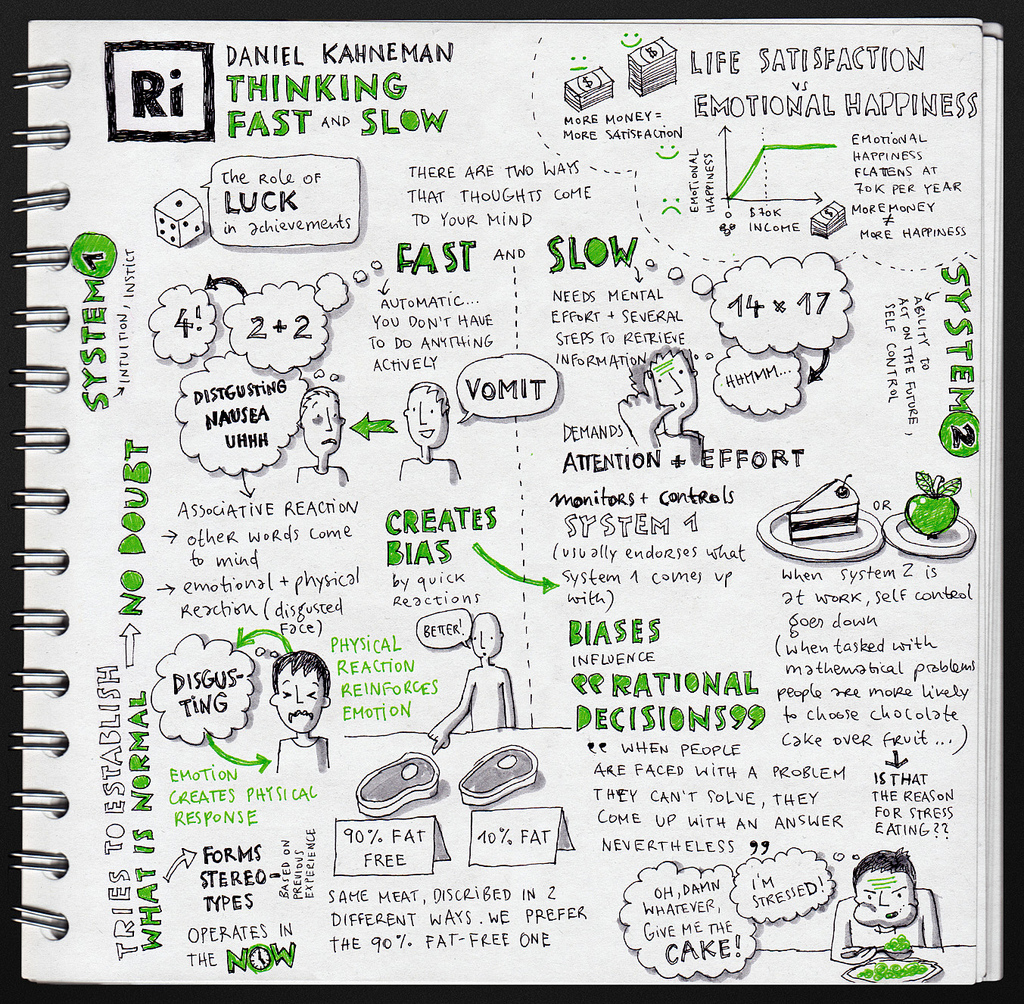
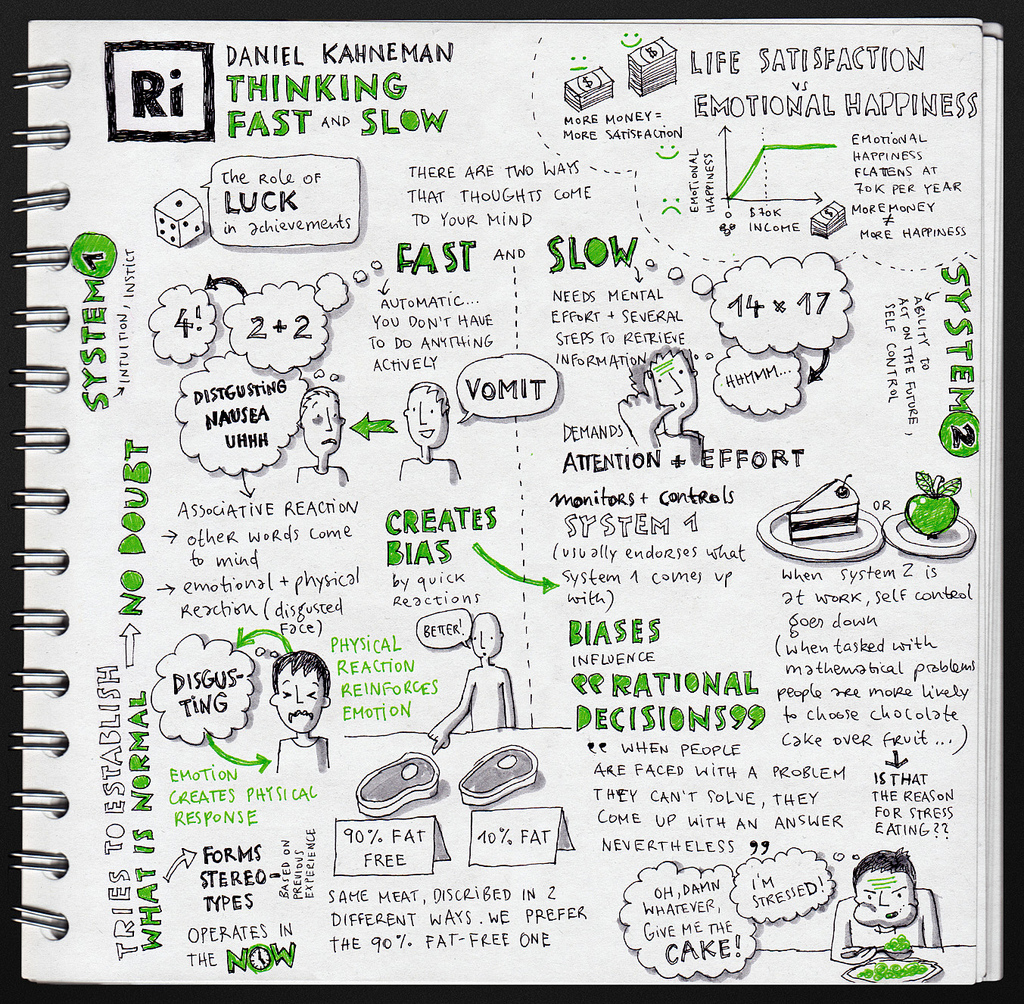
    Thinking_Fast_Slow_Summary

    First Things First – Daniel Kahneman’s “Thinking, Fast And Slow” Is A Must Must Read Book ! Yes – READ IT. It Is One Of The Best Investments You Will Make.

    Daniel Kahneman is the first non-economist to profession to win the Nobel Prize in Economics. But do not worry – the book is easy read and very though-provoking. The book aims to help us understand our systematic errors (biases) so that we an anticipate, identify and avoid them. An accurate diagnosis of our errors of judgement and choice may prevent or limit the damages of our errors.

    The central theme is that our minds have two systems for making decisions – System 1 and System 2.

    System 1 operates automatically and quickly, with little or no effort and no sense of voluntary control.
    System 2 allocates attention to the effortful mental activities that demand it, including complex computations. The operations of System 2 are often associated with the subjective experience of agency, choice, and concentration.

    The books speaks of the role and importance of System 1 in our lives and decisions – intuitions, illusions. It controls us more than we think it does. We become strangers to ourselves. Eventually, System 2 should drive us. And if System 1 is driving us, we should slow down and change course.

    The book touches upon many topics and each one is worth diving further into. I am resisting my temptation to write about all of them – as I want you to read the book.

    Let me touch upon selective interesting points:

    1. One of the important point is about Focus. Multi-tasking is not a great thing as self-control and deliberate thought apparently draw on the same limited budget of effort. Self-control requires attention and effort. Focus and maintaining a consistent thought process requires discipline. Hence tired and hungry judges tend to fall back on the easier default position of denying requests for parole rather thank think more deeper on merits of the case.

    2. High correlation exists between thinking and self-control. People with high self-control have higher measures of executive control in cognitive tasks, and especially the ability to reallocate their attention effectively. The children who had shown more self-control as four-year-olds had substantially higher scores on tests of intelligence. There is a significant difference in intellectual aptitude between people with different self-control.

    3. Another interesting finding is the idea of money primes individualism: a reluctance to be involved with others, to depend on others, or to accept demands from others.

    4. Cognitive Ease allows System 1 to be in control while Cognitive Strain determines whether System 1 should involve System 2. Hence marketing works on creative cognitive ease and lead us to intended behaviours. Using bold colors, simpler language helps. If the message is to be printed, use high-quality paper to maximize the contrast between characters and their background. If you use color, you are more likely to be believed if your text is printed in bright blue or red than in middling shades of green, yellow, or pale blue. As we all know, repetition induces cognitive ease and a comforting feeling of familiarity. It is the exposure effect. A good mood weakens System 2 and hence one needs to be extra careful. Similarly, one should not dismiss an idea because it is badly packaged in a hard language or bad font.

    5. The Wisdom of Crowds indeed makes sense. A collective judgement is often superior to individual judgements.

    6. Whenever taking decisions, ensure that the different biases are checked:
    Halo Effect
    Substitute Effect
    Anchoring
    Availability
    Optimism Bias

    A checklist is a great tool for making decisions.

    Example of Availability Bias: People feel politicians and celebrities often resort to Adultery? Does the aphrodisiac of power cause such behaviour? Statistically, politicians and celebrities have same amount of affairs as other people – it is only that their cases get highlighted more in the media and we tend to feel that they are more morally challenged.

    7. Bad News: Some experimenters have reported that an angry face “pops out” of a crowd of happy faces, but a single happy face does not stand out in an angry crowd. The brains of humans and other animals contain a mechanism that is designed to give priority to bad news. By shaving a few hundredths of a second from the time needed to detect a predator, this circuit improves the animal’s odds of living long enough to reproduce. The automatic operations of System 1 reflect this evolutionary history. No comparably rapid mechanism for recognizing good news has been detected. Of course, we and our animal cousins are quickly alerted to signs of opportunities to mate or to feed, and advertisers design billboards accordingly. Still, threats are privileged above opportunities, as they should be.

    8. The sunk-cost fallacy keeps people for too long in poor jobs, unhappy marriages, and unpromising research projects.

    9. people expect to have stronger emotional reactions (including regret) to an outcome that is produced by action than to the same outcome when it is produced by inaction

    10. The greatest test for professionals including fund managers is persistent achievement.

    Most of the buyers and sellers know that they have the same information; they exchange the stocks primarily because they have different opinions. The buyers think the price is too low and likely to rise, while the sellers think the price is high and likely to drop. The puzzle is why buyers and sellers alike think that the current price is wrong. What makes them believe they know more about what the price should be than the market does? For most of them, that belief is an illusion.

    The book contains many memorable quotes. For example:
    – Pupil of the eye is the window to the soul.
    – Emotional tail wags the rational dog

    The book is replete with rich examples and interesting anecdotes. Some examples were really amazing and though-provoking.

    1. The Equation for Success

    According to Kaheman, his favourite equation is:

    Success = Talent + Luck
    Great Success = A Little More Talent + A Lot Of Luck

    We tend to undermine the role of luck. Whether analyzing stock markets or other events, we tend to ignore the role of luck.

    2. The Formula for Marital Stability

    Frequency of Lovemaking minus frequency of quarrels

    Sounds obvious? Now this is endorsement from the Nobel-prize winning Guru!

    3. The September 11 Attacks

    If an event had actually occurred, people exaggerated the probability that they had assigned to it earlier. If the possible event had not come to pass, the participants erroneously recalled that they had always considered it unlikely.

    The worse the consequence, the greater the hindsight bias. In the case of a catastrophe, such as 9/11, we are especially ready to believe that the officials who failed to anticipate it were negligent or blind. On July 10, 2001, the Central Intelligence Agency obtained information that al-Qaeda might be planning a major attack against the United States. George Tenet, director of the CIA, brought the information not to President George W. Bush but to National Security Adviser Condoleezza Rice. When the facts later emerged, Ben Bradlee, the legendary executive editor of The Washington Post, declared, “It seems to me elementary that if you’ve got the story that’s going to dominate history you might as well go right to the president.” But on July 10, no one knew—or could have known—that this tidbit of intelligence would turn out to dominate history.

    Could better thinking have changed the course of history?

    4. Michael Lewis’s bestselling Moneyball is a story about the inefficiency of the traditional mode of prediction. Professional baseball scouts traditionally forecast the success of possible players in part by their build and look. The hero of Lewis’s book is Billy Beane, the manager of the Oakland A’s, who made the unpopular decision to overrule his scouts and to select players by the statistics of past performance. The players the A’s picked were inexpensive, because other teams had rejected them for not looking the part. The team soon achieved excellent results at low cost.

    5. The basic message of Built to Last and other similar books is that good managerial practices can be identified and that good practices will be rewarded by good results. Both messages are overstated. Because luck plays a large role, the quality of leadership and management practices cannot be inferred reliably from observations of success. And even if you had perfect foreknowledge that a CEO has brilliant vision and extraordinary competence, you still would be unable to predict how the company will perform with much better accuracy than the flip of a coin. On average, the gap in corporate profitability and stock returns between the outstanding firms and the less successful firms studied in Built to Last shrank to almost nothing in the period following the study. The average profitability of the companies identified in the famous In Search of Excellence dropped sharply as well within a short time. A study of Fortune’s “Most Admired Companies” finds that over a twenty-year period, the firms with the worst ratings went on to earn much higher stock returns than the most admired firms.

    Photo Credit:

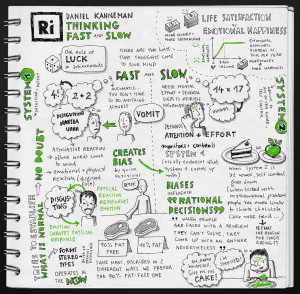
    Please Find A Very Interesting Snapshot Of The Book by: Eva-Lotta Lamm

    This sketchnote is featured in Eva-Lotta’s new book that gathers her sketchnotes from over 100 talks taken at design events and conferences in 2011.
     
    In addition, Eva-Lotta invited 10 of her favourite sketchnoters from all over the world to contribute to the book. They all sketched the same TED talk and created some stunning sketches that show off the wide variety of styles and different ways of summarising content.
     
    www.sketchnotesbook.com

  • Hard Work vs Smart Work !!!

    Hard Work vs Smart Work !!!

    “Don’t work hard, work smart!”
    “Smart work is more important than hard work”

    Every person gets this message from his superior, colleague, friend, teacher.  The idea is to kill inefficiency, do things in a quicker and effective way, add intelligence to tasks, avoid silly errors etc. Noble intentions and nice management jargon! But is it real?

    However, I think hard work leads to smart work. Hard work is essential pre-requisite to smart work. Only when a person gets his / her hands dirty and spends time on understanding the entire process cycle, he will get identify the bottlenecks and add intelligent ideas to make life simpler.

    As they say, no elevators to success.

  • The Difficult Employee Dilemma – The Kevin Pietersen Case Study!

    The Difficult Employee Dilemma – The Kevin Pietersen Case Study!

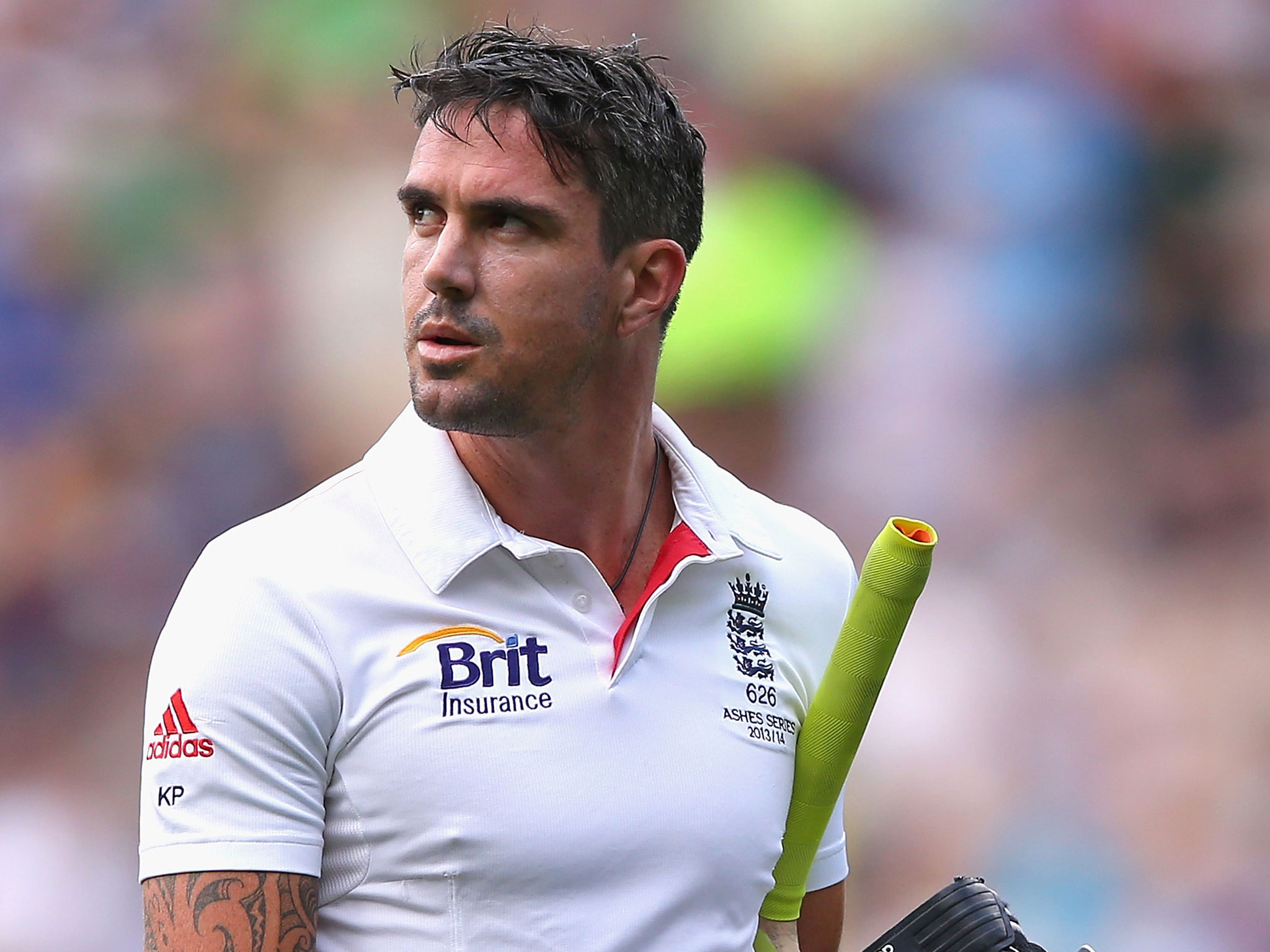
    Trust Kevin Pietersen to remain in limelight ! He has the power to move the needle – on the ground and off the ground ! He is a genius and a great talent – no two doubts on that. He can single-handedly change the course of matches and win series. His records, statistics and victories endorse him as the cricket’s most complete batsman. But he has been in middle of controversies as well – and pretty strong and public controversies!

    Recently Pietersen’s England cricketing career came to an end after he was denied a place in the English side. He was told that he is no longer part of the team’s plans. This was a very controversial and bold move by English Cricket Board (ECB). Because England Team has not been performing well and even exited the recent World Cup very early. Only a miracle can help English team to win the upcoming Ashes against mighty Australia. On the other hand, Pietersen has been performing extremely well. He even scored a exemplary 355 not out recently in first class cricket. He has a good track record against Australia. So it made perfect sense for Pietersen to be in the English squad. But he was not included in the squad due to his past vitriolic against his team mates. Apparently, there exists a trust deficit. So was this is the right move by ECB?

    Should ECB look at the past and deny Pietersen a chance? Especially when English team is already down and needs all the help it can get. Is the job of ECB and captain to pick the best players to win the match or ensure happiness of few team members? Is winning more important or team ethic more important?

    Some people feel that winning is the most important thing. Even if you do not like a person, you still work with that person for winning and achieving organizational objectives. Personal issues cannot be brought to professional arena. The contrarian school of thought says that sports is about teaching life values. So it is the right message to everyone that team is above everything and everyone. If team ethic is not respected, no victory is worth it.

    Thus the Kevin Pietersen Saga brings out the classical people management dilemma – individual brilliance vs team ethic.

    Quite often in corporate world, we come across individual champions and star performers that challenge the organizational culture and team spirit. The star performers feel that they can get away with anything as they are ahead of the pack. They can have huge egos and less respect for hierarchies, systems and shared values. The sales person who is achieving targets or achieving better targets than others thinks that he can get away with anything. He can break the policies, ignore shared culture, outgrow superiors and challenge other departments. The super talented programmer thinks that HR policies are for others, QA reports are work of fiction and corporate security and compliance policies are anti-open source and freedom movement. The situation becomes more tricky when the said person has less competition within the organization. The situation becomes really explosive when the said person starts pulling down others in the organization. How do you deal with this situation?

    If some minor policies are not followed or small rules broken, it can be overlooked. But core values and critical ethical issues cannot be ignored. The short terms costs will be there when action is taken against that player, but the long term results will be rewarding. Corporate cultures thrive on shared values and examples / anecdotes like these do wonders for defining and cementing corporate values.

    The true genius and true great understands the importance of respecting others, respecting organizational policies and contribution of other team members. True greatness comes from being a positive contributor rather than a terrible irritant. If you have a problem with policies, sit with HR and management – you will be listened better than others because of star performance. The real great will work with the laggards and help them. One may not agree with everything, but it is a corporate dharma to follow the organizational stand and present a unified face.

    Sachin Tendulkar, Rahul Dravid, Ricky Pointing, Brian Lara, Viv Richards – All Greats have worked within the defined frameworks and showcased maturity. Thus Kevin Pietersen failed this true genius test.

    Every team, club or organization is bigger than the individual and overall best interests take precedence. It is in the interest of a star performer to be follow the corporate dharma. It converts the star performer into a great professional.

  • How To Get Your Dream Job? Nina Mufleh Inspires!

    How To Get Your Dream Job? Nina Mufleh Inspires!

    All of us have a dream job !

    All of us have a dream customer !

    All of us have a dream date !

    All of us have a dream project !

    But as the nature of things go, not all dream assignments land up in our lap. Some times we are lucky, but some times we have to work of it. How many times we really work for it? How many times we just give up?

    How many times we can persevere? How many times can we think innovatively?

    Here is a great example. I saw this post on NextShark and could not resist writing a post on it.

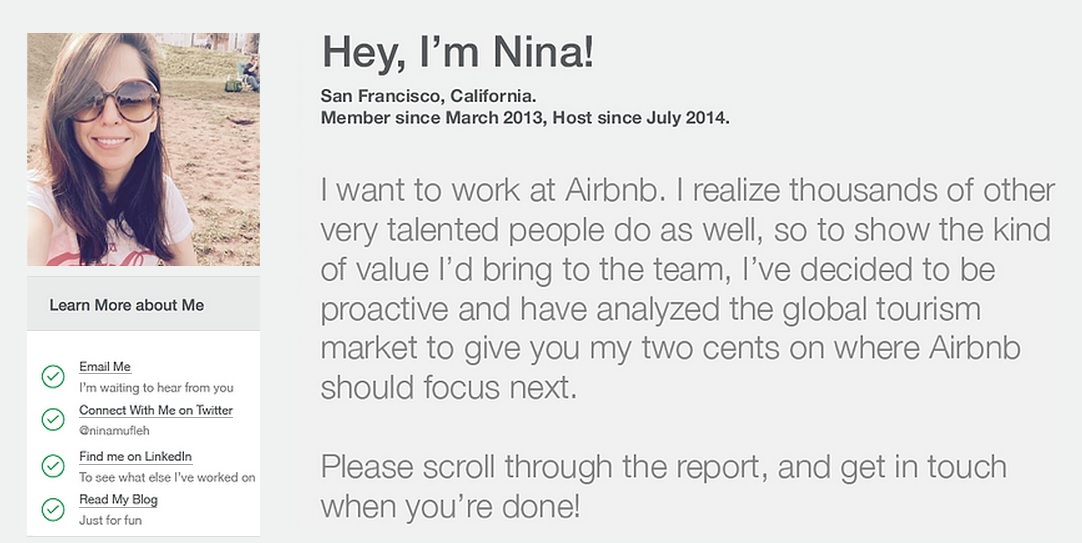
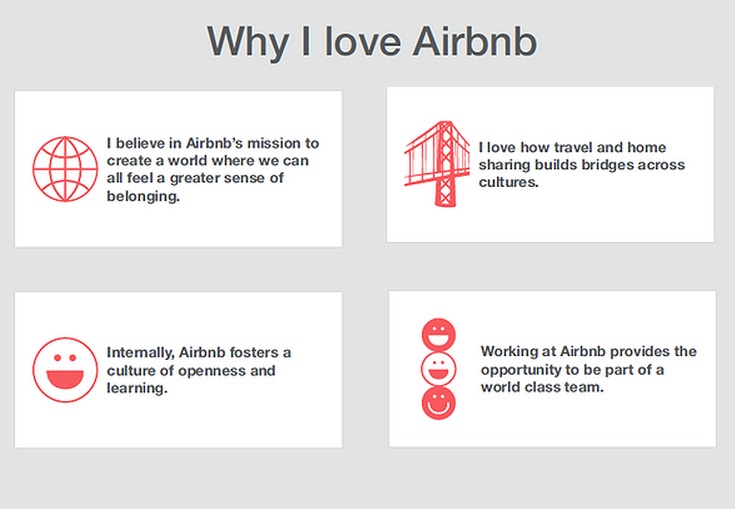
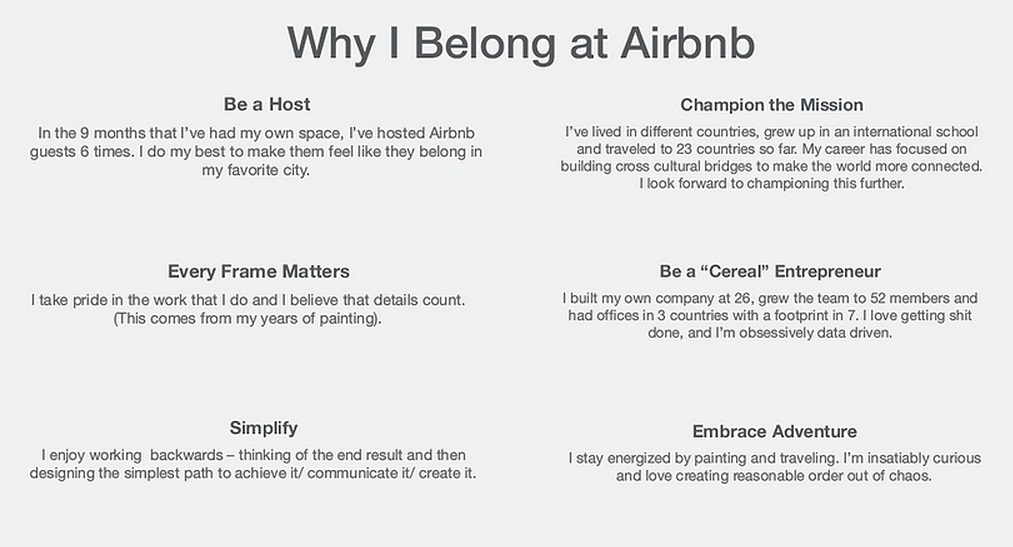
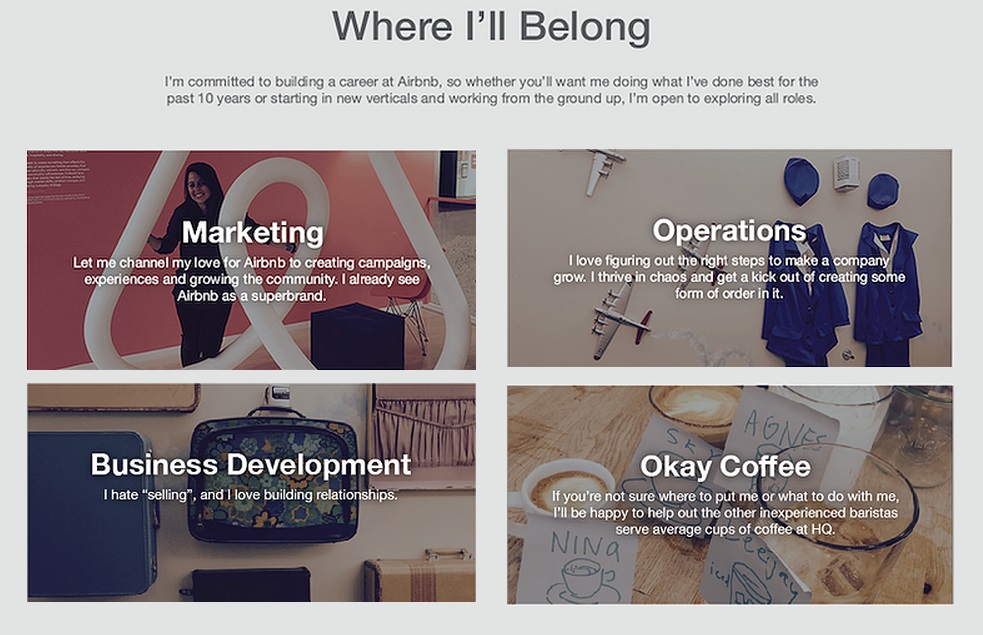
    Nina Mufleh wanted to work for Airbnb. She moved to San Francisco and applied for a job multiple times. She was not successful. 

    She worked on an innovative way to get the attention and get her dream job. She created a website called Nina4Airbnb. She posted this on social media and got the attention of Airbnb. Of course, she also got a job.

    Nina inspires us in many ways:

    1. Perseverance – Never take NO for an answer

    2. Innovation – Think Innovatively and get attention

    3. Ideas To Action – Instead of giving up, she found a new way. She put lot of hard and efforts to push her innovative resume / website.

    4. Value – The value proposition was clear. Read each and every word. Including conclusion and humor. She also gave possible ideas. Seeing the website was the proof of all the values she brought to the table. It also showed her creativity, zeal, energy.

    5. Top-Down Approach – She pitched the idea to the top – Airbnb CEO.

    6. Leverage Social Media – She used Social Media to get her message delivered.  Thus she got support of millions of Airbnb fans as well. It would be really difficult for Airbnb to ignore her.

    Nina’s ideas can be used by every sales person trying to get that important meeting with the dream prospect.

    Image Credits: NextShark / Nin4airbnb.

     Nina1 Nina2 Nina3 Nina4 Nina5 Nina6 Nina7 Nina8

    Credit: http://vancouvercitycentreesc.ca/wp-content/uploads/2017/01/dream-job.jpg

  • Ruling The Corporate World

    Ruling The Corporate World

    Young Professionals and Fresh Graduates often write and ask for advice on surviving the corporate jungle. My view is simple – Continue the journey with the same passion and energy as college life. Do not stress too much – things will fall in place, as young blood is smart, talented and resourceful – forget surviving, you will rule the corporate world.

    The following are the things that I have often repeated and worth listing today:

    1. Learning

    Life is about learning and moving ahead. Young professionals need to focus on acquiring key skills that will differentiate from the rest of the crowd. Even senior executives need to learn, unlearn and learn – constant renewal is a key requirement. If you have nothing to add to your resume every year, think hard! Today is the world of multiple skills.

    Money is important but learning is more important. Seek opportunities to learn. Volunteer to assist on organizational initiatives. Ask for responsibilities and more work. The pace of learning will decide the rate of financial returns!

    Be a lifetime student!

    2. Focus On Fundamentals

    Focus on the business fundamentals. Help the organization to achieve its goals and needs. Learn the flow of money in the organization. Study the executive leadership speeches and industry expert analysis to determine the strategic priorities. And then focus on excelling in these areas. You will rise faster in the organization. And will be more visible as well! No matter what the challenge, never loose sight of the business fundamentals and things should be fine.

    3. Flexible

    Not every work that comes your way will help man to land on the moon. Sometimes watering the plant and ensuring lights on is important. The point is that be flexible to work outside your comfort zone. Be flexible to adapt to changes and new assignments. Leaders emerge and thrive on changes where normal executive fear change. Risk taking is very important.

    Finally, no work is strategic or stupid. It is our approach that makes the work stupid or strategic.

    4. Excellence

    Be the best gardener in the world. Be the best designer in the world. Be the best chef in the world. Pursuit of excellence wins! Always!

    It requires lot of hard work, dedication and persistence. But the results are always sweet.

    Keep attending industry events. Ready magazines and blogs. Discuss ideas with people. Lead small experiments at work!

    5. Accept Failures

    Failure and success are the two sides of the same coin. Sometimes despite the best-planned efforts, there is a failure. Learn from failure. Failure is an important part of the journey to success. Do not get disappointed or stressed due to failure. Analyze failure and find opportunities to learn from it. Just do not make the same mistake twice!

    As they, if you are not failing enough, you are doing something wrong. Jeff Bezos said recently: Failure comes part and parcel with inventions – it is not optional.

    6. Team Work & Interpersonal Skills

    The modern workplace demands huge amount of teamwork and interaction. Learn to be a good team player. Understand that everyone has an important role and organizational goals can be achieved only through pooled efforts. Learn to work in teams and support team members. If people do not collaborate or do not know how to work together, it is going to affect their individual as well as group performance. Lack of interpersonal skills is a recipe for extinction.

    Ordinary or extraordinary times – nothing works like teamwork.

    7. Shun Politics

    When people do not have anything to show, politics comes into picture. Corporate politics is a reality but it is something that will hit you back – mostly at the time when you don’t want it to be. In large organization with walls of silos and layers of bureaucracy, people may have lot of time at disposal. But it is best invested in learning and self-growth rather than politics. Corridor chats or little gossip does not harm but when people spend most of the time on others and not self, it is a problem. The world and organization usually gets the wind of performers as well as non-performers – so it is better to focus on job at hand. And for people at the start of the career or planning to rise the corporate ladder, politics could be career-killer.

    8. Seek Feedback

    People do not give unsolicited advice. So seek feedback in formal and informal ways to enable further improvement in work. Seeking feedback is a good sign of confidence and self-improvement. Of course, do not get defensive or judgmental about feedback. Take it with a pinch of salt but analyze it and act on it if appropriate.

    9. Health & True Wealth

    In the pursuit of corporate journey, never neglect the two important aspects of life – Health and Family! Life is beyond designations, material success and killer resume.

    Family and Friends are critical bases in our journey of life. Not only they give celebrate our success and ease our burdens but they are our mirrors. The glories and happiness of life will be less exciting when you are alone!

    Similarly, Health is your best friend. Neglect health only at your risk. Today’s jobs are demanding with lot of travel and long hours – if you cannot cope up and keep good health, it could slow you down. Basic fitness is required for a sharp mind and top gun.

    10. Fun

    Finally, the most important is to have fun and continue to enjoy the journey of life. All work and no play create dull managers and leaders. So keep the passion and energy level high. Not only you will have less stress in life but also it will act as a great bond in the team. A good sense of humor and the curiosity of child will always be your good friends.

    Finally, just believe in self. Be natural. Continue to have innocence of child and zeal for excellence. Love what you do and success will follow. Enjoy!

  • RIP ‘O Captain! My Captain!’ Robin Williams

    RIP ‘O Captain! My Captain!’ Robin Williams

    Robin Williams left for his heavenly abode on Monday August 11, 2014. Generations of people have inspired by his many roles – but his most memorable role will always be the one in Dead Poets Society. The scene in which his students recite “O Captain! My Captain,” an homage to Walt Whitman’s poem, has become an indelible part of cinematic journey. It’s an onscreen moment where Ethan Hawke, Josh Charles and others stand on top of desks and honor Williams. Together, they honor his intellect and compassion. ‘O Captain, My Captain’ remains a strong cinematic moment!

    Another strong expression was – Carpe Diem – Seize The Day !

    RIP Robin Williams!

    Full Text Of Poem – ‘O Captain! My Captain!’

    O Captain! My Captain! our fearful trip is done;
    The ship has weather’d every rack, the prize we sought is won;
    The port is near, the bells I hear, the people all exulting,
    While follow eyes the steady keel, the vessel grim and daring:

    But O heart! heart! heart!
    O the bleeding drops of red,
    Where on the deck my Captain lies,
    Fallen cold and dead.

    O Captain! My Captain! rise up and hear the bells;
    Rise up—for you the flag is flung—for you the bugle trills;
    For you bouquets and ribbon’d wreaths—for you the shores a-crowding;
    For you they call, the swaying mass, their eager faces turning;

    Here captain! dear father!
    This arm beneath your head;
    It is some dream that on the deck,
    You’ve fallen cold and dead.

    My Captain does not answer, his lips are pale and still;
    My father does not feel my arm, he has no pulse nor will;
    The ship is anchor’d safe and sound, its voyage closed and done;
    From fearful trip, the victor ship, comes in with object won;

    Exult, O shores, and ring, O bells!
    But I, with mournful tread,
    Walk the deck my captain lies,

    Fallen cold and dead.

  • Sleep Well – Think Well !

    Get Some Sleep ! The advice we hear so often but never implement !

    Workaholism may be a badge of honor but it can be dangerous if we are depriving ourselves of sleep as well.

    I came across this video on the research on sleeping behavior. AsapSCIENCE has a new video that explains the effects of lack of sleep, from decreased brain function to increased risks of heart disease and obesity. In one study, researchers found that subjects who slept just six hours a night for 14 days had the cognitive wherewithal of someone with a .1% blood alcohol level. That’s legally drunk.

    The good news: You can make up modest amounts of “sleep debt” over time.
    The bad news: If you suffer from chronic sleep deprivation, over time you lose your ability to judge your own reduced cognitive abilities.

    Finally the big one – Oversleeping is more dangerous as well. Workaholic in me smiles !

    The best sleep : 7-8 hours !

    Get some sleep. Some quick tips:

    1. Avoid the anxiety to check work emails. Even though you surf for Facebook or Twitter or Linkedin, you end up replying to work emails. And some contents can start your train of thoughts.

    2. Avoid bright lights or television.

    3. Spend time talking to family.

    4. Drink warm milk. Avoid heavy food or late night snacks.

    5. Keep the mobile phone away ! (Ironic for me to write this !)

    6. Sleep at the same time daily – It helps !

    7. Read – It helps apart from giving you good knowledge and relaxation

    Sleep Well. Think Well. Live Well !

  • The Netlfix Culture Document – A Must Read !

    I came across the “Netflix Culture: Freedom & Responsibility” document on Sunday evening. It was a good revisit of the Netflix values and philosophy of excellence.

    Sheryl Sandberg even called it “the most important document ever to come out of the Valley.”

    It’s a living set of “behaviors and skills” that the Netflix management team updated continuously and fastidiously. And it drives toward a single point: a company is like a pro sports team, where good managers are good coaches, and the goal is to field stars in every position.

    There are lot of good insights:
    1. Like the expense policy – Act In Netflix’s Best Interest !
    2. Highly Aligned, Loosely Coupled – Makes sense
    3. Pay top performers the top salaries – no bell curves or standard increment
    4. Honesty and top severance packages

    A Must Read for sure !

    [slideshare id=1798664&doc=culture9-090801103430-phpapp02]

    Source: First Round

    Also Read Harvard Document on Netflix – How Netflix Reinvented HR by Patty McCord

  • InfoStretch Is Hiring !

    InfoStretch Is Hiring !

    InfoStretch Is Hiring !

    A Career Opportunity Full Of Learning, A Workplace That Is Exciting, A Culture That Is Stimulating & A Company That Is None To Other ! Fancy A Job That InfoStretch – Lot Of Job Openings Now Live ! Multiple Opportunities Across US and India.

    Please visit our Careers Page !