Category: InfoStretch

  • Mobile Retail Summit 2013 – London – Highlights

    The 2nd Mobile Retail Summit, which took place on 24 April 2013 at London’s Grange Hotel, was a great experience. Here is the quick snapshot of the event:

    Mobile Retail Summit 2013 – Highlights from MobileMarketingMag on Vimeo.
  • Is The Mobile Web Vs Native App Debate Over?

    Is The Mobile Web Vs Native App Debate Over?

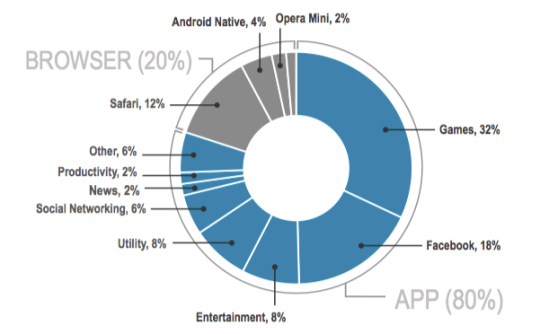
    Mobile Web Vs Native App – One of the most interesting debate in the recent times ! However, gradually, it seems that Mobile Native App has proven to be an preferred choice by both consumers and enterprise mobility technologists.

    Venture Beat declared that the mobile war is over and the app has won: 80% of mobile time spent in apps. According to app analytics firm Flurry, which tracks app usage on a staggering 300,000 apps on over a billion active mobile devices, Americans spent an average of 158 minutes each and every day on smartphones and tablets. Two hours and seven minutes of that is in an app, and only 31 minutes is in a browser, surfing the old-school web

    Native Apps offer rich User Experience, intuitive features, integration with multiple systems and stronger encryption for Enterprise Companies.

    Leading retail companies prefer Native Apps over Mobile Web to drive special promotions and deals, give product information, leverage loyalty programs also provide added features such as games and interactive tools related to their brands.

    Interestingly HTML5 is a useful tool for creating Hybrid Mobile Apps.

  • Tesco Shopping App – Example Of Future Of Retail

    We have been working on a long list of innovative ideas for Retail Industry and helping global retailers maintain their brand leadership.

    The Tesco App is an good example of embracing mobility in retail industry. VB shared a link about the Tesco Shopping App – The Future of Retail.

  • Mobile World Congress 2013 – Recap By Chetan Sharma

    I am a regular follower of Chetan Sharma’s blog. He has recently shared his notes and comments on Mobile World Congress 2013. Please find the same note here.

    Chetan Sharma on Mobile World Congress 2013

    Welcome to Spain, Thank you for your business,” remarked the immigration officer and thus started my yearly pilgrimage to the grand slam of mobile – The Mobile World Congress 2013. It is truly a global event with participants from virtually all countries looking to do business, learn a thing or two, and ponder over what the year will bring forth. The show moved to a new venue which made the logistics work much better for attendees and exhibitors but the venue lost its charm and character. We used this opportunity to feel the pulse of the industry and understand where things are headed. This note summarizes our observations from the show.

    While there was no blockbuster announcements or products that will knock your socks off, several interesting trends emerged that will keep the industry exciting to watch in 2013.

    The perennial search for the #3 ecosystem continues: Windows sales have disappointed thus far, Blackberry has launched new devices but hasn’t quite hit the mark. So, while consumers seem perfectly happy with iOS and Android, industry’s desire to have a third robust ecosystem is palpable. The biggest announcement in that regard was from Firefox OS and in a matter of 12 months, it has not only forged a strong alliance with operators, it is actually getting ready to ship phones. It is going to be targeting the low-end of the market which is a smart strategy but a lot depends on the range of price points of the devices and how quickly it can attract the developer ecosystem. Given that Android device price points are hovering around $50 and it is a mature ecosystem with great developer reach and support, it will be challenging to convince consumers to go the Firefox route. However, if the price points are attractive enough, with the distribution power of some key operators, we could see some early traction. Ubuntu, Jolla, and Tizen were also vying for attention.

    LTE everywhere: LTE deployment is growing at a very fast pace. The US market is ahead of the curve with almost national footprint from Verizon followed by substantial coverage from the remaining three operators. Elsewhere, operators are gearing for deployment once some of the spectrum issues/auctions are sorted out.

    The 4th Wave has arrived: Last year, we put forth a framework for future mobile industry revenues in our 4th wave paper. Since then, the framework has been embraced by many leading operators around the globe. It was good to hear operators talking more about services rather than data plans. Several areas were discussed by the leading tier 1 operators such as health, retail, education, cloud, M2M, automobile, enterprise, security, connected living, home security, commerce, identity and privacy, big data and analytics. Operators who are able to steer their giant organizations to focus on services will be able to survive the commoditization of access. We will have more say on the subject later this year.

    Yo OTT, luego existo: which is Spanish for “I OTT, therefore I am” To be a player in the digital world, one has to be an OTT provider for communications and beyond. The interesting dichotomy of the communications OTT business is that very few will survive. The end state of a majority of them (if not all) is either an M&A with a telco or an Internet player or they run out of cash. The new breed of OTTs has forced the lumbering giants to think different about their customers and their markets.

    Mobile Broadband, Cloud, and Apps: The troika of broadband network access, the cloud infrastructure and the applications are creating a sea change in the enterprise, especially the SMB segment. It is also changing how developers see the enterprise segment as the opportunity migrates from windows to iOS and Android. We conducted some in-depth research in the space and will have more to share later this year. Our Mobile Breakfast Series later this month will be dealing with the topic of Cloud and SDN in more detail.

    Redefining Monopoly: The mobile and internet worlds have collided but the regulatory regimes haven’t changed. European operators seemed to indicate that it is time to reassess what a monopoly really means and the rules should apply to all layers of the ecosystem stack and that means devices and OSs as well.

    Device Launches: All major OEMs are following the Apple playbook as far as the device announcements are concerned. To garner media attention, it is best to announce the “hero” devices away from major shows. Just like CES earlier this year, MWC lacked any big device announcements. Nokia announced mid-low tier devices to expand its portfolio that will help it in unit sales. ZTE, Huawei, LG, Asus, NEC, Sony, HTC, HP, Asus, Acer, Lenovo all had new devices to display but media’s eyes are set on Samsung’s Galaxy release later this month.

    Local OEMs: Traditional OEMs are facing some healthy competition from new entrants in local markets. Players like Fly and Yotaphone in Russia are giving the veterans a run for their money. By both innovating with new features but also by customizing the devices for the local market (e.g. bigger battery that last 3 days), they are creating their own niche. After gaining good market share in Russia, Fly is expanding into other markets.

    Connected Cars: When the biggest operator by revenue announces a deal with the biggest car manufacturer, people take notice. GM and AT&T announced LTE cars by 2015 which will pretty much force the entire auto industry to provide broadband connectivity in a hurry. However, the auto industry has misplaced expectations on apps and any incremental revenue they might be able to harness from them.

    Samsung Knox, Blackberry – can you hear me now: Android is probably the most insecure mobile platform out there. Blackberry has long been the gold standard, iOS has improved, Windows has security features built in but security has always been a step-child of Android. Samsung’s Knox announcement elevates Samsung’s role in the mobile enterprise and to some extent takes over some of the development capability of Android that are squarely aimed at Blackberry. The container security feature set with MDM integration is well thought out and opens up the mobile enterprise market for Samsung especially in North America and Western Europe.

    Spectrum and Regulations: While spectrum was a universal issue with the operators, more is better, European operators were particularly vocal about the state of the regulatory affairs on the continent. Regulators, they complained, are killing the industry by cutting of revenue opportunities, are fostering too much competition, too much taxation, and too involved in the operations of the operators. This is leading to declining revenues and turmoil at the operators. There might be some unintended consequences of weakening operators and regulators will have to grapple with some interesting questions that a free market economy will pose in the coming days.

    TU Go – Take your phone number everywhere: In our opinion, Telefonica has done the best job of dealing with the digital world in putting forth an org structure that can crank out applications and services at Internet speed. TU Go is a new service (launched in UK) that allows users to take their phone number to any supported device and use it for calling and texting – number in the cloud at its best.

    NFC is dead, Long Live NFC: Vodafone CEO’s frank admission that he doesn’t expect to make much money from NFC gave the audience a bit of a pause. Several NFC initiatives have floundered without clear goals or vision. Instead of working together, the industry has remained fragmented and thus the lack of scale has hampered progress. For too long, the industry has focused on payments but the opportunity lies in the engagement with the customer. For better or for worse, the financial industry has sequestered its commission for the foreseeable future. We saw some clever NFC implementations to drive consumer engagement and commerce in retail environments, primarily in Europe.

    Consolidation looms: The question that is on everyone’s mind but was hardly discussed at the show was the coming onslaught of consolidation at virtually all layers of the ecosystem.

    Developing Markets: Connecting the next billion was a recurring theme. The smartphone penetration in the developing world is in the single digits. More than that, introducing consumers to a computing platform for the first time is an exciting opportunity. Creating services that are tailored to the local environment remains an opportunity that can have a profound impact on society. Our own work with the UN/ITU has shown the transformative role of mobile in almost every walk of life. The device unit growth is coming from the developing markets and as they get connected, the world becomes flatter, and the competitive dynamics in a globalizing world will create for some interesting policy and political battles.

    M2M and Internet of Things: As we wrote in our book “Wireless Data Services” back in 2004, the connectivity is becoming pervasive. The module costs are coming down fast and the desire to measure and track every number that is important in our lives is creating a massive opportunity. However, privacy, battery life, environment, security remain key issues that need to be tackled.

    Identity as a business opportunity: In a digital world where access to information and resources depend on verification of your identity, the guards and keepers of the identity information have a big role to play. As such, “identity” management is emerging as an opportunity that can be monetized. In the online world, Facebook has become the dominant way to integrate apps and services. In the mobile world, operators can play a significant role in authentication and verification. Will the two worlds collide? Fasten your seat belts.

    The Post PC world: As an experiment, for the MWC trip, I carried just the Nexus 7 tablet and an iPhone. I felt liberated. In the past, for day trips, I have relied just on iPad/iPhone for taking care of my computing needs. For this trip, I wanted something that I can carry in jacket pocket. Nexus was good enough for taking simple notes, email, browser and even some phone calls. I could easily switch back-and-forth between the tablet and the phone, and the combined battery life lasted the whole day.

    The Miscellaneous:

    · Google’s absence from the show puzzled many

    · The enthusiasm for RCS/Joyn seems to have subsided as reality sets in

    · Nokia is broadening the reach of its HERE platform to other operating systems

    · AT&T/Ericsson showed WebRTC demo

    · Facebook announced messaging partnerships with operators in developing countries

    · Small cells remained a hot topic though seen more of a compliment for the macro network

    · Signaling traffic continues to grow at a faster pace than the data traffic as more LTE devices come on the network

    · Qualcomm launched RF360 solution to deal with frequency band fragmentation which is serious problem for LTE roaming

    · Yotaphone with its dual screen (front and back) and NEC Medias with its stacked up screens had something fresh to offer in the devices space when 99% of the devices look the same

    · Virtualization is the new black in mobile networks

    Best booth: Ericsson’s networked world theme was well thought-out and provided a unique exploratory view of the opportunities and technology evolution. A close second – Connected City.

    Best party: There won’t be an MWC without the bevy of parties every night. Qualcomm again stole the show with the jam-packed confluence of the mobile elite.

  • InfoStretch – Among Top 15 Fastest Growing Companies In Silicon Valley

    InfoStretch Has Been Ranked Among Top 15 Fastest Growing Companies in Silicon Valley for the Third Consecutive Year by the Silicon Valley Business Journal


    InfoStretch Corporation, a leading provider of Mobile and QA services and solutions, announced today that it has been named to the Annual Silicon Valley Fast Private 2012 list for the third consecutive year. InfoStretch ranked #14 in the fastest growing company category, moving up from #19 in 2011. The awards were given by the San Jose Business Journal.  Click here to go the Fast  Private 2012 awards page.

    “The secret of InfoStretch’s success lies in understanding the business challenges in the QA and Mobile QA ecosystem and creating world class solutions to address them”, says Rutesh Shah, Founder and CEO of InfoStretch. “Innovation to establish market leadership is key, especially in an industry that is moving at such a rapid pace. And at InfoStretch, we have always thought a few steps ahead enabling us to be the company of the future in our space”, he added.

    Today, InfoStretch has tested more than 100k apps in its test labs spread across the world. It has access to more than 3k real and pre-market devices and services more than 300 customers ranging from startups to Fortune 500 companies. It has developed innovative testing and certification solutions specific to business needs, which are being leveraged by various companies around the world.

    InfoStretch is also the testing and certification authority for 5 of the 7 top Application Stores in the US.

    The “Fast Private” award is the latest in a series of accolades for InfoStretch. Recently, InfoStretch was also named to top1000 in the Inc.500|5000 List of America’s Fastest Growing Private Companies; it was recognized as one of the top 5 businesses of the West for 2012 by the Business Leader and was named among top 75 workplaces in the Silicon Valley by the Bay Area News Group.

  • Think Mobile – Think InfoStretch

    InfoStretch’s Mobility Service Offering – Think Mobile, Think Infostretch

  • InfoStretch Among Top 1000 in the Inc. 500|5000 List – Third Time !

    InfoStretch Among Top 1000 in the Inc.500|5000 List of America’s Fastest Growing Private Companies

    InfoStretch Corporation, a leading provider of Mobile and QA services and solutions, announced today that it has been named to the annual Inc. 500|5000 list of America’s fastest growing private companies. InfoStretch has received this award for the third consecutive year.

    InfoStretch Corporation, a leading provider of Mobile and QA services and solutions, announced today that it has been named to the annual Inc. 500|5000 list of America’s fastest growing private companies. InfoStretch has received this award for the third consecutive year. InfoStretch has achieved phenomenal growth over last year to be ranked at No. 949 in 2012, moving up from No. 1926 in 2010. It was ranked No. 931 in 2011 for its phenomenal growth.

    “We are very proud to be recognized as one of the fastest growing companies in the United States for third year in a row,” says Rutesh Shah, Founder and CEO of InfoStretch. “At InfoStretch, we want to continue to innovate for our industry and build great solutions for existing and new customers. We believe that with this innovation, we’ll be sure to grow at a good pace to establish market leadership,” he added.

    InfoStretch was founded in 2004 and caught industry’s attention for its innovative QA and mobile testing, development and certification solutions. Since then, it has been growing over a 100% year after year. It is also the testing and certification authority for 4 top App Stores in the United States. Recently, InfoStretch was also named among the top 75 workplaces in Silicon Valley by the Bay Area News Group. It has also been recognized as one of the top 5 businesses of the West in 2012 by the Business Leader.

  • InfoStretch Recognized as One of the Top 5 Businesses of the West for 2012 by Business Leader

    Santa Clara, August, 13th, 2012– InfoStretch, a leading provider of enterprise QA and mobile solutions is named as one of the top 5 businesses of the West for 2012 by Business Leader. Previously, InfoStretch has been recognized among the top 75 workplaces in the Silicon Valley by the Bay Area News Group, was among the hottest companies in Silicon Valley named by 411, was among top 20 fastest growing companies awarded by Silicon Valley Fast Private, and was named as top 1000 in the Inc. 500|5000 list of America’s Fastest Growing Private Companies.

    InfoStretch has seen some phenomenal growth in the last couple of years, both in terms of client acquisition and organic growth within the company. Very recently, InfoStretch signed up its 100th customer, a milestone which came out of dedicated efforts from various teams and company’s vision and leadership.

    “We want to take InfoStretch to the next level, and getting this award from Business Leader is a step in that direction,” says Rutesh Shah, President and CEO at InfoStretch Corporation. “Innovation is key to making a difference, to find out what your customers really need, and make that great product or provide that superlative service which would change the way we live and work,” he added.

    The top 5 business of the west for 2012 awards recognize and honor the top small businesses in the West based on their performance, innovation and community involvement. The award winners are ranked both in their region as well as in their local market. InfoStretch and all other winners have already been recognized and honored at awards dinners in their local markets. They will also be highlighted in the upcoming digital issue of Business Leader that will be available by the end of August.

    Visit InfoStretch awards page to learn about our success, our careers page to see the current job openings, our news releases page to read news, and our clients’ page to see what they’re saying about us.

    About InfoStretch

    InfoStretch is a leading provider of mobile and enterprise QA services and solutions. Our offerings range from enterprise QA, mobile application development, testing, and automation to certification and sustenance. We’ve been providing expert solutions and services to various large and strategic players in the mobile ecosystem including enterprises, carriers, app stores, VAS, and ISV’s to actualize their mobile and QA strategy very successfully.

    We offer the most cost effective, secure, and scalable models to service our clients across various verticals such as banking, healthcare, education, and entertainment to name a few. Our innovations have allowed us to provide an SLA of 24hours and the ability to scale and test over 2,000 apps a day.

  • InfoStretch Announces MobiXpert

    InfoStretch Announces MobiXpertTM – an On Demand Mobile Testing Solution as a Secure and Cost Effective Alternative to Crowd Sourced Mobile Testing

    Santa Clara, July 30th, 2012– InfoStretch, a leading provider of enterprise QA and mobile solutions announced MobiXpertTM, an on demand, secure, easy to use mobile testing service for enterprise developers. MobiXpertTM will test any application in a few easy steps. All users would need to do is to choose the type of test, the devices across various platforms such as Android, iOS, Windows, BlackBerry, and submit the app for testing.

    InfoStretch has designed this solution to mitigate risks which usually occur during engagements with crowdsourcers and mobile cloud platform providers. “Our value proposition with this service is to provide 100% secure testing on real devices at an affordable price”, says Rutesh Shah, President and CEO at InfoStretch. “We solved the device testing problem for Enterprise customers with MobiXpertTM – our test labs have more than 3,000 pre and post market devices, and we have successfully tested more than 100,000 apps on them for app stores. And now, we are bringing the benefits of the same to other Enterprises,” he added.

    MobiXpertTM beats the Android fragmentation with its real device testing, and offers short cycle times, multiple language support, access to a team of certified mobile experts, and a very simple and secure interface.

    “Our newest solution MobiXpertTM is to help small and medium enterprises who are thinking about mobility. We will leverage our lab equipped with real devices and our mobile testing expertise to help solve the device fragmentation problem during testing”, says Manish Mistry, VP of Mobile Services at InfoStretch. “This solution will disrupt the mobile testing marketplace no doubt, mainly because it provides a secured and cost effective alternative to crowdsourcing, and can offer managed testing as part of SDLC”, he added.

    For more information on what is MobiXpertTM and how it works please click here. If you would like submit your app to MobiXpertTM, visit our MobiXpert portal