Category: Management Tales

  • 🔥Trend Tsunami: Creating Billion Dollar Cultural Icons 🌪️

    🔥Trend Tsunami: Creating Billion Dollar Cultural Icons 🌪️

    🔥Trend Tsunami: Creating Billion Dollar Cultural Icons 🌪️

    Labubu Dolls.  

    Matcha Tea.

    Dubai Chocolate.

    Stanley Tumblers.

    Everyday products transformed as global cultural icons!

    They didn’t just sell—they stormed the world. 🔥

    Global Trend Cultural Icons
    Global Trend Cultural Icons

    What do they have in common? What fueled such gravity-defying growth?

     🎠 Childhood nostalgia

     🎯 Bold self-expression

     📈 Social media waves

     🌎 Global tribe mentality

     🎁 The thrill of new and now

     🍀 And maybe… a dash of pure luck?

    Whatever the truth is — it’s magic in motion. ✨ A marketer’s dream. A strategist’s jackpot. 💡💰

    These aren’t just products — they’re movements 💃🌪️

    They build communities, reshape markets, and spark economic booms.

    The world doesn’t just buy them. It follows them.

    Because when a product hits the sweet spot,  it doesn’t just trend — it transcends!

    Here’s to the next wave of viral magic… Are you ready to catch it? 🚀

    Images belong to copyright owners – used for representation! 

  • Winning At Life & Sports – Harsha Bhogle Masterclass

    Winning At Life & Sports – Harsha Bhogle Masterclass

    Winning At Life & Sports – Monday Morning Motivation As Olympics Conclude!

    One Of The Finest Talks By The Wise & Accomplished Harsha Bhogle – A Trailblazer!

    Indian Institute Of Management Ahmedabad Is India’s Best & World’s Finest Management Institute – Watch A Life Masterclass By Its Alumni Who Succeeded In The Non-Traditional IIMA Profession

    Can you work as hard as you can when no one is watching?

    – Humility and gratitude matter the most

    – Patriotism is in paying taxes, not Instagram posts

    – Big orchards encourage other trees to blossom

    Happy to see the reinforcement of these amazing nuggets laced with cricketing and non-cricketing examples! Loved it!

  • Life Lessons from India – New Zealand Thriller!

    Life Lessons from India – New Zealand Thriller!

    The World Cup 2019 Semi-final has silenced a nation of 1.35 billion people.

    The India – New Zealand clash has prompted strong emotions across the globe. The fans’ reaction is a testimony to their love of the game and ‘Men in Blue’. One can discard their involvement and ideas as arm-chair suggestions but without fans, the game is incomplete. The game is a bigger game because of fan, and it unites everyone – delivery boy, CEO, office staff, families!

    What else did I see in the India – New Zealand clash? What can be learn from it for our life?

    1. Innovation

    Indian team showed no innovation. India stuck to their old ways. Same batting order except pushing Dhoni down. Dhoni should have risen up in the order and he would have anchored the batting. He would have stopped Rishabh and Hardik from rash shots.

    Our Batsman played the same way as they did in earlier matches.

    We all need to innovate in life. We cannot keep trying the same things every time. Our career requires us to develop new skills and bring new ideas to the table. Innovation is key to success in today’s world. We need to evolve!

    2. No Plan B

    Indian Team did not have a Plan B. What if our big guns did not deliver? What if our middle order was exposed? India’s middle order was our biggest problem and we never worked on it. The lack of Plan B costed us the match.

    We had a great opportunity in India vs SL match to give practice to others. But still Virat came at No.3 and so did others at their own positions.

    In life our best planned ideas can go wrong. We need to have a Plan B. If our dream promotion does not happen, what do we do? If we do not get admission in IIM, what do we do?

    3. Flexibility / Overconfidence

    The team came across as stubborn as well. The rains would have made the batting difficult was a given factor . But our earlier success blinded us to the new situation. Maybe we got overconfident. What has worked well would continue!

    Respect the conditions. Respect the opponents. Every artist touches the stage before it performs on the stage – we did not kiss and read the pitch well.

    It is not the strongest or the smartest that survives – it is the most adaptable that survives. We need to learn flexibility in life. Change as per the situation and circumstance. Do not be stubborn.

    4. Discipline

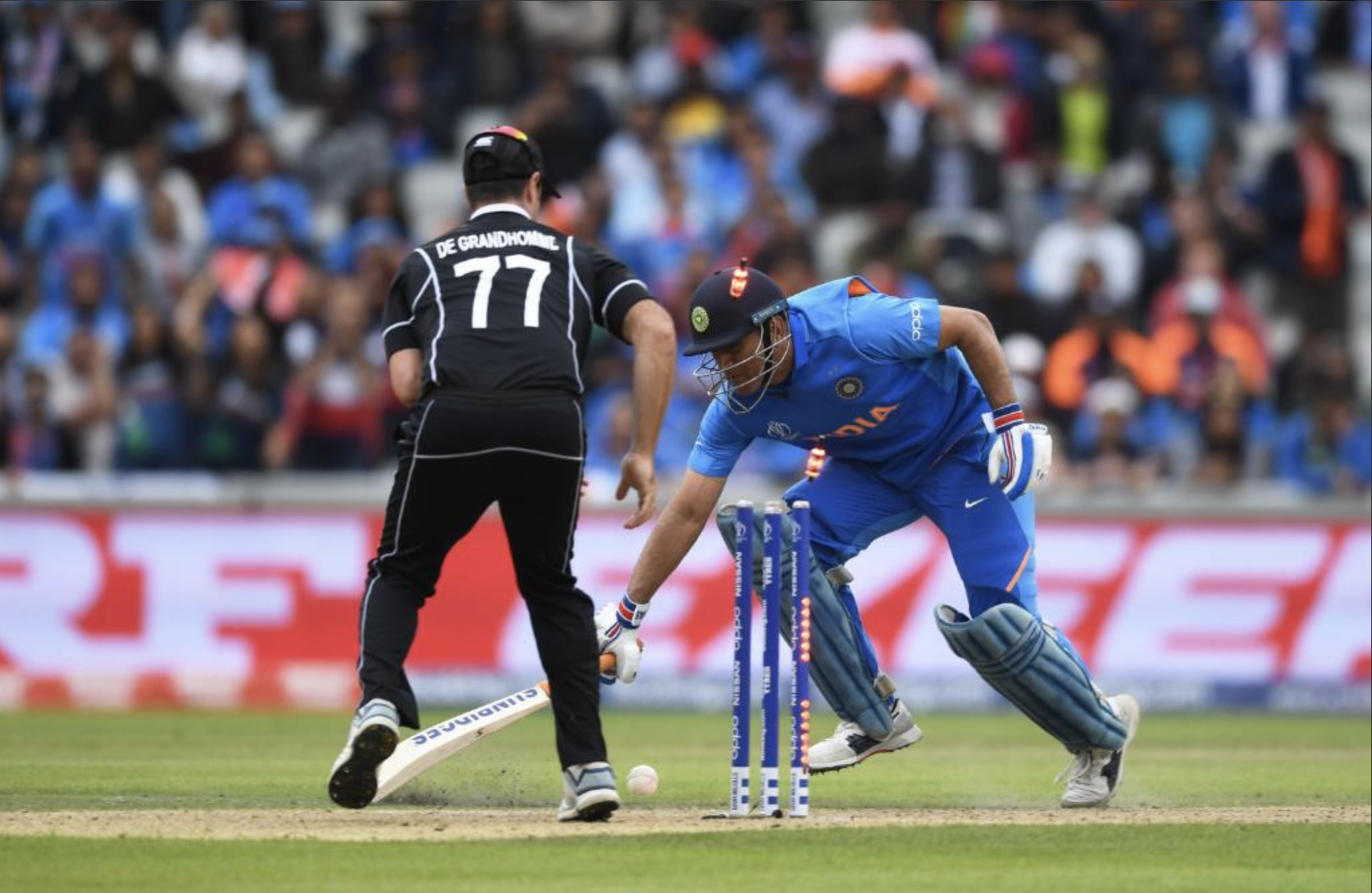
    New Zealand was a disciplined outfit. The batsmen, bowler and fielder played to the strength. The bowlers stuck to the line and the length. The batsmen may have been slow but scored a decent score in the circumstances. The fielding was exceptional including the run-out that broke Dhoni’s stellar run and Indian hearts.

    Indian batsmen were still in their flashy IPL mode. Rishabh Pant and Hardik Pandya could not control their natural instincts. Clearly Rahul was out of the place. We had our share of woes in fielding as well. Virat said that 45 minutes of bad cricket cost us the tournaments. That is what happens in life as well. One bad impulsive action or decision can cause greater regrets!

    Whether is studies or financial planning, discipline goes a long way. Avoid flamboyance. Just do the job silently and consistently. The devil is in the details. Persistent efforts win!

    5. Leadership

    New Zealand skipper deserves equal credit for the leadership he demonstrated. He was the captain cool. Not only did he read the pitch right, he played to the strengths. Kane Williamson outsmarted India tactically with the way he attacked upfront and the way he set the field. He was in action throughout out the match and encouraging the team. He changed the bowlers, backed the colleagues and calmed every one when Jadeja-Dhoni were on fire. His belief ensured that New Zealand was through the match.

    Many people talked about the luck and the rains. A champion team does not need luck. And luck favors the brave and the prepared teams. Had India showed more steel and flexibility, the outcome would have been different. Luck helped Dhoni and Jadeja. But it also helped Guptill – whose run out was the worst thing to happen to India. Or Virat’s dicey wicket. But there are no other excuses – we lost on our own account. We were almost there…but New Zealand got it better that day! We should have not lost to England – we could have got another opponent!

    But the most important thing is that India put a great emphatic show during the entire World Cup. All of us loved it and our team was the table toppers! We had a great semi-final as well where hopes were alive till the last over. It was Dhoni that gave us the belief that we could still have win probability of 70% at 5-3. And we got to see Jadeja’s striking response to Sanjay bits and pieces comment!

    Rohit Sharma’s magnificent batting and Bumrah’s magical bowling will remain in our hearts and minds for long time to come!

    Life is about wins and rising after each fall. Sports is the greatest teacher. This too shall pass!

    Let us back the BlackCaps for a win! Cricket needs a new champion!

  • Avoiding Sep 11 Attacks, Happy Marriage Equation & Better Thinking Ideas

    Avoiding Sep 11 Attacks, Happy Marriage Equation & Better Thinking Ideas

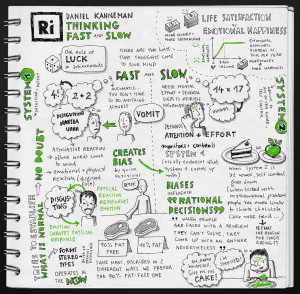
    Thinking_Fast_Slow_Summary

    First Things First – Daniel Kahneman’s “Thinking, Fast And Slow” Is A Must Must Read Book ! Yes – READ IT. It Is One Of The Best Investments You Will Make.

    Daniel Kahneman is the first non-economist to profession to win the Nobel Prize in Economics. But do not worry – the book is easy read and very though-provoking. The book aims to help us understand our systematic errors (biases) so that we an anticipate, identify and avoid them. An accurate diagnosis of our errors of judgement and choice may prevent or limit the damages of our errors.

    The central theme is that our minds have two systems for making decisions – System 1 and System 2.

    System 1 operates automatically and quickly, with little or no effort and no sense of voluntary control.
    System 2 allocates attention to the effortful mental activities that demand it, including complex computations. The operations of System 2 are often associated with the subjective experience of agency, choice, and concentration.

    The books speaks of the role and importance of System 1 in our lives and decisions – intuitions, illusions. It controls us more than we think it does. We become strangers to ourselves. Eventually, System 2 should drive us. And if System 1 is driving us, we should slow down and change course.

    The book touches upon many topics and each one is worth diving further into. I am resisting my temptation to write about all of them – as I want you to read the book.

    Let me touch upon selective interesting points:

    1. One of the important point is about Focus. Multi-tasking is not a great thing as self-control and deliberate thought apparently draw on the same limited budget of effort. Self-control requires attention and effort. Focus and maintaining a consistent thought process requires discipline. Hence tired and hungry judges tend to fall back on the easier default position of denying requests for parole rather thank think more deeper on merits of the case.

    2. High correlation exists between thinking and self-control. People with high self-control have higher measures of executive control in cognitive tasks, and especially the ability to reallocate their attention effectively. The children who had shown more self-control as four-year-olds had substantially higher scores on tests of intelligence. There is a significant difference in intellectual aptitude between people with different self-control.

    3. Another interesting finding is the idea of money primes individualism: a reluctance to be involved with others, to depend on others, or to accept demands from others.

    4. Cognitive Ease allows System 1 to be in control while Cognitive Strain determines whether System 1 should involve System 2. Hence marketing works on creative cognitive ease and lead us to intended behaviours. Using bold colors, simpler language helps. If the message is to be printed, use high-quality paper to maximize the contrast between characters and their background. If you use color, you are more likely to be believed if your text is printed in bright blue or red than in middling shades of green, yellow, or pale blue. As we all know, repetition induces cognitive ease and a comforting feeling of familiarity. It is the exposure effect. A good mood weakens System 2 and hence one needs to be extra careful. Similarly, one should not dismiss an idea because it is badly packaged in a hard language or bad font.

    5. The Wisdom of Crowds indeed makes sense. A collective judgement is often superior to individual judgements.

    6. Whenever taking decisions, ensure that the different biases are checked:
    Halo Effect
    Substitute Effect
    Anchoring
    Availability
    Optimism Bias

    A checklist is a great tool for making decisions.

    Example of Availability Bias: People feel politicians and celebrities often resort to Adultery? Does the aphrodisiac of power cause such behaviour? Statistically, politicians and celebrities have same amount of affairs as other people – it is only that their cases get highlighted more in the media and we tend to feel that they are more morally challenged.

    7. Bad News: Some experimenters have reported that an angry face “pops out” of a crowd of happy faces, but a single happy face does not stand out in an angry crowd. The brains of humans and other animals contain a mechanism that is designed to give priority to bad news. By shaving a few hundredths of a second from the time needed to detect a predator, this circuit improves the animal’s odds of living long enough to reproduce. The automatic operations of System 1 reflect this evolutionary history. No comparably rapid mechanism for recognizing good news has been detected. Of course, we and our animal cousins are quickly alerted to signs of opportunities to mate or to feed, and advertisers design billboards accordingly. Still, threats are privileged above opportunities, as they should be.

    8. The sunk-cost fallacy keeps people for too long in poor jobs, unhappy marriages, and unpromising research projects.

    9. people expect to have stronger emotional reactions (including regret) to an outcome that is produced by action than to the same outcome when it is produced by inaction

    10. The greatest test for professionals including fund managers is persistent achievement.

    Most of the buyers and sellers know that they have the same information; they exchange the stocks primarily because they have different opinions. The buyers think the price is too low and likely to rise, while the sellers think the price is high and likely to drop. The puzzle is why buyers and sellers alike think that the current price is wrong. What makes them believe they know more about what the price should be than the market does? For most of them, that belief is an illusion.

    The book contains many memorable quotes. For example:
    – Pupil of the eye is the window to the soul.
    – Emotional tail wags the rational dog

    The book is replete with rich examples and interesting anecdotes. Some examples were really amazing and though-provoking.

    1. The Equation for Success

    According to Kaheman, his favourite equation is:

    Success = Talent + Luck
    Great Success = A Little More Talent + A Lot Of Luck

    We tend to undermine the role of luck. Whether analyzing stock markets or other events, we tend to ignore the role of luck.

    2. The Formula for Marital Stability

    Frequency of Lovemaking minus frequency of quarrels

    Sounds obvious? Now this is endorsement from the Nobel-prize winning Guru!

    3. The September 11 Attacks

    If an event had actually occurred, people exaggerated the probability that they had assigned to it earlier. If the possible event had not come to pass, the participants erroneously recalled that they had always considered it unlikely.

    The worse the consequence, the greater the hindsight bias. In the case of a catastrophe, such as 9/11, we are especially ready to believe that the officials who failed to anticipate it were negligent or blind. On July 10, 2001, the Central Intelligence Agency obtained information that al-Qaeda might be planning a major attack against the United States. George Tenet, director of the CIA, brought the information not to President George W. Bush but to National Security Adviser Condoleezza Rice. When the facts later emerged, Ben Bradlee, the legendary executive editor of The Washington Post, declared, “It seems to me elementary that if you’ve got the story that’s going to dominate history you might as well go right to the president.” But on July 10, no one knew—or could have known—that this tidbit of intelligence would turn out to dominate history.

    Could better thinking have changed the course of history?

    4. Michael Lewis’s bestselling Moneyball is a story about the inefficiency of the traditional mode of prediction. Professional baseball scouts traditionally forecast the success of possible players in part by their build and look. The hero of Lewis’s book is Billy Beane, the manager of the Oakland A’s, who made the unpopular decision to overrule his scouts and to select players by the statistics of past performance. The players the A’s picked were inexpensive, because other teams had rejected them for not looking the part. The team soon achieved excellent results at low cost.

    5. The basic message of Built to Last and other similar books is that good managerial practices can be identified and that good practices will be rewarded by good results. Both messages are overstated. Because luck plays a large role, the quality of leadership and management practices cannot be inferred reliably from observations of success. And even if you had perfect foreknowledge that a CEO has brilliant vision and extraordinary competence, you still would be unable to predict how the company will perform with much better accuracy than the flip of a coin. On average, the gap in corporate profitability and stock returns between the outstanding firms and the less successful firms studied in Built to Last shrank to almost nothing in the period following the study. The average profitability of the companies identified in the famous In Search of Excellence dropped sharply as well within a short time. A study of Fortune’s “Most Admired Companies” finds that over a twenty-year period, the firms with the worst ratings went on to earn much higher stock returns than the most admired firms.

    Photo Credit:

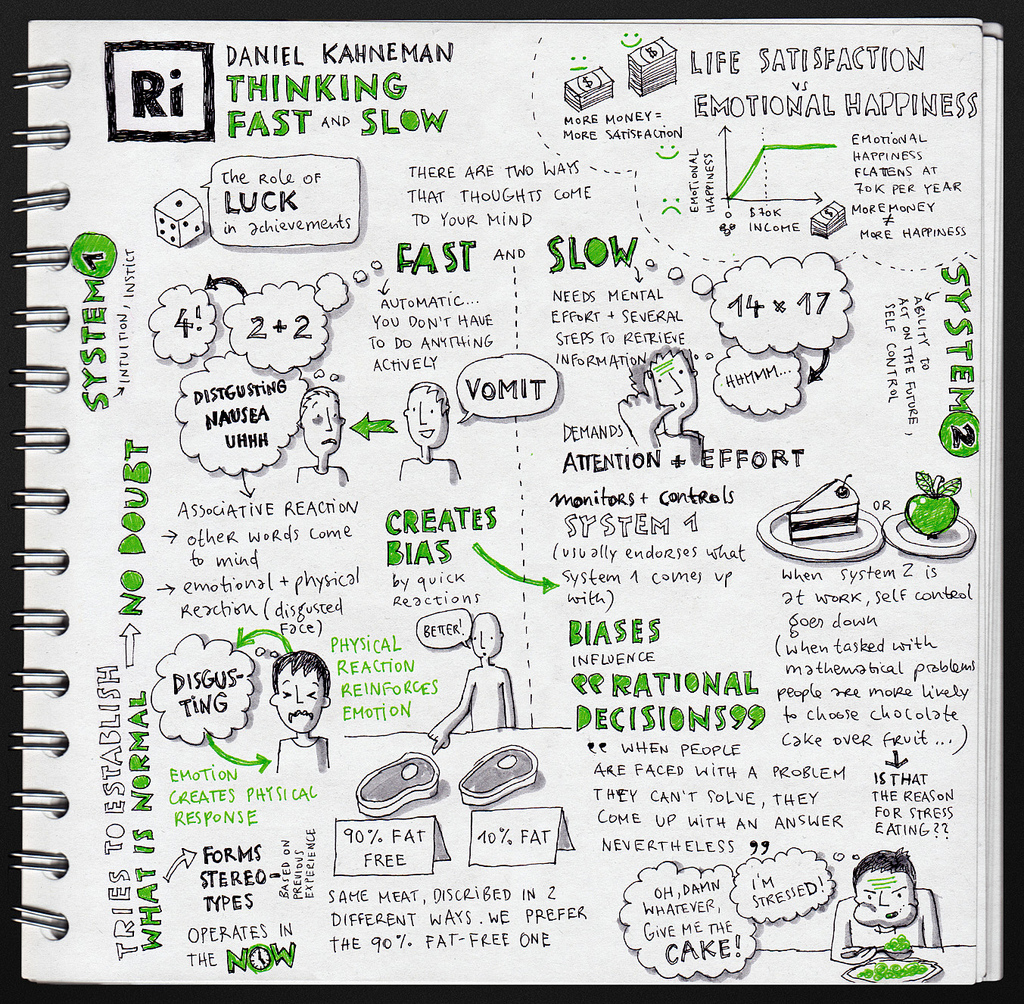
    Please Find A Very Interesting Snapshot Of The Book by: Eva-Lotta Lamm

    This sketchnote is featured in Eva-Lotta’s new book that gathers her sketchnotes from over 100 talks taken at design events and conferences in 2011.
     
    In addition, Eva-Lotta invited 10 of her favourite sketchnoters from all over the world to contribute to the book. They all sketched the same TED talk and created some stunning sketches that show off the wide variety of styles and different ways of summarising content.
     
    www.sketchnotesbook.com

  • The Difficult Employee Dilemma – The Kevin Pietersen Case Study!

    The Difficult Employee Dilemma – The Kevin Pietersen Case Study!

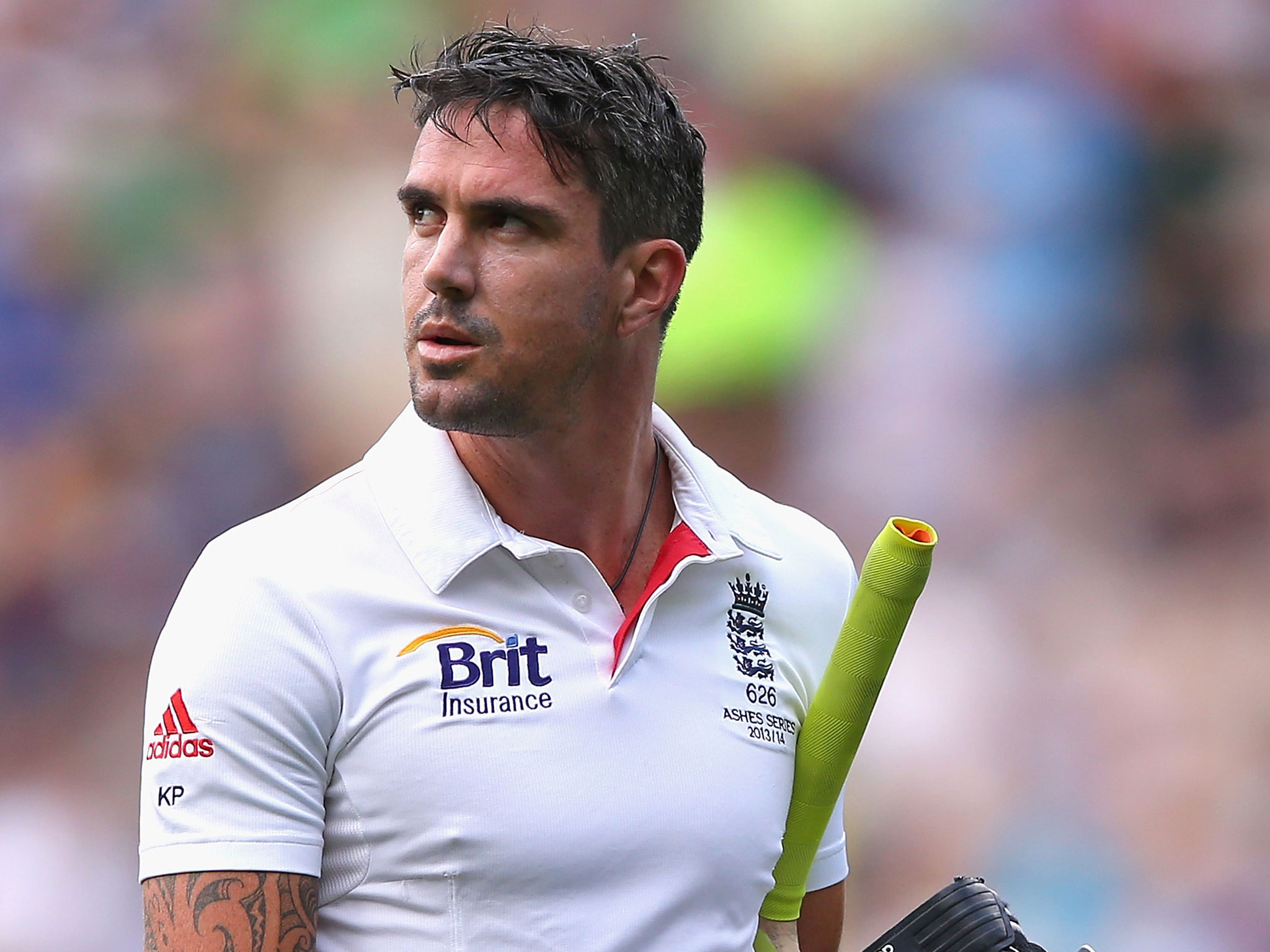
    Trust Kevin Pietersen to remain in limelight ! He has the power to move the needle – on the ground and off the ground ! He is a genius and a great talent – no two doubts on that. He can single-handedly change the course of matches and win series. His records, statistics and victories endorse him as the cricket’s most complete batsman. But he has been in middle of controversies as well – and pretty strong and public controversies!

    Recently Pietersen’s England cricketing career came to an end after he was denied a place in the English side. He was told that he is no longer part of the team’s plans. This was a very controversial and bold move by English Cricket Board (ECB). Because England Team has not been performing well and even exited the recent World Cup very early. Only a miracle can help English team to win the upcoming Ashes against mighty Australia. On the other hand, Pietersen has been performing extremely well. He even scored a exemplary 355 not out recently in first class cricket. He has a good track record against Australia. So it made perfect sense for Pietersen to be in the English squad. But he was not included in the squad due to his past vitriolic against his team mates. Apparently, there exists a trust deficit. So was this is the right move by ECB?

    Should ECB look at the past and deny Pietersen a chance? Especially when English team is already down and needs all the help it can get. Is the job of ECB and captain to pick the best players to win the match or ensure happiness of few team members? Is winning more important or team ethic more important?

    Some people feel that winning is the most important thing. Even if you do not like a person, you still work with that person for winning and achieving organizational objectives. Personal issues cannot be brought to professional arena. The contrarian school of thought says that sports is about teaching life values. So it is the right message to everyone that team is above everything and everyone. If team ethic is not respected, no victory is worth it.

    Thus the Kevin Pietersen Saga brings out the classical people management dilemma – individual brilliance vs team ethic.

    Quite often in corporate world, we come across individual champions and star performers that challenge the organizational culture and team spirit. The star performers feel that they can get away with anything as they are ahead of the pack. They can have huge egos and less respect for hierarchies, systems and shared values. The sales person who is achieving targets or achieving better targets than others thinks that he can get away with anything. He can break the policies, ignore shared culture, outgrow superiors and challenge other departments. The super talented programmer thinks that HR policies are for others, QA reports are work of fiction and corporate security and compliance policies are anti-open source and freedom movement. The situation becomes more tricky when the said person has less competition within the organization. The situation becomes really explosive when the said person starts pulling down others in the organization. How do you deal with this situation?

    If some minor policies are not followed or small rules broken, it can be overlooked. But core values and critical ethical issues cannot be ignored. The short terms costs will be there when action is taken against that player, but the long term results will be rewarding. Corporate cultures thrive on shared values and examples / anecdotes like these do wonders for defining and cementing corporate values.

    The true genius and true great understands the importance of respecting others, respecting organizational policies and contribution of other team members. True greatness comes from being a positive contributor rather than a terrible irritant. If you have a problem with policies, sit with HR and management – you will be listened better than others because of star performance. The real great will work with the laggards and help them. One may not agree with everything, but it is a corporate dharma to follow the organizational stand and present a unified face.

    Sachin Tendulkar, Rahul Dravid, Ricky Pointing, Brian Lara, Viv Richards – All Greats have worked within the defined frameworks and showcased maturity. Thus Kevin Pietersen failed this true genius test.

    Every team, club or organization is bigger than the individual and overall best interests take precedence. It is in the interest of a star performer to be follow the corporate dharma. It converts the star performer into a great professional.

  • Dream Like Ronnie !

    Dream Like Ronnie !

    The Trio of Ronnie Screwala, Zarine Mehta and Deven Khote got my attention early in life. I was in school and Doordarshan was a staple diet. United Television came across as a different company – production, content and overall packaging. The logo of UTV was stuck in mind.

    Since then UTV and Ronnie Screwvala and his team have continued to impress us. India’s first soap – Shanti was a big step at that time. It continued to grow in leaps and bound. In-flight entertainment business, post-production, IPO, broadcasting, VAS business etc. It ventured into the movie business via movie distribution and soon turned into production as well. I am sure each milestone had its share of challenges.

    Everyone sees the success and the limelight. Especially in the glamour business. Ronnie’s UTV was sold to Disney – a watershed moment for Indian entertainment industry. It was a great and a heartening story – a company that its Indian entertainment brethren and camps did not take seriously initially was bought by one of the biggest and iconic entertainment companies in the world.

    Ronnie has played an important role in India movie business. During the course of my doctoral thesis on the role of modern management in Indian Film Industry, I came across many exemplary practices of UTV. I have documented them and they are a part of my thesis.

    UTV gave special importance to movie marketing and production values and content.

    Ronnie has recently penned his journey in his book – Dream With Your Eyes Open. Trust him to do the same with his book. Indian non-fiction does not get great attention. But Ronnie is trying a lot of things here as well. Check his list to redefine this space:

    1. Great Marketing Campaign Around The Book – Unless You Are Lost In Hawaiian Vacation, Very People Will Miss The Book Launch
    2. Ranbir Kapoor Launches The Book – A Perfect Launch
    3. Testimonials From Captain Of Indian Industry & Disney
    4. Testimonial From Narendra Modi
    5. India’s First Television Ad For The Book
    6. An Active Social Media Campaign, Website

    The success of the book is important as it helps to promote the message of Entrepreneurship. He says the books is about “It can be done” and not “I did it” Great. The message of entrepreneurship need more ambassadors. Importance of failing. Importance of taking risks. Dreaming Big! May thousands of Ronnie bloom !

    Related Links:
    Book Website – Dreams With Your Eyes Open

  • The Blank Check Theory – Achieving Breakthrough Results

    The Blank Check Theory – Achieving Breakthrough Results

    Recently, I Revisited An Unusual Management Technique – The Blank Check Theory. The Theory Inspires Managers To Pursue Audacious Goals Without Worrying About Budgets.

    The Thought Is Simple. Managers And Leaders Are Taught To Work Within Limited Available Resources. Budgets Restrict Creativity And Imagination Of Managers – As Everyone Is Always Making Trade-Offs. What If Resources Were Unlimited? What If Managers Were Free To Dream Big And Act Without Worrying About Budgets?

    The Blank Check Theory Believes That When Teams Work With Blank Check, They Deliver Outstanding Results. The Are Accountable For Results But They Decide Their Budgets. They Are More Inspired And Act With More Ownership.

    The Concept Of The Blank Check Was Floated By Sanjay Khosla, Kraft’s President Of Developing Markets, And Mohanbir Sawhney, A Professor At The Kellogg School Of Management At Northwestern University, Writing In Strategy & Business Magazine. They Shared Multiple Examples Of How Blank Check Allowed Teams To Envision And Achieve Breakthrough Results.

    For Instance In 2007 Tang, The Old Powdered Breakfast Drink, Was Doing Poorly Around The World, So Executives At Kraft Gave People In Charge Of The Brand In Various Countries A ‘Blank Check,’ Essentially Urging Them To Dream Big And Not Worry About Resources. The Results Were Astounding. In The Five Years, Tang Doubled Sales Outside The U.S.

    Kraft Applied The Same Theory In Mexico And Got Amazing Results. Kraft Gave Its Cadbury Brand In India A “Blank Check,” And The Innovations There Included Doubling The Use Of Store Display Cases That Both Presented The Chocolate Attractively And Kept It From Melting; Greatly Increasing The Advertising Budget; And Marketing The Product With A New Focus On The Indian Tradition Of Having Sweets At Important Social Moments. The Result: Record Revenues.

    The Blank Check Teams Are Held Strictly Accountable For Quantifiable Results. They Have Freedom To Act But Within The Set Of Ground Rules To Ensure The Initiatives Stay On Strategy And Produce Results.

    There Are Five Rules To Make The Blank Check Theory Work:
    1. Pick The Best Bets – Carefully Figure Out What Part Of The Business To Target, Looking For An Area With Past Success But Definite Room For Real Growth.
    2. Select The Team – Pick The Team To Bet On, Looking For People Who Are Naturally Accountable For The Business Area But Who Also Show Great Potential.
    3. Define Goals And Plans – Define The Goals And Plans, Setting Clear, Measurable Targets And Quickly Getting A Basic Proposal From The Team, Not More Than Two Pages Long.
    4. Kickoff The Initiative – Write The Blank Check, So That The Team Really Knows It Is Authorized To Proceed And Can Do Whatever It Needs To Do.
    5. Monitor Results – Monitor The Results, Setting Milestones With Clear Metrics, And Of Course Expecting A Certain Amount Of Failure Along The Way.

    The Typical First Reaction To A Blank Cheque Challenge Is Skepticism. People In Corporate Settings Have Been Trained To Think In Terms Of Budgets And Belt Tightening.

    Khosla And Sawhney Feel They’ve Proven That The “Blank Check” Can Make Great Things Happen. They Conclude:

    Even Seemingly Sleepy Businesses Hold Tremendous Untapped Potential. If Business Leaders Can Liberate Their People From The Limitations Of Budgets And Resources, They Will Find That Their People Will Surprise Both Leaders And Themselves With What They Can Achieve. This Is The Power Of Blank Checks.

  • Guru Gyan : Bill Gates – Warren Buffet

    Guru Gyan : Bill Gates – Warren Buffet

    Last week, I watched the telecast of ‘Go Back To School’ program on NDTV Profit. It featured the legendary icons of our time – Warren Buffet and Bill Gates. The college graduates asked them questions over a period of one hour. Their answers brought that the rules for greatness and outstanding success in life are simple.

    Here is what I noted after listening to Warren Buffet and Bill Gates:

    1. Follow your passion.

    2. All of us make mistakes. Don’t worry. Don’t repeat the mistake.

    Bill Gates said that he did not anticipate rise of Google/Search. Warren Buffet sold a stock and it rose crazily after.

    3. Get The Best of Out People. Invest in people and trust them.

    4. Learn To Say No – Best Time Management Advice.

    Bill Gates dedicates two weeks for “thinking”.

    5. Invest in Public Speaking Course. Read Faster.

    6. Share with others. Equity is an very important issue in the world.

    Warren Buffet and Bill Gates mentioned that they had got lucky tickets in life. Their thoughts were inspiring and informative. Though these thoughts look very simple, only few understand the wisdom behind these simple principles.

    Listen to The Newspaper Test here!

    Related Link:

    Buffet and Gates on Integrity, Power and Purpose

  • Teamwork & Ego!

    Teamwork & Ego!

    One more good anecdote on teamwork from Idea-Bank

    The sin (and danger) of excessive pride (or an excessive ego) is admirably demonstrated in this simple fable:

    A frog asked two geese to take him south with them. At first they resisted; they didn’t see how it could be done. Finally, the frog suggested that the two geese hold a stick in their beaks and that he would hold on to it with his mouth.

    So off the unlikely threesome went, flying southward over the countryside. It was really quite a sight. People looked up and expressed great admiration at this demonstration of creative teamwork.

    Someone said, “It’s wonderful! Who was so clever to discover such a fine way to travel?”

    Whereupon the frog opened his mouth and said, “It was I,” as it plummeted to the earth.

  • Teamwork!

    Teamwork!

    Teamwork is one of the key differentiator for success in today’s corporate environment. People work in teams and need interpendence to deliver results. The group dyanmics, ego, comparison etc come into play.

    The best example of Teamwork and Results is Australian Cricket Team. They have made a habit of winning. And they win by outclassing the competition by miles. They aside their huge egos and differences while on the field. The only purpose, the only mission, the only attitude is Winning. The team work in the Australian Cricket is indeed worth emulating.

    I came across a few quotations on Teamwork from a commercial site called Idea-Bank.

    Michael Jordan on Teamwork

    There are plenty of teams in every sport that have great players and never win titles. Most of the time, those players aren’t willing to sacrifice for the greater good of the team. The funny thing is, in the end, their unwillingness to sacrifice only makes individual goals more difficult to achieve. One thing I believe to the fullest is that if you think and achieve as a team, the individual accolades will take care of themselves. Talent wins games, but teamwork and intelligence win championships.

    Michael Jordan (1963- )
    American professional basketball player with the Chicago Bulls in “I Can’t Accept Not Trying”
    Harper San Francisco, 1994

    Geese & Teamwork
    Have you ever watched a flock of geese flying in their traditional “V” formation, heading for Canada?

    Two engineers learned that each bird, by flapping its wings, creates an uplift for the bird that follows. Together, the whole flock gains something like 70 percent greater flying range than if they were journeying alone.