Tag: India

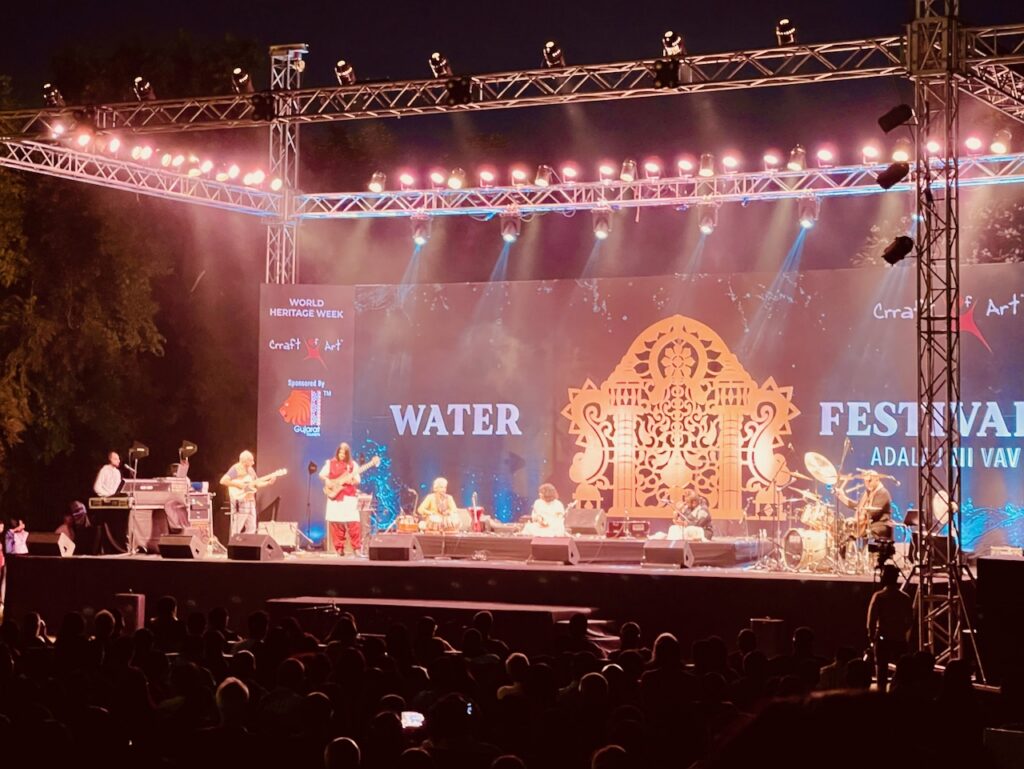
  • Wow @ Vav – The Musical Water Festival At Adalaj Ni Vav

    Wow @ Vav – The Musical Water Festival At Adalaj Ni Vav

    Wow @ Vav – Musical Extravaganza @ Magical Monument

    The Divine Power Of Music Come Alive At The Spectacular & Historic Adalaj Ni Vav!

    Legends Ustad Fazal Qureshi, Ranjit Barot, V Selva Ganesh, Nathulal Solanki, Sanjay Divech, U Rajesh, Sheldon D’Silva and Prithvi Gandharva In Action At The Water Festival ! Actor & Music Lover Pratik Gandhi Does A Fabulous Job As A Host!

    Maestros Marvel At The Magnificent Monument – The UNESCO World Heritage Site Of Adalaj Ni Vav! Truly Wow!

  • Depression – Rising India’s Big Challenge

    Depression – Rising India’s Big Challenge

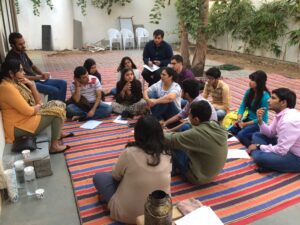
    Pre-Christmas Eve was a special evening!  A discussion on ‘Perspectives on Mental Health’ was organized at Project Otenga, Ahmedabad. This event was organized under the aegis of ‘Against Depression’, a clinical depression awareness project initiated by  Udit Thakre, a psychology student. Dr Nimrat Singh, a leading clinical psychologist, was our shepherd as she shared her rich experiences and knowledge of the subject. It was heartening to see a lot of young people – as they are the future shapers.

    As the conversation proceeded, the group increasingly veered towards talking about depression. India is the depression and suicide capital of the world. According to NIMHANS, one in twenty Indians suffers from depression.  Depression issue in India is aggravated by the social and cultural factors. Most Indian families are reluctant to acknowledge the occurrence of mental illness in and around them. They are embarrassed and dismissive of the issue. This causes avoidance in taking the right steps to address mental health issues. On an average, it takes 10 years to diagnose cases of depression in India – which is much higher than the global average.

    The session addressed many myths of about depression – such as:

    – Once you get depression, you are gone for life. You cannot ever live a normal life.

    – Women are more prone to depression than men.

    – Weak people develop depression

    – Introverts are more prone to depression than extrovert people.

    The fact is that depression can strike anyone – irrespective of age, health, life-stage. Depression can be caused by a lot of things. It can be even triggered by weather, food or erratic lifestyle. Anger, when not channelized correctly,  translates into depression. Often, we are dominated and driven by media designed view of life – creating lot of self-worth issues.

    Our eyes will see what our mind knows. Prevention and management of depression depends heavily of self-awareness, awareness about an individual’s rights and awareness about a person’s environment and how it is affecting him/her. The intensity of depression is directly related to dialogue. If you have dialogue with family and friends, maintain good relationships, exercise regularly and have a regulated lifestyle, you can avoid depressions. Maintaining a diary, regular family life and open dialogue help in channelizing feelings and emotions. In the words of Dr. Nimrat Singh “ It is better to be a pressure cooker which release steam regularly rather than being a volcano.”

    The good news is that mental health issues, especially depression, can be cured. And people can lead a completely normal lives after treatment. The key is to create awareness and being there for people suffering from mental health issues.
    Please find the links to the following documents – shared by ‘Against Depression’:

    1. A continuously updated list of mental health professionals (psychologists and psychiatrists) in Ahmedabad

    2. A manual on depression published by the World Health Organization. 

    If you are interested in helping or being a part of ‘Against Depression’, please contact Udit Thakre at udit.thakre@gmail.com.

    Let us work together on solving one of the biggest challenges of a rising India!


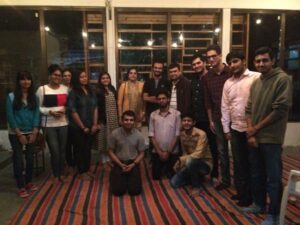
     Participants with Dr Nimrat Singh & Udit Thakre 


    Cover Photo Credit: Jad Limcaco on Unsplash

  • India’s Silent Revolution…

    India’s Silent Revolution…

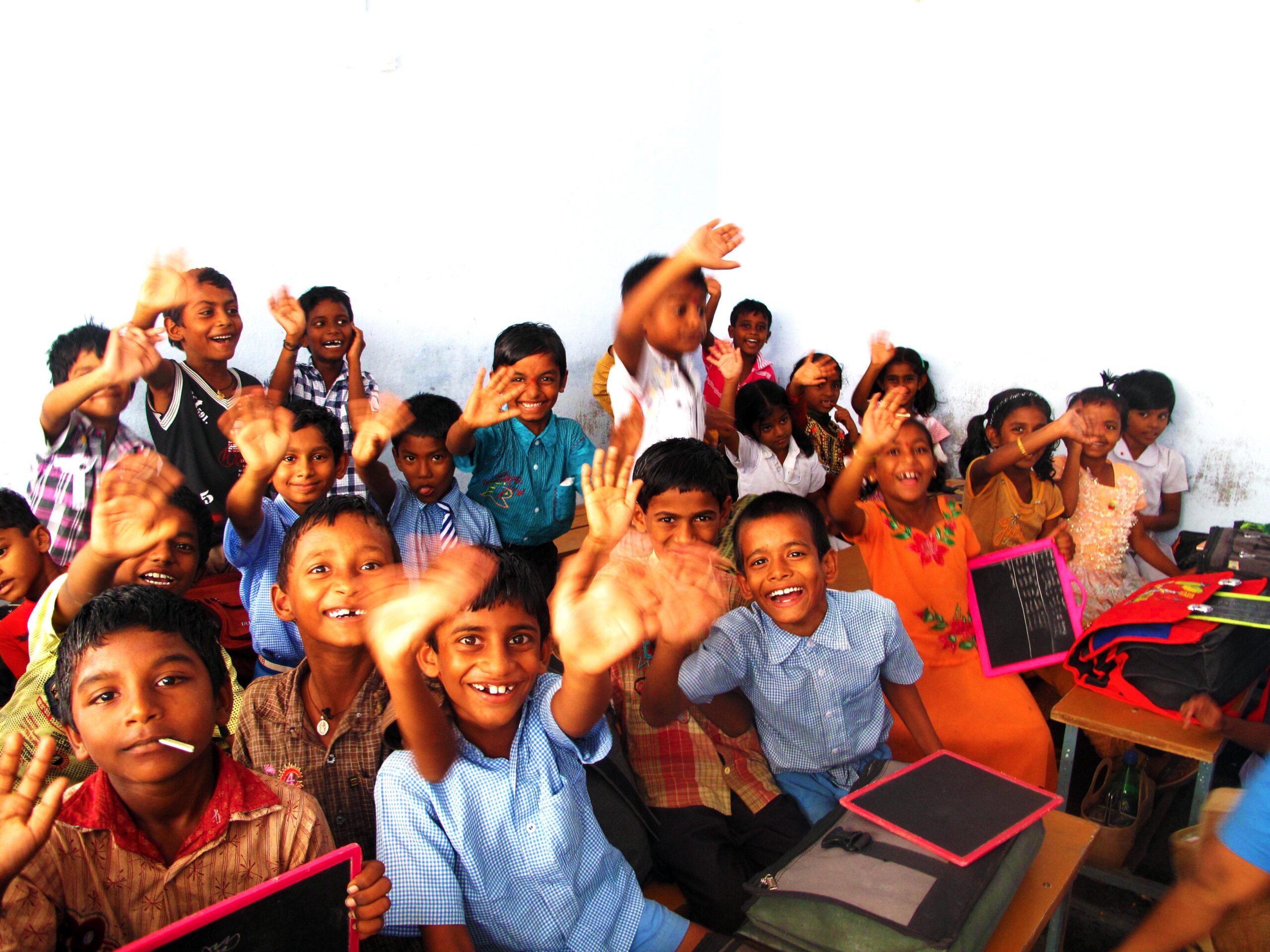
    A silent revolution is happening inside India. A revolution that is led by India’s leading minds. And they are putting their biggest investments behind the revolution – ideas, time and money. The revolution is working for providing world-class education to India’s children in rural areas. People across the board are working towards providing quality education for India’s poor and underprivileged children.

    Anupama Nayar and Vineet Nayar created Sampark Foundation to provide innovation led large-scale changes in primary school education. The ex-CEO of HCL Technologies and his wife have impacted the lives of 3 million children in 50,000 schools in Indian states of Uttarakhand, Jammu & Kashmir and Chattisgarh so far. They have committed to invest USD 100 million (INR 650 crores) and improve quality of education for 10 million children by 2020.

    After researching the key issues in primary education in India and studying Global Best Practices, they have initiated audio-visual driven learning methods. Sampark Didi helps to improve the English and Maths basic skills for students and teachers.

    Children love smartphones and tablets. Digital learning technologies can be an interesting catalyst for improving education. One such example is EkStep

    Nandan Nilekani – Time’s Global Influential Thinker, Architect of India’s National Identity Project Aadhar and ex-CEO of InfoSys has founded EkStep Foundation. It is a non-for-profit foundation that aims to extend learning opportunities to millions of Indian children through a collaborative, universal platform that facilitates creation and consumption of educational content. Nandan, Rohini Nilekani and Shankar Maruwada are co-founder and have the leadership team that was instrumental in developing the Aadhar Project.

    The Nilekanis have started with an initial commitment of USD 10 million and gamified Apps. EkStep Genie is a meta-app for creation and dissemination of gamified content.

    Azim Premji Foundation is working with 350,000 schools across 8 different states of India. Apart from research and development of content, it is working with Governments to improve the approach and outcomes of education. It is also establishing its own schools.

    The above initiatives are about the primary and basic education. India’s stock market expert Rakesh Jhunjhunwala and other foundations are working towards building curiosity and scientific appreciation amongst India’s generation next. Agastya Foundation runs one of the largest hands-on science education programs for children and teachers in the world. Agastya’s mission is “to spark curiosity, nurture creativity and instill confidence” in economically disadvantaged children and government schoolteachers by bringing innovative hands-on science education and peer-to-peer learning to government schools and villages across India.

    It has 175+ Mobile Science Vans which take science education to the village doorstep and 74+ Science Centers for disadvantaged children. It also has a 172-acre Creativity Lab campus in Andhra Pradesh and 313 Night Village Schools.

    Apart from these, there are several other initiatives – Mittals’ Bharti Foundation, Education Alliance, Central Square (founded by ex-ChrysCapital’s Ashish Dhawan), Pratham etc.

    Truly, the scale and execution of the above ideas is impressive. Even if a tiny percentage of the above efforts is successful, it will create a great impact.

    Fruits of education will take a few years to bear fruit, but they yield results at the right time when India’s economic leadership will be significant. And these children bring a new perspective to India’s future and transform India.

  • Google ReUnion Ad : Emotional, Moving, Humane !

    The Google Reunion Ad Has Gone Viral ! It Has Crossed More Than 4 Million Hits Within 4-5 Days Of Release. It Is Love And Hailed On Both Sides Of The Border In Real World. The Online World Including Blogs, Twitters, FaceBook Is Spreading The Message !

    The Google Reunion Ad Is Highly Commendable Work. The Ad Is Emotional, Moving, Humane ! It Is A Warm Story Told Very Beautifully. Very Tear-Inducing. Very Smart As Well – It Goes Beyond The Usual Indo-Pak Stories. It Re-Ignites The Need To Move Forward And Have A Healing Touch !

    People On Both Sides Of The Border Want To Have A Positive Relationship. People On Both Sides To Look At Sunny Side Of The Things. People On Both Sides Want To Celebrate Similarities Rather Than Differences. This Ad Should Be Shown To All Politicians, Bureaucrats On Both-Sides !

    The Ad Is A Clever Piece Of Localization By Google ! It Not Only Highlights The Power Of Google But Also Connects Google To Two Countries. The 3.32 Minutes Will Be The Best Investment Made By Them – It Increase The Local Connect Of Google !

    The Ad Tells The Story Of Two Boys Who Were Separated 66 Years Ago Following The South Asian Subcontinent’s Independence From British Colonial Rule And Its Subsequent Partition.The Advertisement Explains How The Two Friends Are Brought Together Again By Their Grandchildren Using Google Searches. After The India-Based Man Tells His Granddaughter About How He And His Friend Used To Steal A Sweet Called “Jhajariya” From A Shop Close To “An Old Gate” In Lahore, The Girl Uses The Clues To Search On Google And Eventually Tracks Down His Long-Lost Friend. She Contacts The Pakistan-Based Friend’s Grandson Who Also Trawls Google For Advice On How To Obtain An Indian Visa And The Advertisement Ends With An Emotional Surprise Birthday Reunion In India.

    Google – Congrats For The Great AD
    Ogilvy – Great Work Done !

  • Blackberry PlayBook Launched In India

    Blackberry PlayBook Launched In India

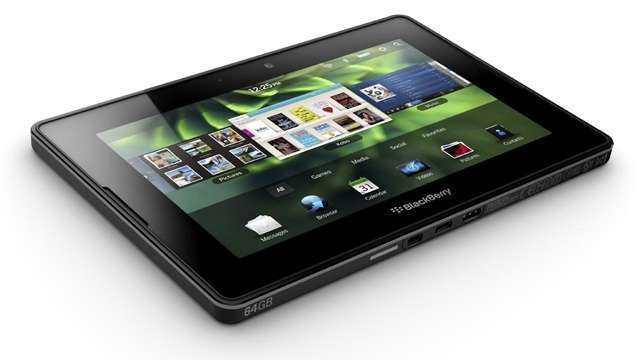
    The much-awaited Blackberry PlayBook is here !

    Canada-based Research In Motion (RIM) on Wednesday announced the launch of BlackBerry PlayBook tablet in India, priced at Rs.27,990 (for 16 GB), Rs.32,990 (32GB) and Rs.37,990 (64 GB). It comes in an ultra-portable design and features industry-leading performance with real-time multitasking and symmetrical multiprocessing.

    The BlackBerry PlayBook features Wi-Fi support and delivers high-fidelity web browsing including support for Adobe Flash, as well as spectacular high-definition (HD) multimedia, advanced security features and out-of-the-box enterprise support.

    “PlayBook offers the same level of encryption as any BlackBerry device, so security is never compromised,” Advait Vaidya, RIM’s head of product management in India said.

    “The BlackBerry PlayBook is an incredibly powerful and innovative product in the growing tablet marketplace. It is perfect for both large organisations and individuals, and it gives users an unmatched mobile experience,” said RIM Managing Director (India) Frenny Bawa.

    The BlackBerry PlayBook is a multitasking powerhouse, measuring less than half an inch thick and weighing less than a pound. It includes a vivid 7 inch high resolution display, 1 GHz dual-core processor and the new BlackBerry Tablet operating system, which delivers a highly-responsive, fluid touch screen experience. It also comes with premium multimedia features including dual high-definition cameras for video capture and conferencing.

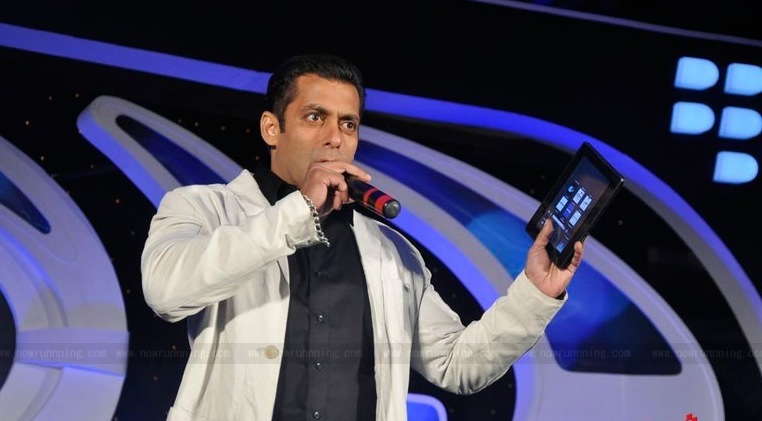
    Bollywood superstar Salman Khan along with Research In Motion’s Managing Director, Frenny Bawa officially launched the tablet.

    Comparative Analysis: PlayBook Vs iPad Vs Galaxy Tab

    All three devices – PlayBook, Apple’s iPad and Samsung’s Galaxy Tab – work on different and highly sophisticated operating systems.

    PlayBook’s design is the most compact at just 7 inches. This feature makes it the most portable tablet amongst its competitors.

    The PlayBook’s camera is of a superior resolution than iPad2, but Samsung Galaxy Tab beats both of them in this department.

    The biggest advantage that the PlayBook has over the iPad is that of a USB port. External devices can’t be plugged in the iPad, but the PlayBook and Galaxy have overcome this disadvantage.

    The BlackBerry tablet also supports 4G services, which are not supported by the iPad. That makes this device a good and forward-looking buy.

    Like the Samsung Galaxy Tab, the Blackberry PlayBook supports Adobe Flash and its applications.

    Salman @ Launch

  • The FMCGization of Indian Mobile Handset Market

    The Indian Mobile Handset Market is coming of age. There are more than 30 Indian Mobile Handset players. The Industry is going strong with impressive numbers and is now resembling the marketing favorite FMCG Industry.

    Let us look at the few common features with FMCG Market:

    1. Strong Global Players With Indian Challengers

    Indian FMCG Market is a vibrant place with global players like Unilever and P&G. Global players have been successfully challenged by Indian companies like Nirma, Cavin Care, Marico, Ghadi etc.

    Similarly, Global Companies like Nokia, Samsung, LG have been strong in India. In fact, Nokia enjoyed Maruti-like status in India. However, now it is challenged by Indian players like Karbonn, Maxx, Fly, Videocon, Micromax, Intex etc.

    India is a very important market for Unilever as well as Nokia, P&G as well as Samsung.

    2. Price Wars

    The FMCG market has seen price wars and companies like Unilever launched Wheel to counter-attack Nirma. Similarly, Nokia, LG and Samsung have launched sub-2000 Rs phones to counter the various Indian brands.

    3. Product Enhancements

    Indian FMCG Players have used strong product features to differentiate themselves. Whether it is special packaging, different price points, product ingredients – FMCG players have been innovating and improving products.

    Similarly, Indian players have innovations like Dual SIM, long battery hours to differentiate themselves apart from price advantage.

    4. Distribution

    In FMCG, Distribution is God ! Companies like HLL, Colgate, Cavin-Care have built a great distribution machinery. It is their biggest advantage. Similarly, Nokia and others have created a great distribution network and a strong sales team, which has resulted in nearly 2 million handsets being sold every month in India!

    5. New & Improved !

    FMCG Products excel in re-launches with minimal changes – The New & Improved. FMCG products play with different colors, size and ingredients.

    Indian Mobile players are also playing with bold Indian colors, new sizes and aesthetic appeal.

    6. Celebrity Advertisement

    Indian FMCG Players have developed and promoted the concept of celebrity advertisements. In fact, Lux prides itself in promoting Indian beauties and every top celebrity is promoting multiple FMCG Products.

    Videocon, Maxx India, Lemon etc have started using Indian Celebrities for differentiating themselves in the Indian advertisement scenario.

    7. Counterfeit

    The Global Players face the problem of product plagiarism in India. Whether is Vicks, Colgate or Parachute, there are several Indian versions.

    iPhone and Blackberry handset designs are the most copied designs in India. There are many foreigns handsets which are openly sold with duplicate designs.

    8. Product Flanking Strategy

    Unilever, P&G started it and Nokia and Indian players are mastering it !
  • Nandan Nilekani on TED : Ideas For India’s Future

    Nandan Nilekani was recently featured on TED. Nandan, visionary CEO of outsourcing pioneer Infosys, explains four brands of ideas that will determine whether India can continue its recent breakneck progress.

    Insightful Stuff…

    Check The Direct Link:

    (Thanks to Manish Mistry / Kartik Mistry for reporting the error in TED feed!)