Laila Majnu Review: The Eternal Love’s Journey From Kashmir To Spirituality
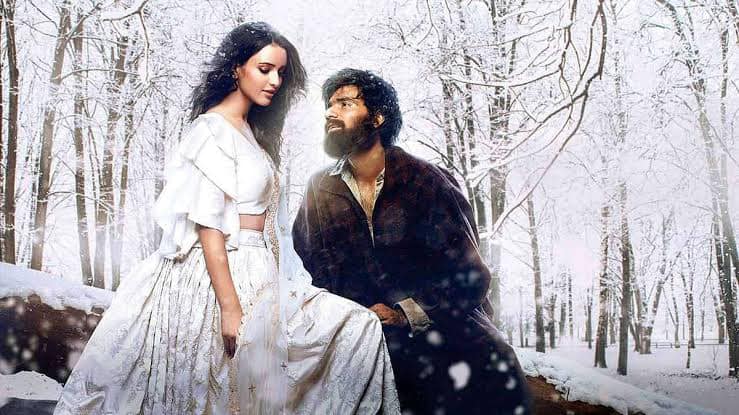
The popular and classical tragic love story of Persian and Arabic times gets a Kashmiri setup in Imtiaz Ali’s writing. The Sajid Ali directed movie impresses with its authentic and rawness – Yashraj polish is missing but the movie touches your heart and soul.
Laila – the girl is a prick tease who flirts with a battery of Srinagar boys
Majnu (Qais) – the guy has bad reputation looks but stalks in a disarming manner
As Qais tells Laila “humaari kahaani likhi gayi hai”, they fall in love while their parents are sworn enemies. The virgin love has a roller coaster ride with Laila getting married to a local politician and Majnu escaping to London. He returns and seems to be in an eternal waiting game for Laila. Both lose their lives with Majnu becoming a crazy mad lover. He discovers spirituality emphasising the path to God is nothing but love.
Avinash Tiwary is intense and gets better as the movie progresses. He makes us believe in the madness of love with his powerful portrayal of Majnu. Tripti Dimri shows her talent in this pre-Animal avatar. Kashmir is a character by itself – what would Vishal Bharadwaj or Gulzar have done?.
The songs are beautiful – O Meri Laila, Hafiz Hafiz and Aahista shine. The direction and editing could have been better as movie fails in certain portions.
The movie was a big flop but the audience love brings it back after years of conversations. Within 3-4 days of release, it has made more money than its initial run six years ago! Love stories are eternal!
Watch Laila Majnu for Avinash Tiwary’s Majnu act, Kashmir backdrop, nice music and a timeless love story!
Phir Aayi Hasseen Dillruba: Tapsee Hasseen, Movie Not A Dillruba
“Jo pagalpan ki hadd se naa guzre woh pyaar hi kya kyunki hosh mein toh rishte nibhaye jaate hain”
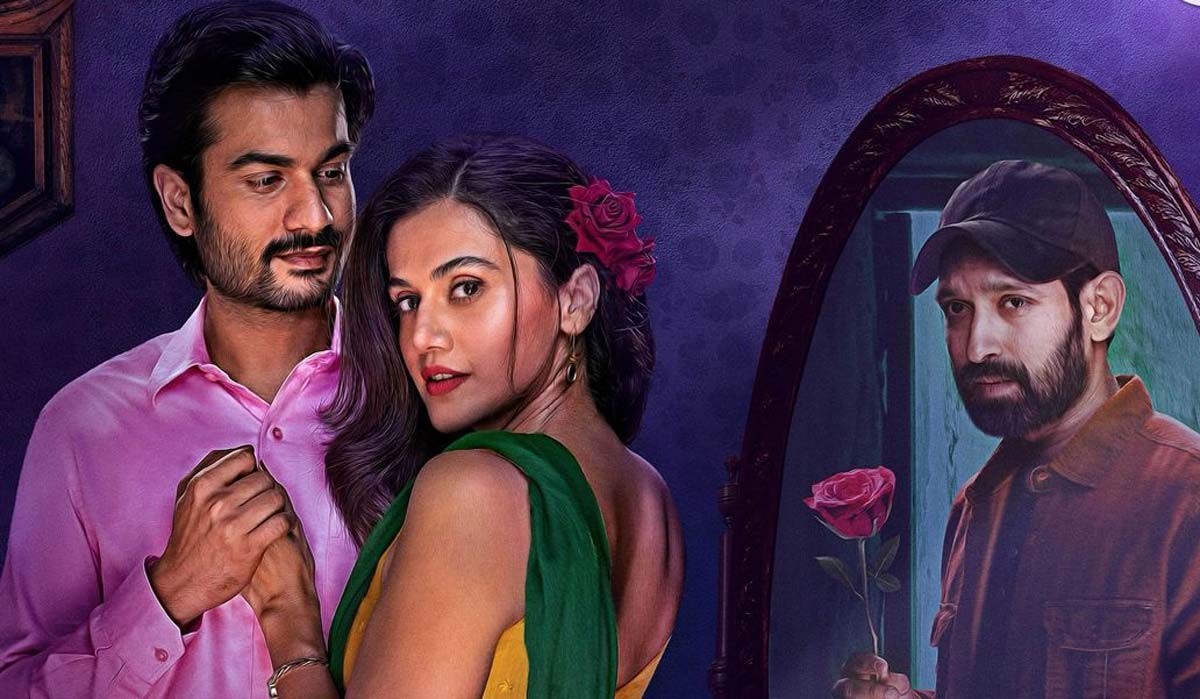
After successfully outwitting the cops, Rani (Tapsee) and Rishu (Vikrant) emerge in Agra, from where they are planning to escape to Thailand and start a new life. The arrival of a cop (Jimmy Shergill) with personal agenda nudges Rani to seek help of a smitten admirer Abhimanyu (Sunny Kaushal). The game of snakes and ladders comes alive!
Tapsee sums up the proceedings as LSD – Another iconic movie!
The movie fails to build on the magic of the original Haseen Dillruba – which was an engaging, intriguing small-town thriller. The sequel is a laboured effort with a weak screenplay, predictable storyline and too many twists! The reopening of the case or marriage are clearly too convenient while the use of literary allusions seems forced. The audience is intelligent and is unforgiving of lazy loopholes!
Loved the cinematography for beautifully capturing Taj Mahal and revealing the balance of fate in a fair swing!
Hasseen Dillruba Tapsee Pannu continues to shine and is the anchor of the movie – It’s her show! Vikrant Massey is impressive but does seem like a baggage with too little to do. Even the ever-reliable Jimmy Shergill’s as cop Montu and sincere Sunny Kaushal are average.
Phir Aayi Hasseen Dillruba: Tapsee ki wapsee fails to make an impact!
Vijay Sethupathi’s Delivers A Knockout Performance In His 50th Appearance
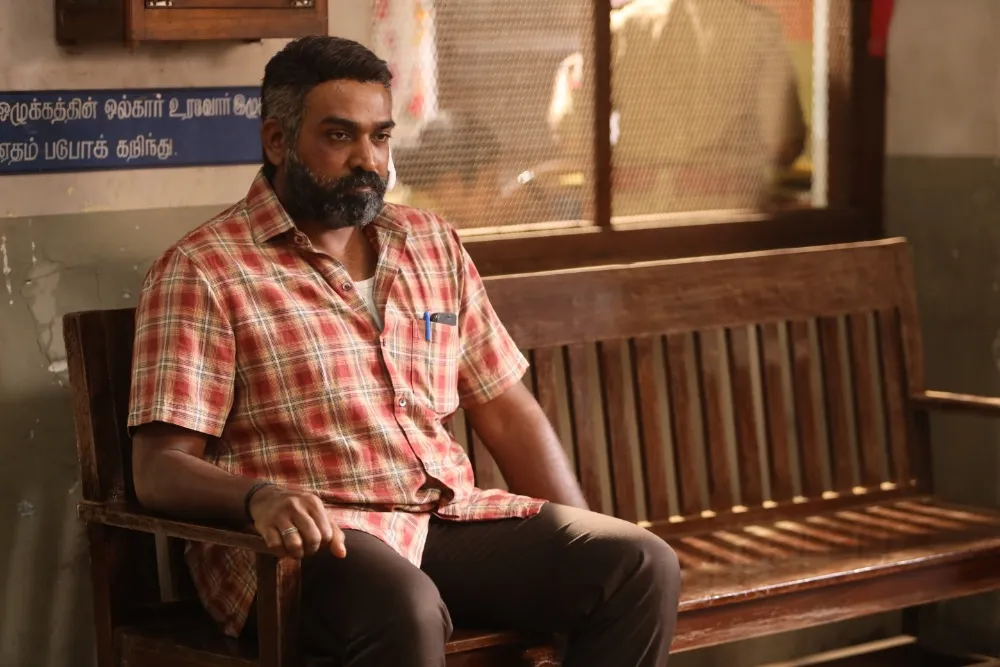
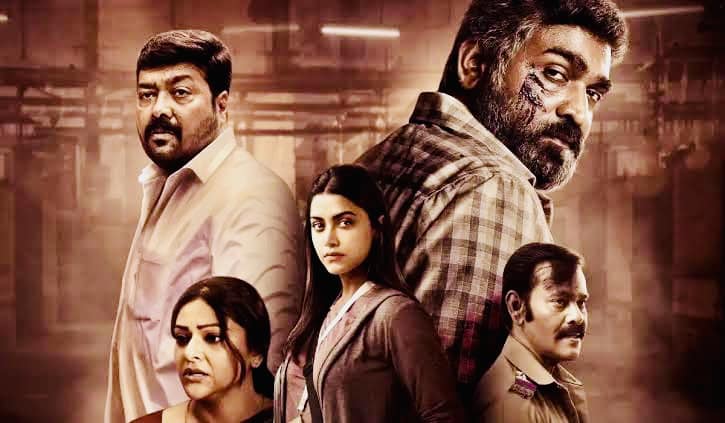
A bruised middle-aged father visits a police station and wants action against three criminals who stole his “Lakshmi” – a dustbin which has a special value in his life. As the movie progress, parallel tracks and juxtaposed scenes come together to reveal a shocking and heartbreaking climax.
Vijay Sethupathi’s masterclass acting is the highlight of the movie. He is truly the Maharaja of acting and it shows! Anurag Kashyap fails to leave a mark.
I loved the smart and intelligent use of metaphors – especially snake. While the climax is what has set everyone talking it was not unpredictable. Lots of scenes are rushed and engineered.
The director uses “shock and awe” technique. The truck crash, the snake, the non-linear narrative, multiple characters – all are designed to amplify the mystery and engage the audience.
Maharaja is essentially a father daughter story showcasing the law of karma at work. Packaged emotionally and symbolically designed to leave a strong impact! Worth a watch!
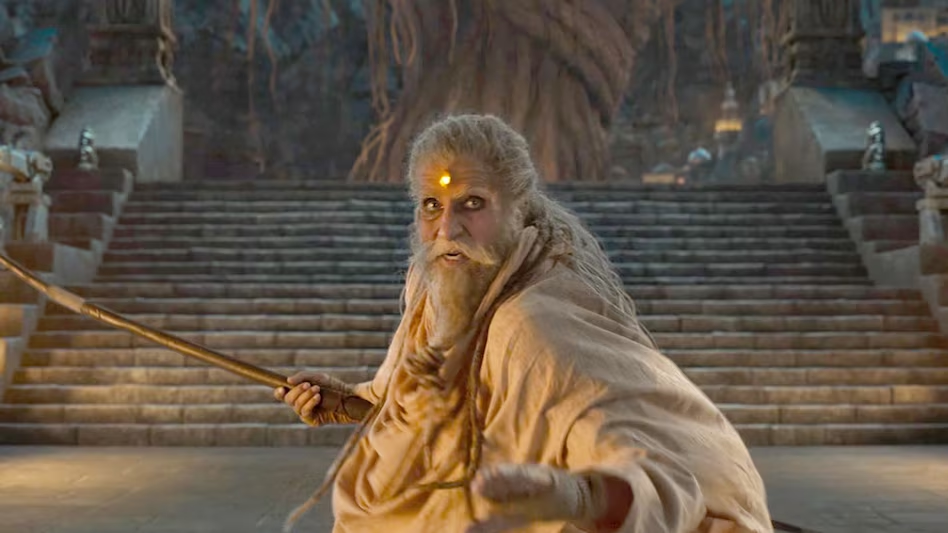
Kalki 2898 AD: Actor Amitabh Aces In Hollywood Challenging Visual Extravaganza
An Epic Story Meets Futuristic SciFi To Create Dystopian World
A Mesmerizing Grand Spectacle Meets Hollywood Vision & Scale
A Pack Of Legendary Actors Showcasing Their Best Craft
Kalki Is An Indian Triumph – Creating A Deeply Cultural Mythological Art With World-Beating Best In Class Production Values!
A Feast For Eyes That Could Have Been A Feast For Soul – But That’s A Debate Worth Having Over Ginger Enhanced Strong Tea!
The Modern Avatar Of Lord Vishnu Is To Be Born In The Post Apocalyptic World In Year 2898 AD – 6000 Years After Kurukshetra War. Th Evil Forces Are At Is Peak Through Totalitarian Supreme Yaskin & His Team’s Devil Designs & Actions. Kashi Is The Last Surviving City & Yaskin Is Driving A Secret Project K. Rebels Attempt To Save The World From Their Multi-Race Multi-Cultural Multi-Religious Place Shambala.
Amitabh Bachchan Is The Powerhouse Who Carries The Movie With An Acting Masterclass – Living The Character In Totally Engaging Manner! Prabhas Continues To Underwhelm & Is Victim Of Poor Scripting. Kamal Hassan Is Introduced Strongly & Impactfully But He Has Limited Presence.
Much Like History, Women In Kalki Have Very Marginal Role. Deepika Is A Guinea Pig Whose Sole Purpose To Give Birth. Disha Patani Does What She Does Best In Her Instagram Post – Exhibiting Her Curvy Toned Sculpture. Mrunal Thakur & Shobhana Have Small Roles While Dulquer Salman, Vijay Deverakonda Ram Gopal Varma & S S Rajamouli Star With Their Cameo Presence!
Long After The Credits Roll, The Lasting Feelings Of Mind-blowing VFX, Mahabharata Meets Hollywood Scale & Grandeur Will Remain. The Screenplay & Editing Are Very Weak With So Musical Notes That Strike A Chord. Hats To Off Production Team, Cinematographer & Of Course Director Nag Ashwin.
When A Midnight Show On Day 30 Is Housefull – The Movie Is Universally Accepted. By The Time You Read This, It Would Have Overtaken Jawan To Become The Biggest Movie!
Kalki 2898 AD – A Cinematic Experience To Watch On Big Screens Only!
Kakuda Review: Fresh Fun Folklore Gives Frail Fear
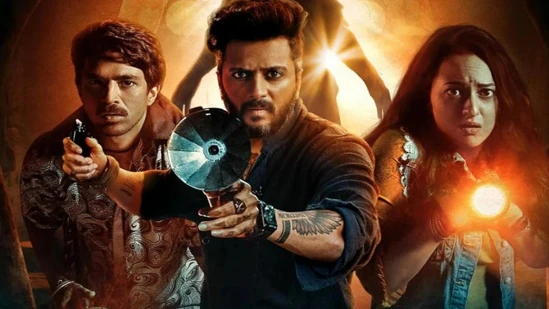
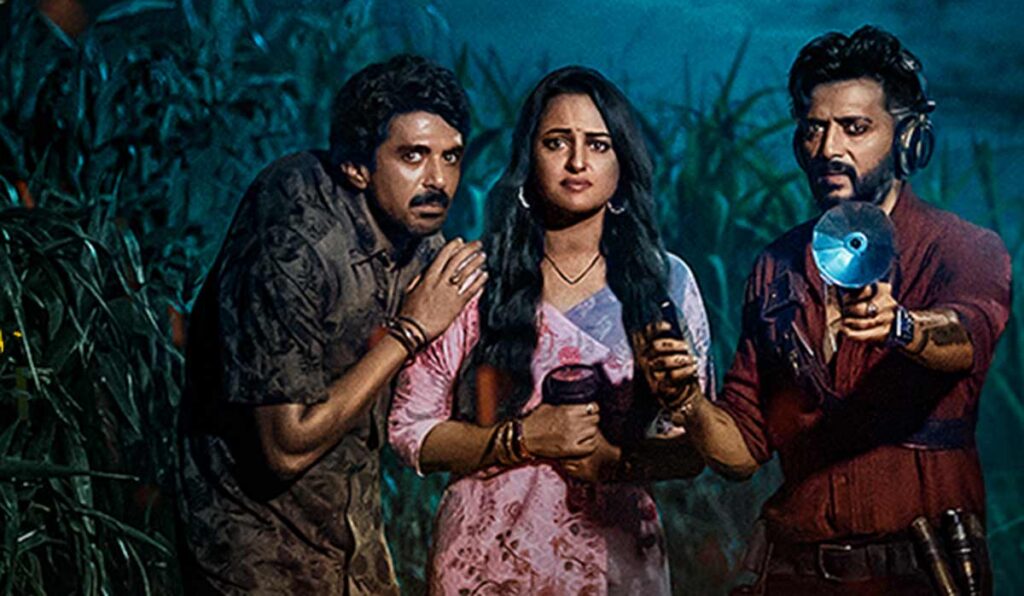
The horror comedy’s premise is refreshing and interesting: Every Tuesday evening at the designated time, the small door next to the main door needs to be opened by a family male, else the devilish mythical ‘Kakuda’ would strike. The victim would develop a hump and the person dies within 13 days.
A newly wed couple Sonakshi and Saqib get entangled in the Kakuda folklore when the groom is late to open the door and he is marked for death. Riteish is the ghost hunter, who comes to their rescue and helps to set the house in order.
The film has a great cast, strong performances and nice comic timing but it fails to make an impact due to weak ghost, half baked plot and hurried ending! Riteish is impressive with excellent acts by Saqib Salem and Sonakshi.
A nice fun one time watch – Not in the class Stree!
Disclaimer: The movie was shot at the family establishment of the reviewer.
Manthan: The Amul Story Of Influencing Change – India’s First Crowd Funded Movie
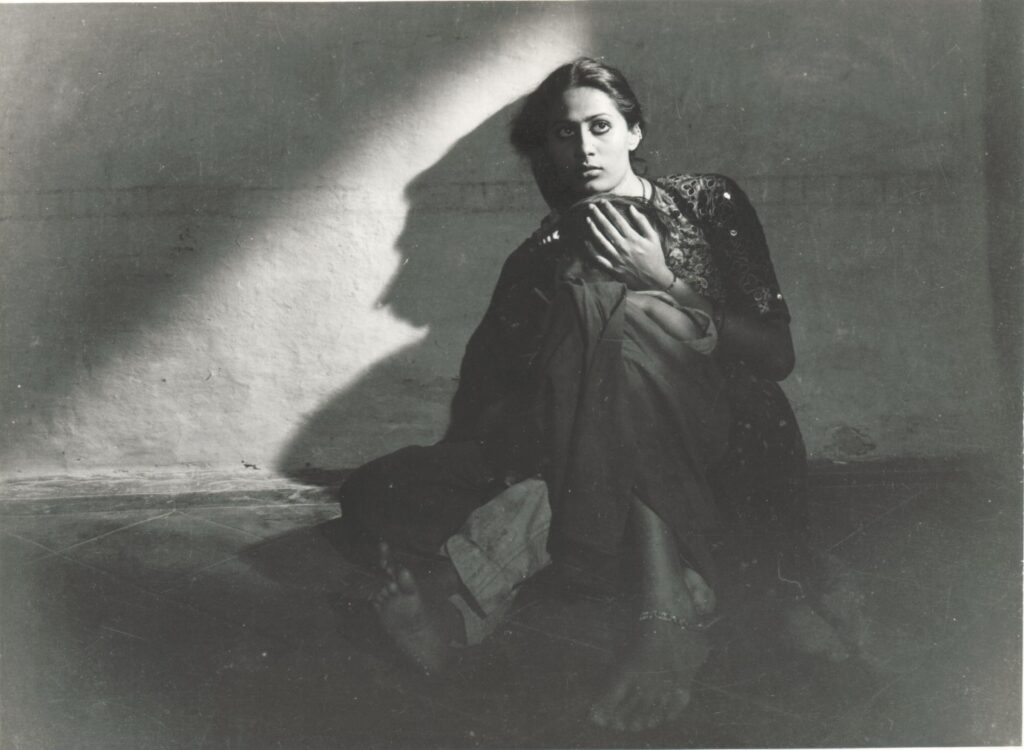
Manthan is a pathbreaking work showcasing the power of cinema to inspire change – The classic movie has been funded by 500,000 farmers of Gujarat, inspired by the Father of White Revolution Dr Kurien and directed by legendary Shyam Benegal.
An idealist Dr Rao (Girish Karnad) and his colleagues arrive in a typical Gujarat village to setup a milk cooperative society. The virtuous vet makes a statement from the first frame by refusing to board a overloaded horse cart and prefers a long walk. He is the change agent whose presence challenges the status quo and upsets the power equations. The upper caste milk trader has created a systematic well-oiled machinery to socio-economically exploit the poor villagers. The upper caste village headperson (Sarpanch) must ensure his power structure for winning the elections and has personal grudges against the other caste members. The less privileged members of the villages (Dalits) are sceptical of the new society and fear that this will be another upper-caste urban scheme. A volatile and outspoken villager Bhola leads the lower caste brigade. Dr Rao and his team tirelessly work to evangelise the vision and enrol the members to the benefit of the society which will also unleash a social change and overall empowerment in the village.
Dr Rao and his colleagues get entangled in the political and social issues in the village eventually leading to Dr Rao’s unceremonious and quiet exit. Bhola, the outspoken firebrand Dalit villager who starts patronising and supporting Dr Rao after initial mistrust, emerges as the real hero. He understands the intricacies of the hierarchical structures and local power games – he rallies the villagers and inspires them to march towards the promised change. He is voice of the bottom and harbinger of hope. The community finally learns to stand up on its own feet.
The beauty of Manthan is its multiple layers and the arc of all characters. All hues of caste, ethics, privilege and gender are explored and showcased by a dream cast of performers par excellence! Doing good is never an easy job nor is unleashing change! Excellent performances, compelling story, great screenplay, sensitive direction and simple tone make it a true classic. The haunting national award-winning song ‘Mero Gaam Katha Parey’ elevates the movie. It lightens up the screen and stays with you long after. Definitely heartening and happy moments for us as we celebrate its showcase at the 77th Cannes Film Festival
Manthan is a great work of cinema, and the Cannes Classic showcase gave us an opportunity to revisit the movie. But I could not agree with the narrative and certain aspects of the movie.
My biggest grouse against the movie is its total disregard for women – while it aims to create a caste less society and empower less privileged citizens, it ignores and belittles the biggest and most affected constituency of the society. Dr Rao does not stand up and support Bindu – a headstrong village woman who is a victim of her husband’s atrocities and was shattered after the death of her income generating cow. He lets her down when she needs the most help – he fails to help even through humanity and words, forget leveraging and showcasing cooperative’s power to help in distress. Idealism is in action and not words. In fact, the way he took the milk samples from her despite her refusal seemed an overstep and undermining the independence and authority of Bindu. She has feelings for Dr Rao and she ends ups a voiceless useless tool.
The way an idealist like Dr Rao treats his wife may succeed in showing him as a man with flaws but it is not consistent with overall image and persona. Maybe she has a different take on life, Dr Rao’s treatment to her highly objectionable.
Dr Rao punishes his colleague by sending him away for having a relationship with a village girl – but should he not have asked for the colleague’s perspective or the wishes of the village girl? Was he brash or did he see this incident just as an opportunity to establish trust or win the confidence of Dalit men in the village? Or he felt guilty of his feelings for Bindu and this was an abrupt reaction and expression of his inner conflicts?
Should Dr Rao have left without meeting villagers? What happens to Bindu?
Thanks to Dr Margie Parikh for her insightful views and thoughts as we analysed the movie post its digitally restored avatar screening! And I know our dissections will continue….
Manthan is indeed a thought-provoking complex movie!
Worth a watch! And definitely worth a lot of discussions!
Mahatma Gandhi is one of the most significant and enduring gifts of India to
the world. And so is Bollywood. How is the relationship between India’s biggest
exports?
Mahatma Gandhi saw only two movies in his
lifetime. The first was a Hollywood movie called ‘Mission To Moscow’. And the
second one was the 1944 Indian movie ‘Ram Rajya’, which was directed by Vijay
Bhatt. Thus, he saw only one Indian movie.
Let us look at representation of Mahatma Gandhi
in movies.
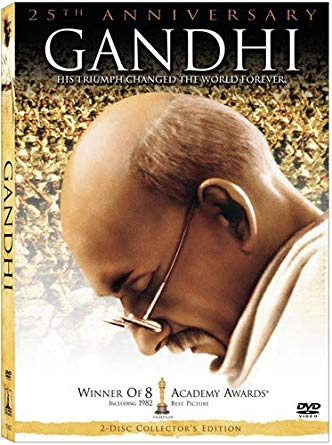
Sir Richard Attenborough’s Gandhi – The Gandhi Movie of All Time
Let me first take Richard Attenborough’s Gandhi out of the way. This is
‘The Gandhi Movie of All Time’ – the one movie that everyone should watch!
It is an amazing epic of all time, a movie par excellence and a life story
beyond imagination! Everyone was at their best in the movie –actors, director, producer,
cinematographer, music director, costume designer. Nobody could have done
anything less good for this project – It was a divine duty or a ‘Sistine
chapel’ of their lives!!
The Gandhi movie swept all the major awards including Oscars, Golden Globe
& BAFTA. It won the 8 Oscars including the Best Film and Best Actor. The
movie had a very successful box office run across the world. In India, it had
an ordinary response.
Richard Attenborough’s Gandhi is a moving experience. It transforms you. It keeps you engaged. It is one of the best tributes to Gandhi and his ideals. Ben Kingsley gave a performance of his lifetime. Ben Kingsley has Indian-Gujarati roots and his original name is Krishna Pandit Bhanji. Hence it was apt to see an Indian origin Ben play the legendary role. Rohini Hattangady, Amrish Puri, Om Puri and Saeed Jaffrey enact key roles in the movie.
The trivia of movie Gandhi are endless. One of the most interesting is that
three lakh extras participated in Gandhi’s funeral procession scene in the
movie. Only a few claimed the remuneration – everyone did it as their duty and
tribute to Gandhi.
Growing as a young kid in late 80s, Richard Attenborough’s Gandhi was a
constant fixture of your Doordarshan life. Every important day including October
2, 2019 would be the day to view Gandhi. And what gem we had been offered
regularly – Maybe like other Doordarshan offerings like Tamas, Buniyaad, Yeh Jo
Hai Zindagi, National Programme of Music, we ignored the priceless gift!
Gandhi & Bollywood
Richard Attenborough’s Gandhi remains one of most significant movies of our
times. But Richard’s Gandhi is not a Bollywood movie. It is a British movie.
Let us turn our eyes to Bollywood.
One of the first though indirect portrayal of Gandhi on screen was in the
Dwarkadas Sampat’s 1920 movie ‘Mahatma Vidur’. The character Vidur was dressed
and walked like Gandhiji.
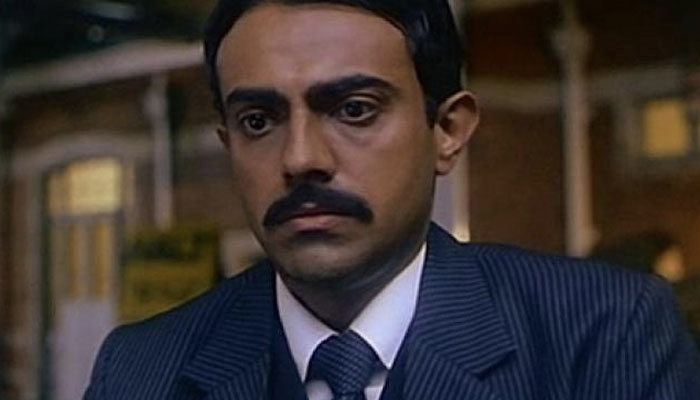
The first significant Indian attempt on Gandhiji was by Shyam Benegal. The 1996 movie ‘The Making Of The Mahatma’ focussed on the 21 years of Gandhi’s life in South Africa and his transformation. It is true that Gandhi discovered himself, his philosophy and political tools in South Africa. The movie is based on his South African experiences including the iconic incident of being thrown out of the train at Pietermaritzburg station. As Gopal Gandhi said later that the man who stood up from the fall was a revolutionary! Actor Rajit Kapoor did a splendid job and the movie is a great piece of work. The movie failed at the box-office though it won few awards.
Kamal Hasan made a movie named ‘Hey Ram’ in 2000 and depicted the struggle
of a man trying to kill Mahatma Gandhi. Shah Rukh Khan and Rani Mukherji joined
Kamal Hasan but they could not save the movie from tanking at the box office.
Anupam Kher and Urmila Matondkar had used Gandhi’s killing as a backdrop Jahnu
Barua directed 2005 movie ‘Maine Gandhi Ko Nahin Maara’. Anil Kapoor produced
‘Gandhi My Father’ in 2007. The movie was based on Feroz Khan’s play and was
adapted for the big screen. The movie focussed on the troubled relationship
between Gandhiji and his son Hiralal Gandhi. Many people amplified Harilal’s
negative views on Gandhi – How ‘Father Of The Nation’ could not be a great
father to his own son! But it backfired. The movie also bombed at the box
office.
Movies on Gandhi were not getting enough Gandhis! (currency notes)
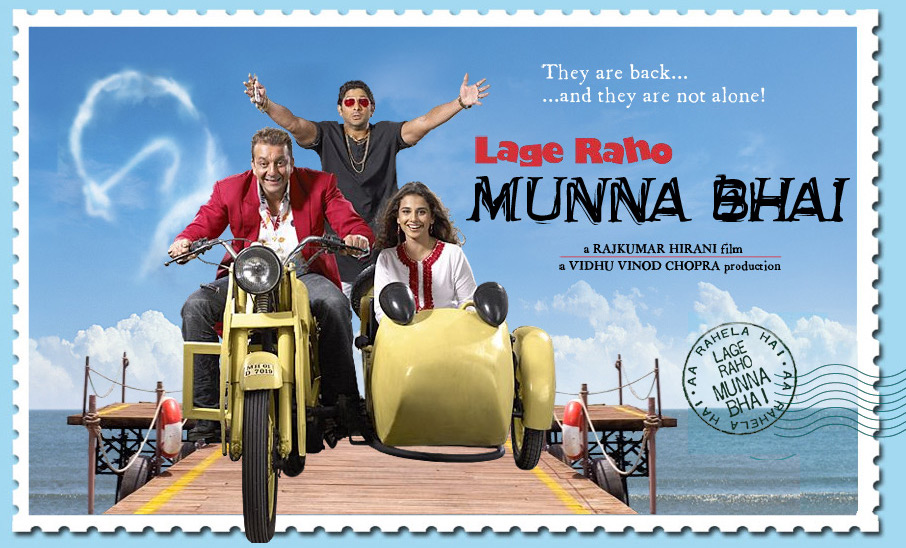
It had to take Rajkumar Hirani’s Midas touch to turn the tide. Leveraging
his unique story telling skills and humour, he offered a completely new
perspective on Gandhi. ‘Lage Raho Munnabhai’ did what thousands of historians,
hundreds of books and several organisations could not do – bring Gandhi back in
fashion. The simple story of a loveable Mumbai don using Gandhi’s principles to
solve challenges and win his lady love. Munnabhai’s Gandhigiri was observed
throughout the nation in ensuing months and years. It was Hiran’s excellent
vision, script and direction that delivered a genuine blockbuster at the movie.
‘Lage Raho Munnabhai’ was the biggest hits of 2006. Producer Vidhu Vinod Chopra
smiled all the way to the bank. More importantly, it made Gandhi cool and
offered a great new alternative narrative and a perspective on Gandhi to the
youth. He brought Gandhi out of the statues and photo frames and books into the
lives of youth. A great achievement! The power of good cinema!
Amit Rai made a movie ‘Road To Sangam’ in 2009 starring Paresh Rawal and Om
Puri. The movie focussed on immersion of the ashes of Gandhiji against a
communal backdrop. Gandhi’s great grand-son Tushar Gandhi played a Cameo in the
movie and it won several awards. But it was a box office disaster. Rakesh
Ranjan Kumar’s 2011 ’Gandhi To Hitler’
is based on Gandhi’s letters to Hitler.
Apart from the above, Gandhi has been represented in biopics of other
leaders like Shri Babasaheb Ambedkar, Iron Man Sardar Patel, Shaheed Bhagat
Singh etc. Hollywood had made another movie called ‘Nine Hours To Rama’ in 1962
where Gandhi’s assassination was re-imagined and Godse was presented as hero.
The Mark Robson directed film never released in India and tanked globally. It
had no Indian actors.
Gandhi’s Under-Representation In Indian Cinema
Mahatma is under-represented in Indian film industry. The best work on
Gandhi is by a non-Indian – Maybe an outsider had more courage and better
perspective to make a film on Gandhi. The greatest film makers of our time in
1940s to 1980s never thought of making a movie on Gandhi. They must have
thought – Gandhi is so much within us that we never need a movie for him.
Gandhi is a family member of every Indian. What is there to tell about Gandhi
that people do not know? The movie may not make money!
Dada Saheb Phalke, Bimal Roy, V Shantaram, Himanshu Rai, Chandulal Shah, Mehboob Khan, Raj Kapoor, Chetan Anand, Satyajit Ray, Hrishikesh Mukherjee – None of them made a movie on Gandhi. The movies till 1950s and 1960s had a lot of influence of Gandhian values but there was no Gandhi movie. The erosion of patriotic feeling, the rise of corruption, the arrival of angry young man, the liberalisation of economy, the excitement of millennium – different phases of a growing India. And all this while Gandhi remained in background in the cinematic world.
There were occasional trace of Gandhi. In Bimal Roy’s Nutan starrer Sujata,
the main protagonist avoids suicide after becoming aware of Gandhi’s views on
suicide and changes her life. Salim Khan Saheb had once commented that the
pivoted character of movie ‘Imaan Dharam’ was inspired by Gandhiji. The
protagonist of his movie ‘Kabza’ was also Gandhi. Ashutosh Gowariker’s movie
Swades was influenced by Gandhian principles – Shah Rukh Khan is called Mohan
in the movie. The interesting thing to note is that the movies on Gandhi and
his philosophy are limited and lacking depth.
Charlie Chaplin and Gandhi
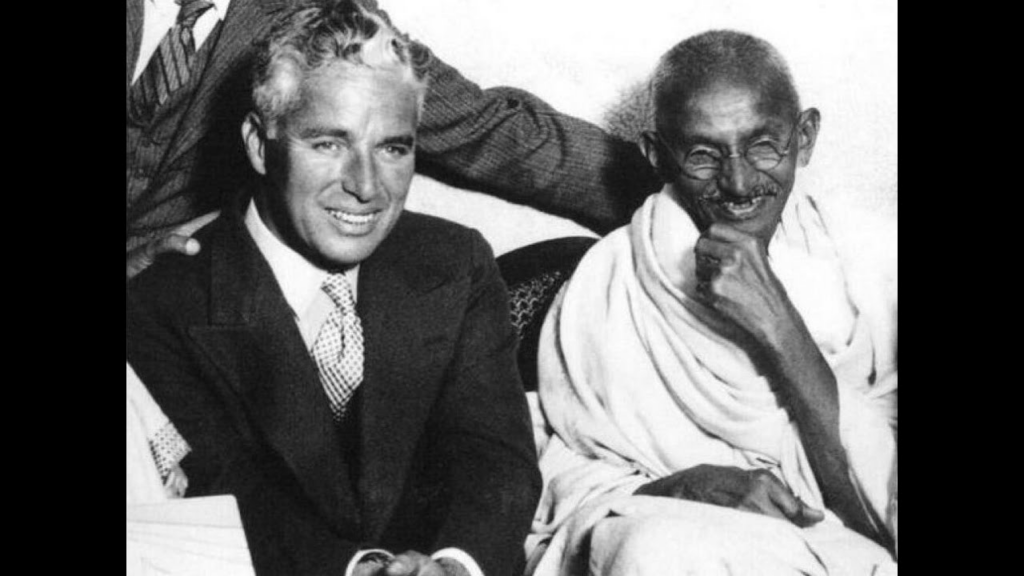
Interestingly, Charlie Chaplin was inspired by Gandhi and one can notice the influence in his film ‘Modern Times’. Charlie Chaplin had met Mahatma Gandhi in at a nondescript building at London’s East India Dock Road in 1931. The two had discussions on lot of topic including machinery, socio-economic conditions, philosophy of principles driving Indian Independence struggle etc. Charlie Chaplin’s memoir describe how he was transfixed to see Gandhi offer the evening prayers – a super intelligent being immersed in spiritual devotion! (An interesting point to note is the biopics of both Gandhi and Charlie Chaplin were made by one person – Sir Richard Attenborough.)
How would modern directors interpret Gandhi? We have had Love Stories and
Lust Stories. How about ‘Gandhi Stories’ by Zoya Akhtar, Anurag Kashyap,
Sanjay Leela Bhansali and Karan Johar? Or if Hollywood presented Gandhi through
the eyes of Steven Spielberg, Christopher Nolan or James Cameron? Just imagine!