Tag: Nokia

  • Celebrating Learning & Innovation – The Museum Of Failure

    Celebrating Learning & Innovation – The Museum Of Failure

    The winner takes it all! Winning at any cost seems to be the modern mantra – whether in business, politics or any other aspect of life.

    But what about failures? Failure is a learning process. Failure is an important part in our journey of evolution. Unless we fail, we do not learn the important lessons that are necessary for our growth – personal as well as professional.

    Once a famous Indian King had to make a choice between two able generals for an important war. One was a general who had never lost an war. He was the lucky general. The other one had won more wars but lost a few as well. The upcoming war was an important one and king chose the one with a mixed record. The second general would not take success for granted. He would be less arrogant and take the right steps for winning the war. And who knows the first one could run out of his luck – law of averages would catch-up! Wise choice.

    Today, the excessive focus on success has made failure a completely negative concept. Failure is not welcome. But failure is nothing to be shameful about. Every race has always one winner – so we should not consider the rest as failures.

    Failure is an equally important factor in the innovation journey. Hundreds of innovations became successful, but thousands and thousands failed before the successful ones!

    I recently came across an interesting Museum – the Museum of Failure. Hidden in a small town of Helsingborg in Sweden, it is a collection of all interesting innovation failures. It has a collection of failed products and services from the world – to drive home a single point – that business of innovation is risky proposition, but it is a learning process.

    Some of the famous items on display include:

    – Apple Newton

    – Harley Davidson Perfume

    – Google Glass

    – Nokia N-Gage

    – Kodak Digital Camera

    – Sony Betamax

    – Lego Fiber Optics

    – Ford Edsel

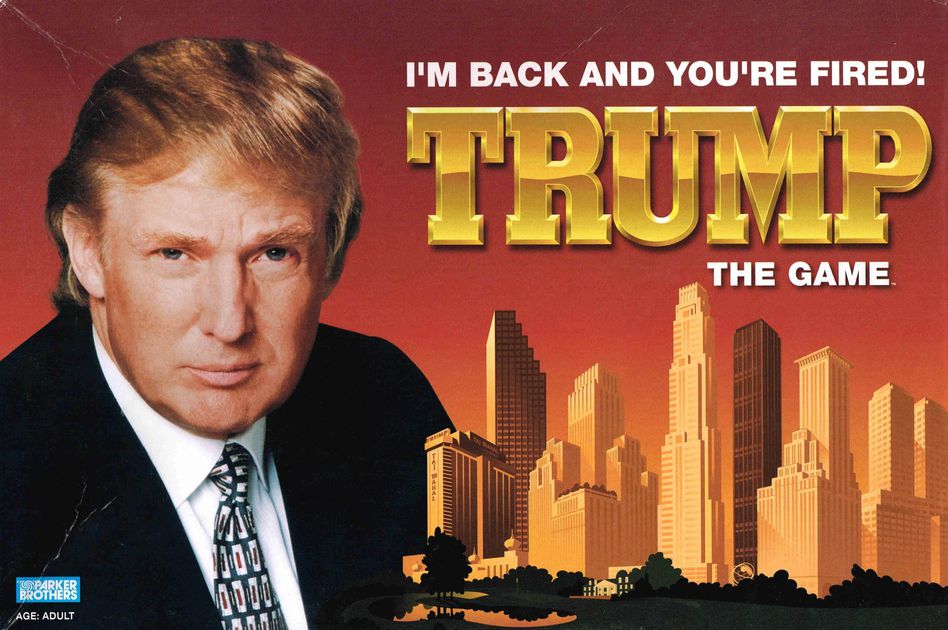
    – Donald Trump Board Game

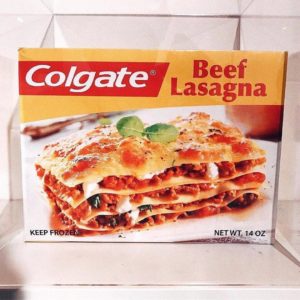
    – Colgate Beef Lasagna

    – Coke Coffee Cola


    The important thing is to not get disappointed after failure or lose enthusiasm. We should avoid self-doubts as well. Failure tells us to start once again but with more intelligence and information. Hence failure is never final. It is a stepping stone towards success!

    Official Site of Museum of Failure


    Check A Quick YouTube Video:


  • CES 2012 Impressions

    Rutesh shared with me “CES 2012 Impressions” by Chetan Sharma. It is indeed a good read and gives key indicators for the near future….

    CES 2012 Impressions

    The Grand Slam of electronic gadgets brought back the faithful to the sin city of Las Vegas to indulge in the future of electronics, gadgets, and consumer behavior. This note summarizes my observations from the CES show.

    Pass the baton – CES is turning into a wireless show. With Microsoft no longer leading the keynotes in future editions, my vote will be for Qualcomm’s Paul Jacobs who gave a fun and eloquent keynote himself to occupy the opening keynote next year.

    Connected Everything – Our theme for last year’s Mobile Future Forward was “Connected Universe, Unlimited Opportunities.” It was one of the central themes of this year’s CES (and is likely to be for many more years). From health monitors to Sony Vita, from treadmills to autos, connectivity is driving new features, behavior, and hopefully consumer demand.

    Gesturize Everything – Touch is for oldies, gesture (wave and voice) is driving the new interactions. If you thought talking to machines was weird, well! get used to it. Starting with TVs, autos, gaming devices, and PCs, gesture based computing is invading the internals of electronic devices everywhere.

    Microsoft/Nokia resurgence? – Nokia’s Elop was everywhere to help introduce the windows devices in North America. AT&T could do to Windows devices what Verizon did to Android – give it a boost that is. While the OS is fresh and elegant, the consumer interest has been tepid. Though there are a number of things that could go wrong with pricing, execution, and marketing, at least they have some operator allies in the North American market this time around.

    1K is so yesterday, 4K/8K is in – TV manufacturers touted higher resolution 4k/8k displays. Never mind the content in new formats won’t be available for months. However, the displays are getting sharper with exquisite clarity. It is a great time to be a consumer.

    Live Mobile TV, No it is not dead yet – I have been a believer in broadcast mobile video. Dyle could succeed where Mediaflo failed; it just needs to get the top tier operators behind the endeavor.

    Waterproof is the new black – It seemed like the OEMs have been reading from research that consumers are not aware off. They either expect us to start using the tablets and phones in shower or start colonizing oceans in search of greener pastures. Almost all OEMs had their devices in “hold-your-nose-and-dip-in-water” mode.

    Chinese are coming – Pretty soon “Made in China” will also mean conceptualized and designed in China. The Japanese and Korean gizmo manufacturers should be bracing for a tough slug in the months ahead. Chinese brands are starting to make an impact on the show floor, often a precursor to the impression on the global marketplace.

    You say MacBook Air Imitators, I say Ultrabooks – Intel and partners were out in full force to demonstrate that sleek designs can go hand-in-hand with windows as well. It is not a substantially new category, will just eat the share from notebooks.

    Intel’s entry into smartphones – Will they, won’t they? The question of when will Intel be a player in the mobile space has been out there for a while. Intel’s partnership with Motorola + the OS partnership with Samsung is its attempt to alter the mobile ecosystem. While our Predictions Panel gave man finding water on Mars a higher probability than a new mobile ecosystem emerging, Intel might be one to watch.

    3D Printers – Having a birthday party, no problem! Something new and cool, now you can print kids’ toys right from your desk. It will set you back $1300 but you will be the geekiest dad on the block.

    Phablets – Getting tired of phones? tablets? How about Phablets with your morning tea sir? Samsung’s Note is trying to convince customers that hybrid is all they need for making phone calls or drawing a portrait for an art gallery. OEMs are launching devices for every inch in the range of 4” to 12” and see what sticks.

    Tablet Bloodbath – There were so many tablet launches at CES that it is hard to keep track of them. One thing most of them had in common – no pricing, no launch dates which is generally a precursor to their trip to the graveyard of electronics.

    Home Energy Networking – If your home lights are starting to flicker without any sane reason, there is a good chance that someone has gotten a hold of your WiFi router which controls your house’s electric outlets via adaptors that are about to flood the market. Other devices for the home like kitchen tablets etc. have also started pouring in.

    AT&T Developer Summit – The mobile developer summit was very well executed, full with announcements (how about free unlimited API access for one year), buzz, and gravitas. Google would have been proud.

    The ghost of Apple – As usual, the ghost’s presence was felt at the show (including some execs in human flesh).

    Coolest demo – For me it was Samsung’s transparent window. Gives a new meaning to window shopping.

    Coolest toy – My vote goes to Parrot’s AR.Drone. Will set you back $300 but will make you the neighborhood ninja. What was missing was a drone that can carry humans so they don’t have to walk 50,000 CES miles in one day.

    Coolest booth – Auto industry can teach a thing or two about stacking up the booths. Audi with its blindingly fluorescent lights and futuristic concept cars was quite impressive with Mercedes Benz a close second. LG with its massive 3D TV wall was also quite impressive.

    CES Star of the Show – Samsung with its omnipresence dominating virtually every important CE category has to be the most dominating player in the industry. Of course, Apple gives its Korean counterpart run for its money but Samsung made its presence felt with a slew of devices, future vision, and an integrated view of the world.

  • Nokia – Microsoft Alliance – Will It Work?

    Desperate Times Call For Innovative Thinking. Is Nokia’s Alliance With Microsoft The Right Move? Or Is It An Act of Desperation?

    Both Need Each Other ! Microsoft needs a player like Nokia since its Windows Mobile OS has not really set things on fire. It is a small player in the field dominated by Android, Apple and RIM. Nokia has been losing market share and mind share. Its confusion is evident from its actions on Symbian, Maemo, Meego. It really need someone else to develop the OS while it focussed on the hardware side. For both of them, this is indeed a move necessitated by market dynamics, but while consumers bite?

    Do you think the Nokia-Microsoft Alliance will work? Will Nokia reclaim its glory? The drama is as exciting as the mobile space !

    Related News:
    Wall Street Journal Article:

    Nokia CEO’s Letter To Employees:

    CEO Says Nokia Needs Big Change – Feb 9, 2011

    Hello there,

    There is a pertinent story about a man who was working on an oil platform in the North Sea. He woke up one night from a loud explosion, which suddenly set his entire oil platform on fire. In mere moments, he was surrounded by flames. Through the smoke and heat, he barely made his way out of the chaos to the platform’s edge. When he looked down over the edge, all he could see were the dark, cold, foreboding Atlantic waters.

    As the fire approached him, the man had mere seconds to react. He could stand on the platform, and inevitably be consumed by the burning flames. Or, he could plunge 30 meters in to the freezing waters. The man was standing upon a “burning platform,” and he needed to make a choice.

    He decided to jump. It was unexpected. In ordinary circumstances, the man would never consider plunging into icy waters. But these were not ordinary times – his platform was on fire. The man survived the fall and the waters. After he was rescued, he noted that a “burning platform” caused a radical change in his behaviour.

    We too, are standing on a “burning platform,” and we must decide how we are going to change our behaviour.

    Over the past few months, I’ve shared with you what I’ve heard from our shareholders, operators, developers, suppliers and from you. Today, I’m going to share what I’ve learned and what I have come to believe.

    I have learned that we are standing on a burning platform.

    And, we have more than one explosion – we have multiple points of scorching heat that are fuelling a blazing fire around us.

    For example, there is intense heat coming from our competitors, more rapidly than we ever expected. Apple disrupted the market by redefining the smartphone and attracting developers to a closed, but very powerful ecosystem.

    In 2008, Apple’s market share in the $300+ price range was 25 percent; by 2010 it escalated to 61 percent. They are enjoying a tremendous growth trajectory with a 78 percent earnings growth year over year in Q4 2010. Apple demonstrated that if designed well, consumers would buy a high-priced phone with a great experience and developers would build applications. They changed the game, and today, Apple owns the high-end range.

    And then, there is Android. In about two years, Android created a platform that attracts application developers, service providers and hardware manufacturers. Android came in at the high-end, they are now winning the mid-range, and quickly they are going downstream to phones under €100. Google has become a gravitational force, drawing much of the industry’s innovation to its core.

    Let’s not forget about the low-end price range. In 2008, MediaTek supplied complete reference designs for phone chipsets, which enabled manufacturers in the Shenzhen region of China to produce phones at an unbelievable pace. By some accounts, this ecosystem now produces more than one third of the phones sold globally – taking share from us in emerging markets.

    While competitors poured flames on our market share, what happened at Nokia? We fell behind, we missed big trends, and we lost time. At that time, we thought we were making the right decisions; but, with the benefit of hindsight, we now find ourselves years behind.

    The first iPhone shipped in 2007, and we still don’t have a product that is close to their experience. Android came on the scene just over 2 years ago, and this week they took our leadership position in smartphone volumes. Unbelievable.

    We have some brilliant sources of innovation inside Nokia, but we are not bringing it to market fast enough. We thought MeeGo would be a platform for winning high-end smartphones. However, at this rate, by the end of 2011, we might have only one MeeGo product in the market.

    At the midrange, we have Symbian. It has proven to be non-competitive in leading markets like North America. Additionally, Symbian is proving to be an increasingly difficult environment in which to develop to meet the continuously expanding consumer requirements, leading to slowness in product development and also creating a disadvantage when we seek to take advantage of new hardware platforms. As a result, if we continue like before, we will get further and further behind, while our competitors advance further and further ahead.

    At the lower-end price range, Chinese OEMs are cranking out a device much faster than, as one Nokia employee said only partially in jest, “the time that it takes us to polish a PowerPoint presentation.” They are fast, they are cheap, and they are challenging us.

    And the truly perplexing aspect is that we’re not even fighting with the right weapons. We are still too often trying to approach each price range on a device-to-device basis.

    The battle of devices has now become a war of ecosystems, where ecosystems include not only the hardware and software of the device, but developers, applications, ecommerce, advertising, search, social applications, location-based services, unified communications and many other things. Our competitors aren’t taking our market share with devices; they are taking our market share with an entire ecosystem. This means we’re going to have to decide how we either build, catalyse or join an ecosystem.

    This is one of the decisions we need to make. In the meantime, we’ve lost market share, we’ve lost mind share and we’ve lost time.

    On Tuesday, Standard & Poor’s informed that they will put our A long term and A-1 short term ratings on negative credit watch. This is a similar rating action to the one that Moody’s took last week. Basically it means that during the next few weeks they will make an analysis of Nokia, and decide on a possible credit rating downgrade. Why are these credit agencies contemplating these changes? Because they are concerned about our competitiveness.

    Consumer preference for Nokia declined worldwide. In the UK, our brand preference has slipped to 20 percent, which is 8 percent lower than last year. That means only 1 out of 5 people in the UK prefer Nokia to other brands. It’s also down in the other markets, which are traditionally our strongholds: Russia, Germany, Indonesia, UAE, and on and on and on.

    How did we get to this point? Why did we fall behind when the world around us evolved?

    This is what I have been trying to understand. I believe at least some of it has been due to our attitude inside Nokia. We poured gasoline on our own burning platform. I believe we have lacked accountability and leadership to align and direct the company through these disruptive times. We had a series of misses. We haven’t been delivering innovation fast enough. We’re not collaborating internally.

    Nokia, our platform is burning.

    We are working on a path forward — a path to rebuild our market leadership. When we share the new strategy on February 11, it will be a huge effort to transform our company. But, I believe that together, we can face the challenges ahead of us. Together, we can choose to define our future.

    The burning platform, upon which the man found himself, caused the man to shift his behaviour, and take a bold and brave step into an uncertain future. He was able to tell his story. Now, we have a great opportunity to do the same.

    Stephen.
  • Exciting Times for Mobile Industry In India

    These Are Interesting Times For Mobile Industry In India !

    Mobile Number Portability Deadline is here Oct 31. The share of the top telecom companies maybe redefined. But the overall Top firms will continue to cumulatively hold the lion’s share. Will the subscriber leave a top 3 carrier and move to a new carrier? What will be the top 3 carrier’s strategy? Interesting discussions for next MoMo !

    The 3G Countdown Begins….
    – Tata Docomo has started its marketing blitz for the 3G Launch this Diwali.
    – Vodafone plans to launch its 3G services in Q1 2011.
    – Reliance, MTNL and BSNL already offer 3G Services but PSUs have not milked its unique advantage to the extent it should have.

    Mobile Handset Market Share Being Redefined
    – Nokia’s market share is down from 50+ % to about 32% or so. Though Nokia disputes IDC numbers, there is no denying that Nokia has been seeing reduction in mind-share to smartphones.
    – Indian OEMs continue to increase their volumes. Micromax makes very impressive strides.
    – Newer, Better, Fully Loaded Handsets Are Being Launched At Both Ends Of The Spectrum.

    Thriving Mobile App Industry
    Indian Developers Are Designing Cooler And Innovative Apps Across The Board. More and more professionals are gaining exposure and experience on Mobile software across back-end as well as client applications. The need for mobile developers is higher than ever before and the companies are training their cadres for future growth.

    The Discrepancy Between Apple’s Market Share, Mind Share and Application Share is being corrected. Android has zoomed ahead of iPhone in US.

  • The FMCGization of Indian Mobile Handset Market

    The Indian Mobile Handset Market is coming of age. There are more than 30 Indian Mobile Handset players. The Industry is going strong with impressive numbers and is now resembling the marketing favorite FMCG Industry.

    Let us look at the few common features with FMCG Market:

    1. Strong Global Players With Indian Challengers

    Indian FMCG Market is a vibrant place with global players like Unilever and P&G. Global players have been successfully challenged by Indian companies like Nirma, Cavin Care, Marico, Ghadi etc.

    Similarly, Global Companies like Nokia, Samsung, LG have been strong in India. In fact, Nokia enjoyed Maruti-like status in India. However, now it is challenged by Indian players like Karbonn, Maxx, Fly, Videocon, Micromax, Intex etc.

    India is a very important market for Unilever as well as Nokia, P&G as well as Samsung.

    2. Price Wars

    The FMCG market has seen price wars and companies like Unilever launched Wheel to counter-attack Nirma. Similarly, Nokia, LG and Samsung have launched sub-2000 Rs phones to counter the various Indian brands.

    3. Product Enhancements

    Indian FMCG Players have used strong product features to differentiate themselves. Whether it is special packaging, different price points, product ingredients – FMCG players have been innovating and improving products.

    Similarly, Indian players have innovations like Dual SIM, long battery hours to differentiate themselves apart from price advantage.

    4. Distribution

    In FMCG, Distribution is God ! Companies like HLL, Colgate, Cavin-Care have built a great distribution machinery. It is their biggest advantage. Similarly, Nokia and others have created a great distribution network and a strong sales team, which has resulted in nearly 2 million handsets being sold every month in India!

    5. New & Improved !

    FMCG Products excel in re-launches with minimal changes – The New & Improved. FMCG products play with different colors, size and ingredients.

    Indian Mobile players are also playing with bold Indian colors, new sizes and aesthetic appeal.

    6. Celebrity Advertisement

    Indian FMCG Players have developed and promoted the concept of celebrity advertisements. In fact, Lux prides itself in promoting Indian beauties and every top celebrity is promoting multiple FMCG Products.

    Videocon, Maxx India, Lemon etc have started using Indian Celebrities for differentiating themselves in the Indian advertisement scenario.

    7. Counterfeit

    The Global Players face the problem of product plagiarism in India. Whether is Vicks, Colgate or Parachute, there are several Indian versions.

    iPhone and Blackberry handset designs are the most copied designs in India. There are many foreigns handsets which are openly sold with duplicate designs.

    8. Product Flanking Strategy

    Unilever, P&G started it and Nokia and Indian players are mastering it !

  • Nokia Makes Navigation Free!

    Nokia‘s done it. A strong and aggressive move! Nokia makes walk and drive navigation free on its smartphones, doubling size of mobile navigation market.

    All New Nokia GPS – Enabled smartphones will have new Ovi Maps App pre-loaded on it. It will have the local country map data and walk and drive navigation with access to location-aware Lonely Planet and Michelin travel guides at no extra cost.

    The benefits are immense ! Drivers will receive traffic information, assistance, safety guidance, speed warnings etc. Pedestrians will be guided to safe pedestrian-only zones and quick shortcuts. And this will work offline as well. Beautiful!

    Read the official Nokia Press Release!

  • Top 5 Business Smartphones & The Rise of Android

    screen-shot-2009-11-27-at-63828-pm
    CIO Sanity Savers listed 2009’s Best Business Smartphones. They are:
    1.    BlackBerry Tour
    2.    Apple iPhone 3GS
    3.    Palm Pre
    4.    HTC Touch Pro2
    5.    Nokia E71

    In another interesting news, the share of Android OS is rising. The Android OS already accounts for 11% of smartphone web traffic worldwide, according to the latest figures from market research firm AdMob. In the US, where the OS has had a head start, Android handsets were responsible for 20% of all smartphone traffic in October. The market leader is iPhone with 55% market share.