🔮 The San Francisco Consensus: Are We Ready for a Smartest-Human-in-Your-Pocket Future?
Eric Schmidt’s bold thesis is shaking up the global AI discourse.
He calls it The San Francisco Consensus — a widely shared belief among Silicon Valley’s top minds that Artificial General Intelligence (AGI) will emerge within the next 3–5 years, followed by Artificial Superintelligence (ASI)just a few years later.
Let that sink in:
🧠 AGI: Machines matching the brightest mathematicians, physicists, writers, and artists — by 2028–2030
🚀 ASI: Machines smarter than all of humanity combined — by 2031
This isn’t speculative sci-fi. It’s a strategic timeline being taken very seriously by the people shaping AI’s future.
📍The three revolutions shaping this vision:
Language as Interface – Natural language becomes the universal UI, making AI accessible and omnipresent.
Agentic AI – Systems with memory, goals, and the ability to take autonomous actions across workflows. Think: AI agents coordinating construction, hiring, legal negotiations, and even litigation.
Reasoning at Scale – AI models now rival top graduate students in mathematics and are learning through complex inference and reinforcement loops.
🏗️ Schmidt gives a simple example:
“I have one agent to find a plot of land, another to understand zoning rules, a third to design the building, and another to sue the contractor when it’s not built right.” This isn’t sci-fi. It’s business as usual — reimagined.
This isn’t just a technological leap — it’s a societal transformation.
💥 If this consensus holds, it will redefine work, creativity, policy, education, and governance in ways we are only beginning to grasp.
The questions we must ask:
How do we stay relevant in an AGI world?
What happens when ASI acts independently of human control?
Can we align these systems with human values — before it’s too late?
👉🏼 Agentic AI is not the end of the story. It’s the beginning of something unprecedented.
Are we ready for the smartest-human-in-your-pocket era? Because it’s coming — faster than the next iPhone update.
💡 The Agentic AI Reality Check: Strategy Over Spectacle
The promise of Agentic AI is powerful—but so is the risk of chasing hype.
According to Gartner’s latest study, more than 40% of Agentic AI projects will be cancelled by 2027.
What’s driving these project failures? 🔻Skyrocketing costs without clear ROI 🔻 Vague business value propositions 🔻 Insufficient risk management frameworks
The truth: Agentic AI is riding a wave of hype. Many initiatives are half-baked experiments with no clear ROI.
And worse—“Agent Washing” is everywhere. Vendors are rebranding RPA, chatbots, and assistants as Agentic AI. It’s old wine in a new bottle.
🧠 But here’s the real insight for strategic leaders: Gartner’s latest poll shows: ✅ 33% of enterprise apps will embed Agentic AI by 2028 ✅ 15%+ of daily decisions will be autonomously made ✅ Only 130 vendors qualify as truly Agentic AI solution providers
🚀 The future is bright—for those who invest wisely.
Focus on business outcomes: ✅ Improved customer experience ✅ Operational scalability ✅ Agile decision-making ✅ Cost optimization
🔍 The smart play? Avoid the Agentic hype trap. Cut through the noise. Choose business driven use cases. Curate & collaborate with authentic players.
Data-ISM: The New Religion Of Digital & AI-Enabled World!
Data-Driven culture is at the heart of success for actualization of business vision!
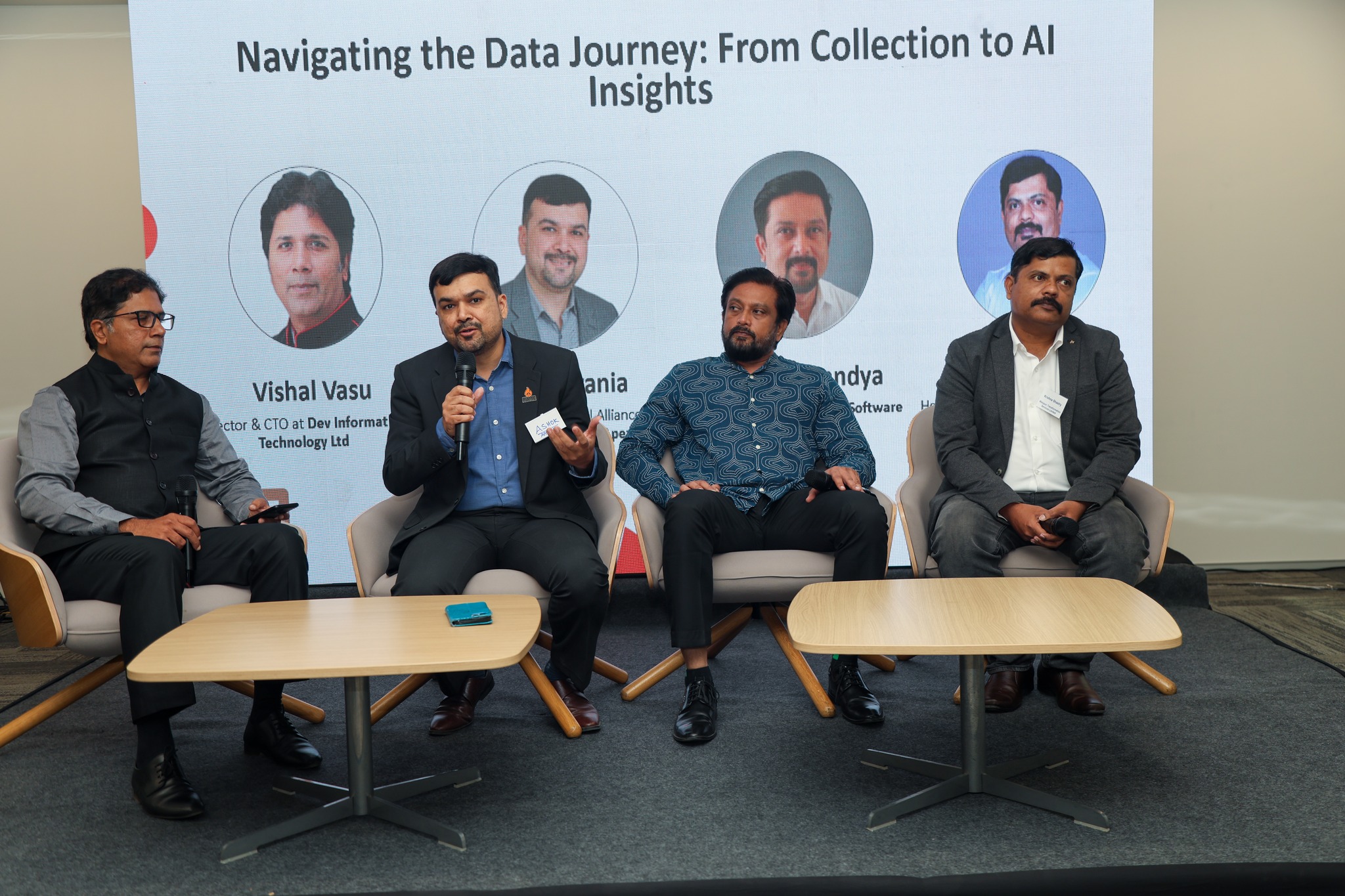
Dr. Ashok Karania & Mr Murali Kotagiri, senior leaders of Apexon, participated in the Nasscom Technology Confluence Roadshow at Ahmedabad – An eclectic mix of exhilarating topics and amazing speakers at the thoughtfully curated event.
Dr. Ashok spoke about the importance of data analytics for a digital enterprise and how creating a data-driven organisation ensures innovation, efficiency and competitive advantage. He also double clicked on the choice of cloud, on-prem and hybrid data storage solution from the perspective of security and scalability.
Mr Murali interacted with the industry leaders and technology geeks and stressed the importance of data in regulatory industry and the overall trends in the market.
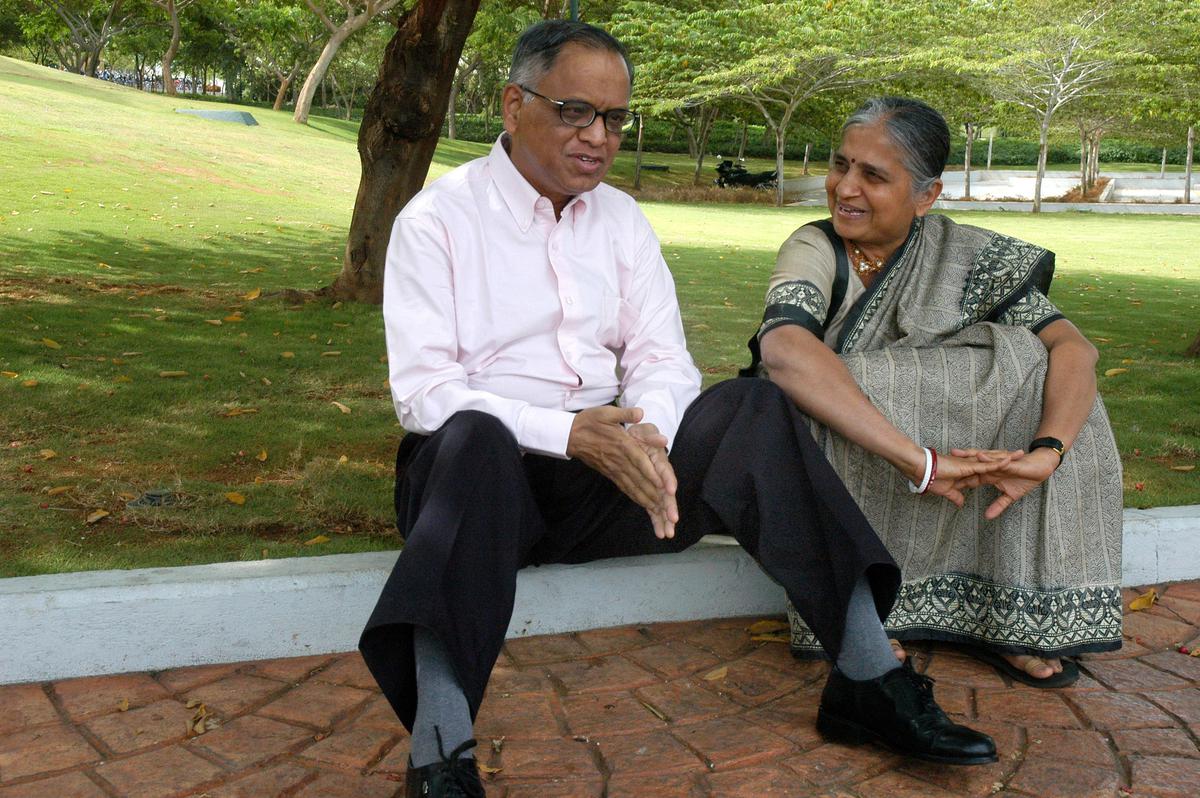
Chitra Banerjee Divakaruni’s ‘An Uncommon Love: The Early Life of Sudha and Narayana Murthy’ covers all of the above and more themes!
Like its iconic subjects, Uncommon Love is a simple, candid and honest story of the early life of Sudha and Narayan Murthy. The couple have led a very private life and hence it is quite insightful to get a peek into their personal world. The book is filled with rich anecdotes which are a delight for everyone. These tales give us a clear understanding of the individual traits of Sudha and Narayan.
Indeed a few stories stand out:
Sudha Murty is a movie buff and a certified ‘First Day First Show’ fan. She won the title of Miss Cinema, after winning the bet to watch one movie every day of the year in a theatre! I can relate to it totally!
She was the only woman in the engineering class of 150 men and had to face a lot of challenges including derogatory comments and total unkindness. Her admission conditions included compulsory wearing of saree, no access to canteen and no chatting with boys! The college had no toilet and she had to travel to home in break. But not only she excelled despite the systemic misogyny, she won the respect of everyone!
She got prestigious MIT admission but she gave it up for a shop floor job at Telco – A job where she challenged J R D Tata for ‘men only’ employment policy of Tatas and won the coveted job. She faced similar challenges like the engineering college but her persistence and diligence and professionalism won the day. Later in life, she cried profusely when she visited MIT.
Sudha supported the entrepreneurial dreams of Murthy emotionally, physically and even financially! Murthy would be broke and she would loan money and fund their expenses. She had a notebook of loans which she destroyed on their wedding day.
She regularly financed Infosys and saved it – even pawned her wedding jewellery. She had to be away from her young daughter Akshata to help Infosys as well as manage her job.
Narayan Murthy got an IIT admission but his father’s financial situation forced him to turn it down. He was devastated.
He learnt English due to the nudge and kind help of a roadside shopkeeper!
He proposed to Sudha in an autorickshaw. Though she agreed, her father was not convinced. Narayana also had worn a Red Shirt when meeting his prospective in-laws and gave weird responses to their questioning.
He turned down a lucrative job offer at Hindustan Lever because of the ‘separate toilets’ policy.
Azim Premji interviewed Murthy but did not offer him the job as he thought Murthy was too simple. What if Azim Premji had hired Narayan Murthy?
Narayan Murthy founded Infosys but he gave a lion’s share to all other colleagues. All the other co-founders got big equity share – more than the normal business parlance. He kept only 30% and distributed the rest. He took a 90% salary cut while gave a 20% hike to others. He always focussed on the comfort of the employees. Compassionate Capital is his mantra!
Narayan Murthy did not allow Sudha to join Infosys as he wanted to create a totally professional company. He told her that if she wants to join Infosys, he will support her decision – he would leave and let her run the show. Sudha was very disappointed, hurt and angry. These hard decisions created Infosys as a different company (there was a brief departure from this position when Rohan joined as EA for a short period).
What if Sudha Murthy ran Infosys?
Murthy was busy building Infosys and could not spend time with the kid. The children felt that Infosys was the third sibling – the favourite child that never grew up and required constant attention.
He continues to be the simpleton. He cleans his own toilet.
Sudha clearly emerges as the brighter, smarter and more generous with her untold sacrifices. But Narayan Murthy’s simplicity, humanity, ethical approach and care for everyone else is his distinguishing hallmark. As Sudha said, he was the trapeze artist in the circus and she was the safety net!
In summary, Uncommon Love is a great read. The author’s grip on the content is not consistent and the book is bereft of any pictures – the one big disappointment in such a rich historically important biography. While the childhood, career, courtship, marriage, childbirth and entrepreneurship is captured well, the rise of Infosys and Sudha’s author career is very rushed.
The love, understanding, respect and support that Sudha and Narayan gave each other is the core message of the book. They do not need anyone else other than each other’s company. They are mirror to each other and their bond strengthened by shared values and idealistic principles.
The book also gives a glimpse of the challenges that Narayan Murthy faced in setting up Infosys after his first failure as an entrepreneur. Indeed it is due to persistence of him and likes of Fakir Chand Kohli, that India has emerged as an IT superpower – that would change the glo
The Robotization topic has moved from moved from tech unconferences to boardrooms to factories and warehouses. Organizations are implementing the Robotization use cases across the industries. And this is happening fast along with machine learning and improvements in artificial learning.
Recently, I visited one of the largest milk dairies and saw that less than 15% of employees are employed as compared to previous few years. The control center did not even have a machine – if things go wrong, it will have start an alarm. McKinsey has predicted that within eight years, one-third trucks on the road will be self-driving trucks. So, will the truck-driver be an anachronism? (Truck driver is one of the most common jobs in the US with 3.5 million people in US.)
Robotization is for real. How will its spread impact jobs? Already people are suffering from unemployment and discontent across major economies which have created political challenges. Will this create further joblessness? Will this lead to more Occupy Wallstreet? Will self-driving trucks render drivers without work? Will politicians stop targeting immigrants and target robots for job losses? Will it raise the case for universal basic income or profit-sharing policies? Will it create new public policies?
Lot of important questions are to be answered. On the other hand, there is a fear psychosis being created – ‘Half of the jobs will be lost to robots’, ‘Robots will take over jobs by 2025’, etc., etc. How do we address these wrong fears?
One more important thing, this time the robotisation of work will eat into more knowledge-based jobs as compared to low skill jobs alone. Accounts jobs can be taken by software. Robot-advisors will help with portfolio planning and investment decisions. Robotization and AI can threaten best of the jobs! Uber already raises invoices automatically, classifies it as a business or personal expense and send it to you. The software can receive these invoices and file them electronically.
So, since the white-collar jobs are at stake, there are more predictions of doom and gloom. But one needs to understand that automation and process improvements have always existed. The invention of the steam engine to the wheel to robots – all are the part of same technological progress. Technology has always been a net creator of jobs.
Of course, there are short term challenges but in the long run, everyone is better off. It will create opportunities and help reskilling of people. It will drive employees to high-value jobs and force skill upgrades. Data scientist, creative visualizer, UX expert, social media guru, search engine optimization etc. are the new jobs. As IBM CEO Ginni Romety quoted, the future of job creation is no longer white collar vs blue collar – its new collar. Or there is no collar, only hoodies 🙂
Robotization is not be feared but to be celebrated. It frees us from high risk and day-to-day drudgery. It allows us to do more meaningful work. It helps us to evolve as a society. Of course, we need to make more decisions as a society and control our destiny. How much automation is good? What skills do we value? How should people spend their time outside of jobs? If they are working less, how do they live a more fulfilling life? What is the new definition of a job? Will the world economic production be on auto-pilot while we are working on creative and imaginative high-touch passions? Will we move to artisan and creative industries? Will it lead to more self-actualization?
How do you deal with the new normal? How do you get ready for the Robo Revolution?
1. Accept the change. Do not fight it or challenge the change – it is a futile effort.
2. Burn the box. Discard the status quo. Work on cultivating new skills. Problem-solving, creativity, judgment, team skills, digital and social skills will be never out of fashion.
3. Invest few hours every day in the emerging technologies – it will give you the headstart. Organisations will support the change-agents and people willing to upgrade.
4. Start small on new skills and emerging technologies. Work on small projects. Create new modules and build on the success.
5. Create learning groups and share the journey – difficult questions, fears, hacks, tips etc. It is much easier when we are together.
6. New processes and new styles of working will also create new opportunities. Identify those. Have a break-through idea or a radical thought – build on it.
7. Finally, do not panic. If you have good work ethic, are disciplined and willing to change, things will be fine. This too shall pass.
Academia, organization, society and governments have an important role to play to prepare the talent for right skills for the future. Training and collaborative approach is a must to avoid mass unemployment and skills gaps. That alone will help people to be more confident for the future and allow everyone to work to their competitive best.
What more can we do? How can we live where robots rule? I have asked my robot assistant to research on this and come back on the topic.
The invention of wheel has been an important invention of the human ingenuity that has created multiple scientific and business opportunities. Cars have been as much a necessity as a personal statement.
Today cars are technology products. The evolution of car from a manufacturing to electrical to software product has been meteoric. The Car economy is driving towards being a service economy rather than a product one. OEMs are no longer interested in one-time sale of the car – they are looking at a confined steam of lifetime revenues and services. In the fact the price of the future cars will be highly subsidised and services may give more revenues – The Gillette Pricing model.
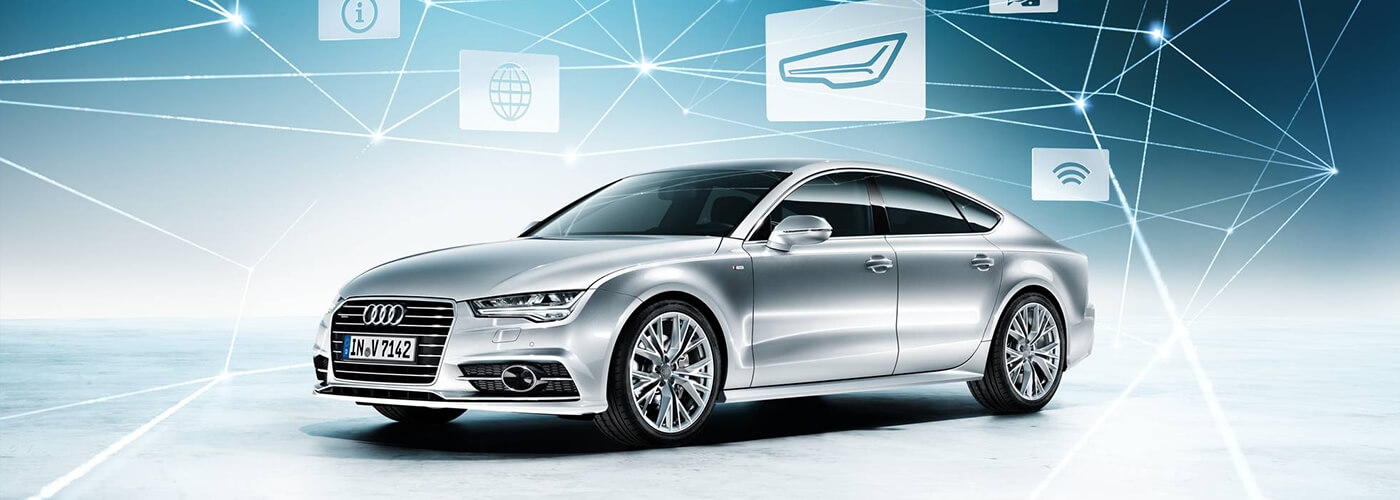
Car Manufacturers need the help of other players to create a wholistic Connected Car Ecosystem – an Ecosystem where connected cars talk to each, city infrastructure and internet via multiple technological ways. The Connected Car Ecosystem represents a great opportunity for all the stake-holders including consumer.
Connected Car is an emerging reality. All Major OEMs are working on designing and rolling out newer and better use cases for Connected Car. They are working with unlikely partners as they navigate the future of cars. OEMs are open for help from software developers and testing organisations to accelerate their solutions to the market.
Infotainment is a big area where Connected Car technologies have made the first impact – which is obvious and understandable as it represents easy monetisation and quick adoption. A few Insurance companies have leveraged Apps/OBD Data/Telematics for better insurance premiums and information. Innovative and interesting new use-cases are emerging with the confluence of IoT, Mobile and Digital Technologies. A few are:
1. Connected Cities: The Smart city can light only those street lights where the car is driving through. It means energy efficiency. The traffic management can be better planned based on the flow of current traffic. Roads that need immediate attention can be quickly determined. Audi has already announced the integration of street traffic light information on the car dashboard.
2. Connected Payments: Cars can update one about the best prices at the fuel stations. Going forward, the payment can be made seamlessly for those fuel recharges. The Connected Car can also make the payment for those drive-through gelatos and French fries.
3. Safety: Cars can be monitored to drive along pre-determined and optimal routes – any out of normal behaviour can trigger safety alarms and alerts. The car can equally detect the rightful owner through behaviour analytics. Similarly, cars can detect driver drowsiness or health issues and trigger relevant actions thereby ensuring safety. A driver’s heart attack can automatically stop the car and initiate SOS call.
4. Better Care: Advanced Diagnostics help to take preventive maintenance and fixing of worn out automotive parts. Defects can be identified earlier and effectively avoiding large-scale recalls and PR disasters. In case of breakdown, quick, meaningful and relevant assistance can be provided.
5. Better Driving Experience: Voice Recognition will open new vistas in driving. The Driverless car with Voice Recognition is a step towards autonomous driving.
The Connected Car era also presents new questions:
1. Who owns the customer? OEM, Software Manufacturer, Infrastructure Owner?
2. How to create and win customer loyalty? The customer loyalty is of paramount importance to create a stream of continued revenues but what does the customer really need?
3. How to create Open Framework for all to access? How to create New Standards for not only the car but customers’ data and information in a secure way?
4. Effective collaboration to avoid duplication of standards, efforts and investments. How to leverage data collected through multiple systems?
5. Regulatory & Privacy Issues. Wisdom gained from biometric, behavioural and locational data could be a goldmine as well as a landmine.
6. Security Threats. Predicting system abuse and vulnerabilities is a key challenge. Hijacking is another treat.
The industry is confident of addressing these challenges and moving ahead with a passionate fervour. These will create new opportunities, new business potential and new winners. The Connected Car Ecosystem is a compelling idea that promises better overall experience to customers, customer loyalty to players and overall environmental and safety benefits to the society.
Everyone has pet ideas and interesting concepts that are pure fun, very energizing and often seemingly impossible. I have my list. One of the ideas in the list was Annapurna Tablets. The idea was simple. Body needs food. Food takes lot of time. I really hate time spent on lunch. Even dinner – if I am busy. Many of my friends and colleagues visit home for lunch – waste of time, fuel and break from thinking. My mother or wife have to worry about the menu for the lunch – especially difficult for a person like me. Why not have a tablet that gives you all the necessary ingredients of the daily food? Going beyond the normal supplement pills ! Imagine a pill for dal, chawal, roti, subzi etc. It helps in many time. Saving precious time for you and your environment. In a country like India, it will release the time from housewives – as this becomes their major chore. They can invest in other productive areas including their passions, kids or helping family business.
The joy of food increases. You really cherish those lunches and dinners of full food. You really spend time with friends and colleagues and spouse when you go out for lunch or dinner.
Of course my parents always warned me. But this will not allow the natural growth of your body. Many body parts exists such to help us digest food. Including teeth ! I agreed to some points.
Annapurna Tablets was a thing I never thought would happen. Mine was just wishful thinking and part of my friend conclaves. I am sure that there are lot of people thinking on same lines. I was overjoyed and extremely excited when I saw the concept of Soylent. It addresses the very same issue.
Soylent is an efficient form of fuel for humanity for the first time in history. Soylent is an affordable nutrition drink with all the essential ingredients the healthy body needs. It is an substance that is intended to replace food – just mix the powder with water and drink.
The name Soylent is inspired from the 1973 movie Soylent Green
Soylent seems like the future of food. Cut the emotion out of food. Do not worry about what to eat. Just eat Soylent which addresses the needs of your body. Have the same thing. It is time efficient. Saves money as well. Steve Jobs did not worry about what to wear – saves decision making and one less thing to worry !
And when you really want to enjoy food – do that. The same food may test better !
Of course Soylent may be very controversial as well. I am sure enough research has been done on it and its effect. It is ready for delivery in US from early 2014. It will soon open for international orders.
Maudene Nelson, a dietician at Columbia University’s Institute of Human Nutrition. “Nutritionally I don’t think you can make a food that delivers everything,” she says. “This is an obsessive way of making food choices. It’s not obsessively overeating. It’s obsessively micromanaging.”
The dream of replacing food has been around for hundreds of years, popular with science fiction writers and utopian communities, says Amy Bentley, an associate professor of food studies at New York University. “In the 19th century, Victorians talked about the meal in a pill,” she says. While the idea may appeal to a small group of people who find eating to be a chore, she says, “for better and worse, most people find food pleasurable.”
Soylent is a revolutionary concept. It is a major mindset shift for mankind. Can it solve the world’s hunger problem? Or it will be just a Silicon Valley techie’s time-saving tool only? Let us see !