Blog

  • What Is Enough: The Only Question That Survives the Climb

    What Is Enough: The Only Question That Survives the Climb

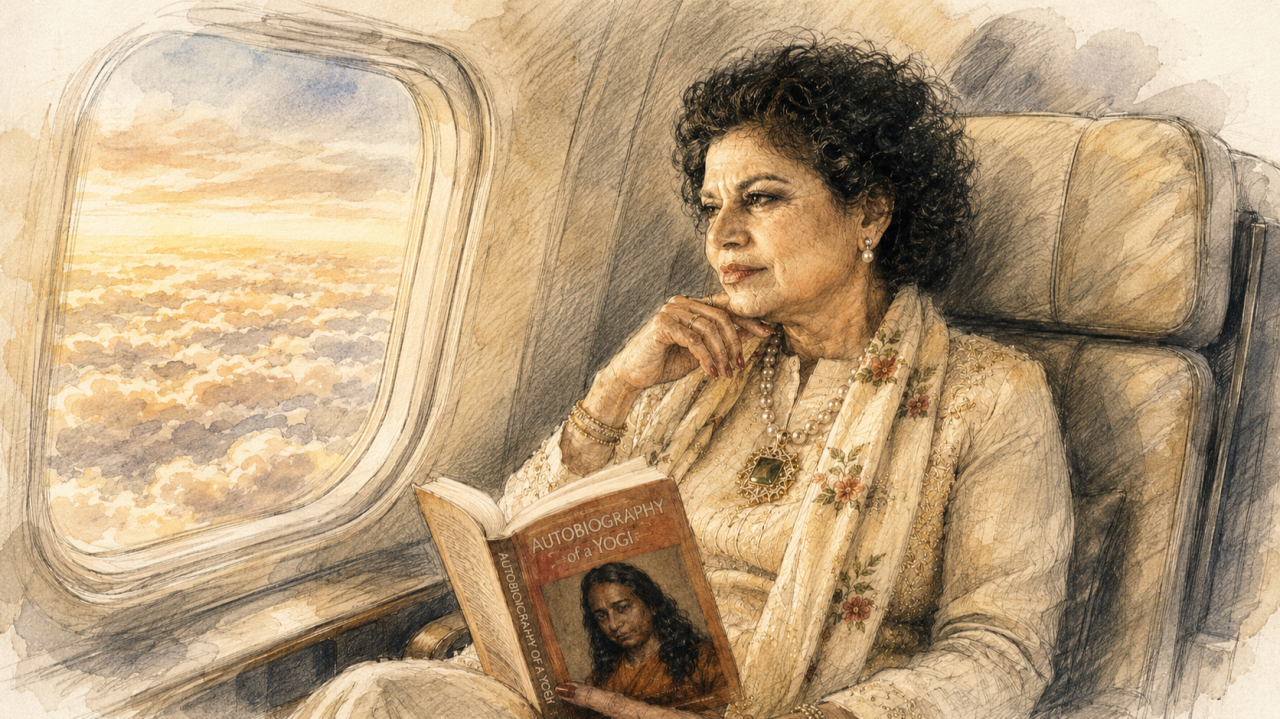
    The cabin was empty. She was the only passenger in the first-class compartment, somewhere between the closing dinner and the next morning’s press release. The deal in her briefcase would, when she signed it on Monday, take her firm into a different weight class — a mega institution, the kind of client she had spent a decade learning how to win. The plane was returning her, with the press release already drafted, to a city where her husband and her young daughter were asleep.

    And then, somewhere between the meal service and the descent, she began to cry.

    She tells the story carefully when she tells it now, because she needs you to understand one thing about her: she did not cry. Not as a partner at McKinsey. Not as the young woman who had walked down Park Avenue at midnight in a sari, with two suitcases and no hotel room. People who know me will tell you I’m just not a crier. Even when I was little, I wouldn’t cry.

    She did not know why she was crying. It was not sorrow. It was not regret. The book in her hands was Autobiography of a Yogi. The deal was not a bad deal. The career was not a wrong career. And yet the tears kept coming, all the way to the descent.

    On Monday morning, she called the client. She told them she could not sign. The press release would have to be killed. The deal — by then nearly two years of work — would have to be handed back. They told her she was crazy. She knew she was not.

    The decision cost her a great deal. It took her months to undo what the next twenty-four hours of her life were supposed to do. But the question that had arrived uninvited in the first-class cabin, without sorrow and without reason, did not leave her. It only got larger.

    I will make more money. I will have more fame. And when does it stop. What is enough.


    I watched the WIMWIAN Trailblazers podcast featuring Chandrika Tandon . The conversation was recorded at Indian Institute of Management Ahmedabad — she was back for her fiftieth reunion, the first guest of a new podcast the endowment fund had built to listen to its own.

    And the moment I keep returning to is not the Grammy. It is not the hunger strike at seventeen. It is the cabin. The tears of a woman who did not cry. Because what arrived on that flight was not a midlife crisis. It was a question. And the question is the same one that, at a certain hour in a certain decade of a certain kind of life, arrives uninvited at the door of every serious person.


    To understand the question, you have to understand what was sitting in the briefcase on the seat beside her.

    She had reached, by then, a place few advisers reach in any market in any decade. Her firm — which she had started by liquidating her own retirement savings, by bleeding money for eleven months without a single client, by signing paid-on-success contracts because she was that certain of her formula — had become a discreet engine of restructuring at the centre of American banking. She had taken a bank whose stock traded at a dollar and five-eighths and walked it, in four years, to sixty-one dollars a share. She had done it again, and again. She was, at one point in her career, a disclosable event for the SEC: when a bank hired her, they had to file. The stock would move on the news of her name. People called her office at odd hours just to learn which town she was flying to, so they could guess which bank might be next.

    The deal in the briefcase was the next size up. It would have moved her firm from the company of advisers into the company of the institutions they advised. It was, in every external sense, the deal of a career.

    She did not sign it.


    What she did instead, in the months and years that followed, was strange in the way that intentional lives are always strange to those still living accidentally.

    She began, at the same age at which her contemporaries were preparing to slow down, to learn music seriously. She had sung all her life — when I hear an air conditioner, I am making a tune; when I hear the sound of thunder, I am making a tune — but always around the edges of the work. Now she wanted the masters. The masters do not take pupils in middle age; they take them at four. So she became, in her own phrase, a music beggar. She found a Carnatic teacher at Wesleyan University, two hours from her Manhattan apartment, and she asked him for a 6 a.m. Saturday class because it was the only window her life left her. He kept refusing. She kept asking. He finally agreed.

    For a year and a half, every Saturday, she set her alarm for half past three. She walked out of her building. She de-iced her car — sometimes for an hour, at two thirty in the morning, because the car was parked on the street. She drove the two hours with the cassette playing the scales she would be tested on. She sat in his living room from six to eight. She drove the two hours back. She bought a muffin on the way. She was home by quarter past ten, in time to wake her daughter.

    She was at the time still running her firm.


    The music was the first of the journeys. The giving was the second.

    She did not begin with a cheque. She walked into NYU one afternoon — it was the closest serious institution to her apartment — and she asked the dean whether she might be useful. Can I please give myself. She offered a few hours a week as a mentor. They asked her to be the Distinguished Executive in Residence at the Stern School. Three hours a week became three days a week. She taught classes. She sat in on faculty lunches and interrogated the professors about their research. Several years in, the president of NYU invited her to join the board. From the board of NYU she became chair of the engineering school, which has since taken her family name. The Tandon School of Engineering at NYU. The Boyd Tandon School of Business at Madras Christian College. The Krishnamurthy Tandon School of Artificial Intelligence at IIMA Ahmedabad — the institution that is now hosting the conversation in which she is telling the story.

    She has a rule for any of it. Time, talent, and treasure must align. If she cannot give all three — if she cannot get inside the project, learn it, walk it into being — she does not write the cheque. The cheque is the lightest of the three. The hardest is the time. Anyone can give what is in their account. Few can give what is on their calendar.

    She has a phrase for the kind of work this becomes, and it is, I think, the most beautiful phrase in the conversation. We have a lot to learn from people who planted these banyan trees we are all sitting in the shade of. The image is older than her. It is older than any of us. But the people who actually plant banyans in their lifetime are rare, because banyans do not grow in your lifetime. They grow in someone else’s. To plant a banyan is to give shade to a child you will never meet.


    But the question has not yet arrived.

    The question arrives when she is asked, late in the conversation, about the world her grandchildren will work in. Her register changes — no longer the register of a woman remembering, but of a woman watching. She has just met, she says, a senior executive in the United States who is now running a company with annual revenues of a hundred million dollars and a single employee. He had been running it before, she says, with seventy-eight. She wonders aloud what becomes of the seventy-seven. She says, almost in passing, that the speed of all of this means we will be in continuous beta mode for the rest of our working lives.

    Then she says the line that, when I heard it the third time, I went back to the transcript and underlined.

    Machines can do everything faster. Machines have got domain knowledge. We have to figure out how to be wholly human.

    Becoming wholly human, she says, is becoming more centred. One cannot have a moral compass if one is stressed out inside. One cannot, she says, be a boat that carries others across the water if one’s own boat is full of holes.
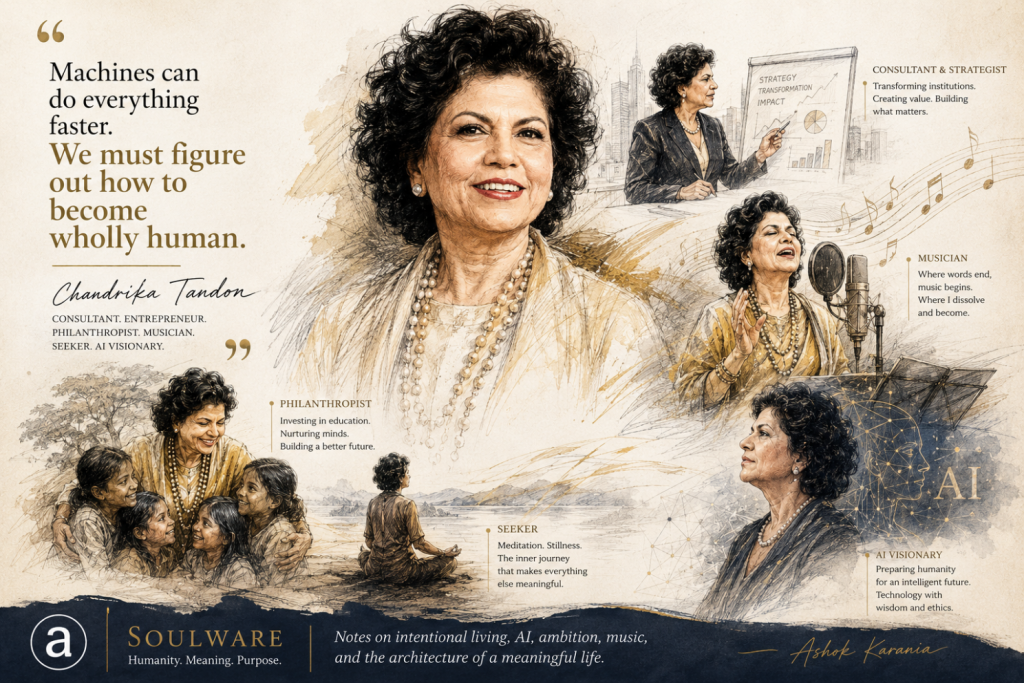
    Years after the flight, in a podcast taping at IIMA Ahmedabad, she would say something else — quietly, almost in passing.

    If I died right now, I would have zero regrets.

    It was, in its own way, the answer to the question that had arrived uninvited in the cabin.


    The cabin, then, was not a turning point. It was a hearing. The question had been in the air for some time. The first-class compartment, with its empty seats and its single passenger and its Yogananda paperback, was simply the room quiet enough for her to hear it.

    Most of us will not get a cabin. Most of us will get a Tuesday morning. And the question, when it arrives — and it arrives, eventually, for anyone whose life is built on momentum — does not announce itself. It does not come dressed as crisis. It comes, sometimes, as tears with no obvious cause. It comes, more often, as the slow realisation that the calendar one is keeping is not the life one is living.

    Her answer turned out to be specific, idiosyncratic, a little inconvenient. Music at six on Saturday mornings. A board seat at NYU. A banyan-shaped school at the institution she had once been afraid to leave Chennai for. The shape of her answer is not the shape of yours. The shape of your answer is your own.

    But the question is the same. It is the only question that survives the climb.

    When does it stop. What is enough.


    This essay is a reflection on a conversation recorded for WIMWIan Trailblazers, the inaugural podcast series of the IIMA Endowment Fund, with Chandrika Tandon (PGP 1975) as its first guest. The full episode is available below.

    🎙️ Watch on YouTube: https://lnkd.in/gTizgv3Q

    🎧 Listen on Spotify: https://shorturl.at/KV9ua

    With gratitude to the IIMA Endowment Fund team for bringing this conversation into the world.

    #Soulware #SunshineLife #WhatIsEnough #IntentionalLiving #ChandrikaTandon #IIMA #Leadership

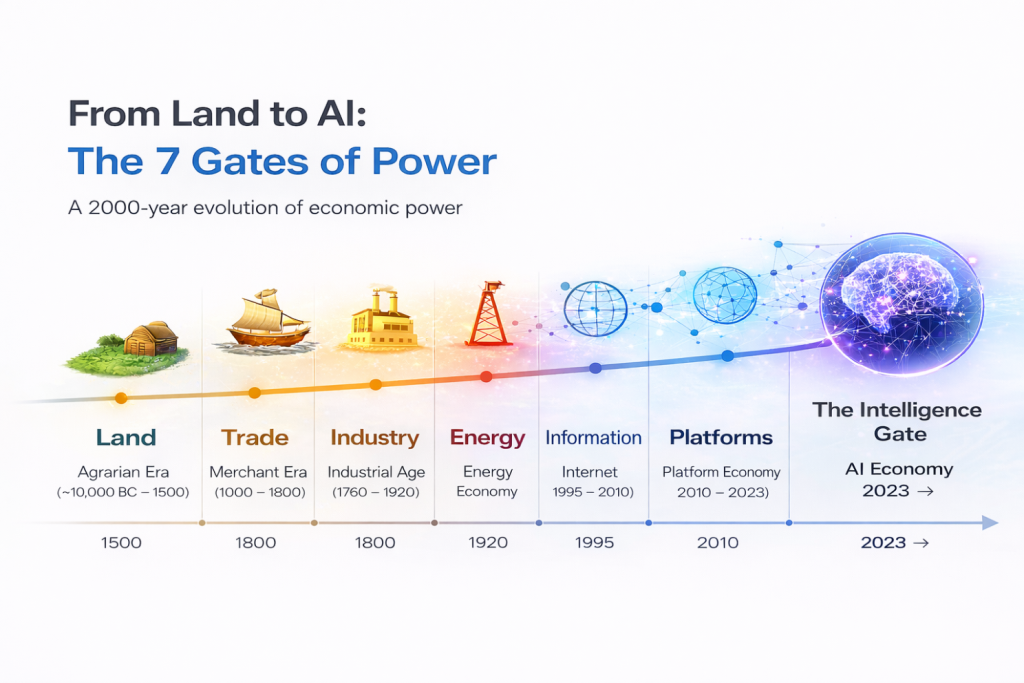
  • From Land to AI: The 7 Gates of Power That Control the World

    From Land to AI: The 7 Gates of Power That Control the World

    Across history, power has rarely been random.

    It has almost always flowed through a small number of “gates.”

    Whoever controlled those gates shaped wealth, influence, and the direction of civilization.

    Every economic era has had its defining gate.

    And today, we are witnessing the rise of a new one.


    The 7 Gates of Power That Shaped the World

    1. The Land Gate

    Agrarian Civilizations

    For thousands of years, wealth came from land ownership.

    Land meant control over:

    • food production • taxation • political authority • armies

    Kings, emperors, and feudal systems dominated because agriculture powered economies.

    Insight: Power belonged to those who owned land.


    2. The Trade Route Gate

    Merchant Empires

    As global commerce expanded, power shifted from land to trade networks.

    Civilizations controlling the routes dominated global wealth:

    • Venetian merchants • Arab trading networks • Portuguese maritime empires • British shipping power

    Ports and shipping lanes became strategic assets.

    Insight: Whoever controlled the routes controlled the riches.


    3. The Industrial Gate

    Factories & Production

    The Industrial Revolution shifted power again.

    Factories enabled massive production of:

    • steel • railways • automobiles • machinery

    Industrial titans like Rockefeller, Carnegie, and Ford reshaped the economic landscape.

    Insight: Industrial scale replaced agricultural wealth.


    4. The Energy Gate

    Oil & Natural Resources

    The 20th century became the energy age.

    Oil powered:

    • transportation • manufacturing • logistics • military power

    Countries and corporations controlling energy infrastructure gained immense influence.

    Insight: Energy became the lifeblood of modern economies.


    5. The Information Gate

    The Internet Era

    The internet reshaped power dynamics again.

    Companies controlling information flows became dominant:

    • search engines • social networks • cloud platforms

    Data emerged as the most valuable digital asset.

    Insight: Information became more valuable than many physical resources.


    6. The Platform Gate

    Digital Ecosystems

    Platforms transformed the internet economy.

    Companies like:

    • Apple • Google • Amazon • Microsoft

    built ecosystems where others build businesses.

    Network effects made these platforms incredibly powerful.

    Insight: Platforms became the operating systems of modern commerce.


    7. The Intelligence Gate

    The AI Era

    We are now entering the Intelligence Economy.

    The next generation of power will come from controlling:

    • AI models • data ecosystems • compute infrastructure • autonomous agent systems

    Companies building this new foundation include:

    • OpenAI • Nvidia • Microsoft • Google

    Insight: Intelligence itself is becoming infrastructure.


    The Pattern Across History

    Article content
    Each Era Is Defined By Who Controls The Gates

    The Strategic Lesson

    Most organizations compete inside the system.

    The most powerful organizations build the gate itself.

    That is why:

    • Platforms beat products • Infrastructure beats applications • Ecosystems beat individual companies

    And now — Intelligence will beat software.

    A Final Thought

    History is not shaped by those who work the hardest.

    It is shaped by those who control the gates through which the world must pass.

    In the AI era, that gate is no longer land, energy, or even data.

    The new gate is intelligence.

    And the organizations that build the systems through which intelligence flows will shape the next century.


    #ArtificialIntelligence #AgenticAI #AILeadership #FutureOfWork #DigitalTransformation #AIInfrastructure #Strategy #Innovation

  • When Stepping Back Is the Bravest Step Forward

    When Stepping Back Is the Bravest Step Forward

    The Courage to Choose Depth Over Momentum

    The news sent shockwaves through an entire industry.

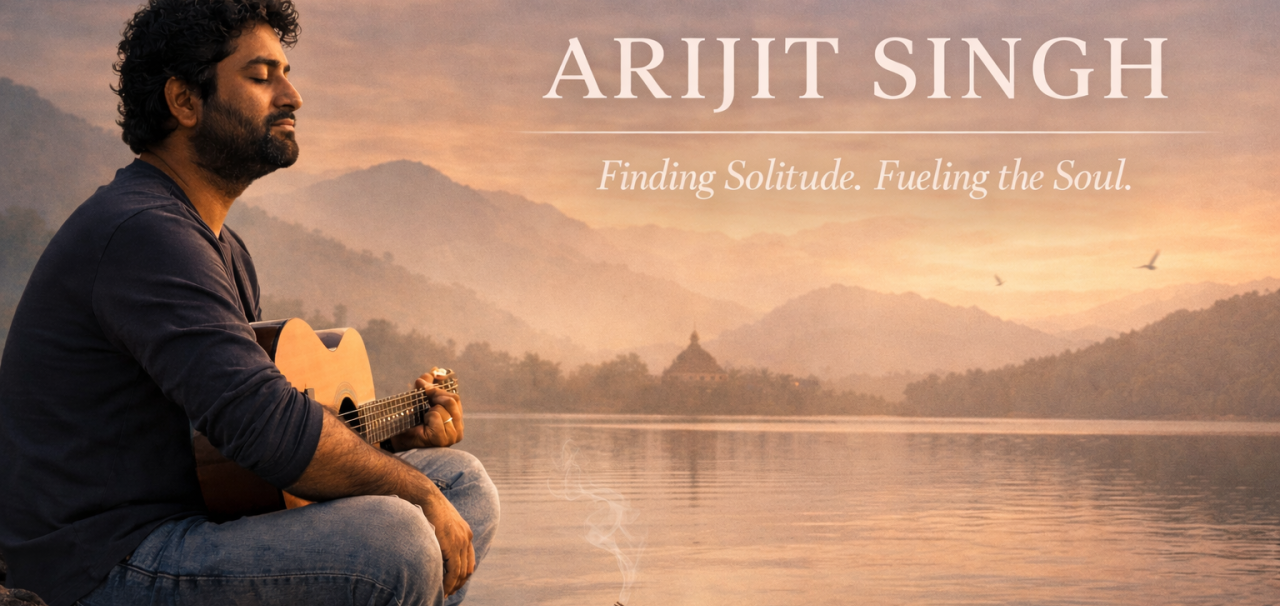
    Arijit Singh—Spotify’s most-streamed artist for seven consecutive years, Ed Sheeran collaborator, a voice with a following that rivals Taylor Swift—announced his retirement from active playback singing. Not because he had to. Because he chose to.

    The industry was stunned. Why leave the peak? He didn’t leave because he was finished; he left because he was starving. He left to feed his classical roots, to touch the “pure music” that commercial success often dilutes. To focus on what matters to his heart and soul, not just his career trajectory. He chose his heart over the hits.

    Brave. Courageous. Revolutionary.

    The Paradox of Success

    Here’s what skeptics miss: “He can afford to do this—he has enough name, fame, and money.”

    Wrong.

    Success operates like sugar and sales—the more you have, the more you crave. The machinery of fame doesn’t slow down; it accelerates. Saying NO at the peak of your powers isn’t easier because you’re successful. It’s exponentially harder.

    That’s precisely what makes Arijit’s decision remarkable.

    He’s not alone in this brave new movement.

    An emerging singer Hardik Dave paused all commercial engagements to focus on Shabd Parikrama—an intuitive, immersive experience that speaks to his artistic soul.

    Zakir Khan, the first Indian to perform in Hindi at Madison Square Garden, stepped into silence to heal his mind —to refresh, reinvent, and sharpen his saw for the next act.

    A pattern is emerging: Stepping back from success is no longer failure. It’s a commitment to reinvent, to rise higher, to go further.

    If Arijit Can, Everyone Can

    Because here’s the truth we avoid:

    Knowing when to walk away

    Knowing when to focus on the next chapter

    Knowing when to listen to your heart

    Knowing when to fuel your soul

    Knowing when to feed the artist within

    It takes guts. It takes restraint.

    The Addiction to Busyness

    Why are we never content?

    Why do we chase everything simultaneously, wearing our busyness as a badge of honor? We accumulate certifications, enroll in every “Top 10” list, binge every trending series. If you actually added up all the “Top 10” things the internet recommends, you’d need several lifetimes to complete them.

    We accept stress, burnout, shallow relationships, and health crises—as long as Instagram validates us with likes.

    How utterly absurd.

    We’ve lost the ability to stand and stare. Our calendars have no white space. Our minds have no room for wonder.

    And we wonder why we’re not creating anything meaningful.

    The Masters Knew Better

    Michelangelo didn’t paint a thousand ceilings; he painted the right one, and it became eternal.

    Van Gogh was prolific yet deeply focused, creating extraordinary work in compressed time.

    Both understood something we’ve forgotten: depth beats breadth. Immersion beats accumulation. Being beats doing.

    “You can do anything, but not everything.” — David Allen

    “The difference between successful people and really successful people is that really successful people say no to almost everything.” — Warren Buffett

    “Starve your distractions, feed your focus.”

    Steve Jobs didn’t create a thousand products. He created a few insanely great ones. He famously said, “I’m as proud of what we don’t do as what we do.”

    If you’re always on autopilot, always busy, always scattered—AI and robotics will gladly replace that version of you. Because that’s not living; that’s executing a program.

    Your First Move

    The gap between knowing and doing is where dreams die.

    So here’s how you bridge it—not someday, not when conditions are perfect, but now:

    1. Name Your North Star

    Not your boss’s goal. Not your parents’ dream. Not society’s checklist. Yours.

    What would you create if no one was watching? What makes you lose track of time? What would you do even if it paid nothing? That’s your North Star.

    During my PhD, everyone expected me to chase publications and conferences. But my North Star was different—I wanted to create frameworks that actually changed how people work. So I blocked Diwali, Christmas, and holidays exclusively for deep thesis work. Three-day sprints for field research. No apologies.

    Your move: Write down three goals that are yours—not borrowed, not expected, not impressive. Just true.

    2. Guard Your Sacred Hours

    All deep work happens in flow states. You can’t schedule flow, but you can protect the conditions that invite it.

    Mozart composed in the early morning. Hemingway wrote at dawn. Maya Angelou rented hotel rooms to escape distractions. They didn’t wait for inspiration—they created the space for it to show up.

    Even today, when I have critical deliverables, I don’t negotiate with distractions. Phone off. Door closed. Calendar blocked. The world can wait two hours.

    Your move: Block one 90-minute window this week. No email. No Slack. No “quick check.” Just you and your craft.

    3. Build Your “Hell No” List

    You already have a to-do list that never ends. Now create the list that actually matters: your Not-To-Do List.

    What will you stop doing? What committees will you quit? What “opportunities” will you decline? What certifications will you skip?

    This isn’t about being lazy. It’s about being ruthless with your finite energy.

    Your move: Write down five things you will say NO to this month. Five meetings, projects, obligations, or distractions. Feel the guilt. Do it anyway.

    4. Turn Doubters Into Believers

    Here’s the secret: You don’t need everyone’s permission. You need your results to speak.

    Communicate your priorities clearly. Then deliver exceptional work in your focus areas. When people see the quality of what you produce, they stop questioning your choices and start championing them.

    Your family might not understand why you’re saying no to gatherings. Your boss might not get why you’re declining projects. But when your focused work produces legendary outcomes, they become your biggest advocates.

    Your move: Tell three people about your focus area this week. Not asking permission—informing them. Then prove it with your work.

    The surest path to failure is saying yes to everything.

    The surest path to mastery is saying no to almost everything.

    The Ultimate Truth

    Here’s what nobody tells you about excellence:

    Excellence is lonely before it’s legendary.

    When Arijit chose inner voice over commercial success, people questioned him. When Jobs killed profitable product lines to focus on the iPhone, the board resisted. When you choose depth over breadth, people will call you impractical.

    Let them.

    Because years from now, they’ll call you visionary.

    Your legacy won’t be measured by how busy you were. It will be measured by what you built when you stopped being busy.

    The urgent always screams louder than the important. Email will always demand attention. Meetings will always multiply. Social media will always beckon. The world will always want a piece of you.

    But your soul? Your art? Your magnum opus? They whisper. And you must learn to hear them above the noise.

    “The cave you fear to enter holds the treasure you seek.” — Joseph Campbell

    That cave? It’s the space between who you are and who you could become. It’s scary because it demands you say NO to good things to say YES to great things.

    Enter the cave.

    The Soul Needs Space

    Focus on depth. Focus on immersion. Focus on being present. Focus on living, not just existing.

    Focus on doing something worthwhile—for the pure joy of the art and heart.

    Focus on making the Earth better, someone’s life richer.

    Focus on taking only what is your due, not everything offered.

    If Arijit can choose his soul over his spotlight, so can you.

    The question isn’t whether you can afford to step back.

    The question is: Can you afford not to?

    The world has enough workers.

    It’s starving for artists.

    Be the artist.

    #Soulware #FocusOnCraft #DeepWork #ArijitSingh #CourageToChoose #LiveWithPurpose #ZakirKhan #Artist

  • The Sunshine Life Playbook: A Life That Matters

    The Sunshine Life Playbook: A Life That Matters

    Stop Sleepwalking. Start Living.

    Soulware: Beyond The Horizon – Issue #2


    “There are two important days in your life: the day you are born and the day you find out why.” — Mark Twain


    Are you sleepwalking through your life?

    Are you just another number? Another social media junkie scrolling through someone else’s highlight reel?

    Who are you, really?

    Going through the motions. Chasing promotions. Collecting possessions. Following the herd.

    Wake up. Meetings. Commute. Scroll. Sleep. Repeat.

    Is this it? Is this what we were given this precious gift for?

    Because here’s what I believe, deep in my soul:

    Life is special. Life is precious. Life is God’s gift.

    Hindu philosophy teaches that we receive human birth after countless lifetimes. This isn’t just poetic—it’s a reminder that this life, right now, is extraordinary.

    So why are we living it like we’re ordinary?

    Why are we treating our one magnificent existence like it’s a dress rehearsal?

    As Socrates said: “An unexamined life is not worth living.”

    So let’s examine. Let’s awaken. Let’s create not just a good life, but a blockbuster life.

    Welcome to the Sunshine Life.


    What Is The Sunshine Life?

    It’s simple, really.

    A meaningful, versatile, enriching, harmonious, and well-lived life.

    A purposeful life. An authentic life.

    A life you actually love. A life that matters.

    Not the life your parents designed. Not the life Instagram sold you. Not the life your colleagues are racing toward.

    YOUR life. Fully lived. Fully awake.

    The Sunshine Life isn’t about perfection. It’s about presence. It’s about making your existence count—for you, for others, for the world.

    And it rests on seven foundational elements.

    I call them The Sunshine Seven.


    The Sunshine Seven: Your Life Architecture

    1. Purpose: The North Star

    Purpose gives meaning to life. It’s the difference between existing and truly living.

    Here’s what most people get wrong: They think purpose is something you find, like a treasure buried in a cave.

    The truth? Purpose emerges. Purpose evolves. Purpose can change.

    Your purpose at 25 isn’t your purpose at 45. And that’s not failure—that’s growth.

    But here’s what doesn’t change: True purpose involves helping others. Creating impact. Being light for someone else.

    Ask yourself:

    • What breaks my heart about the world?
    • What would I do even if no one paid me?
    • When do I feel most alive?

    Start there. Your purpose is whispering. Are you listening?


    2. Relationships: The Longest Study On Happiness

    Harvard conducted the longest study on human happiness—spanning 80+ years, tracking hundreds of lives.

    The conclusion? It’s not money, fame, or career success.

    It’s relationships. Always relationships.

    Each relationship is sacred:

    Love: It’s ibaadat. A symphony of souls.

    Marriage: Not a destination—a journey. A daily commitment to grow together.

    Children: Give them roots to ground them and wings to fly.

    Friends: They are your diary, your mirror, your catalyst for growth.

    Work Colleagues: More integral to your wellbeing than you realize.

    The quality of your life is the quality of your relationships.

    Invest there. Return there. Protect that.


    3. Experiences: Feed Your Soul

    When you’re 80, looking back, what will you remember?

    The car you drove? The title on your business card?

    Or:

    The sunrise you watched from a mountain peak. The music that moved you to tears. The book that changed how you see the world. The marathon you thought you couldn’t finish.

    Experiences shape us. Experiences enrich us.

    Nature. Travel. Music. Art. Reading. Hobbies that have nothing to do with productivity.

    Be adventurous. Step out of your comfort zone. Embrace serendipity.

    Here’s a radical idea: Disappear for a month. Go on a solo journey. Be a hermit. See what emerges when the noise stops.

    The Sunshine Life is an explored life.


    4. Health: Your Only Real Wealth

    It’s clichéd, I know. “Health is wealth.”

    But nothing is further from truth.

    A healthy person has a thousand dreams. An unhealthy person has only one.

    Your body isn’t just a carrier for your head. It’s your experience center. It enables the accomplishment of every dream you have.

    Physical health AND mental health. Both non-negotiable.

    The components:

    • Positive mindset (this comes first)
    • Nutrition that fuels, not just fills
    • Movement—cardio, strength, flexibility
    • Sleep (stop wearing exhaustion as a badge)
    • Laughter (seriously—when did you last laugh until your stomach hurt?)

    And eliminate what destroys you: excessive alcohol, smoking, drugs, stress that you choose to carry.

    You get one body. One mind. Treat them like the miracles they are.


    5. Work: Love Made Visible

    Work is a big area of life. For many of us, it’s linked to our sense of identity, our purpose.

    Without meaningful work, people feel void. A loss of self.

    As Kahlil Gibran wrote: “Work is love made visible.”

    The Bhagavad Gita teaches us about action—about doing our dharma without attachment to outcome.

    So how do you transform work from obligation to calling?

    Develop an attitude of excellence. Adopt a growth mindset. Take ownership like it’s YOUR company, YOUR mission.

    Find your flow state. Deep work. The hours when you lose track of time because you’re so immersed.

    Keep reinventing. Learn. Unlearn. Relearn. The world changes. You must too.

    Create your signature style. Your work should carry your hallmark. As they say in the movie Pushpa: “Pushpa naam sunke flower samjhe kya? Flower nahi, fire hai.” Let your work be your fire.

    Seek work-life harmony, not balance. They’re not opposing forces—they’re parts of the same beautiful whole.


    6. Wealth: What Is Enough?

    Money is important. Let’s not pretend otherwise.

    Money provides security. Comfort. The ability to take care of loved ones. Basic luxury that makes life easier.

    But here’s the question that will define your life: What is enough?

    Need versus greed. That’s the line most of us can’t see clearly.

    How much money do you actually need? Calculate it. Use tools, formulas, common sense. Find the number that ensures comfortable living—needs plus a few meaningful desires.

    Then stop chasing more for the sake of more.

    Can you live without money? No. But you also can’t live WITH only money.

    Money ≠ Happiness*

    (*But poverty ≠ happiness either. Let’s be real.)

    Save wisely. Spend smartly. Invest in experiences and relationships, not just possessions.

    Money is a mindset. It changes from person to person. We’ll dive deeper into this in a future Soulware edition.


    7. Giving: Living Is Giving

    The most important element. The one that transforms everything else.

    Living is giving.

    You have gifts to share: Time. Talent. Money. Ideas. Energy. Presence.

    Be a consistent helper. Mentor. Guide. Light the way for someone behind you.

    Pay it forward. Someone helped you get here. Help someone else get there.

    Volunteer just one hour a week. Watch what it does to your soul.

    Be light for others. In a world that can be dark and overwhelming, be someone’s sunshine.

    As one of my dear friend always says in Hindi: “Kar ke dekho—achcha lagta hai.” (Just try it—it feels good.)

    This isn’t altruism. This is enlightened self-interest. When you give, you grow.


    The Foundation: What Powers The Seven

    All seven elements rest on three foundational principles:

    Learning — Stay curious. Stay humble. Stay growing.

    Positive Mindset — Your thoughts shape your reality. Choose them wisely.

    Authenticity — Be yourself. Everyone else is taken.

    And underneath it all? Spirituality. However you define it. Whatever connects you to something larger than yourself.


    The Sunshine Life: A Summary

    Let me bring it together:

    Purpose defines your life and gives it meaning.

    Health and wealth are important—but they’re tools, not goals.

    Living is giving. Always.

    Be light to others.

    Transform yourself. Transform others. Transform the world.

    This is the architecture of a life well-lived.


    Two Roads Diverged

    You’re standing at a fork right now.

    One road: Keep sleepwalking. Follow the herd. Chase what everyone else is chasing. Arrive at the end wondering where your life went.

    The other road: Wake up. Live purposefully. Build the Sunshine Life. Arrive at the end with stories, impact, meaning, and peace.

    Two roads diverged in a wood, and I—I took the one less traveled by, and that has made all the difference.

    Which road will you take?


    The Sunshine Life Is A Blissful Gift—Waiting To Be Unwrapped

    You don’t need permission to start living differently.

    You don’t need to wait for the “right time.”

    You don’t need to have it all figured out.

    You just need to wake up. Arise. Begin.

    Start with one element. Just one.

    Maybe it’s reconnecting with a friend you’ve been meaning to call.

    Maybe it’s finally signing up for that hobby you’ve been putting off.

    Maybe it’s asking yourself: “What is my purpose? What breaks my heart? What lights me up?”

    The Sunshine Life doesn’t require perfection. It requires presence.

    Emily Dickinson wrote something that stays with me:

    “If I can stop one heart from breaking, I shall not live in vain; If I can ease one life the aching, or cool one pain, Or help one fainting robin unto his nest again, I shall not live in vain.”

    That’s it. That’s the measure of a life well-lived.

    Not the money. Not the titles. Not the followers.

    The hearts you’ve touched. The pain you’ve eased. The light you’ve been.


    Your Turn

    Here’s what I want to know:

    Which of the Sunshine Seven resonates most with you right now?

    Which one are you neglecting?

    What’s one small step you can take this week toward your Sunshine Life?

    Tell me in the comments. Let’s figure this out together.

    Because we’re not just building careers here. We’re building lives that matter.


    This is Soulware: Beyond The Horizon. Where we explore not just how to work better with AI, but how to live better as humans.

    If this resonated, subscribe and share it with someone who needs to read this.

    The Sunshine Life is waiting. Let’s unwrap it together. 🌅


    #Soulware #SunshineLife #Purpose #MeaningfulLife #MondayMusings #ThoughtLeadership #LifeWisdom #Authenticity

  • Adolescence Review: An Impeccable Masterpiece – Mandatory Watch!

    Adolescence Review: An Impeccable Masterpiece – Mandatory Watch!

    Adolescence Review: An Impeccable Masterpiece – Mandatory Watch!

    Adolescence is a gripping top notch layered roller coaster dealing with the highly relevant themes of adulting, impact of influencers, teenage insecurities, social media indoctrination, deep misogyny, and parenting challenges in modern world! A catastrophic, horrific and moving experience!

    Just watch it! Every parent, every educator and every teenager should watch it!

    Spoilers ahead, if you continue to read!

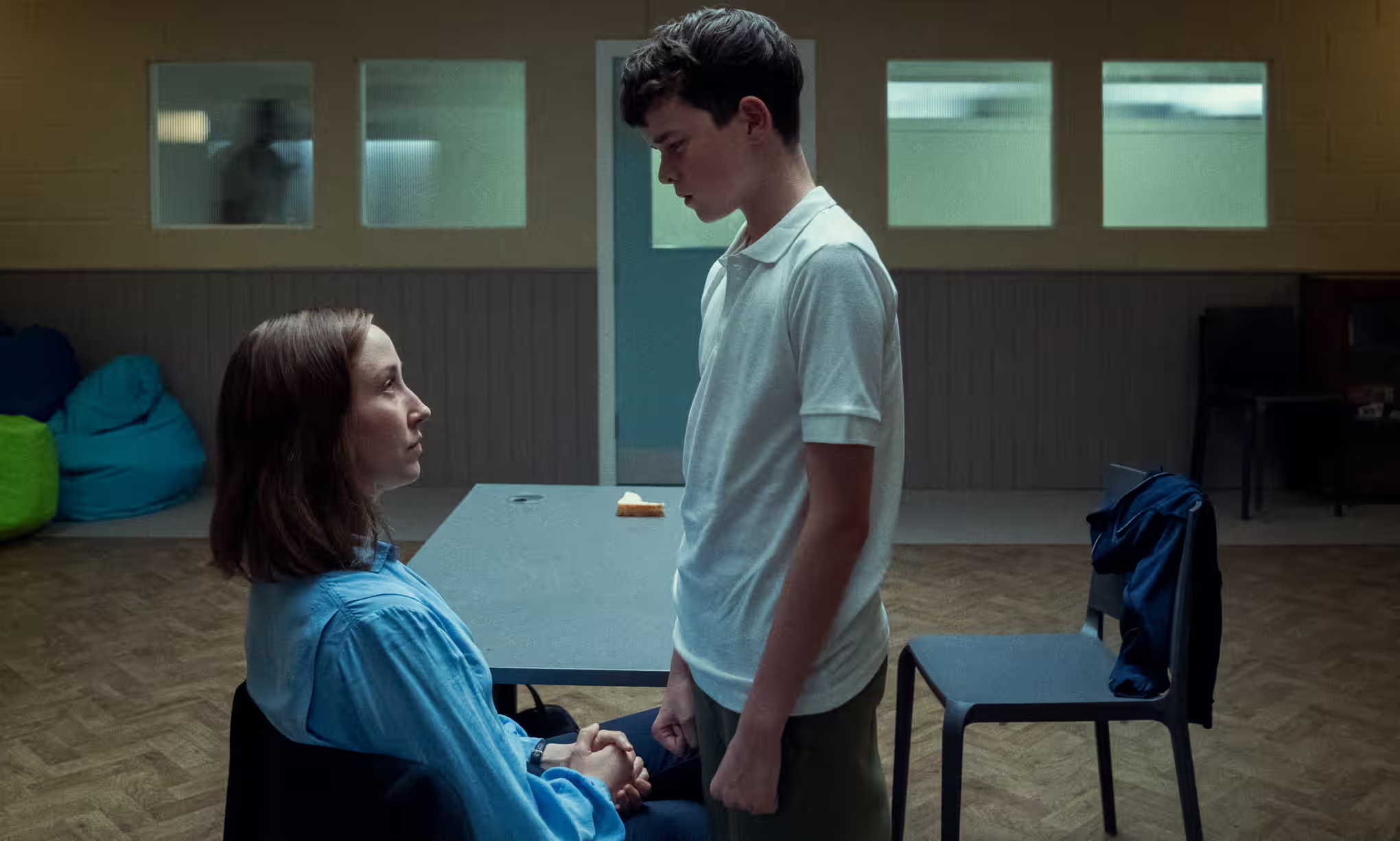
    Adolescence is about how an incident changes the lives of a family. A 13 year young boy is accused of a murder and arrested from his home. The four episodes cover different perspectives – first episode is a police procedural dealing with arrest in the police station, the second episode showcases the behaviour of teens in contemporary device loaded school, the third episode is the closed door hard hitting interaction of psychologist with the accused and the final episode is the impact on family and life after the event in the home and town.

    The show is a masterclass – the amazing idea of a single shot take for the entire episode creates a great impact – like watching live theatrical purpose! Episode 3 will remain one of the finest one hour of television in recent times! Class!

    The amazing prowess of actors is on full showcase – how the intelligent posh psychiatrist Erin Doherty engages the accused, uncovers the truth and processes her emotions – just out of this world. The way Stephen Graham as father deals with the situation is exemplary – straddling shock, concern, anger and regret!  His facial emotions say what words cannot ever say – when the child is stripped – pure genius at work. And the debutant 15-year-old Owen Cooper as the central character slays it – from a pant-wetting boy to smart

    conversationalist to angry male – he is rocking!

    Adolescence is the best of television for you!

    “I should’ve done better”

    I do not think any closing lines have created such a thought-provoking deep impact in recent times as these ones in the Adolescence! Totally Devastating!

    (Casablanca, Gone With The Wind and Silence Of The Lambs are my all-time favourites for beautiful ending one liners!)

    Do you like me?

    Do you think I am ugly?

    Are we safe in our homes?

    The mental repercussion of thoughts like these emerge in a Netflix redeeming spectacular show!

    And more questions emerge!

    How can we do a good parenting job?

    Can good produce evil?

    How can kids deal with social media?

    How much technology is good?

    Adolescence is the perfect mix of gut-wrenching contemporary premise, dazzling performances, technical impeccability and devastating impact that calls for action and conversations!

    Ladies and gentlemen, watch the finest piece of artistic work today!

    #adolescence #adolescencereview #netflix #netflixandchill #misogyny #thriller #crimethriller #murdermystery #weekendwatch #mustwatch

  • Rediscover Gandhi

    Rediscover Gandhi

    Mahatma Gandhi: A man synonymous with India. Nobody deserved Nobel Peace Prize more than Mahatma Gandhi. Nobody deserved more respect and love than Gandhi. But, nobody gets more criticism than Gandhi( especially by Indians). So isn’t it quite surprising for many of you to see Gandhi topping the list of people I admire.

    Gandhi was no emperor, not a military general, not a president nor a prime minister. He was neither pacifist nor a cult guru. Who was Gandhi ? If anything, Mohandas K. Gandhi was a constant experimenter. Mahatma gave us the freedom by revolutionary concept of non-violence, non-cooperation and satyagraha. He was the best communicator known to us. He won the hearts of people even in a new nation like South Africa.

    During my Gandhi sessions, I reiterate that he was the best example of servant leadership. He was equally terrific example of authentic and situational leadership. Beyond his politics and philosophy, he was a linguist and health expert. I am glad that Gujaratilexicon has played a small part in digitising his dictionary. His ideas on women empowerment, village economy, self-reliance,  untouchability and health are timeless. 

    Majority of Indians have not understood Gandhi and we label him as a bygone phenomenon. But I feel he is more relevant today than ever before. 

    Gandhi is in us. Let’s rediscover him. 

    Will we? 

    I get hope from T S Eliot’s lines:

    We shall not cease from exploration

    And the end of all our exploring

    Will be to arrive where we started 

    And know the place for the first time.

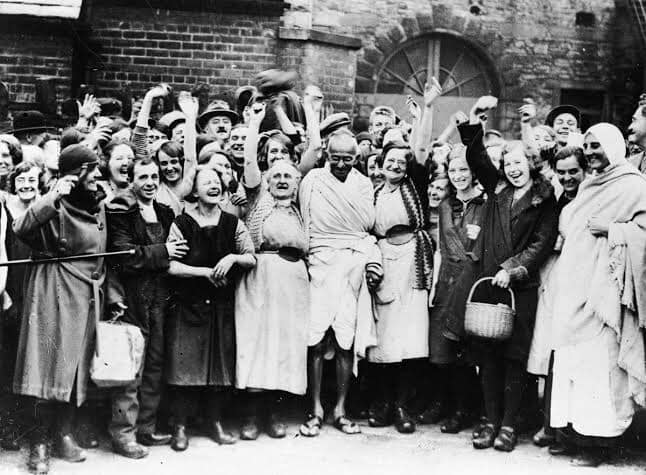
    Image: My favourite anecdote of Gandhi’s visit to Lancashire mills….

  • The Bollywood Movie Watchlist – 2020 Version

    The Bollywood Movie Watchlist – 2020 Version

    During The Course Of My Professional And Personal Interactions, The Topic Of Personal Interests Often Crops Up! As Soon As People Know That I Am Passionate About Movies And Have Professionalized My Passion Through PhD In Management Of Movies, The Next Question Is : Which Are The Best Bollywood Movies? Which Are Your Best Bollywood Movies? Can You Give Your Recommendations? As Everyone Knows, It Is A Really Difficult Question…

    Everyone’s Idea Of Favorite Movie Is Unique. It Depends On Individual Preferences & Taste. And Every Indian Has Their Favorites In Bollywood, Cricket And Politics. But This Is The List For My Friends, Film-Buffs, Non-Indians & Everyone Who Like Movies – We Can Match Our Favorites ! And I Have Created A Shortlist And A Long-List.

    Part 1: The Essential Bollywood List

    The aim of this list is to introduce Bollywood to the newbies – people who want to explore Bollywood. The 20 movie list has mix of all genres and periods with a view to introduce versatile Indian stories and colours of India. The list was first compiled during my European abode.

    1. 3 Idiots
      Perfect example of a movie that wins the love of masses and classes. A complete entertainer with excellence as a theme. A comic take on Indian education system through the eyes of three friends. Impeccable acting and beautiful direction. A movie with the heart in right place. Aamir Khan, Boman Irani, Madhavan shine in the Rajkumar Hirani adaptation of Chetan Bhagat’s best-selling novel. Comedy / Drama
    2. Amar Akbar Anthony
      Entertainment entertainment entertainment. The trademark magic and masala of Manmohan Desai. One of the best ensemble cast with Amitabh Bachchan, Vinod Khanna and Rishi Kapoor. The mirror scene of Amitabh is legendary. Comedy / Action.
    3. Anand
      The classic! Inspirational masterpiece! A dying cancer patient spreads happiness. Art of living! Stalwarts of Indian cinema – Hrishikesh Mukherjee, Gulzar, Amitabh Bachchan and Rajesh Khanna. Beautiful music and memorable moments including: “Babumoshai, Zindagi badi honi chahiye – lambi nai”. Drama.
    4. Baahubali
      The cinematic event of the Indian film industry. The South Indian industry showed that Indians can create our own ‘Lord of The Rings’. ‘Why did Katappa killed Baahubali?’ was the question that bothered millions of Indians. Drama / Action / Visual Extravaganza.
    5. Badhaai Ho
      A peek into everyday Indian household with the versatile Ayushmann Khurana – the poster boy of unique characters of real India. But there is a twist – what happens when 25 year old man finds his parents are expecting another child? An awesome screenplay with spectacular performances by the entire cast. A taste of Indian cinema’s new stories. Comedy.
    6. Bobby
      Innocent, refreshing and beautiful romance of the youth – unchallenged till Qayamat Se Qayamat Tak. Music and freshness were the highlight of the showman Raj Kapoor’s project to pay off debts of Mera Naam Joker and Kal,Aaj Aur Kal. The movie launched the romantic era of Rishi Kapoor and introduced Dimple Kapadia. Romance / Musical.
    7. Dangal
      A sports biopic and an emotional saga of a father who fulfils his dream of winning a gold medal for the country by training his daughters. Indian sport of wrestling captured in Aamir Khan’s classic. The movie became a phenomenon in China as well. Sports / Drama.
    8. Deewar
      Yash Chopra packs simple ‘Good vs Bad’ plot with a dynamite treatment. Two brothers on the opposite sides of law. Salim Javed’s dialogues and acting master class of Amitabh Bachchan, Shashi Kapoor and Nirupa Roy. ‘Mere paas maa hai’ is one of the most popular dialogues of all time. Drama / Crime / Action.
    9. Devdas
      Sanjay Leela Bhansali’s grandeur and larger-than-life treatment of Sarat Chandra Chattopadhyay’s novel Devdas. Perfect casting, amazing music, ‘Dola Re’ dance and overflowing emotions….Magical. Shah Rukh Khan, Madhuri Dixit and Aishwarya Rai deliver towering performances. Never has been a loser’s tale presented so magnificently! Drama / Romance / Musical.
    10. Dilwale Dulhaniya Le Jaayenge
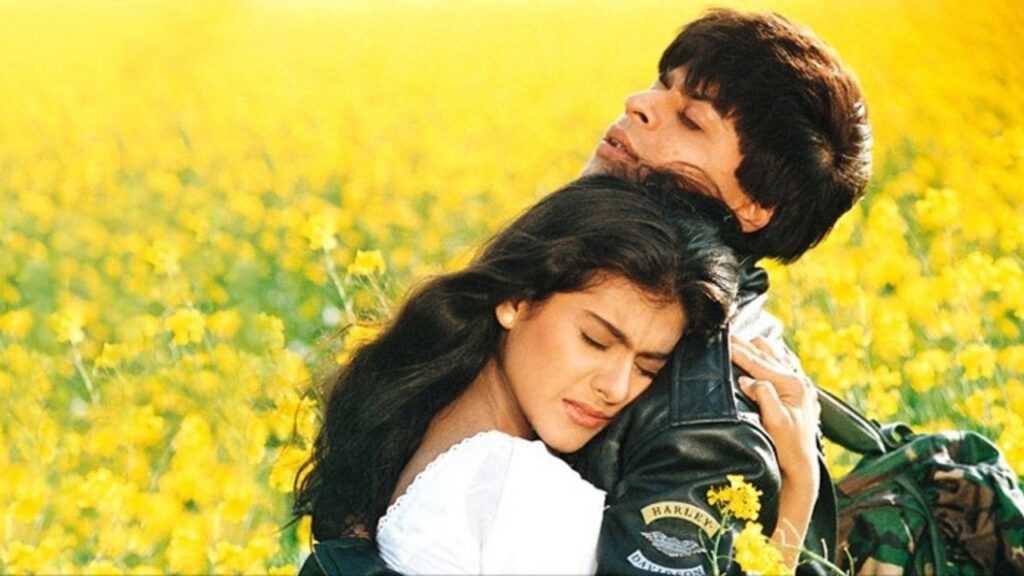
      DDLJ. Shah Rukh Khan and Kajol in the mustard fields is one of the most iconic image of Indian cinema. Love is supreme but parental approval is must – the perfect Indian recipe that touched billion NRI and domestic hearts. A love story with perfectly etched characters, evergreen songs and iconic train scene in the climax. Romance / Musical.
    11. Disco Dancer
      The 80s musical. Rags to riches story. Mithun was the heart throb of India and garnered amazing fan following in Russia and other parts of the world. Musical / Dance.
    12. Do Bigha Zameen
      The Rabindranath Tagore poem inspired socialist drama was a trendsetter. Impressed with ‘The Bicycle Thieves’, Bimal Roy directed Balraj Sahni and Nirupa Roy in the 1953 classic. A dream to watch Balraj Sahni – he is in another zone. Drama.
    13. Guide
      The masterpiece of Indian cinema. A path breaking movie that challenged societal norms and showcased the interesting journey of its lead characters – fallible humans can transform. Excellent music, most memorable songs and amazing moments showcased magically – Genius at work! Dev Anand’s home production was based on R K Narayan’s acclaimed novel of same name – though the author hated the movie. Drama / Romance.
    14. Hum Aapke Hai Kaun
      The Indian wedding movie with 14 songs. The wholesome feel-good family movie with a delicate twist. All happy and smiling faces in the Rajshri drama of 1990s. Launched at a single theatre, the movie became a craze of the nation. Salman Khan and Madhuri Dixit song and dance lighted weddings for years to come. Romance / Music / Drama.
    15. Hum Dil De Chuke Sanam
      Sanjay Leela Bhansali’s sensitive treatment of an interesting dilemma of a young Indian woman. What is true love? A strong story with amazing visuals, powerful dialogues and world-class music. Salman, Aishwarya Rai and Ajay Devgan give dazzling performances. Cryptic title. Romance / Musical / Drama.
    16. Kabhi Khushi Kabhi sGham
      The quintessential Bollywood family movie with the right dose of all the right emotions. The finest looking ensemble cast in beautiful locales with foot tapping music. Shah Rukh Khan, Amitabh Bachchan, Hrithik Roshan, Kareen Kapoor and Kajol with Rani Mukherjee and Jaya Bachchan. Karan Johar’s glorious success! Keh diya! Romance / Family / Drama / Music.
    17. Mother India
      An iconic India movie. Mehboob Khan’s remake of his own movie (Aurat) was the most expensive and most successful revenue earner of that time. Despite facing numerous hardships and exploitation at the hands of money-lender, poverty-hit protagonist Nargis stands for integrity and righteousness. Inspirational Drama.
    18. Mughal E Azam
      K Asif’s Mughal-E-Azam is a landmark of Indian cinema. A movie that took 14 years to make! The epic timeless saga of romance broke all box office records. Emperor Akbar’s son Salim loves a courtesan but the emperor does not approve the relationship. Each and every dialogue is memorable. Also, the mesmerising music and amazing cast of Madhubala, Prithviraj Kapoor and Dilip Kumar. Jab Pyaar Kiya To Darna Kya….Music / Drama / Historical.
    19. Pakeezah
      Meena Kumari’s finest performance as a courtesan in Kamal Amrohi’s musical drama. Timeless music, strong dialogues, royal grandeur and impeccable direction. Drama / Music.
    20. Sholay
      The complete Bollywood masala movie. It had the perfect mix of action, drama, adventure, romance, comedy, suspense with memorable characters, dialogues and songs. Ramesh Sippy directed the biggest names of the industry and created an all-time popular movie. Each and every character was perfectly sketched and given full life. Al the stalwarts – Amitabh Bachchan, Dharmendra, Hema Malini, Amjad Khan and Sanjeev Kumar. ‘Kitnay Aadmi the’ and other dialogues are popular even today! Drama / Action.

    Noteworthy Movies: Lagaan, Dil To Pagal Hai, Pyaasa are many other great movies.

    Part 2: The Unique & Universal Bollywood List

    Bollywood has experienced a paradigm shift and found a new confidence in recent years. The death of the formula movies and rise of content-driven stories is a much needed change – Ironically people in more than a dozen unique countries have lamented the death of old Bollywood. Interesting!
    The aim of this list is to introduce 20 unique and different Bollywood movies. The brave and new stories. The movies that are universal. It does include a few earlier age movies that still fit the theme of the list.

    1. 3 Idiots
      A complete entertainer with excellence as a theme. A comic take on education system through the eyes of three friends. Impeccable acting and direction with a strong script. A movie with the heart in right place. Aamir Khan, Boman Irani, Madhavan shine in the Rajkumar Hirani adaptation of Chetan Bhagat’s best-selling novel. Comedy / Drama
    2. A Death In The Gunj
      A disturbing melancholic film about a shy introvert young man set in a small hilly town of the 70s. A rich ensemble cast, beautiful script, haunting background score and an impeccable direction by Konkona Sen Sharma. The films grows on you! A masterpiece, a beautiful painting – a must watch movie!
    3. Article 15
      A brave and courageous piece of cinema. Thought provoking and hard-hitting movie. An urban officer defends the Indian constitution and fights caste discrimination. A masterpiece. Anubhav Sinha and Ayushmann Khurana – take a bow. Drama / Crime.
    4. Black Friday
      Anurag Kashyap directs the powerful and gritty Bombay Blast investigation drama. Kay Kay Menon, Imtiaz Ali, Pavan Malhotra and others leave you speechless. Crime / Drama / Thriller.
    5. Dor
      A gem of a movie. A moving story of forgiveness and friendship of two women in beautiful Rajasthan. One lady’s husband accidentally kills another woman’s husband and she is seeking forgiveness. Gul Panag and Ayesha Takia’s beautiful performances take Nagesh Kukonoor poetic movie to the next level. ‘Yeh Hosla Kaise’ is a song for all times. Drama.
    6. Ek Doctor Ki Maut
      A classic tale of how a scientist gets reprimand and hardship instead of recognition for his discovery of a cure for leprosy. Pankaj Kapur shines in the Tapan Sinha directed masterpiece. Drama
    7. Guide
      The masterpiece of Indian cinema. A path breaking movie that challenged societal norms and showcased the interesting journey of its lead characters – fallible humans can transform. Excellent music, most memorable songs and amazing moments showcased magically – Genius at work! Dev Anand’s home production was based on R K Narayan’s acclaimed novel of same name – though the author hated the movie. Drama / Romance.
    8. Haider
      Vishal Bharadwaj’s Shakespearean magnum-opus. Breath-taking Kashmir. Shahid’s portrayal of Haider. Tabu in another class act with equal support from Kay Kay and Irfan. Mind-blowing music. Movies are like this ! A rare blend of critical acclaim and commercial success. Equally good are Maqbool and Omkara – the other movies in Vishal Bharadwaj’s Shakespearean trilogy. Drama.
    9. Lootera
      A visual poetry. Beautiful and slow and stunning. The romance drama is based on O Henry’s ‘The Last Leaf’. Ranveer and Sonakshi’s amazing and heart-warming performances. Out of world music of Amit Trivedi. The music is a character in itself. One of the best endings. Magical. Romance / Drama.
    10. Masaan
      Poetry, pain and beauty against the multicoloured Varanasi. Neeraj brings heart and art into cinema and showcases four lives stuck in Varanasi. Tu Kisi Rail Si Guzaarti Hai – Just Wow ! Masterpiece. Romance / Drama.
    11. Mukti Bhawan
      An amazing film about death, life and father-son relationship set in Varanasi raises many interesting questions. What happens when you are waiting for your death? Drama.
    12. Newton
      Rajkumar Rao shines as a honest and stubborn government official assigned to election duty in remote naxal-infected Chhattisgarh forest. Watch-out the beautiful screenplay, cinematography and strong cast including the brilliant Anjali Patil. Drama.
    13. October
      Poetry on screen. Visually arresting. Touching story of love, loss and longing. Slow down India – this is the movie for the soul. Movie of the unconditional love and beauty of silence in a loud loud India. Romance
    14. Queen
      Kangana rules! Inspiring story – Seek your own happiness, live life to the fullest and fight one’s own battle. Perfect treatment of a great script. Nice direction. Lisa Haydon, Europe and Rajkumar Rao provide great support. The ‘London Thumakda’ and the movie rocked the box office as well!
    15. Taare Zameen Par
      One of the finest movies that explores the sensitive topic of dyslexia. Every child is special. The eight year old Ishaan and his struggles are captured in a touching manner. The art teacher inspires the young boy and develops confidence through compassion and patience. Aamir Khan’s directorial debut with Amol Gupte’s rich story. Music is another highlight with ‘Maa’ emerging as a universal tear machine. Drama.
    16. The Lunchbox
      The LunchBox is a ‘Food For Thought’ movie that will make you hungry after the movie! The Lunchbox is a moving story of two lonely individuals in a big metropolis, who accidentally get connected and developed a liking for each other. It is a simple love story made with lot of care and attention to detail. Very layered and textured. The outstanding performances of Irrfan, Nimrat and Nawazuddin light up the movie. Romance.
    17. The Ship Of Theseus
      A thought provoking and soul-stirring movie based on Theseus Paradox. Three stories of a photographer, an ailing monk and a young stockbroker with a common theme. A visual treat with great direction and awesome screenplay. Cinema par excellence.
    18. Tumbadd
      An Indian movie to be proud of! A visually gorgeous treat. Deep and intriguing metaphors. Set in a small village of Maharashtra, Tumbbad is a psychological horror at its best. Fear is scary but greed of humans is scarier and it turns men into monsters. Solid writing, world-class CGI, Hollywood style production values, background music and cinematography make Tumbbad a very original and distinct movie. The Ship of Theseus man Sohum Shah delivers a performance that is par excellence. An original and a different Indian movie!
    19. Udaan
      A courageous movie. A highly captivating coming-of-age movie. The young protagonist escapes an abusive father and follows his dreams. Powerful content, mind-blowing acting and awesome direction. Vikramditya Motwane’s classic directorial debut with touching music and Jamshedpur backdrop. Drama.
    20. Udta Punjab
      Alia Bhatt steals the show in a hard-hitting and strong movie on the drug menace in Punjab. Abihshek Chaubey shows his prowess with a deft handling of a powerful script and total control over characters. Shahid Kapoor and music are the other highlights. Drama.

    Gulaal, Dev D, Rocksar, Gangs of Wasseypur, Haasil, Tamasha, Titli, Highway, Jagga Jasoos and many other do deserve attention.

    Part 3: Ash Favourites

    A list of personal favourites – the 20 movies that I loved and enjoyed and connected to them! No rationale!

    1. 3 Idiots
      A complete entertainer with excellence as a theme. A comic take on education system through the eyes of three friends. Impeccable acting and direction with a strong script. A movie with the heart in right place. Aamir Khan, Boman Irani, Madhavan shine in the Rajkumar Hirani adaptation of Chetan Bhagat’s best-selling novel. Comedy / Drama
    2. Anand
      Classic! Inspirational masterpiece. A dying cancer patient spreads happiness. Art of living! Stalwarts of Indian cinema – Hrishikesh Mukherjee, Gulzar, Amitabh Bachchan and Rajesh Khanna. Beautiful music and memorable moments including: “Babumoshai, Zindagi badi honi chahiye – lambi nahi”. Drama.
    3. Dilwale Dulhaniya Le Jaayenge
      DDLJ. Shah Rukh Khan and Kajol in the mustard fields is one of the most iconic image of Indian movies. Love is supreme but parental approval is must – the perfect Indian recipe that touched billion NRI and domestic hearts. Romance / Musical.
    4. Dor
      A gem of a movie. A moving story of forgiveness and friendship between two women in beautiful Rajasthan. One lady’s husband accidentally kills another woman’s husband and she is seeking forgiveness. Gul Panag and Ayesha Takia’s towering performances take Nagesh Kukonoor poetry to next level. ‘Yeh Hosla Kaise’ is a song for all times. Drama.
    5. Guide
      The masterpiece of Indian cinema. A path breaking movie that challenged societal norms and showcased the interesting journey of its lead characters – fallible humans can transform. Excellent music, most memorable songs and amazing moments showcased magically – Genius at work! Dev Anand’s home production was based on R K Narayan’s acclaimed novel of same name – though the author hated the movie. Drama / Romance.
    6. Hazaaron Khwaishein Aisi
      One of the finest political films. Only Sudhir Mishra can mix poetry and politics – Marx and Ghalib. A beautifully crafted movie of the pre and post emergency area. The meticulously defined characters speak about ideals, inequality, socialism, capitalism, oppression with passion. Drama / Politics.
    7. Jaane Bhi Do Yaaron
      Kundan Shah’s Jaane Bhi Do Yaaron is landmark movie. A dark comedy about corruption and conspiracy connects universally. Politics, mafia, builders, bureaucracy, murder, the grand finale of Mahabharata – the movie is an example of perfect screenplay, mind-blowing acting and genius direction. Drama / Comedy.
    8. Jab We Met
      One of the most popular romantic movies of the new millennium. A wholesome entertainer with impeccable timing and energy of live-wire Kareena – free spirited vivacious Geet inspires the heart-broken business tycoon Aditya (Shahid) and changes his perspective of life. The perfect chemistry of the lead pair, comic timing, amazing music and beautiful direction – Imtiaz Ali is the guru of modern day romance. Romance / Comedy.
    9. Kabhi Haa Kabhi Naa
      Nice guys finish last. Shahrukh Khan is a loser in the coming of age cult romcom. SRK’s emotions are expressed through his eyes throughout the movie – no physical attachment to the women he loves. Unrequited love at its best – ahead of Saagar and Raanjhana. And simplicity of Anna (Suchitra), raw songs of Jatin-Lalit and the overall natural charm of Goa. Romance / Comedy.
    10. Koshish
      Gulzar’s masterpiece. Extraordinary tale of different abled. The journey of a couple with speech and hearing impairment. The simplicity of the movie is its biggest victory – even this married couple fight in unique way – proving that disability is just another aspect of life. Sanjeev Kumar and Jaya Bahaduri’s heart-touching performances. Drama.
    11. Manorama Six Feet Under
      A hidden gem. An under-rated movie. A thriller with layered story, powerful performances and brilliant climax. Abhay Deol impresses. Thriller / Drama.
    12. Masaan
      Poetry, pain and beauty against the multicoloured Varanasi. Neeraj brings heart and art into cinema and showcase four lives struck in Varanasi. Tu Kisi Rail Si Guzaarti Hai – Just Wow ! Masterpiece. Romance / Drama.
    13. Masoom
      A canvas with all the colors of human emotions at play – Love, hate, attraction, jealousy, repentance, self-realisation, forgiveness. The music and its lyrics are a high point of the movie. Trust Gulzar to give his special tough to script, lyrics and dialogues. Drama.
    14. Mughal E Azam
      K Asif’s Mughal-E-Azam is a landmark classic of Indian cinema. The epic timeless saga of romance broke all box office records. The music, dialogues and amazing cast of Madhubala, Prtihviraj and Dilip Kumar. Music / Drama / Historical.
    15. Munnabhai MBBS
      Rajkumar Hirani’s perfect entertainer of a good-hearted goon who enrols in a medical college to fulfil his father’s dream. An absolutely amazing movie with superb comedy and incredible timing. A simple and beautiful message of life. Sanjay Dutt shines in his comeback. Arshad Warsi and Boman Irani’s rocking performance. Jaadu K Jhappi. Comedy / Drama.
    16. Pyaasa
      The towering landmark of Indian cinema. Guru Dutt’s Pyaasa is the best advertisement for great filmmaking. A struggling poet meets a prostitute who falls in love with him. And his life changes. Guru Dutt bares his sensitive soul and highlights the eternal struggle between materialistic and spiritual aspirations. ‘Yeh Duniya Agar Mil Bhi Jaaye To Kyaa Hai?’ Drama.
    17. Swades
      A heart-warming movie with right dose of idealism and patriotism. Be the change. An NRI employed with NASA returns to his village. One of Shah Rukh’s best performance. Excellent script and amazing direction by Ashutosh Gowarikar. Drama.
    18. The LunchBox
      LunchBox is a ‘Food For Thought’ movie that will make you hungry after the movie! The Lunchbox is a moving story of two lonely individuals in a big metropolis, who accidentally get connected and developed a liking for each other. It is a simple love story made with lot of care and attention to detail. Very layered and textured. The outstanding performances of Irrfan, Nimrat and Nawazuddin light up the movie. Romance.
    19. The Ship Of Theseus
      A thought provoking and soul-stirring movie based on Theseus Paradox. Three stories of a photographer, an ailing monk and a young stockbroker with a common theme. A visual treat with great direction and awesome screenplay. Cinema par excellence.
    20. Zakhm
      Mahesh Bhatt’s own story. An emotional roller coaster set in the backdrop of communal tensions. A unique love story that challenges as well as touches you. One of the finest acting performances of both Ajay Devgan and Kunal Khemu – who are the soul of the movie. Pooja Bhatt’s splendid acts as well. ‘Maa aur Mulk badle nahin jaate’. Drama.

    Lot of movies from Vishwal Bharadwaj, Anurag Kashyap, Hrishikesh Mukherjee, Rajkumar Hirani will also feature in personal favourites. And many many more gems….

    Part 4: The Long List

    Indian Cinema releases more than 1000 movies a year. In more than 100 years, tens of thousands of movies have been produced and presented – telling the story of the times. Here is a long list of some movies I liked and recommend. Hope this helps all my friends who have been asking for recommendations for surviving Covid lockdown. More focus on recent movies.

    Bollywood lives in the heart of Indians and they own it. So everyone has their own list – let us exchange notes and celebrate the magic of movies!

    Ash Long List
    A Death In A Goonj
    Aandhi
    Ab Tak Chappan
    Abhimaan
    Aligarh
    Amar Prem
    Andaz Apna Apna
    Andhadhun
    Article 15
    Badhaai Ho
    Bajranji Bhaijaan
    Band Baaja Baarat
    Barreily Ki Barfi
    Bheja Fry
    Bhoomika
    Black Friday
    Bobby
    Chak De India
    Chandni Bar
    Chennai Express
    CityLights
    Company
    Dabanng
    Dangal
    Dil Chahta Hai
    Deewar
    Dev D
    Devdas
    Do Aankhen Barah Haath
    Do Bigha Zameen
    Dum Laga Ke Haisha
    Ek Doctor Ki Maut
    Ek Duje Ke Liye
    Ek Haseena Thi
    Ek Ruka Hua Faisla
    English Vinglish
    Firaaq
    Gangs of Wasseypur
    Golmaal
    Gulaal
    Gully Boy
    Haider
    Highway
    Hindi Medium
    Hum Dil De Chuke Sanam
    Hum Tum
    Ishq Vishq
    Ishqiya
    Jaane Bhi Do Yaaron
    Jagga Jasoos
    Jodhaa Akbar
    Kachche Dhaage
    Kahaani
    Khamoshi
    Kuch Kuch Hota Hai
    Lagaan
    Lootera
    Maachis
    Manmarziyaan
    Manto
    Maqbool
    Mother India
    Mukti Bhawan
    Mulk
    Munnabhai MBBS
    Newton
    No One Killed Jessica
    No Smoking
    October
    Omkaara
    Paan Singh Tomar
    Page 3
    Pakeezah
    Piku
    PK
    Premrog
    Pyaar Ka Punchnaama
    Queen
    Raanjhaana
    Raazi
    Rang De Basanti
    Rockstar
    Saaheb Bibi Aur Ghulam
    Saaransh
    Saathiya
    Satya
    Shahid
    Shubh Mangal Savdhaan
    Silsila
    Singham
    Taare Zameen par
    Tamasha
    Tanu Weds Manu
    The LunchBox
    Trapped
    Tumbadd
    Udaan
    Udta Punjab
    Uski Roti
    Vicky Donor
    Viraasat
    Wake Up Sid
    Waqt
    Wednesday
    Yeh Jawaani Hai Deewani
    Zindagi Milegi Na Dobaraa

  • The Chernobyl Diary

    The Chernobyl Diary

    Chernobyl is back in news thanks to HBO series. Chernobyl is one of the most tragic events in our history. Chernobyl happened when I was in school. I was too young to understand it but we were all talking that something big and bad had happened.. I remember me and my friend Abhi reading the newspapers, watching TV and discussing this passionately. Since then a visit to Chernobyl was one of the things in my bucket list – yes I have an interesting bucket list.

    I landed in Kiev for a trip to Chernobyl. Though Ukrainian authorities had started tourist activities in the Chernobyl since many years, it was recently only that Visa regime became friendly. 

    I reached the Kiev Central station after a quick ride in the Soviet style metro. The Chernobyl Tours are conducted by licensed agencies and instructors. I had chosen one of the local agencies and our guide for the day was Igor. The tour was only allowed to people above 18 years. Basic health criteria must be met. Currently, citizens of Russia and Belarus cannot visit the tour. There were 3-4 check-points to ensure that the compliance was met. 

    We got lot of instructions about the safety and do and don’ts for the trip. We were not supposed to put our clothing down on the floor or ground anywhere. We had to regularly measure radiation levels using Geiger counter. We could not touch the animals. We could go only in areas allowed for visits etc. We were not supposed to take anything from the nuclear site and town. No special souvenirs! 

    The big question was about the safety of the tour. The Chernobyl Zone and Prypiat town have high radiation but they are safe for human beings. One-day tour’s radiation is equal to the radiation experienced in one hour airplane flight. Or the exposure is 160 times less than X-Ray of chest. And we had Geiger meter to be sure. So the trip was safe. Or it means flights are not as safe as we think!

    After the basic instructions and tips, Igor gave us the background about the Chernobyl accident including the technical details. The accident happened on 01:23 am on April 26, 1986. A power failure test was being conducted and an accident happened causing explosion during emergency shutdown. And one thing led to another causing uncontrolled reaction – water flashed into the site created a steam explosion. The fire produced plumes of fission products and the radioactive material moved towards USSR and Europe. The authorities either did not understand the gravity of the situation or they downplayed it. But they did not acknowledge the accident immediately – maybe a mistake in hindsight. In fact, the people in the nearby town carried on the life as normal. Nobody was told the truth. It was only after a week that people were evacuated from the nearby town of Pripyat which had a population of 49,000 people. The town was designed as a model town and was the town planned for the staff and families of people working at Chernobyl Nuclear Power Plant. It was Sweden which alerted the world about the presence of these plumes in the air. Then authorities had to acknowledge the accident. Belarus was the worst affected country as plumes moved towards that direction. 

    Back to the trip. The first stop was the checkpoint of Dytiaki. Our passports were checked. We moved to the abandoned villages. We could see the traditional houses, village shopping store, doctor’s house, kindergarden etc. The houses were in ruins. People were forced to leave quickly as a part of evacuation drive. The authorities had destroyed these houses to ensure that the villagers do not return. The area of villages was within the 30 km radius of the accident and it was a risk. Villagers were sent to cities but many villagers did not adjust to the city life and wanted to come back – but then government withdrew their pension and other benefits. So people were forced to go back to cities. Nobody liked it. The villagers did not like it. Nor did the hosts in cities. Apart from hotels and camps, authorities forced city dwellers to accommodate the refugees. After the destruction of the village by authorities, nomads, thieves and others came here to steal the remnants of the house. As people had left in a hurry, lot of goods were there in the house. TV, Fridge, expensive things etc. People stole the metals, wires etc. Whatever they could get. And whatever little was left, was destroyed by nature over the years. Wear and tear due to nature was the final act. I was pained to see images of kindergarden. The dolls, the story books, the cots for kids etc. Very Emotional. We visited more abandoned sites – all of which had similar and equally tragic stories.

    The next stop was the Chernobyl Nuclear Power Plant. The Chernobyl Nuclear Power Plant was one of the most important power plants in USSR. The aim was to make it the largest nuclear power plant in the world. 

    The city of Chernobyl was chosen after proper research. The density of population was low. The land was not very fertile and hence could be used for industrial use. The nearest big city was Kiev – which was far away from the place. Hence USSR started to develop infrastructure – roads, schools etc. The construction of Chernobyl and Pripyat city began in 1970 and the power planned was opened on 1977. The second reactor was commissioned in 1978, third in 1981 and fourth in 1983. The Chernobyl accident happened on April 26, 1986. But still the power plant continued to work and reactors were active. The three reactors were decommissioned only in 1996, 1991 and 2000 respectively. The reactor two indeed had to be closed earlier due to faults. The reactor No.5 was scheduled for going live on Nov 1986 and No.6 in a short time after that – but the work was suspended and then cancelled due to the accident. The site is very high on radio activity. The isotopes have half-life of at-least 30 years. Hence Reactor No. 4 is enclosed in a concrete and lead sarcophagus. It is further covered by a large steel confinement shelter, to prevent further escape of radioactivity. The large arch-shaped steel case has costed almost 2 billion dollars. 

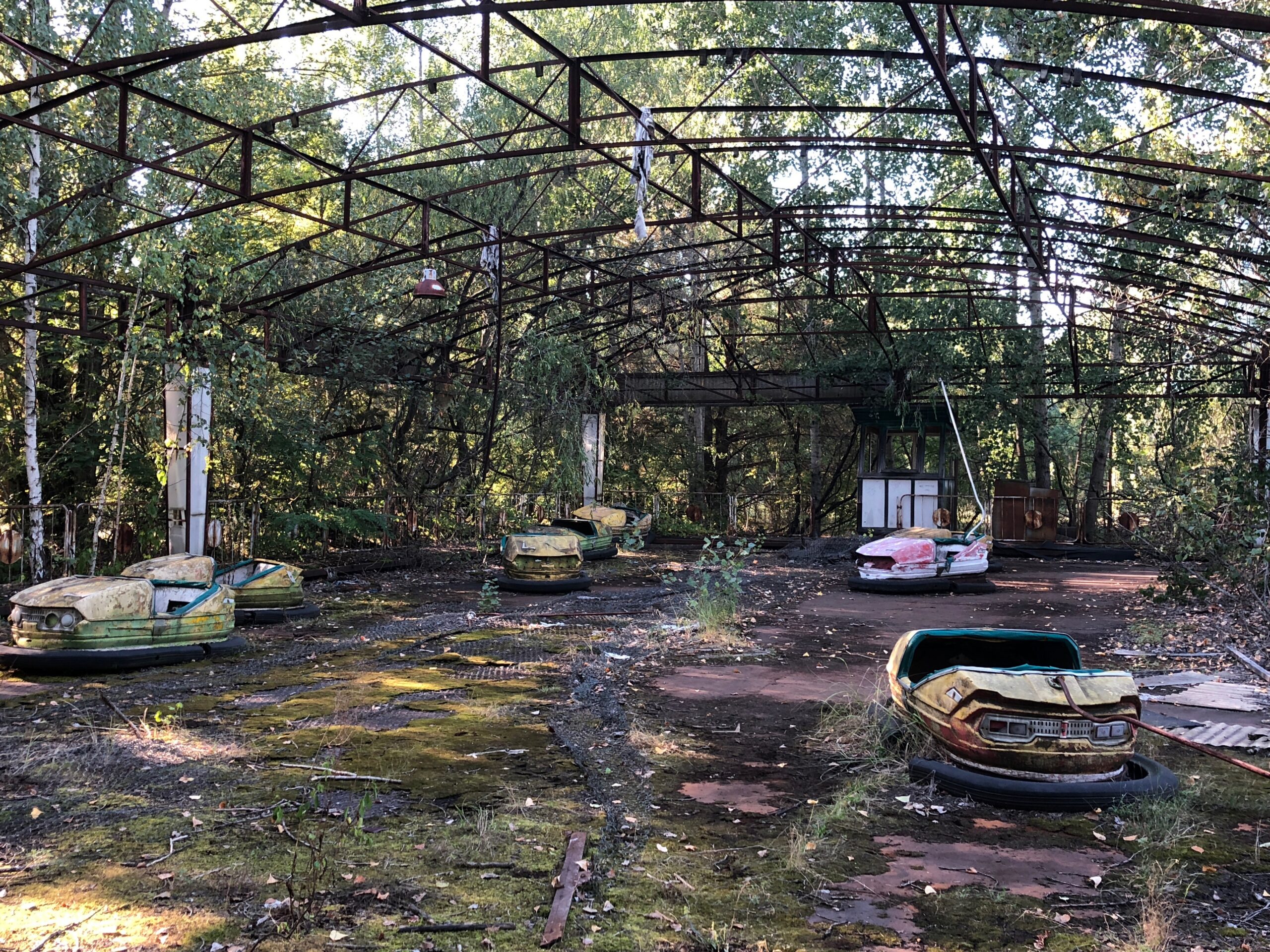
    The next site was the city of Pripyat. The city of Pripyat was the planned city. It was the showcase to the world. It hosted scientists, delegates, diplomats, politicians and other important people from all over the world. It was designed as a showcase city for the world. The chosen ones came to Pripyat as it promised a better life. The salaries at both Pripyat and Duga was higher. The best food, best hotel, best schools, best healthcare was made available. People came here for a better life. The city of Pripyat had a cultural centre, theatre, football stadium, wonderful roads, shopping centre, amusement park etc. It was planned for walking and bicycles – no vehicles. There was a nice river port. Everything was planned for future growth of the city. But man proposes, God disposes… 

    The accident happened on April 26 but people were not given any information. The life continued and thus it exposed everyone to grave danger. The people injured in the plant were brought to the hospital here and they brought radio active elements. Some people heard of accident and visited near a bridge to see the view of the power plant. They got infected as well. 

    In fact, big celebration was planned for May 1 celebrations and it continued. People had hoarded their houses with food and wine and other things for the celebrations. On May 2, people were told to evacuate the city. They were given 3 hours to take two bags as it was a short-term evacuation. The information was given at 11 am and evacuation happened at 2 pm. They were told that this was temporary evacuation and everyone could be back in 3 days – so people did not take much stuff. They were allowed 2 bags only. Thus people left everything important to them here including electronic items, expensive items etc. A man tried to stuff his favourite cat in the bag but could not do so. But nobody returned. It was sad. The first match in the new stadium was scheduled on May 2, 1986. But it never happened. The new Amusement Park was to open on May 1, 1986 but it also never opened officially. 1300 buses came to evacuate the 49,000 people from town. The buses took lot of time on the road – they were on the roads next to power plant for hours and just inhaling more injurious plumes. People suffer from lot of health issues including cancer due to the exposure to these plumes. All dogs and cats and other animals in the zone were found and killed. 70 Belarusian villages were buried under the ground. 

    Today, the city of Pripyat is a ghost town. Everything is decaying and rusting. Large trees have grown. The residence building, theatre, hospitals etc. all are crumbling. The liquidators have destroyed everything. And rest by scavengers, thieves and nature. The rusting ferris wheel has been a sign of ghost town Pripyat. 

    The next stop was Red Forest. It was very near to the Chernobyl Power Plant and the most infected area. It was the most dangerous area and has the highest level of radioactive elements. At the time of evacuation, buses were standing next to it in queues as the town was cleared. Even we could see that readings on Geigmeter increased from 0.1 to 25-30 even when were in bus and moving at full speed. Dangerous indeed! 

    The last stop was the monument dedicated to liquidators, fire-fighters and other rescuers. It was next to Chernobyl Fire station in the Chernobyl town. It was designed by amateurs and it was never commissioned by anyone. It was an impromptu decision and nobody questioned it. 

    Even today few people live in Chernobyl town. The people who are managing facilities at power plant, overseeing liquidation process etc. Some people are allowed back as 30 years has passed and the 30km radius is considered safe. Even a hotel has opened and people can stay there. Everything requires permission. No schools still as people below 18 years are not allowed. 

    The most surprising thing is that even today Ukraine’s 40% of energy needs are met by nuclear energy. There is no opposition to nuclear power plants. Ukraine exports nuclear energy. 

    Chernobyl continues to be the reminder of what can happen when things go wrong with nuclear energy…..

  • TEDx Talk: Soul Fuel – Why Solivagant Travel Matters!

    TEDx Talk: Soul Fuel – Why Solivagant Travel Matters!

    My TEDx Talk on ‘Soul Fuel – Why Solivagant Travel Matters’ is live!

    Technology, travel and movies are my passions. I work around the confluence of these themes using my varied skills!

    I am an evangelist to influence and inspire people to travel. I believe that travel is the best way to widen our horizons, accept differences, remove intolerance and make the world a better place. It promotes cultural exchange, understanding and helps people to connect with people.

    In my TEDx talk, I spoke about the joys of traveling alone and how it is an enriching and life-changing learning experience. I strong believe: A new you is the best travel souvenir!

    I welcome your feedback and suggestions on this talk and what other topics you would like to me cover in future talks and travelogues! And yes, if you like it, spread the good word. Please “like” and share it.

    Keep traveling! Keep discovering!

  • Auschwitz – A Mirror Of Our Failure

    Auschwitz – A Mirror Of Our Failure

    Summary:

    1. Auschwitz is the global name of genocide.
    2. What have we learnt from Auschwitz? Nothing!
    3. Auschwitz is a moving experience if you can visualise and understand the pain. Else it is another tick in our bucket list.
    4. Auschwitz had more tourists than learners. Unesco site has led to a huge influx of Instagram generation tourists.
    5. Human beings are capable of the most inhuman crimes to their brethren.
    6. Popular and majority view do not mean correct view – Hitler was popular and he led this genocide.
    7. Why was the world silent when this was happening? Where was the greatest nation on the earth?  Why did Allied forces not act earlier – Auschwitz continued for several years!
    8. What would be the mental make-up of soldiers? You question how can one set of human being butcher another set of human beings which include children, women and senior citizens? Amy in war and Police in combat situations can kill but how can you kill innocent people – often fooling them? And that also millions of people.
    8. The allowance for Jews for the life-move to the so called better place (Auschwitz) was 20kgs. Our cabin luggage is between 7kg to 10 kg – so imagine how can you carry your life in 20kgs?
    9. More than 1 million people were killed. The youngest person was 2 year old. 90% were killed in gas chambers on arrival. 10% were kept as inmates.
    10. Birkenau was 20 times bigger than Auschwitz and was designed to exterminate people quickly. More than 10,000 people were killed in a day. 4 crematoria were not sufficient and people were burnt in open.
    11. Auschwitz is a shame on humanity. It is our failure. But it has happened several times after that as well.

    Additional Points:
    12. McDonalds and KFC – Globalization icons welcome you as you enter Auschwitz. A brand is a living thing – then context specificity and sensitivity are important.
    13. Movies to watch: The Pianist, Schindler’s List, The Boy With Striped Pajamas, Life Is Beautiful.
    14. Vegetarian and Indian restaurants were very popular in Krakow. Glonojad is a clear hit with huge queues and Hindu ran out of food. I had one of the best samosas of life at Glonojad.

    Auschwitz Diary

    Auschwitz – the global name of genocide and human hatred. It is the place associated with the darkest chapter of modern human civilization.

    Auschwitz was one of the places that was on my mind for a long time. Since my arrival in London, I had regained interest in this chapter of history. After Nordic Noir, Holocaust movies were a topic of my personal research. I had watched all the important movies and documentaries around this dark chapter – The Pianist, Schindler’s List, Life Is Beautiful, The Boy With Striped Pajamas etc. It was natural that the trip to this important historical centre was in the making. It was my desire to visit this place with Vipoobhai and I was very happy that he agreed to visit with me during the month of November. Travel is about destination, journey and the company as well – So I was lucky on that front.

    Auschwitz was a one hour drive from Krakow. It was a small town that was physically 60 kms away from city but philosophically in a completely different world. Even today, people live in the town of Oswiecim (The Polish name is Oswiecim but Germans had renamed this as Auschwitz). Actually, there are three concentration and extermination camps in the region – Auschwitz, Birkenau (Auschwitz II) and Monowitz (Auschwitz III). However, Auschwitz is the most famous one though Birkenau saw the maximum deaths and murders in a very industrial and scalable way.

    We were speaking to John, our companion cum driver, about the Auschwitz. He said that he has visited it only twice – once a student and once as an adult few years back. He found the place very difficult and depressing. He informed us that for inhabitants of Oswiecim town, Auschwitz and its memories are a part of their daily lives. As we entered the town, we saw KFC and McDonalds – the global symbols. I thought it as a case of confused branding. Brand is a living being – that is what we marketers believe. It lives in the hearts and mind of the audience. But here these ads seems out of context and out of sync with the audience’s sensitivity.

    We reached the Auschwitz camp (now converted into a museum) and we had to stand in the queue till 10:45 am. There were huge crowds and it took us one hour to clear the security checks and meet our guide for the tour. The guide mentioned said that these crowds were negligible. Auschwitz had been getting popular and last three years had been phenomenal. 2014 saw 1 million plus visitors and it rose to 1.5 million visitors in 2015. During 2016, the visitor count has already crossed 2 million. And we were visiting in cold November and yet the crowds were enormous.

    I was aware of the basic history thanks to my reading, movies and discussions. The Jewish and anti-Nazi regime protestors from across the Europe were brought to the concentration camps in Auschwitz. As soon as the trains arrived, the people were segregated. Healthy men were directed to work while old people, women and children were led to the gas chambers. Often, these people were dead within few hours and their death was never recorded – creating a case of missing and forgotten people. People were led to believe that they were going for bath for disinfection and the poisonous gas was leaked onto the naked people. Often all the trains were directed straight to the gas chamber without carrying any selection. The dead bodies were stripped of hair, gold teeth, watches etc. were removed and sold to finance the war economy – often with army personnel pocketing multiple things. The bodies were burnt in the crematorium and the personl documents of dead were destroyed. The conditions in the camp were pathetic and people were shot for minor offences.

    Our tour started with the guide explaining us the history of the place. Auschwitz was originally built as a prison for Polish political prisoners. The first batch of Poles reached in 1940 from Tarnow prison. It was an army garrison at that point of time. But with passage of time, it became the prime centre for extermination of anti-Nazi protestors and Jewish people. It also had people from Roma, Soviet Union and other places. Auschwitz soon ran out of place and Birkenau (Auschwitz II) and Monowitz (Auschwitz III) were built. Birkenau was 20 times bigger than Auschwitz. All the camps were isolated from the world and thick barbed wire fencing surrounded the camps. The camps were run by the dreaded Secret Service (SS) and German state financed it.

    Why was Auschwitz chosen as the location for these concentration camps? Three reasons:
    1. It was one of the well-connected junctions. People from all over the Europe could be brought here. People were brought here from even Oslo.
    2. It was easy for Nazis to hide their crime in this remote place.
    3. Poland and Krakow had a sizeable Jewish population. About 30% of European Jewish population was in Poland. So, it had the right population to start with.

    More than 1 million people lost their lives in Auschwitz – though the unofficial figure could be even higher. Many more people were killed and these statistics were not even recorded. The youngest person to be killed was a 2 year old child. Out of the million plus people who were killed, 90% were killed on arrival. Rest were kept as inmates and killed later – by shooting, hunger, bad weather etc.

    As we entered Auschwitz, I saw those famous words on the gate – ‘ Arbeit Macht Frei’ – ‘Work brings freedom’. People had to work and work hard to avoid death. They were lonely and alone and without family. They had poor food and nutrition and had to toil hard. These words were a slogan and a motivator.

    Auschwitz camp was a huge place. We saw the different blocks. Originally, it had 21 blocks and inmates built more blocks during their stay. One block could hold more than 1000 people. It was a rainy winter day that day and I could imagine what it would be without my warm clothes and shoes – most prisoners had to live in pyjamas and they were given only one set of uniform. They had to wear it everyday. Often people died of harsh and cold winters. We later saw photographs of people who survived only one day in the camp – either they were shot for minor offence or they must have died due to harsh situation.

    The blocks had very tiny rooms and hundreds of people had to live in them. There were barracks and three level of bunks. Often they had to fight between them to ensure that they got good place to sleep. The floor was not heated and in winter it was a big problem. The floor was damp and lices and rats were there as well. There were limited toilet blocks and it could not be used in night. They were given a single bucket in the single for usage. The toilets had no water or tissue papers. Hundreds of people lined up for toilet every morning. People were given limited time for their daily needs and hundreds of people had to queue for toilet etc. outside the block in cold or rainy weather. It was sheer humiliation. Some sanitation condition improved after 1943.

    We visited Block 11 where many prisoners were kept in a very small cell and they could only stand. Nothing else. It had a tiny hole for air. They had to crawl to get in and get out. Often prisoners were kept hungry after a hard day’s work – they had to work more than 12 hours a day. They were given tea or coffee in the morning, soup in the day and bread/burger/sausage in the evening. The quality of food was pathetic – soup was often of rotten vegetables. Inadequate food led to malnutrition and many died because of hunger.

    Nazis had to save money as the war was a costly affair. They used the work of prisoners for industrial work. Women worked for bullet making factories. Inmates were slaves for SS. Long working hours and fatigue also led to deterioration of health. Nazis also sold the hair and belongings of killed prisoners for financing the war expenses.

    SS officers regularly gave punishment for simple things like trying to get more food or not obeying them. They were flogged in the public. And killed by shooting many times.

    In one of the blocks, the belongings of the Jewish inmates were kept. The inmates were told that they were taken to a better place to work for. They were given hope of a better life. Hence many came with their belongings like utensils, personal grooming products etc. In fact, the irony was that many actually paid to come to Auschwitz as it promised a better life and they could escape the atrocities back home. But here they were cheated. As soon as people landed, there was a selection process. The camp doctor would classify people into strong and weak. One sign of hand of the camp doctor and the fate was sealed. The camp doctor would immediately send the weaker people and children and old people to gas chambers. Or phenol was inserted into their hearts. Hence their belongings remained at Auschwitz – we could see many kitchen utensils, shaving brushes, shoe shine, shoes, luggage bags, bags of kids etc. Each item had a life story. It was sad.

    Going back to the above topic, the Jews in the cities had to first move to the Jewish ghettos. They had to give up their property etc. They had to work hard in only licensed work. They were given ID card and had to wear Jewish star. There were restrictions on what they could read, write and watch. People were killed under slightest pretext. Later they were moved to Auschwitz. But they were given a false impression of the Auschwitz. For the trip to Auschwitz, they had to carry entire life’s belongings. They were only allowed 20 kgs. So most of the people took chair – the chair was versatile and could help them for various purposes. And of course at Auschwitz, they had to undergo a selection process at the unloading area. Families met for the last time at the unloading area. After that families were separated.

    For the people arriving to Auschwitz from other parts of Europe, often the journey was for 4-5 days or more. The journey was in rail bogies and the bogies were cramped with hundreds of people. There was no window or toilet inside the bogey. Many people died in the journey itself. Often the bogies would be full of dead bodies only – when opened at Auschwitz.

    Many healthy women and men were also selected as guinea pigs and the camp doctors did various experiments on them. Women were experimented for various sterilisation methods and many died in the process. Block 10 was the place where camp doctors conducted several experiments. Prof. Dr Carl Clauberg, a German gynaecologist, conducted several sterilisation experiements and many died from the treatment they received. Many were murdered so that the autopsies could be performed on them. Few people survived and they continued to have permanent injuries.

    The area between Block 10 and Block 11 was the shooting wall. People were shot dead. The windows next to the wall were covered with wood – so that inmates could not see what was happening. They could hear but not see. In one of the blocks, we saw an entire floor full of hair of dead women. These hairs were collected to sell in the market for textiles and other purposes. The 1 kg of hair was sold for a price that was equal to one quarter price paid for cigarettes.

    In Block 11, more than 250 prisoners were killed by Zyklon B in one of the first case of mass extermination and it was then repeated often. But soon they realised the need for a dedicated crematorium.

    We finally came to the gas chambers. Nazis were finding it difficult to kill so many people everyday by shooting. It was also affecting morale of some soldiers. So they wanted to find new means to exterminate the Jews. They were given the solution to kill people by gas.

    The people arriving at the railway station were directed straight to the crematorium. The people were tricked and they entered the gas chambers assuming that they were going for a shower bath. They were asked to get naked and their belongings were taken away. They were told that after the bath and cleaning wash and disinfection, they would be given appropriate jobs in the labour camps. Even the existing inmates left their uniforms outside. Once the Jews entered the chambers, the doors were closed. An SS officer in a gas mask would take off the chimney lids of the crematorium, open the Zyklon B cans and release the contents onto the heads of the victims. The inmates cried and died within minutes – their cries were shut by engine of nearby lorries. Then their bodies were burnt continuously. The smell conveyed it all to the other inmates. The output of the furnaces was low as compared to the death and corpses were also being transported to Birkenau and buried in mass graves.

    After Auschwitz, we went to Birkenau- it was 20-24 times bigger than Auschwitz. Wherever your eyes could see, you could see the camp. It was much bigger and designed to exterminate more people. 10,000 people could be killed in one day. It was the extermination factory. It had 4 crematoria but they were not sufficient and people were burnt in open as well. There were several prisoner volunteers and SS officers who worked hard for extra cigarettes and liquor.

    We saw the huge gas chambers and the crematoria. We saw the block for women. The block had minimal room and 600 women were cramped into it. The irony was that there was only one bucket for toilet and 600 women had to share that for their needs. Women were suffering from diseases and diarrhea. Women had three level bunk bed and top was the best place – because on ground or mid floor – people could get wet due to stool from above. Many times women were left out in the open courtyard – and they died in winter in 2-3 hours.

    Only about 200,000 people survived the concentration camps. Last year, during the celebrations of 70 years, about 2000 people were present. Many people do not talk about this dark chapter of their lives.

    Nazis later destroyed the records and exterminated the witnesses. The mass murder apparatus was terminated. These buildings in Birkenau were destroyed by the Nazis themselves as they feared as their crimes would be exposed.

    We asked: what did we learn as humanity from this? Nothing!

    Auschwitz is a shame on humanity. It is our failure. But it continues….

  • What I Learned From Ratilal Chandaria

    What I Learned From Ratilal Chandaria

    “You must remember that for a man like you to live in itself is a service to your country, for your life is not merely useful, but it is a light to others”
    Rabindranath Tagore to G K Gokhale
    Dec 1913.

    Shri Ratilal Premchand Chandaria holds a special place in the hearts of innumerable people. For me, he is a father figure. Over the multiple projects and years, I came across the extraordinary individual that Ratibhai was. He was a person who was razor sharp in his thinking, intellect and memory. He was a person with tremendous zeal and energy. At the same time, he was a very kind and caring individual. He worked his entire life with the agility of a roaring tiger and lived his life with his principles – Ratibhaism.

    The following are the important lessons that I learned from him:

    1. Never Accept No For An Answer:

    Ratibhai (Kaka) never accepted NO for an answer. His persistence is legendary. He would never leave any work incomplete. Whatever things he set his sight on, he would achieve. He would find ways to overcome hurdles. And he did not mind seeking help for achieving the goal.

    He had given 20 years of devotion and dedicated service to GL project. 20 years is a long time – our experience of a little more than 20 months on Gujarati language had been very frustrating and thankless. He chased people in USA, UK, Canada, Germany, France, and India etc. He approached companies like Microsoft, Apple, Tata, CMC, etc. He achieved the GL mission and launched the GL project on Jan 13, 2006.

    He went to Paris for developing a font. He went to Apple and sought help from them. On not getting the desired response, he found a few Indians in the Apple in an ingenious way. He persisted with these Indians in Apple to help him. He got contacts of a person in Paris working on Arabic Spellchecker. He went to Toronto to seek help.

    2. Lead By Example:

    Kaka could not accept No for an answer. At the same time, he was very hands-on. If things would not move, he would himself start working on it. He would often say to me – Aap Marya Vagar Swarge Javatu Nathi.

    When he did not find enough experts, his assistant, his driver and he himself started typing the words. Kaka drove to Gondal to speak to the local team and seek help for digital rights of Bhagwadgomandal. If there were bottlenecks, he would visit people and start working on find ways. He would not wait for people to come to him. Beyond being Hands-On, he always believed in leading by example. His entire life he practiced what he preached.

    3. Work For A Higher Purpose

    Kaka and his family built a successful and sustainable business across countries. During the business time and after retirement, he contributed to the larger goals.

    He worked on GujaratiLexicon with a simple mission – to do something for the mother tongue Gujarati. Gujarati is my mother – that was his common statement. He worked to ensure that every Gujarati person could access Gujarati on his computer. All tools are accessible in Gujarati. He worked with Madhu Rye for the first font in Gujarati. He worked with people across the world to make this happen.

    He has achieved something impossible – something which Universities or large companies or Government should be doing. Also, he was spending time on a collective good, rather than pursuing his business. Had he spent the same time and effort and passion on his business, he would have added more jewels to his business treasure. But he chose to work for his mother tongue. Everyday morning, he would wake up and check the latest statistics of the GL project.

    4. Attitude For Gratitude:

    In this world, many seek help. But few remember to thank people for the help they get. People are transaction-oriented these days. But Kaka remembered and thanked everyone who would help him. He would never forget anybody who stood by his side and helped.

    5. Share Credit:

    Kaka always shared credit freely. Kaka met Dhirubahen Patel through some common contacts. He told Dhirubahen about the difficulty he faced. He told her that I fear I might die without seeing this project go live. Dhirubahen said that she would help. She got him help from many people to get the work checked. Kaka was very happy. When after some years, the project was complete and ready to be launched, Kaka expressed his desire to launch the project at the hands of Dhirubahen only. Friends and family had got many people invited at the event. Mr. Deepak Parekh of HDFC Bank and Dr. Viren Shah, Governor of Bengal were at the event. But he said that the project would be launched by only Dhirubahen and nobody else. Even the invite from CM Narendra Modi to meet him was converted into a courtesy visit and prelude to actual launch. And at the launch and even after that he expressed his gratitude for Dhirubahen.

    6. Respect Women. Encourage Women.

    Kaka encouraged women in all spheres of life. He was very happy that Arnion was formed with the entire Women Team. He was proud of the work done by the team. Kaka had a special respect for all women. It included Dhirubahen, friends and family members as well.

    He even respected the contribution of Vijaya Kaki to his life. The surest way and the fastest way to make Kaka cry were to remind him about Vijaya Kaki. As Jan 26 approached, he would get emotional.

    7. Nurture Relationships

    Kaka sowed, nurtured and grew relationships. He would make special efforts to maintain the relationship. He would take personal interest in people and their lives.

    Even his late eighties, Kaka drove to Surat to meet his friend Uttambhai and spend an entire day there. He would be personally interested to know how did the knee surgery of Uttam bhai went. Every year Uttambhai and Madhu Aunty would go for a nature-therapy break and Kaka would ensure that he exchanged enough emails before those visits – so that he would not miss them. And he would wait eagerly for them to return and see emails of Uttambhai.

    Whenever we would be in Ahmedabad, he would visit Kumarpalbhai, Prabhahben, and Kasturbhai. Tushar Bhatt and he exchanged some notes via email. Next time he was in Ahmedabad – he met him. He would talk to me on Skype and every few days he would ask me about Dhirubahen, Vipoolbhai etc.

    Whenever he would return to India, I would get a call from his team asking me to meet him immediately. Whenever I would go to his Mumbai home, he would ensure that I had my favorite vegetables (I am a fussy eater) and there was a Paan for me to eat. We shared our love for Paan and Pani Puri. When he was outside of India, Skype would ensure that we remained in touch. When I went to London, he would prepare tea for both of us in the morning. When I went out of his home in London, he taught me to navigate London’s metro. He would wait for me to return home. He would sit late till night and talk. And his talks would be about Gujarati language, technology and helping people. He never talked about himself !

    Kaka had a problem in hearing but he always listened to my heart. He would know of things that I never spoke. He would know my feelings and thoughts. He was always there for me – my marriage, birth of Aditya and other milestones of life. When my wife was pregnant, he wrote emails to her and after her pregnancy, he was the first one to visit her – even ahead of my other family members. Whenever I had to make any decision or whenever I was low – one Skype call to him and I would be clearer. He was my life mentor. He stayed at my house in Ahmedabad and time would fly. And so would Kulfis and Pans. He was a foodie and would love exploring good food.

    Kaka was very simple. After my first year of marriage, I decided to go to Mahabaleshwar. Kaka was in India and asked whether he would like to join. He was hesitant as he did not want to intrude into my privacy. I assured him that we were 100% comfortable and hence inviting him. In fact, we would not get such a vacation with Kaka. However there was a problem. I told Kaka that I stay at a small mini-resort cum hotel at Hotel Uday in Mahabaleshwar. There is no 5-Star accommodation there. He said that he was more than happy to accompany us. However during the journey to Mahabaleshwar, he stopped at Pune and decided to visit CDAC. He went to CDAC and told them to help with OCR.

    8. Zest For Life

    Kaka had tremendous zest for life. He believed in living life with full passion. He would enjoy his food. He would like to wear best clothes – he was always impeccably dressed. He would enjoy a great wine. He scolded me for not getting him a wine from my Europe tour. He would like to go out and spend a good time with his friend Dhirubhai. He would watch a movie with him at frequent intervals.

    9. Family First

    Kaka spoke only about two things – Gujarati Language and Family. He said that the entire achievements of his are achievements of family.

    I have never heard any grudge or any ill-will Kaka had towards any family members. He would keep me posted about the activities in the family and it was his way of sharing joy. Whether it is the daughters of Kunteshbhai, or Sachin’s ventures or Jet-Ski accident of Vimalbhai, he would share it all. He loved talking about the family.

    I can recount anecdotes and anecdotes on Kaka’s life. The fact is that I am yet to come across a person more humble than Ratibhai. He never speaks about his contribution, efforts, past laurels etc. He only wants to leave something for the future generation. We youth can learn the important lessons of dedicated service, relentless pursuit of goal, endless energy from him. His loving and caring nature adds another dimension to his greatness.

    I was privileged to spend very close time with him. I and my team are indeed honored to make a small contribution to this great work. God has made him for a special purpose – he was indeed a divine soul. He wanted that this project touches as many Gujaratis as possible. He was recently working on making this available to all schools and colleges via Government education department. If we can achieve that, it would be a great homage to him. We pray that the project should reach maximum Gujaratis across the world, create more linguists and contemporarize Gujarati for the future.

    The Article Is Based On My Homage To Shri Ratilal Chandaria. First Delivered On Oct 21, 2013 In Ahmedabad. Shri Ratilal Chandaria Was Born On Dussehra Day In 1922. He Left For His Heavenly Abode On Dussehra Day In 2013.

  • The Sheep Detectives: Herd-Breaking. Charming. Heartwarming. 

    The Sheep Detectives: Herd-Breaking. Charming. Heartwarming. 

    The Sheep Detectives: Herd-Breaking. Charming. Heartwarming. 

    Can a murder mystery be delightful, beautiful, and warm like a hug?

    The Sheep Detectives proves that it can.

    One of the finest family films I’ve watched this year, it blends mystery, humour, empathy and quiet wisdom into something truly special.

    Hugh Jackman is wonderful as George, a gentle shepherd living on a picture-perfect English farm with his beloved flock. Every sheep has a name, a personality, and every night George reads them murder mysteries—never imagining they understand every word.

    When George is mysteriously killed, the sheep decide to do what any devoted readers of detective fiction would do—they become detectives themselves.

    What could have been a quirky comedy turns into something much deeper. Beneath the laughs lies a moving story about grief, love, memory and learning to let go. The film never talks down to children, yet gives adults plenty to reflect upon as well.

    I especially loved how every sheep feels like a real character rather than comic relief. Lily’s quiet intelligence, Mopple’s innocence, Sebastian’s complexity—and George’s enduring presence—make the emotional journey surprisingly rich.

    It’s rare to find a film that is equally clever, funny and deeply human.

    A perfect family watch. One that will make you smile, laugh, and perhaps leave with a small lump in your throat.

    #TheSheepDetectives #MurderMystery #Cinema #WeekendWatch #AmazonPrime  #Storytelling #CinemaLovers #FeelGoodCinema #WeekendWatch #FilmRecommendation #SunshineLife  #FamilyCinema

  • Beyond AI: The Next Gates of Power That Will Shape Humanity

    Beyond AI: The Next Gates of Power That Will Shape Humanity

    What comes after intelligence may redefine what it means to be human.

    In my previous note, I explored the 7 Gates of Power — from land to intelligence. The deep thinker Rutesh Shah asked: What comes after the Intelligence Gate?

    Great question. If history teaches us anything, it is this: We rarely recognize the next gate while we are inside the current one.

    The next gate won’t “arrive” the way previous ones did. It will emerge gradually on top of the Intelligence Gate. For now, intelligence is still becoming infrastructure. The next gate will likely be built on top of it — not instead of it.

    The Near Gates — Already Forming

    Before we look too far ahead, pause. Some gates are not in the future. They are already under construction.

    1. Compute and Energy

    This is the substrate of intelligence. Chips. Data centers. Power grids.

    Whoever controls this layer controls everything built on top of it.

    Compute and energy are already reshaping geopolitics.

    2. Biology and Longevity

    Gene editing. Synthetic biology. Ageing science.

    But the deeper shift is this: Time itself is becoming a gate.

    Those who can extend it will compound advantage in ways never seen before.

    3. Trust and Identity

    In a world of agents and synthetic media, the hardest problem won’t be intelligence.

    It will be verification. Knowing what is real. Knowing who is real.

    Trust infrastructure is the most underestimated gate forming today.

    The Gates We Can Barely Name Yet

    Beyond these, the next gates move inward — toward the human experience itself.

    4. The Consciousness Gate

    Not just intelligence — but experience itself. If we can map, store, or transfer consciousness, the gate shifts from information to awareness. Whoever controls this layer controls something more intimate than data ever was.

    5. The Reality Gate

    We are moving from observing the world to mediating it. As AI and spatial computing evolve, reality becomes programmable. The gate becomes: who controls perception itself.

    6. Meaning

    When AI handles creation, decisions, and productivity, something else becomes scarce: purpose. belonging. identity.

    Whoever shapes meaning frameworks may hold a more enduring gate than any technology.

    7. The Longevity Gate

    This is not just about health — it is about time as leverage. If lifespan becomes engineerable, compounding itself becomes unequal. The gate shifts from wealth to who gets more time to build it.

    8. The Synthetic Labor Gate

    For the first time, labor can scale without humans. Humanoids and autonomous agents will not assist work — they will be the workforce. Control over this layer is control over the new means of production.

    9. The Planetary Gate

    We are approaching the ability to influence climate and ecosystems at scale. Geo-engineering turns nature into something that can be shaped. The gate becomes: who can alter the conditions of the planet itself.

    10. The Protocols Gate

    In a world of autonomous systems, power shifts to who writes the rules. Protocols will define how intelligence interacts, verifies, and governs itself. This is control not of systems — but of the laws they operate by.

    The Deeper Pattern

    Every previous gate controlled something outside us. Land. Energy. Data.

    The next wave moves inward.

    Towards: • consciousness • perception • meaning • identity

    A Final Thought

    History was shaped by those who controlled the world. The future may be shaped by those who control how the world is experienced — and understood.

    Because the ultimate gate may not be technological at all.

    It may be: Who defines reality. Who shapes meaning. Who decides what it means to be human — in a world where intelligence is no longer uniquely ours.

    What do you think are the next gates?

    #ArtificialIntelligence #AgenticAI #FutureOfHumanity #Leadership #Innovation #TechnologyStrategy #FutureOfWork #Gates #FutureTrends #TrendSpotting

  • Life Beyond Agents

    Life Beyond Agents

    Agents are the opening move. The Autonomous Enterprise is the game. Here is what separates the leaders who understand that from the ones who don’t.

    Assume agents work.

    Assume your organization has deployed them across claims processing, clinical documentation, contract review, and underwriting. They are running reliably, governed properly, delivering measurable ROI.

    Now what?

    That question — almost never asked — is where real strategic divergence begins. The organizations thinking seriously about it are already operating in a different category from the ones still focused on deployment.

    This article is for leaders in that first category. Or the ones who want to be.


    The number that reframes everything

    Capgemini projects AI agents will generate $450 billion in economic value by 2028. At that scale, agents are not a feature or a department initiative. They are an operating layer — a parallel workforce that needs to be led, governed, measured, and developed with the same intentionality you bring to your human organization.

    McKinsey finds only 1% of organizations have achieved true AI maturity. The other 99% are still asking how to build and deploy agents. The 1% have moved to a fundamentally different question:

    How do we operate as an Autonomous Enterprise?

    Not a company that uses AI. A company that runs on it — where humans set strategy, define values, and establish boundaries, and intelligent digital workforces handle execution at a scale no human organization could match alone.

    That is the destination. These are the five shifts that determine who gets there.


    Five shifts that separate leaders from followers

    1. Your most valuable asset is no longer your data. It is your domain intelligence.

    The race to build the largest AI model is over. The next competition runs in the opposite direction — toward precision.

    Domain-specific Small Language Models trained on clinical literature, regulatory filings, and proprietary transaction data are outperforming general-purpose giants in bounded, high-stakes tasks. They are faster, cheaper, and critically, more defensible in front of a regulator. Healthcare systems face increasing pressure to explain clinical AI recommendations. Insurance commissioners are mandating that underwriting decisions be traceable. A model trained on the entire internet cannot satisfy that requirement. A model trained on twenty years of your own claims decisions, calibrated to your patient population, governed against your clinical protocols — can.

    The organizations building domain intelligence strategies today will hold assets in three years that competitors cannot quickly replicate.

    The executive question: Is your organization treating its domain data as a strategic asset for building proprietary intelligence — or simply as input to someone else’s model?


    2. The operating model of the future runs on digital twins, not dashboards.

    Dashboards tell you what happened. Digital twins tell you what will happen — and let you intervene before it does.

    The convergence of real-time IoT data, AI simulation, and cloud infrastructure has made operational twins viable far beyond their original engineering applications. A hospital operations twin that models patient flow and staffing 48 hours ahead. An insurance risk portfolio twin that simulates catastrophe scenarios and reprices exposure before losses materialize. A pharmaceutical supply chain twin that reroutes production before a disruption reaches the manufacturing floor.

    IDC projects the digital twins market reaches $110 billion by 2028. But the market size is the least interesting part. Organizations with operational twins are not just making better decisions. They are making decisions at a speed and precision that organizations without them structurally cannot match — regardless of how many agents the latter have deployed.

    The executive question: Where in your operations would a real-time simulation model create a structural advantage your competitors cannot easily replicate?

    Recommended by LinkedIn

    Overnight, humanity stands at the precipice of an AI…

    Gareth Stokes  1 year ago

    When Policy Races Ahead: Closing the Gap Between AI…

    KUMA  4 months ago

    Can Agentic AI Help My Business, and How Will it…

    Kartik Patel  4 months ago


    3. The workforce redesign crisis is arriving faster than anyone is preparing for.

    McKinsey estimates AI agents will absorb 20 to 40% of current enterprise workflows by 2030. The technology exists today. The organizational infrastructure to manage the transition does not.

    When a health system has 30 human nurses and 200 AI agents coordinating patient care, who is accountable for what? When a claims department processes 80% of routine cases automatically, what does an experienced adjuster do — and how do you retain the institutional knowledge that makes their judgment irreplaceable on the 20% that require it? These are not technology questions. They are organizational design questions. And the striking thing about the current enterprise AI conversation is how rarely they surface.

    Capgemini finds 38% of organizations expect AI agents as team members within human teams by 2028. The organizations designing that future now — rethinking roles, management structures, and decision rights for human-agent teams — will be dramatically better prepared than the ones who encounter it as an operational surprise.

    The executive question: Have you started designing the organization your enterprise will need in three years — or only the technology?


    4. The commercial model is changing. Most buyers haven’t noticed.

    When an agent processes 10,000 prior authorization requests overnight, billing for “hours of prior auth work” is indefensible. When a contract review agent analyzes 500 agreements in the time a human reviews five, the cost-per-contract collapses. Effort-based commercial models are structurally incompatible with what agents can do.

    HfS Research calls the emerging alternative Services-as-Software — charging per authorization processed, per claim adjudicated, per insight generated. Bloomberg estimates outcome-based contracts will grow from 10% to 60% of enterprise agreements within a decade.

    The vendors who cannot shift to outcome-based pricing are implicitly telling you they are not confident enough in their results to be measured by them.

    The executive question: Are your most important technology partnerships structured around outcomes or effort? The answer tells you which vendors are ready for the next era — and which are not.


    5. Governance is not a constraint on AI ambition. It is the condition for it.

    Gartner predicts more than 2,000 “death by AI” legal claims by end of 2026. Trust in autonomous AI has fallen from 43% to 27% in a single year (Capgemini). The EU AI Act is in force. US state regulators are advancing model laws on insurance and healthcare AI.

    The organizations that scale most successfully will not be the boldest. They will be the best governed — with explainability engines, meaningful human-in-the-loop controls, and board-level AI risk visibility that matches the quality of oversight directors already apply to financial exposure.

    Every organization that has tried to scale AI without governance has hit a ceiling. Every organization that built it in from the start found the ceiling disappear — because sound governance converts skeptical board members, cautious regulators, and nervous legal teams from blockers into supporters.

    The executive question: Does your board have the same quality of visibility into your AI risk exposure as it has into your financial risk exposure? If not, that gap is your highest-leverage governance investment.


    What this requires of leaders

    The Autonomous Enterprise is not a technology project. It is a leadership challenge.

    It requires holding two time horizons simultaneously — executing on agentic AI deployments that create value today, while building the organizational, commercial, and governance infrastructure that determines who leads tomorrow. The five shifts described here are not sequential. They are concurrent. Organizations that treat them as a single integrated agenda will compound advantages across all five at once. The ones that address them separately, when each becomes urgent, will find themselves perpetually a cycle behind.

    Agents are a profound capability. They are not the destination.

    The Autonomous Enterprise is — and the leaders building toward it now are already playing a different game.


    What shift are you most focused on — or most concerned about? I read every comment.

    #AutonomousEnterprise #AgenticAI #AIStrategy #FutureOfWork #EnterpriseAI #DigitalTwins #CXO #AIGovernance #Innovation #DigitalTransformation

    TechTonicTechTonic

  • The Transformation We Keep Postponing

    The Transformation We Keep Postponing

    A few weeks ago, I spent seven days at a wellness retreat in the Sahyadris.

    There were doctors, therapists, yoga sessions, meditation halls, organic farms, barefoot walks, and enough healthy food to make a lifelong ginger chai enthusiast voluntarily stop drinking tea for eight days.

    Yet the most important lesson had very little to do with wellness.

    It began with an uncomfortable observation.


    Most of us are constantly improving something.

    We improve our careers. Our homes. Our teams. Our businesses. Our productivity systems. Our children’s futures.

    Improvement has become a way of life.

    And yet, somewhere in the middle of all this progress, we quietly stop improving the one person experiencing it all.

    Ourselves.

    Not our resumes. Not our skills. Not our balance sheets.

    Us. The human being beneath the professional identity. The person beneath the title. The soul beneath the schedule.


    During the retreat, the days followed a simple rhythm.

    Wake early. Walk. Breathe. Eat mindfully. Move. Rest. Sleep.

    Nothing revolutionary. Nothing expensive. Nothing particularly difficult.

    And yet, by the fourth day, something surprising happened.

    The body began to cooperate. The mind became quieter. The constant internal urgency softened.

    I realised how much of modern life is lived slightly out of rhythm.

    We sleep later than our bodies prefer. We eat faster than our digestion appreciates. We consume more information than our minds can process. We spend more time connected than we do present.

    And then we wonder why we feel tired.


    There was another realisation that stayed with me.

    Many of the practices that produced the biggest shifts were astonishingly simple.

    Morning sunlight. Walking barefoot on the earth. Eating earlier. Breathing more consciously. Sleeping on time. Spending less time with screens.

    None of these would qualify as innovation. Most would not attract venture capital.

    Yet they worked.

    Perhaps one of the great mistakes of modern life is assuming that every meaningful solution must be complex. We have become brilliant at building sophisticated external systems. The body, however, still runs on ancient code.

    It responds to rhythm. To light. To movement. To rest. To attention.

    The body is not asking for heroics. It is asking for cooperation.


    Three ideas emerged from that week. They have not left me since.

    Rhythm over resolution. True alignment is not aggressive discipline — it is a design philosophy. Sleeping at 10 and rising at 5 is a complete sentence. The body already knows its optimal baseline. Our only job is to stop arguing with it. Consistency does not demand heroics. It simply builds the biological scaffolding that everything else hangs from.

    Food as mindful medicine. We routinely surrender our physical fuel to processed shortcuts. Simple, whole ingredients, eaten at the right hour, possess an immediate pharmacological power that most of us have never tested because we have never truly tried. Transformation does not require deprivation. It requires structural intelligence. The most surprising lesson of the week was not what I ate. It was what I stopped consuming. Tea. Sugar. Noise. Urgency.

    Restoring the holy trinity. As a culture, we are masterful at sharpening the intellect. More recently, we have begun paying attention to the body. But the soul — that quiet, luminous inner dimension — is often treated as a background process, served last, if at all. No popular metric tracks it. No dashboard measures it. No wearable device can tell us when it is thriving. Yet its neglect is quietly felt everywhere. True equilibrium requires treating mind, body, and soul not as separate silos but as one deeply interconnected ecosystem.


    The great paradox of modern life may be this.

    We have never been better at transforming everything around us.

    And we have never found it harder to transform what is within us.

    Progress has given us many gifts. But it has also created a peculiar illusion: that transformation is something external. A better role. A better city. A better device. A better future.

    Yet some of the most meaningful transformations begin when nothing external changes at all.

    When we sleep a little earlier. When we pay attention to what we eat. When we sit quietly for ten minutes. When we take a walk without headphones. When we listen — not to the world, but to ourselves.


    And perhaps that is why this feels increasingly important in the age of AI.

    As machines become better at processing information, generating content, and automating work, the distinctly human dimensions of life become more valuable, not less.

    Presence. Awareness. Stillness. Meaning. Compassion. Connection.

    No machine can meditate on your behalf. No algorithm can walk barefoot on the earth for you. No agent can cultivate your inner life.

    The future may belong to intelligent machines.

    But fulfilment will still belong to conscious humans.


    We spend our lives transforming businesses, technologies, and futures.

    We are becoming masterful at it.

    The internal equivalent — the upgrade that runs underneath everything else — gets scheduled for later. For when things slow down. For the next quarter. For the version of ourselves that never quite arrives because the calendar never clears itself on its own.

    The most important transformation is still the one within.

    Not escape. Not indulgence. The possibility of becoming more alive.


    A question for reflection

    What part of your life have you been diligently improving while quietly neglecting yourself?

    And what might change if you gave the same attention to your inner life that you give to your ambitions?


    Soulware is a space for reflection on the inner life — beyond busyness, beyond achievement, beyond the horizon.

    #Soulware #TheMostImportantTransformation #MindBodySoul #IntentionalLiving #Sunshine #Leadership #Mindfulness #Alive

  • Atmantan Diaries: The Transformation

    Atmantan Diaries: The Transformation

    We lost a few kilos and inches over the week. We gained, rather more significantly, a new set of habits, a new perspective on the relationship between what we eat and how we feel, and a growing suspicion that the word ‘wellness’ has been dramatically underselling what is actually possible.

    Some of those changes have already followed us home. Grain-free flours have quietly entered our kitchen. Hibiscus tea has replaced some of our evening beverages. Coconut sugar has found a place on the shelf. Brazilian nuts have become a regular snack. These may seem like small adjustments, but together they represent something larger: Atmantan did not remain in Mulshi. It travelled home with us.

    1. The soul is not optional

    We have built a sophisticated culture of mind improvement — reading, thinking, learning, optimising. We have recently added the body. The soul — the quiet centre beneath both — remains the frontier. Meditation is not supplementary. It is structural.

    2. Food is the most underrated lever

    Not complicated. Not expensive. Not requiring a subscription or a supplement stack. Whole, seasonal, local, organic, eaten at the right time in the right portion. That is the entirety of the framework. The transformation this produces in energy, clarity, and physical feeling is immediate and significant.

    3. 10 pm and 5 am is a complete sentence

    We have been sold the idea that sleep is a sacrifice — time stolen from productivity. It is the reverse. Sleep at 10, rise at 5, and the hours of the morning before the world wakes and demands attention are the most creative, the most clear, and the most genuinely productive hours available.

    4. The body is not a background process

    It is not sufficient to have ambitions for your career, your relationships, your intellect, while treating the body as infrastructure that will simply continue running. We service our cars. We upgrade our devices. The body — the only vehicle that cannot be replaced — deserves at minimum a periodic, honest audit.

    5. Mindfulness compounds

    Attention, practised even briefly, accumulates. A week of watching what I eat, how I move, when I sleep, and what I think about has generated a residue of awareness that is still present months later. The investment continues paying returns well after the billing cycle.

    6. While we transform business with Agentic AI, we must transform self as well

    We live in an era of extraordinary external transformation — technology, markets, organisations, entire industries reshaped in years. The internal equivalent is overdue. Atmantan is, in the most literal sense, a place to bring the self into the same quality of attention we give to everything else.

    The Final Word

    Atmantan is not a vacation. It is a recalibration. It is effortful and sometimes uncomfortable and occasionally — during the LSP, during the abdominal massage, during the meditation session when something you have been carrying simply has enough and lets go — quite confronting. It is also, for all of that, among the most valuable weeks I have spent in recent memory.

    The 42 acres of green valley above Mulshi Lake do something to the nervous system that is difficult to articulate and unnecessary to argue for. You simply feel it, and then you feel the difference when you leave, and then — if you have paid attention — you carry a little of it back into the life that was waiting.

    We lost a few inches and kilograms, as noted. But what we gained — a renewed sense of physical possibility, a different relationship to food, a morning practice, a commitment to earlier sleep, a handful of friendships from unexpected corners of the world, and a profoundly restored sense of calm — is not easily summarised in metrics.

    We spend so much of life transforming businesses, careers, homes, brands and futures. But the most important transformation is still the one within.

    Atmantan gave us seven days to remember that truth.

    And perhaps that is the real luxury of wellness: not escape, not indulgence, not even healing alone — but the possibility of becoming more alive.

    More mindful.

    More balanced.

    More whole.

  • Atmantan Diaries: Discovering Food & Friends

    Atmantan Diaries: Discovering Food & Friends

    The Atmantan Food: Michelin Precision. Masterchef Magic. Mindful Medicine

    Let food be thy medicine

    Atmantan’s food programme is built on the Hippocratic principle — and executes it with the rigour of a Michelin kitchen and the humility of an organic farm. It was, quite simply, the most significant discovery of the week.

    • The Source: An organic farm on the estate itself, supplemented by local, seasonal produce. Farm-to-table is not a slogan here — it is the actual infrastructure. What grows this morning, you eat this afternoon. 
    • The Prescription: Your plate is a continuation of your medical consultation. The kitchen receives your dietary parameters from the doctor. What you eat is indistinguishable from treatment.
    • The Philosophy: Pure vegetarian, sattvic, alkaline. Richest natural source of phytonutrients, polyphenols, and antioxidants. Vegetarians carry lower inflammatory markers and longer life expectancy. The food makes the case without argument.      
    • The Technique: Natural sweeteners only: honey, jaggery, fruit juice, coconut flower syrup. Himalayan pink salt exclusively. No white sugar. No refined flour. No chemical additives. The taste arrives through real ingredients.


    What We Actually Ate

    The food was not austere. It was abundant in a precise way — plated with a chef’s eye, varied across the seven days, and calibrated so that portions matched actual need rather than habit. (The revelation that one has been eating roughly double one’s genuine requirement arrives quietly, without judgment, after day three.)

    Breakfast began with morning shots — turmeric, amla, wheatgrass — followed by smoothies. The Kale-Spinach-Date smoothie was a personal revelation: something that sounds like punishment and tastes like a decision you’ll be proud of. Chia seed fruit bowls, grain-free idli, and fresh fruit rounded out the morning.

    Lunch was the main event: soups, salads dressed with cold-pressed oil and herbs, grain-free rotis made from banana stem flour and cassava, vegetable curries stripped of excess masala and oil. Desserts for those whose plans permitted: carrot kheer, chana kheer, date cake — all made with natural sweeteners, all genuinely delicious. On the last day but one we also got to celebrate with a grain-free pizza!

    Dinner was lighter: lentil soups, carrot-orange soup (which sounds wrong and is extraordinary), broths, and clean main courses. Water was served in measured amounts — a small but pointed lesson about over-consuming water with meals and diluting digestive enzymes in the process.

    There are 110 juice combinations and 30 shot variants available. I did not try all of them. But I tried enough to conclude that wellness food has been liberated from its own mythology. The question is no longer whether it can taste good. It demonstrably can.

    We often think transformation requires deprivation. Atmantan reminded me that transformation can also be delicious.

    Perhaps the most surprising outcome was what I stopped consuming. I spent eight consecutive days without tea — no small achievement for someone who considers ginger chai one of life’s great inventions. By the third day, I had stopped missing it. By the seventh, I had stopped thinking about it. The body, it turns out, can be surprisingly adaptable when given the chance.

    The Cooking Class

    One afternoon, the kitchen opened to guests in the Soulful Spoon studio. A live demonstration covered the cuisine philosophy, sourcing principles, and the surprisingly creative substitutions Atmantan employs to make healthy food both nutritious and genuinely enjoyable. We learnt to prepare a carrot-orange soup, a grain-free kofta made using watermelon seeds, and a cassava roti. The session felt less like a cooking class and more like an invitation to rethink everything we assume about healthy eating. We were encouraged to taste at every stage, understand the reasoning behind each ingredient, and carry the ideas home with us.

    The Atmantan Tribe – The People Who Make It Real

    A wellness retreat is ultimately a human institution. The architecture, the views, the programme design — these set the stage. What fills it is people: the staff who show up with knowledge and warmth in equal measure, and the guests who bring their particular wounds and curiosities and become, over seven days, something like community.

    The Atmantan Team

    Atmantan’s team is drawn from across India — Kerala, the Northeast, Maharashtra, Odisha, West Bengal, Madhya Pradesh. Brief conversations between treatments yielded fragments of remarkable life stories. These are people who chose this work, and it shows in how they do it.

    1. Dr. Navya – Consulting Physician

    Patient, rigorous, and genuinely curious about each guest as a medical case worth understanding. The week’s anchor.

    2. Rahul, Amresh, Siddhi, Vandana, Abhishek – Yoga & Fitness

    Practitioners with deep, practical knowledge who could simultaneously correct your Warrior II and explain the neurological logic behind Pranayama.

    3. Pragati & Biswajit – Wellness Coordination

    The infrastructure that made the plan work day to day. When therapies collided in the schedule, they resolved it quietly, without fuss.

    4. Asha – Dining Coordination

    The face of Atmantan. Three times a day, without fail, the most energising human presence in the building. Guests didn’t walk to lunch — they walked to Asha. Her warmth was not performed hospitality. It was the real thing.

    5. Amrit, Agnes, Ankita, Amber, Mohasin, Krishna – Kitchen & Dining

    Fed us like Goddess Annapurna — with smiles, care, and the occasional firmly enforced dietary boundary when we attempted to negotiate our way to chai-pakoda during the rains. Neither our emotional appeals nor alternative proposals could move them!

    The Atmantan Guests

    The Atmantan guest mix is not what the wellness-retreat stereotype might suggest. Yes, there were middle-aged professionals seeking lifestyle recalibration. But there were also young people — eighteen to twenty-two years old — who had made a deliberate, self-directed choice to invest a week in their long-term health before life’s pressures compounded.

    An Ivy League student traded notes on therapies with a fintech entrepreneur. The senior government official exchanged notes with a Gujarati businessman.

    Atmantan guests came from all over the world – Chile, Malaysia, Dubai, Europe, USA etc. We exchanged stories on Atmantan, work, and overall life. Apart from global citizens, there was a big group from The United States of Ahmedabad – Panjrapole, Vastrapur, Satellite, Navrangpura etc. There is a clear case for Atmantan 2.0 in Ahmedabad or near Ahmedabad.

    The digital detox — strictly enforced, no network in common areas or restaurants — compressed the usual social performance and opened something more honest underneath. Instead of connecting with a tribe of influencers, you connect with strangers who, by day four, feel like old friends

    NEXT: Part 4  —  The Transformation

  • Atmantan Diaries: The Timeless Therapies & Trek

    Atmantan Diaries: The Timeless Therapies & Trek

    The Atmantan Method: Therapies & Activities

    Atmantan does not offer a menu of generic spa services with vaguely Sanskrit names. Its practitioners — many from Kerala, others from the Northeast, Maharashtra, Bengal, Odisha — carry knowledge and technique that can be immediately distinguished from the decorative massages of a five-star hotel. You feel the difference within minutes.

    We experienced the following therapies and activities:

    1. The Morning Yogic Kriyas

    Each day opened with Yogic Kriyas — a systematic cleansing sequence rooted in Hatha Yoga. Neti: warm saline water flowing in through one nostril and clearing through the other, purifying the sinus passages. Gargling: deep-throat cleansing that most of us have never done properly. Eye exercises: thirty rapid blinks, followed by six deliberate rotations in each direction — left, right, up, down, clockwise, counter-clockwise — reactivating the ocular muscles grown lazy under fluorescent light and screen glare.

    It sounds clinical in description. In practice, especially at six in the morning with mist on the valley below, it felt like an act of genuine self-regard — the deliberate care of a body one has perhaps been taking for granted.

    2.  Laghu Shankha Prakshalana — The Great Internal Rinse

    LSP is one of the more extraordinary experiences available to the guest willing to surrender ego for approximately ninety minutes. The name comes from Sanskrit: shankha — the conch shell, referring to the entire alimentary canal from mouth to anus — and prakshalana — to wash completely. It is exactly that.

    The practice: warm saline water consumed in measured rounds of two glasses, interspersed with five specific yoga asanas that mechanically move the water through the digestive tract. Round after round, the process continues. The body begins to release — solid waste first, then progressively clearer, until what emerges is essentially the clean water you drank, signalling a genuinely emptied and flushed gastrointestinal system. One returns to the room afterwards and eats, as prescribed, a plain moong dal khichdi with a touch of ghee — a meal that lands like a blessing in a body that has just, perhaps for the first time in years, been completely clean inside.

    LSP can be practised once every one to three months. We intend to make it an annual ritual — and are quietly planning to introduce our children to it under proper guidance.

    3. Massages — The Art That Will Not Be Taken Away By AI

    Atmantan’s therapists operate on a different register from any spa massage I have experienced. These are practitioners who use not just their hands but their forearms, elbows, and body weight — redistributing energy rather than simply applying pressure. Each therapy comes with a verbal brief: what it does, why it has been prescribed for you, what to expect.

    The Green Tea Scrub lifts dead skin and awakens circulation, leaving the skin with an improbable smoothness.

    Manual Lymphatic Drainage — through light, rhythmic strokes following the lymphatic pathways — restores flow to a system congested by travel, desk work, and stress.

    The Signature Atmantan Massage uses warm basalt stones alongside oils specific to the season; the stones allow the therapist to work at a depth impossible with hands alone.

    Udwarthanam — a two-therapist Ayurvedic treatment of simultaneous upward massage with warm herbal paste — is both exfoliating and deeply stimulating.

    The Chi Nei Tsang (Abdominal Massage) devotes fifty focused minutes to the gut: confronting and liberating in equal measure, releasing not just physical tightness but, for many guests, something more layered and harder to name.

    4. Fitness – Moving The Body — Multiple Ways To Sweat

    Daily group activities include Pilates, Aqua Aerobics, Yoga, Zumba, Bollywood Dance, Pranayama, and Laughter Therapy — a session which initially produces self-conscious, performative laughter and then, surprisingly, genuine laughter, which seems to be the point.

    Bollywood Dance deserves a special mention. Forty-five minutes disappeared in what felt like five. Somewhere between awesome choreography, enthusiastic participation, and a soundtrack that refused to let anyone remain serious, fitness quietly disguised itself as joy. It was one of the few workouts I wished had lasted longer.

    The highlight was Neuro Reactive Training — a methodology built on dynamic, unpredictable stimulus-response sequences that challenge the brain and the body simultaneously. Eight stations, one minute each: strength, reflexes, balance, coordination, explosiveness — all demanded in rapid succession. After years of repetitive gym routines, this was the most genuinely stimulating physical experience I can recall. The adrenaline was real. I was grinning uncontrollably by station five.

    5. The Daily Meditation – Sitting With The Soul

    Every evening, after the body had been stretched, pressed, challenged and nourished, the soul was invited into the conversation.

    We experienced meditation sessions that spanned multiple modalities: Twin Heart Meditation (moving attention through the heart centre and crown before radiating compassion outward), Chakra Meditation, Trataka (candle-gazing, one of the classical concentration practices of Hatha Yoga), and Omkar — the resonant, sustained intoning of Om that one dismisses as cliché until one actually does it properly and feels the vibration move through the chest cavity and into the skull.

    Some were familiar. Some were new. All of them created pauses.

    I realized something simple: I have spent much of my life sharpening the mind. In recent years, like many of us, I have also become more conscious of the body. But the soul — that quiet, luminous, inner dimension — often gets leftover attention. No popular metric tracks it. No biometric captures its state. And yet its neglect is quietly felt everywhere.

    Atmantan gently restores the triangle.

    Body. Mind. Soul.

    Not as a slogan. As a lived sequence.

    6. The Sahyadri Trek — Where The Mountain Becomes The Medicine

    On Sunday morning, after kriyas, twenty-some guests from Chile, Malaysia, Dubai, the United States, Europe, and several postcodes of Ahmedabad assembled for a trek into the Sahyadri range. The hill was steep; the reward, comprehensive.

    At the summit, a small Ganesh temple. We stopped. The sky delivered a brief, perfect rain — just a few minutes of cool drizzle, as though on schedule. We ate slices of apple and pear and shared, in the way people do when they have just climbed something together, more of our lives than we would have at sea level. The descent was quicker. Conversations went deeper. The group — engineers, students, government officials, entrepreneurs, Ivy League graduates — had, for this hour, the same muddy shoes and the same enormous view.

    7. Grounding — The Oldest Medicine

    There is, in the Atmantan grounds, a dedicated barefoot walking path. Guests are gently invited — not instructed — to use it in the early morning.

    The practice is called Earthing, or Grounding. When bare skin contacts the Earth’s surface — grass, soil, wet stone — a transfer of electrons occurs. The Earth carries a net negative charge; the human body, perpetually exposed to electromagnetic radiation from devices and artificial lighting, tends to accumulate a net positive charge. Direct skin contact with the Earth neutralises this imbalance, restoring the body’s electrical baseline to something close to its evolutionary norm.

    The benefits documented in the peer-reviewed literature include reduction in systemic inflammation, improved blood viscosity, better glucose regulation, enhanced sleep, and reduced cortisol. These are not trivial effects from a trivial cause.

    Our Indian customs always said: remove your shoes at the temple, at the school, entering the home. We dismissed this as ritual. It turns out it was also physiology. The ancients, working by inference and observation across millennia, had arrived at the correct answer.

    I walked barefoot on the grass every morning. By day seven, I was doing it before breakfast without thinking about it. That, I have come to believe, is how the best of what Atmantan teaches actually travels home — not as a resolved intention, but as a new habit so quietly embedded it has already stopped feeling like effort.

    Digital Detox: Watching Nature Instead of Reels

    One of the most powerful therapies at Atmantan is not listed as a therapy.

    Disconnection.

    There was limited connectivity in common areas. Wi-Fi was mostly functional in the rooms. This changed the energy of the stay. Restaurants became places of conversation. Walkways became spaces of observation. Mornings became softer. Nights became quieter.

    Instead of watching AI-manufactured reels, we watched the play of nature.

    Instead of scrolling through other people’s lives, we listened to our own.

    I rediscovered the joy of reading a book while the breeze and sunshine sat beside me like old friends. I remembered that boredom is not an enemy. It is often the doorway through which reflection enters.

    NEXT: Part 3  —  The Food & The Atmantan Tribe

  • Hello Bachchon Review : Predictable Plot, Powerful Purpose

    Hello Bachchon Review : Predictable Plot, Powerful Purpose

    In a country obsessed with unicorns, Hello Bachchon reminds us that the most valuable startups are the ones that create human potential.

    Education is the passport to a better life. For millions of less-privileged Indian children, it is the only magic wand — the one equaliser that can transform a destiny. And it is these very children who will power India’s ascent to becoming an unquestionable superpower.

    Hello Bachchon tells the story of Physics Wallah founder Alakh Pandey and the rise of one of India’s most influential EdTech companies. On the surface, it is a familiar rags-to-riches journey. At times, it feels like a sanitized corporate success story, and fans of TVF’s Kota Factory or Aspirants may find the narrative predictable.

    Yet, the series succeeds because its heart lies elsewhere.

    What stayed with me were not the business milestones, valuation headlines, or unicorn status. It was the stories of the students.

    A young boy battling financial hardship. A young girl fighting social expectations that threaten to end her education prematurely. Another quietly setting aside his love for cricket to shoulder family responsibilities. Through their journeys, we are reminded that education is not a privilege for a fortunate few—it is a life-changing force capable of altering destinies.

    Viineet Kumar Siingh delivers a sincere and compelling performance as Alakh Pandey—a teacher whose belief in affordable education remains stronger than the lure of commercialization. His Alakh is idealistic, imperfect, passionate, and deeply committed to the students he serves.

    The series also highlights a truth we often overlook: India’s rise in entrepreneurship, sports, science, and the arts is being powered by countless young people from ordinary backgrounds who simply need access, opportunity, and someone who believes in them.

    That is why Hello Bachchon resonated with me.

    A series every Indian parent, student, teacher, entrepreneur, and policymaker should watch.

    More than the story of an entrepreneur, it is the story of hope. The story of education as social transformation. The story of what becomes possible when purpose is placed above profit.

    We need more institutions that democratize opportunity.

    We need more social entrepreneurs who choose impact over valuation.

    May a thousand Alakh Pandeys bloom in India. 

    #HelloBachchon #PhysicsWallah #AlakhPandey #SocialImpact #Education

  • Atmantan Diaries: The Art Of Aliveness

    Atmantan Diaries: The Art Of Aliveness

    .We Arrived Hoping to Improve Our Health. We Left with a Different Definition of Wealth.

    Over the years, we have crossed many borders chasing sunsets, skylines, stories, and the occasional version of ourselves. This summer, we chose a different kind of expedition — inward. Not to a foreign shore, but to a quiet valley in the Sahyadris where the prescription for living well is written not in itineraries, but in rhythms.

    Five Truths That Seven Days Burned Into Me

    Before I tell you about the place, let me tell you what I brought home from it. These are the five things I now know that I did not know before:

    1.  The Holy Trinity:

    Soul, mind, and body are not departments in a building — they are one ecosystem. Neglect any corner and the whole suffers.

    2.  Food is Medicine:

    Simple, conscious ingredients — eaten in the right portion, at the right hour — have a pharmacological power we have cheerfully surrendered to processed shortcuts.

    3.  Rhythm Over Resolution:

    Sleeping at 10 and rising at 5 is not discipline — it is alignment. The body already knows what to do. Our job is to stop arguing with it.

    4.  Mindfulness Compounds:

    Awareness, once practised even briefly, accumulates. A week of attention to breath, posture, and plate changes what follows you home.

    5.  The Body Counts:

    We train our minds relentlessly and admire our balance sheets. The body — the only vehicle we cannot trade in — often gets a car-service appointment once a decade.

    Where the Sahyadris Meet the Self

    There are journeys that take us across oceans. There are journeys that take us across mountains. And then there are journeys that travel a far greater distance—the journey from the head back to the self.

    Over the years, I have wandered through more than sixty-five countries. I have watched the Northern Lights dance across Arctic skies, admired Gothic cathedrals in Europe, stood before ancient ruins, explored bustling cities and quiet villages, and collected enough passport stamps to fill several lifetimes of stories.

    Travel has always been one of my greatest teachers. Yet this summer, we chose a destination unlike any we had visited before.

    Instead of exploring another country, we decided to explore ourselves. Instead of seeking new landscapes, we sought a new perspective. Instead of visiting foreign shores, we embarked on a journey inward.

    That decision brought us to Atmantan.

    Nestled in the crystalline hills above Mulshi Lake, Atmantan is not a spa. It is not a hotel. It is not a resort in the way that word has been softened by Instagram. It is a considered, medically structured environment designed to make you uncomfortable in all the right ways — and then deeply, lastingly well.

    The name itself is a compass. Atma — soul. Mana — mind. Tann — body. The centre spans 36 acres of the Sahyadri range — recognised as one of the world’s eight hottest hotspots of biological diversity — overlooking the blue-green expanse of Mulshi Lake. The air here carries the scent of jamun and wet laterite. The light, filtered through the valley mist, arrives gently, even in summer.

    “I had braced myself for the usual wellness-retreat food — the steamed, the beige, the vaguely punitive. The bitter kadhas and punishing vegetables that haunted many Indian childhoods. What arrived was a Michelin moment: vivid, precise, layered with flavour.”

    The property rewards wandering: two salt-water pools, a Pilates studio, dedicated yoga pavilions, therapy suites, a barefoot walking garden where the earth beneath your feet is part of the prescription, and an organic farm from which a significant portion of what you eat tomorrow was growing this morning.

    Across the property, thoughtfully placed stations offered fruit- and herb-infused water. Every detail seemed intentional — glasses neatly arranged on coasters, replenishment appearing before it was needed. It reflected a broader truth about Atmantan: wellness here was not an activity. It was a design philosophy.

    A Day at Atmantan

    The day here has a rhythm. The rhythm grounds everything else.

    6:00 am  —  Yogic Kriyas

    6:30 am  —  Barefoot Walk / Hiking

    7:00 am  —  Morning Yoga & Pranayama

    8:00 am  —  Breakfast

    10:00 am  —  Therapy / Fitness Activity

    1:00 pm  —  Lunch

    3:30 pm  —  Health Talk

    5:00 pm  —  Therapy / Evening Yoga

    6:15 pm  —  Meditation

    7:00 pm  —  Dinner

    10:00 pm  —  Sleep

    It sounds simple. It is not. Because modern life has made simplicity very difficult.

    Medicine Meets Mindfulness

    Every guest at Atmantan begins with a doctor. Dr. Navya sat with us on Day One, having already reviewed our pre-submitted health reports. She asked the kind of questions a good physician asks: not the ones on the intake form, but the ones beneath them.

    The output of that first consultation was a week-long, personalised wellness plan — a schedule that interwove specific therapies, a customised diet plan (transmitted directly to the kitchen), daily fitness sessions, and the particular yogic kriyas most relevant to our constitution. A Body Composition Analysis followed, and its data was fed back into the plan to sharpen it further.

    A Physiotherapist evaluated our posture, movement patterns, and musculoskeletal health — providing a written assessment and corrective exercises that were both humbling and useful.

    Dr. Navya checked in regularly through the week. By the final morning, she presented a progress report, a two-week diet plan for home, and long-range health recommendations. She even shared recipes. This was not wellness as amenity — this was healthcare as hospitality.

    The guests we met came for vastly different reasons. Some sought weight management. Others, detoxification, Ayurvedic Panchakarma, post-illness recovery, or yoga immersion. Several were veterans — on their fifth or sixth visit — who had built Atmantan into an annual rhythm, the way one services a complex machine.

    That was indeed a thought worth sitting with – We service our cars religiously. The body? Maybe once in forty years, if the engine light comes on.

    NEXT: Part 2  —  The Body : The Art That Will Not Be Taken Away by AI