The first impact project of my working life — a man with pink dice in his wallet, a national movement built around the right of children to play, and the lesson that the work and the credit are not the same thing.
Snapshot
- DOCC (Development of Corporate Citizenship) project, SP Jain Institute, Mumbai, 2001
- Three-person student consulting team: Aashish Agarwal, Sachin Agarwal, and me
- Surveyed 32 toy libraries across CTF’s network; diagnosed systemic gaps in sustainability
- Drafted a funding proposal to ICICI Bank for two model Play Centres
- Proposal accepted — A very large sum committed over three years; CTF’s first multi-year corporate partnership
- CTF had 210+ toy libraries across 10 states in 2001; grew to 393 libraries across 36 states and UTs by the 2010s
- Founded by Devendra Desai in 1982; featured in the Limca Book of Records; honoured by the International Toy Library Association
- Approximately 10,000 children benefit from the platform each year today
The Journey
Every child comes with a message that God is not yet discouraged by man.
— Rabindranath Tagore, opening slide of my final presentation, May 2001
In the spring of 2001, I was a second-year MBA student at SP Jain Institute of Management and Research in Mumbai. As part of its curriculum, the institute ran a programme called DOCC — Development of Corporate Citizenship. For six weeks, small teams of students would set their textbooks aside and work with a Mumbai-based NGO. The brief was open: apply what you have learned. Make something useful happen.
I had picked up a copy of Outlook during the Diwali holidays and read a short, slightly affectionate feature on an organisation called the Children Toy Foundation, run by a man named Devendra Desai who had spent two decades opening toy libraries for India’s underprivileged children. Toy libraries. As in lending libraries, but for toys. As in the proposition that play deserved the same dignity, the same infrastructure, the same public investment, as reading did.
I had not, until that moment, thought of play as a right. Article 31 of the UN Declaration of the Rights of the Child does: every child shall have full opportunity for play and recreation. Mr Desai had been working on that proposition since 1982. By 2001, he had helped establish more than 210 toy libraries across ten Indian states. And he was carrying, in his wallet, a pair of large pink dice for the impromptu games he liked to start on Mumbai local trains.
I called my classmates Aashish Agarwal and Sachin Agarwal, and we walked into Mr Desai’s office at Fort the following week.
The work
For six weeks, the three of us did what young consultants do — we surveyed the field, met everyone we could find, and tried to understand a sector we had not known existed.
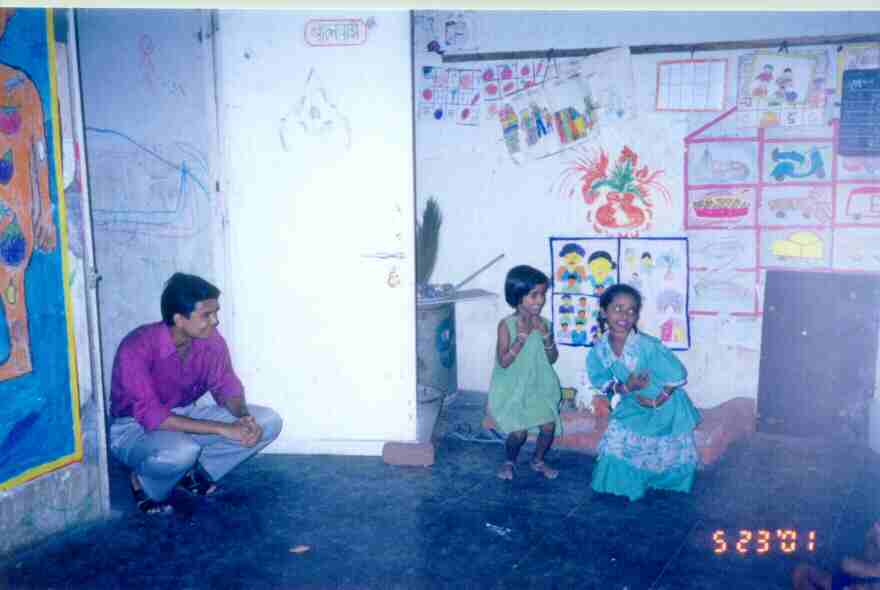
We surveyed 32 of the toy libraries CTF had helped establish. Most were struggling. Some had quietly shut. The ones still running had small memberships, ageing toys, exhausted volunteers, and the look of organisations that had run on missionary zeal for two decades and were beginning to feel it. The diagnosis was almost always the same: no awareness, no funds, no formal training, no budget to replace toys that wore out.
We met the leading child psychiatrist who had become CTF’s intellectual conscience. We met the pioneer behind India’s first toy library, founded in the 1970s, who had spent forty years building this small movement before anyone outside Mumbai cared. We met the parents of the children who used the libraries, in community centres across the city, who said the most ordinary, moving things. I select toys according to the syllabus being taught in the school, one mother told us. The chapters appear dull in the textbook. But the same thing taught by way of games — the child remembers it forever.
The ICICI proposal
The single concrete deliverable of our six weeks was a funding proposal to ICICI Bank.
ICICI had, in the early 2000s, begun supporting social-impact organisations with a focus on non-formal education. We spent two of our six weeks drafting a proposal for two model Play Centres — pilot toy libraries that CTF would run directly in municipal schools, with proper funding, trained staff, structured measurement of children’s learning outcomes, and replicability built in.
In the process, we encountered something called a Logical Framework — a single-page summary of project intent, inputs, outputs, indicators, and assumptions. It was the first time any of us had encountered a formal structured project framework. It taught me a discipline I have used in every consulting and strategy engagement since.
The proposal was for a handsome large sum over three years. It was accepted.
For the small CTF office in 2001, it was a transformative sum — and structured as three years of committed support, which mattered more than the lump sum. For the first time in its history, CTF had a multi-year funding partner. The MBA students had not done anything particularly clever. We had simply applied the disciplines of measurement and accountability to a sector that had been running on goodwill alone.
What I did not yet understand
There is one line from my final project report that I return to, twenty-five years later, with more recognition than I had any right to feel at twenty-one:
We felt bad that our suggestions were found unacceptable because we lacked grey hair. Prof. Merchant consoled us by saying that a true consultant is happy when the work is done. It does not matter how it was done.
Every advisor who is younger than the people they advise eventually meets the same wall. The discipline Prof. Merchant offered was the single most useful sentence anyone said to me in business school, and it has carried me through every advisory hour I have offered to an NGO since.
The work and the credit are not the same thing. The work lives on after you. The credit is a small, mostly irrelevant courtesy. If you can keep yourself focused on the first and untroubled by the second, you can build a career of genuine usefulness without ever needing to be a name in the room.
This is the single most valuable thing CTF and Prof. Merchant gave me.
What became of it
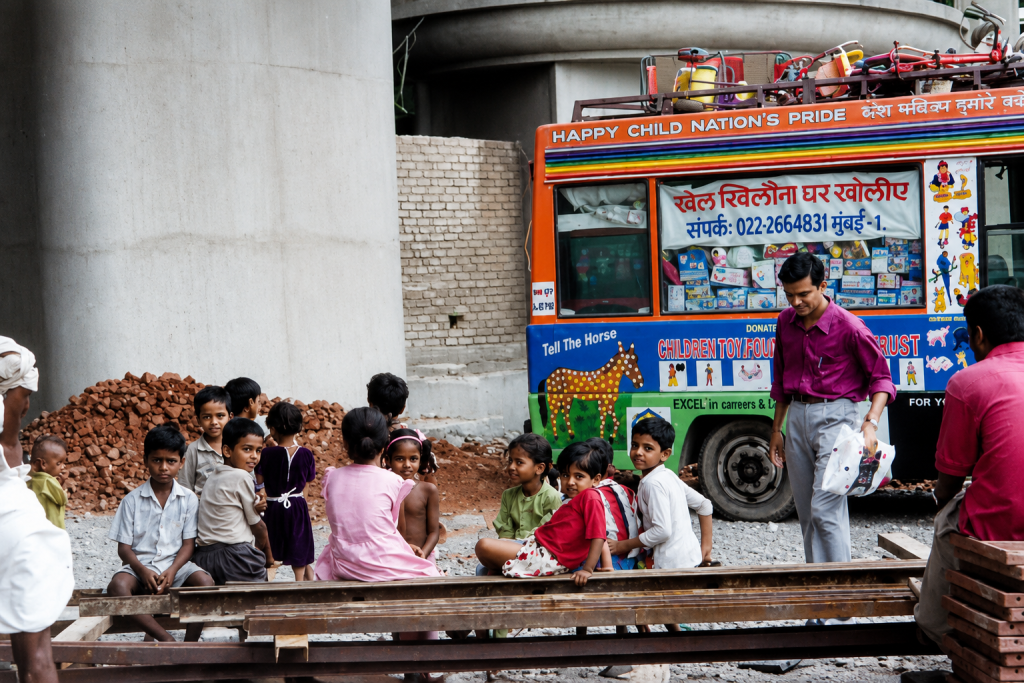
CTF continued, long after we left. The two model Play Centres were launched, the outcomes tracked, the model tested. By 2009, CTF had grown to 272 toy libraries. By the late 2010s, 393 libraries across 36 states and Union Territories — including one on the Andaman and Nicobar Islands and one in the deserts of Rajasthan. CTF today runs Khelvigyan centres, partnerships with Larsen & Toubro, and four mobile vans serving municipal schools, hospital children’s wards, construction sites, and homes for differently-abled children. Approximately ten thousand children benefit each year.
Mr Desai, now in his late seventies, is still the organisation’s heart. The pink dice are presumably still in his wallet.
I am no longer formally associated with CTF — my involvement ended with the DOCC project and the early years of the ICICI implementation. But I think of Mr Desai, and of toy libraries, and of the strange, small, dignified fact of a man who has spent forty years building a national infrastructure for the right of children to play, more often than I think of most things I worked on in my twenties.
It was, looking back, the first time I understood that cause work could be a discipline rather than a feeling.
— Ash