Category: Books

  • Uncommon Love: A Profound Sketch Of Simple Souls!

    Uncommon Love: A Profound Sketch Of Simple Souls!

    Uncommon Love: A Profound Sketch Of Simple Souls!

    The hearts of the brilliant minds

    The colours and seasons of evolving love

    The personal costs of entrepreneurship

    The role of parenting in creating leaders

    The story of the guiding light of Infosys

    The tale of India’s most loved children’s author

    The chronicle of current British PM’s family

    The history of India’s IT Industry

    Chitra Banerjee Divakaruni’s ‘An Uncommon Love: The Early Life of Sudha and Narayana Murthy’ covers all of the above and more themes!

    Like its iconic subjects, Uncommon Love is a simple, candid and honest story of the early life of Sudha and Narayan Murthy. The couple have led a very private life and hence it is quite insightful to get a peek into their personal world. The book is filled with rich anecdotes which are a delight for everyone. These tales give us a clear understanding of the individual traits of Sudha and Narayan.

    Indeed a few stories stand out:

    Sudha Murty is a movie buff and a certified ‘First Day First Show’ fan. She won the title of Miss Cinema, after winning the bet to watch one movie every day of the year in a theatre! I can relate to it totally!

    She was the only woman in the engineering class of 150 men and had to face a lot of challenges including derogatory comments and total unkindness. Her admission conditions included compulsory wearing of saree, no access to canteen and no chatting with boys! The college had no toilet and she had to travel to home in break. But not only she excelled despite the systemic misogyny, she won the respect of everyone!

    She got prestigious MIT admission but she gave it up for a shop floor job at Telco – A job where she challenged J R D Tata for ‘men only’ employment policy of Tatas and won the coveted job. She faced similar challenges like the engineering college but her persistence and diligence and professionalism won the day. Later in life, she cried profusely when she visited MIT.

    Sudha supported the entrepreneurial dreams of Murthy emotionally, physically and even financially! Murthy would be broke and she would loan money and fund their expenses. She had a notebook of loans which she destroyed on their wedding day.

    She regularly financed Infosys and saved it – even pawned her wedding jewellery. She had to be away from her young daughter Akshata to help Infosys as well as manage her job.

    Narayan Murthy got an IIT admission but his father’s financial situation forced him to turn it down. He was devastated.

    He learnt English due to the nudge and kind help of a roadside shopkeeper!

    He proposed to Sudha in an autorickshaw. Though she agreed, her father was not convinced. Narayana also had worn a Red Shirt when meeting his prospective in-laws and gave weird responses to their questioning.

    He turned down a lucrative job offer at Hindustan Lever because of the ‘separate toilets’ policy.

    Azim Premji interviewed Murthy but did not offer him the job as he thought Murthy was too simple. What if Azim Premji had hired Narayan Murthy?

    Narayan Murthy founded Infosys but he gave a lion’s share to all other colleagues. All the other co-founders got big equity share – more than the normal business parlance. He kept only 30% and distributed the rest. He took a 90% salary cut while gave a 20% hike to others. He always focussed on the comfort of the employees. Compassionate Capital is his mantra!

    Narayan Murthy did not allow Sudha to join Infosys as he wanted to create a totally professional company. He told her that if she wants to join Infosys, he will support her decision – he would leave and let her run the show. Sudha was very disappointed, hurt and angry. These hard decisions created Infosys as a different company (there was a brief departure from this position when Rohan joined as EA for a short period).

    What if Sudha Murthy ran Infosys?

    Murthy was busy building Infosys and could not spend time with the kid. The children felt that Infosys was the third sibling – the favourite child that never grew up and required constant attention.

    He continues to be the simpleton. He cleans his own toilet.
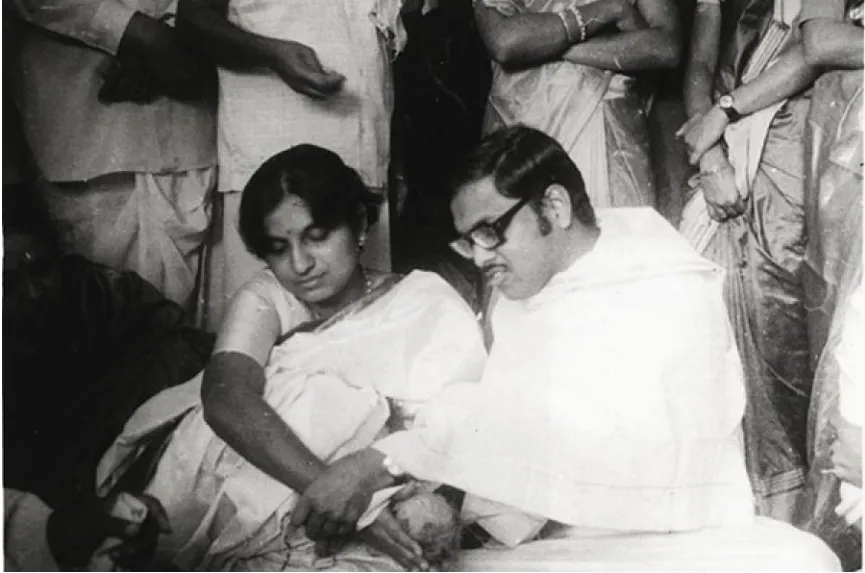
    Sudha clearly emerges as the brighter, smarter and more generous with her untold sacrifices. But Narayan Murthy’s simplicity, humanity, ethical approach and care for everyone else is his distinguishing hallmark. As Sudha said, he was the trapeze artist in the circus and she was the safety net!

    In summary, Uncommon Love is a great read. The author’s grip on the content is not consistent and the book is bereft of any pictures – the one big disappointment in such a rich historically important biography. While the childhood, career, courtship, marriage, childbirth and entrepreneurship is captured well, the rise of Infosys and Sudha’s author career is very rushed.

    The love, understanding, respect and support that Sudha and Narayan gave each other is the core message of the book. They do not need anyone else other than each other’s company. They are mirror to each other and their bond strengthened by shared values and idealistic principles.

    The book also gives a glimpse of the challenges that Narayan Murthy faced in setting up Infosys after his first failure as an entrepreneur. Indeed it is due to persistence of him and likes of Fakir Chand Kohli, that India has emerged as an IT superpower – that would change the glo

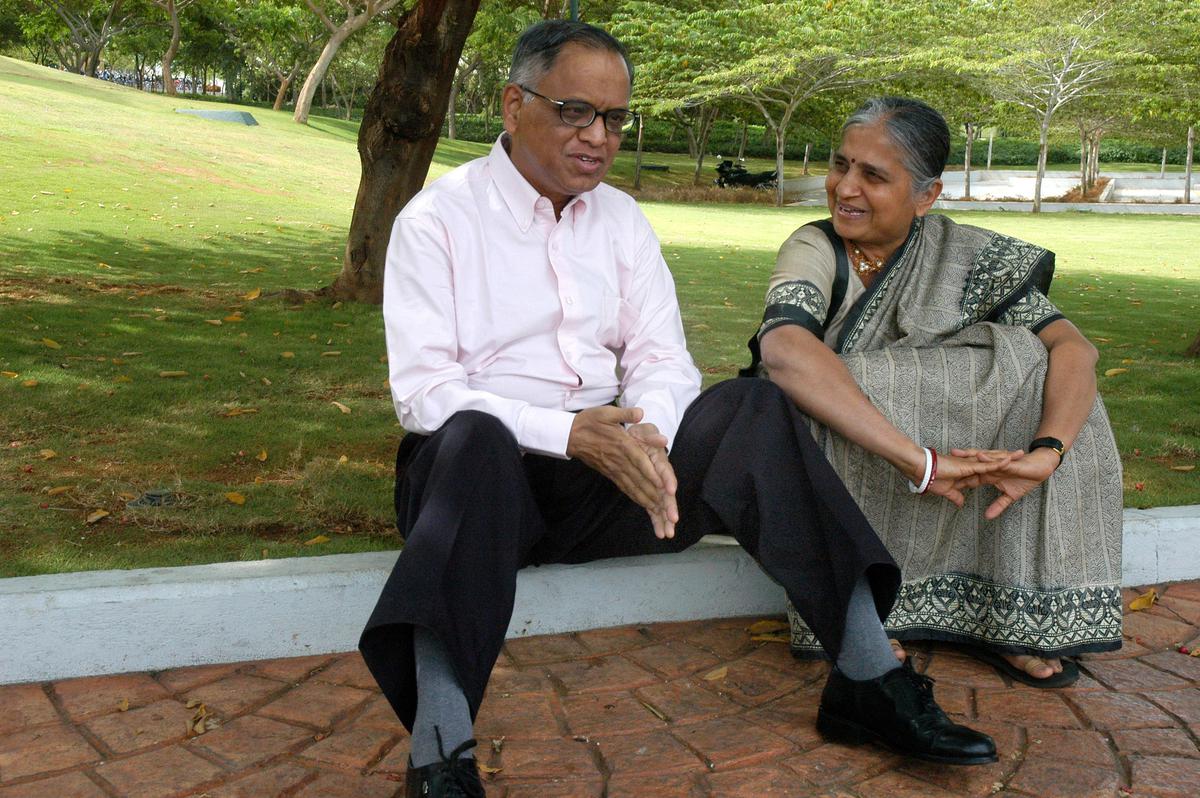
    Sudha Murty N. R. Narayana Murthy

    #uncommonlove #bookreview #infosys #narayanmurthy #sudhamurthy #entrepreneurship #biography #chitrabanerjeedivakaruni


  • Skandal! Bringing Down Wirecard – A Gripping Crime Docu-Thriller!

    Skandal! Bringing Down Wirecard – A Gripping Crime Docu-Thriller!

    • German FinTech’s Unicorn
    • Silicon Valley Innovation From The Land Of Automobiles
    • Black Turtleneck Wearing Witty CEO
    • Death Threats, Thugs & Spies
    • Funding Of Militia & Influencing European Elections
    • Suave COO Features In Europol’s Most Wanted Fugitives
    • Yet Another Financial Fraud

    All of the above and much more!

    Skandal! Bringing Down Wirecard, is a Netflix Documentary that unfolds one of the biggest corporate corruption and financial fraud case of the recent times! Wirecard went bust after its dubious malpractices were discovered and a staggering $1.9 billion was found missing from its books. Skandal! is based on Financial Times’ Dan McCrum’s book ‘Money Men: A Hot Startup, A Billion Dollar Fraud, A Fight for the Truth’. Dan was the person who unravelled the Wirecard fraud. 

    Skandal! explains the entire Wirecard drama and its intricacies in a lucid and engaging manner – through a mixture of graphical story telling, rich interviews and brilliant insights. The journalists where followed and spied by Wirecard’s investigators. They were suspended due to smart counter-allegations by Wirecard and a short trader was threatened by thugs. Lots of interesting histrionics! 

    How did Wirecard execute the scam? Who were responsible? While Skandal! answers such questions about the Wirecard saga, its raises important queries as well: 

    • How did the Wirecard fraud go unnoticed for so long?
    • What loopholes were exploited? Are they fixed?
    • Did German politicians and media turn a Nelson’s Eye to Wirecard?

    Lots of truth is still not unknown. The former Wirecard COO Jan Marsalek disappeared shortly and is currently wanted by the German police. He is listed on Europol’s list of Europe’s most wanted fugitives. CEO Braun resigned and was arrested on suspicion of false accounting and market manipulation. 

    Watch it!

    A few thoughts do emerge….

    As always, it was the Wirecard employees, customers and common investors who had to pay the price!

    Wirecard had some of the best and extremely talented technologists and business experts, who brought great ideas to life. Many innovative ideas came to an abrupt end and many employees suffered for no fault of theirs. 

    Wirecard was a darling of investors. The whole financial world watched how Wirecard surpassed CommerzBank and Deutsche Bank, the traditional Financial heavyweights. There was a move to buy Deutsche Bank as well. All investments turned sour!

    And biggest casualty was the image of Germany and Germans – extremely hard working, honest, focussed, passionate and determined champions! 

    #netflix #wirecard #financialtimes #scam #fintech

  • Everybody Lies – Book Summary

    Everybody Lies – Book Summary

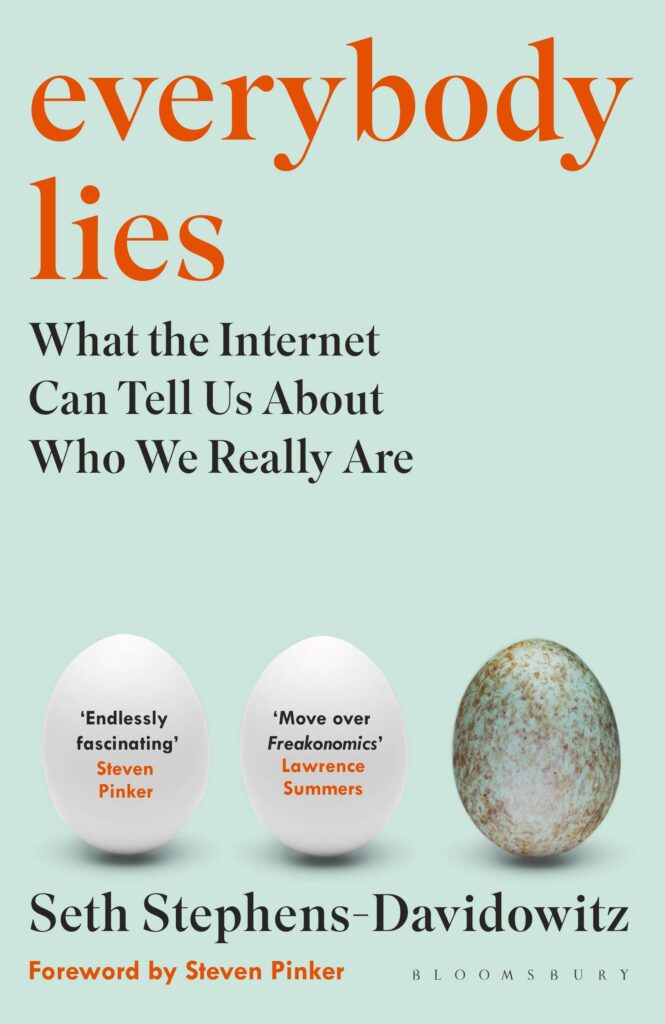
    Everybody Lies : Insightful. Shocking. Mind-blowing. Original. Smart. 

    Seth Stephens Davidowitz introduces us to the smart and astonishing insights by analysing the huge collection of big data. 

    In the process, it lists many anecdotes and examples:
    1. Why election of Donald trump should not surprise us!
    2. What is the biggest worry in a marriage – sexless marriage, loveless marriage or unhappy marriage?
    3. How many men are gay?
    4. Does advertising work?
    5. What should you talk about on a first date if you want a second?
    6. Can you beat the stock market?
    7. What is the most interesting sexual query in India? 

    Let me summarise quick points:

    1. The book’s basic premise is that everybody lies – to themselves and others. But digital trails that we leave on internet can be highly revealing.

    2. Everybody lies. How many drinks they had on the way? How often they go to gym? How many books they read? People want to look good and they under-report embarrassing behaviours and thoughts on surveys. This is called Social Desirability Bias. 

    3. People brag through social media posts,  social media likes and dating profiles. But the real truth is revealed by searches, views, clicks and swipes 

    4. Google searches are the most important dataset ever collected on the human psyche. The internet can tell us a lot about ourselves – things we may or may not know about ourselves. It also exposes the chasm between ideal self we project to the world and the true beings we are. 

    5. The new data increasingly available in our digital age will radically expand our understanding of humankind. 

    6. Trust data and build your actions around it! Analyse data and build your business around it!

    7. Netflix learned the above lesson early on in its life cycle – don’t trust what people tell you, trust what they do. So did Facebook. 

    8. People say they do not want to stalk their friends. There is little in this world they want more than to keep up with and judge their friends. Mark Zuckerberg’s  net worth is the biggest proof of this. 

    9. Similarly, everyone will claim that they have no interest in reading about bondage, dominance and sadomasochism. But people want to read about BDSM between a young college graduate and a business magnate. Proof: 50 Shades of Gray’s success – 125 million copies sold in original and the movie franchise and the revenue collection around this.

    10. Apart from business, academicians can also use big data and digital trails. Academics can use digital data to test a few hundred or a few thousand ideas in just a few seconds. No need to recruit army of researchers to perform a single test. 

    11. Researchers need to include digital data in research. Researchers on desirability and sexuality need to supplement their questionnaires to hundreds of subjects with data from sites like PornHub. 

    12. Collecting rich data on the world’s problems is the first step towards fixing them. Indeed, the algorithms know us better than we know ourselves. 

    Everybody Lies is a wonderful book indeed. A must-read for everyone to know the new emerging world. It continues the legacy of Freakonomics and Moneyball. 

    What we can learn? Study data and make decisions. The best way to work today is to have a data-driven approach. Data and insights can help you win – a difficult boss, a challenging sale and maybe love!

    Image Courtesy: Grzegorz Walczak on Unsplash

  • Prakashotsav – An Intoxicating Evening!

    Prakashotsav – An Intoxicating Evening!

    Intoxication found at Gujarat Vidyapith premises! Intoxication of love, respect and admiration for Prakash N Shah (પ્રકાશન. શાહ  ka નશા)

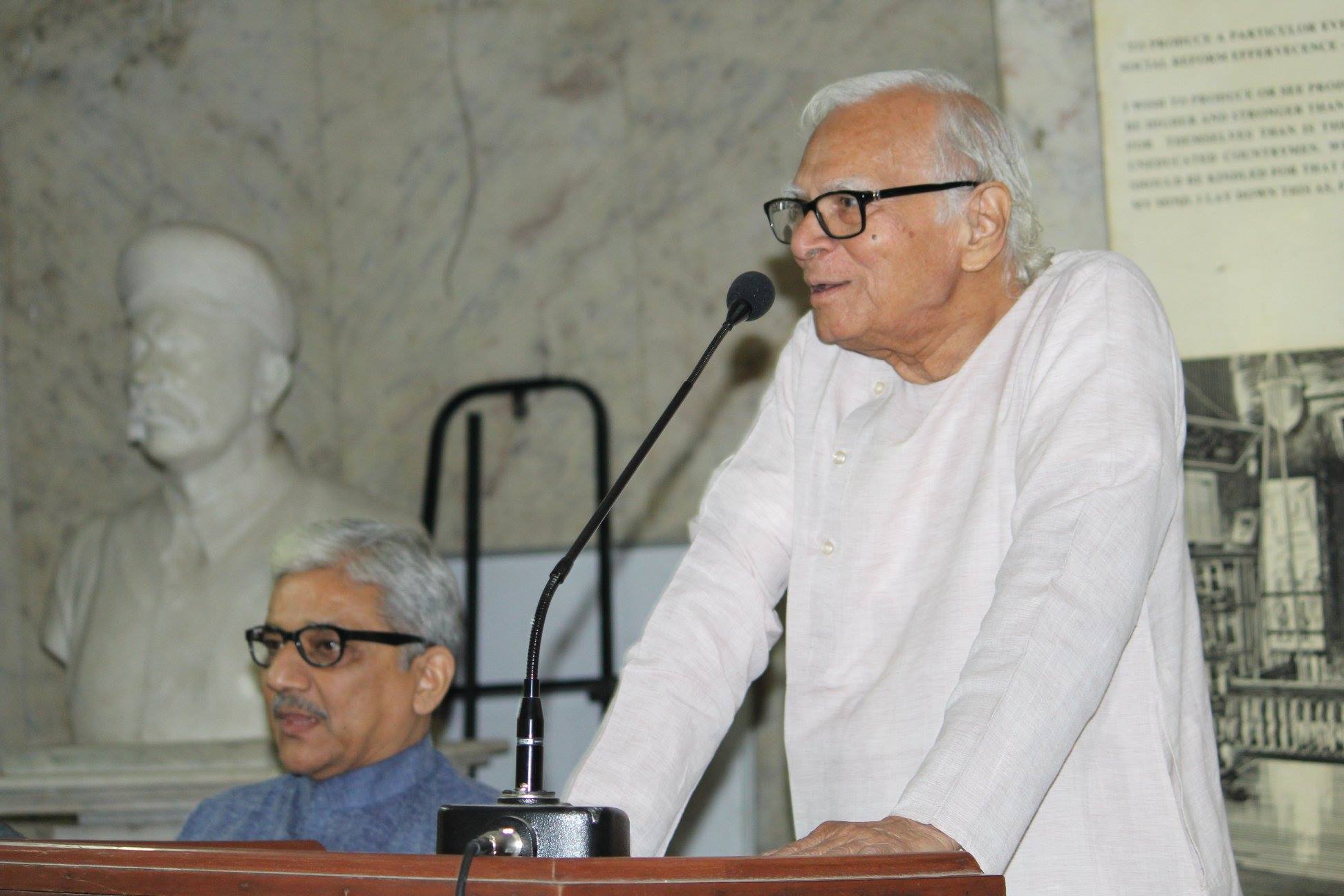
    The occasion was the public felicitation of Shri Prakash N Shah – the many with many roles! The auditorium was overflowing with double its capacity and people occupying the aisles, areas between dais-chair, service area – whatever space one could find. The Saturday evening distractions or the 40 degree heat did not stop the admirers to throng at Gujarat Vidyapith. The audience grabbed every word like a gem and the 2.5 hour event ended too soon – never mind the endless sweating! 

    Prakashotsav – The festival celebrating Prakash N Shah was organised by his friends, well-wishers and Sarthak Prakashan team. 

    The evening started with a mock court where the most loved culprit Prakash N Shah was produced in the court of judge Hashmukh Patel. The lawyers Ketan Rupera and Urvish Kothari conducted the proceedings with the help of Ashish Kakkad. The public prosecutor Urvish Kothari produced a stellar list of witnesses to prove the charges against Prakash N Shah. Ratilal Borisagar, Ashwin Chauhan, Ashish Mehta, Binit Modi, Biren Kothari, Nayanbahen Shah and other stellar figures accused Prakash Shah of several crimes – the burning ambition of being a prime minister, torturing the world with his cryptic and incomprehensible language, creating a cult of his own, communist leanings, hidden acting skills etc. The court proceedings were ably proved with strong logic, evidences and confessions of the witnesses. 

    The mock court was followed by the release of Urvish Kothari’s book on Conversations with Prakash Shah. Prakash N Shah was felicitated by a section of citizens of Ahmedabad. 

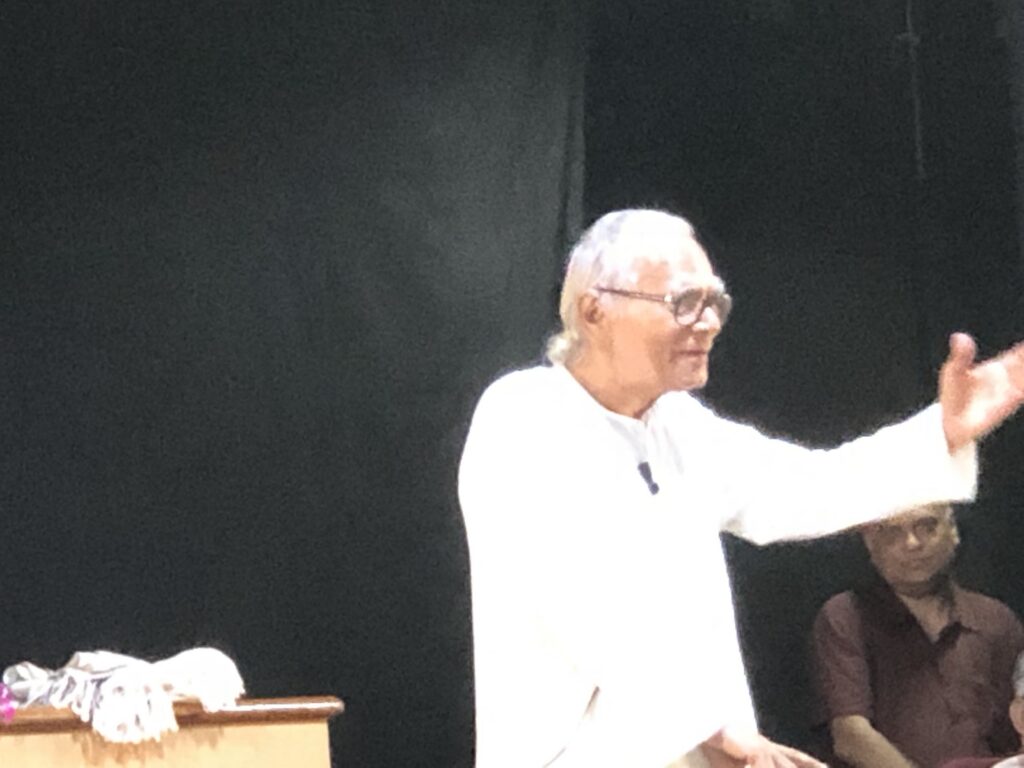
    The grand finale was the speech of Prakash N Shah. He expressed his gratitude for the great gesture. 

    He recounted his journey. His central thought was – Yukta and Mukta. He spoke about Gandhi. He spoke about the impact of three primary books on his life. The audience was listening as hypnotised by David Copperfield but time came calling….

    Prakash N Shah’s intoxication and values will remain…An evening to remember for a human to never forget …..

    Prakashbhai & Ash:

    The white clothes, the simple spectacle and the straight from the heart laughter is how I visualise him whenever we say Prakashbhai. His simplicity, his vision, his clarity and his friendliness is his magic that drives us to him again and again. 

    Thanks to Vipool Kalyani and Gujaratilexicon, I have the greatest fortune of spending lot of time with him and knowing him. The Nireekshak Digitization and other initiatives got us working together. Gujaratilexicon briefly operated from his residence during a difficult time in our journey. 

    Prakash N Shah is a towering personality but he is our Prakashbhai. Our DadaGuru….Sri Sri Sri Dada Guru…Not many can see the Halo behind him…So you see he does have a cult! He is also the business partner of my spouse – they are still searching for their Eureka moment!

  • The Road Not Taken – The Visual Expression!

    The Road Not Taken – The Visual Expression!

    The Painting That I Was Waiting For!

    Our lovely library was waiting for the right art as its entry showcase. We had explored many options but never got it right!

    Till we saw this wonderful art expression of Ms Falak of Eklavya. It stole our hearts at the first sight and all the As of Karania family shouted in joy!

    Eklavya has several unique initiatives and Picasso is one such amazing idea. All the children express their painting and other talents which is encouraged and applauded by the entire society. The exhibition is organized to showcase the talent to the world and the proceeds are given to charities.

    The painting is aptly named ‘The Road Not Taken’. Robert Frost’s timeless poem is our favourite anthem and this creative work does the great justice to the poem.

    All the recently auctioned paintings of Mr N Modi on one side and this one on another side!

    Welcome home ‘The Road Not Taken’ and thanks a million Falak!

    Let us revisit the poem here:

    The Road Not Taken
    Robert Frost

    Two roads diverged in a yellow wood,
    And sorry I could not travel both
    And be one traveler, long I stood
    And looked down one as far as I could
    To where it bent in the undergrowth;

    Then took the other, as just as fair,
    And having perhaps the better claim,
    Because it was grassy and wanted wear;
    Though as for that the passing there
    Had worn them really about the same,

    And both that morning equally lay
    In leaves no step had trodden black.
    Oh, I kept the first for another day!
    Yet knowing how way leads on to way,
    I doubted if I should ever come back.

    I shall be telling this with a sigh
    Somewhere ages and ages hence:
    Two roads diverged in a wood, and I—
    I took the one less traveled by,
    And that has made all the difference.

  • Book Review: 21 Lessons For The 21st Century by Yuval Harari

    Book Review: 21 Lessons For The 21st Century by Yuval Harari

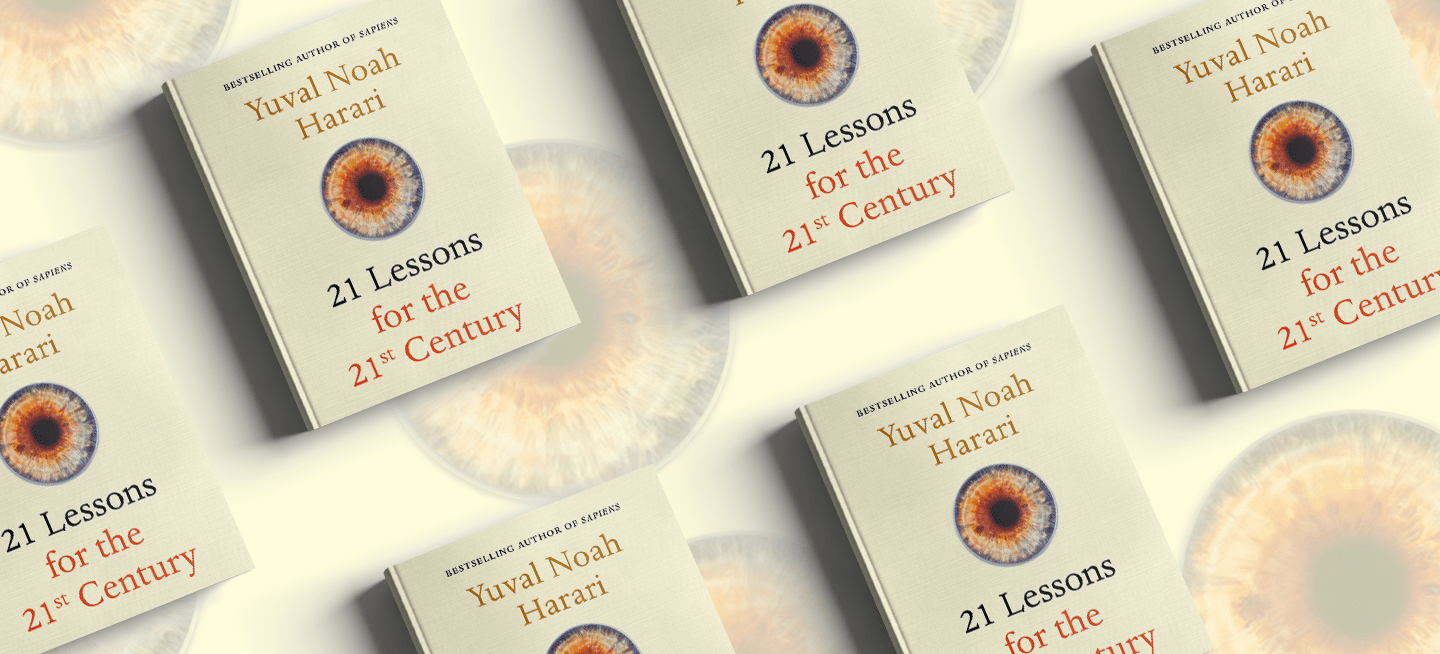
    The highly stimulating and inspiring Yuval Noah Harari is back! His latest book ‘21 Lessons for the 21st Century‘ completes his trilogy. While his previous best sellers, Sapiens and Homo Deus explored the past and the future respectively, 21 Lessons focusses on the present and contemporary topics.

    I read the book on a long SFO-Delhi flight in one reading, amidst the chaos of Brexit and US-China trade tensions. I was returning from an annual planning pilgrimage where we were trying to look at the crystal ball and make our bets. So, the topic of knowing the present and the modern challenges made a lot of sense. The book’s cover jacket and introduction indeed made the right claims:

    How can we protect ourselves from nuclear war and technological disruptions? What are today’s greatest challenges and choices? What should we pay attention to? Are we still capable of understanding the world we have created? What should we teach our children?

    The book is divided into 21 chapters over 5 different sections and cover topics Work, Terrorism, Immigration, Nationalism, War God, Fake News, Education etc. So how does the book measure up? Does it rise up to the claims?

    The vegan smartphone-less Yuval Noah indeed makes a compelling reading. His wide knowledge and deep intellect are evident in his strong claims. The contemporary examples quickly relate and establish a shared platform for arguments. It offers interesting insights and ideas to provoke further thinking and find answers. Sample this:

    1. Donald Trump warned voters that the Mexicans and Chinese will take their jobs, and that they could therefore build a wall on the Mexican border. He never warned voters that the algorithms will take their jobs, nor did he suggest building a firewall on the border with California. True indeed. It is very easy to create a narrative and channelize resources against a visible threat, but what about the larger invisible challenges. It is easy for Donald Trump to talk about Mexicans but how do we prepare to deal humanity with the challenges arising from the confluence of AI and Biotech? The same thing is happening across the world.

    2. The Russian, Chinese and Cuban revolution were made by people who were vital for the economy and lacked political power. But Trump and Brexit were supported by people who enjoyed political power and were afraid to lose the economic power.

    3. Humans vote with their feet. Which countries do people want to emigrate to? It tells the answer for the future. People want to move to USA, Germany, Canada, Australia.

    4. Why terrorism makes headlines? Because the world has become a safer place as compared to the past and any new acts of violence makes more noise. Terrorists are successful because they are like a small fly that can drive a large mad bull to smash up a china shop. That is exactly what 9/11 did. It drove US to smash up Middle East. Terrorism requires action on three fronts: state action against terrorist networks, responsible media management and individual self-restraint.

    5. Humans have two types of abilities – physical and cognitive. In the past, machines competed with humans mainly in the raw physical abilities, while humans retained an immense edge in raw physical abilities. Today, machines are taking over human beings even in the cognitive abilities. So how can humans retain an edge over machines?

    6. Artificial intelligence and biotech are the future and will change humanity. Are we ready for it?

    7. Self-driving cars are safer, but will we understand that? Shall we protect people, or shall we protect jobs? The jobs in Bangladesh and Bangalore will be lost soon. How do we train the redundant workforce? It was easier for farm labourer to become industrial worker or retail help as it required very less significant training. What happens in the future when jobs are becoming very specialised?

    8. The rich are becoming richer, but they may become superior and more talented as well in the future. There will be a rise of “useless” class of people. What are the implications for the society and humanity?

    9. The climate change will be good news for Russia.

    Does the book offer solutions? Yes and no. It offers high level solutions – universal basic income, globalisation of politics, meditation etc. However, if one is looking for practical and innovative solutions, there are very few. And it is not Yuval Noah’s fault – nobody has got the answers right to these questions. At least he has identified the right questions to find answers for and given some initial thoughts. He wants us to debate and find our own answers.

    The book is a good read and a recommended reading. But first do read Homo Deus and Sapiens as well.

    And then let us meet and brainstorm…

    Further Reading:
    Yuval Noah Harari Official Website
    Yuval Noah on YouTube

    Image Courtesy: www.ynharari.com

  • The End: Bombay’s Iconic Strand Book Stall Closes Down

    The End: Bombay’s Iconic Strand Book Stall Closes Down

    Strand Book Stall closes down. A heart-breaking news for every book lover.

    Hundreds of memories are associated with Strand Book Stall.

    As a student, I used to collect pocket money and save it for books. Strand offered a vast collection and great prices – so I could get more for my hard-saved money. I would sacrifice many things to collect more money for book. Though it started with stretching my money, what eventually won me was the great collection, personal touch and warm service. I met Mr Shanbagh many times and he would take so much interest in kids like us.

    My trips from Goregaon to Churchgate for buying books at Strand would be happy events in my annual calendar. I could only afford 2-3 trips in a year, but whenever I could make more trips, it would be a bliss. The annual Strand sale was awaited with much eagerness and it would be held at large Sunderbhai hall. I would carry so many bags and my fingers would have mark of the weight. I have been scolded the most for buying and collecting so many books. Even today my Bombay home is full of books. I always have been guilty of diverting my clothing and food funds to books.

    Mr Shanbagh and Strand really wanted everyone to love books and they did everything to spread that love. The prices at Strand were rock bottom. Not only Mr Shanbagh but his entire team shared the same love. I have clear memories of Mr Giridhar – he would reserve books for me and often call me when our demanded books arrived. We spent hours in the book store and they did not mind it.

    Strand offered us a standard 20% discount. It used to import books and was the preferred place for every true book lover. Since it humble openings in Strand Cinema to the Fort store, it has gained nothing but love and trust.

    70 years after its opening, it will finally close on Feb 28, 2018. A sad day for every book lover. The sadness is there. It was not a book store, it was a friendly place where others who shared books for love came together. I would like to thank Mr Shanbagh and his family for spreading the love for books. The books are important part of my life and Strand was an important part of my life.

  • Subroto Bagchi’s Sell: Rich Insights For Technology Sales

    Subroto Bagchi’s Sell: Rich Insights For Technology Sales

    Selling is a challenging profession and a very demanding one as well! Selling today is a different ball game with the buyer being more knowledgeable and smart. A buyer would have done a thorough research on us before actually interacting with us. A lot of activities in the sales process are getting digital and a smart sales person needs to understand this shift. Even Artificial Intelligence will invade sales area. So how does one deal with these changes? What are the best practices in technology sales? Unfortunately, there are few sources and books on technology selling that can provide insights and shared experiences. Mindtree Co-founder Subroto Bagchi tries to address this gap and provide his rich insights on selling.

    Many of Subroto’s fans and friends like me were awaiting his new book – since a lot of water had flown in Ganges since the release of his previous book. And ever since he told me that his upcoming book was on sales, the salesman in me was eager to lay his hands on the book.

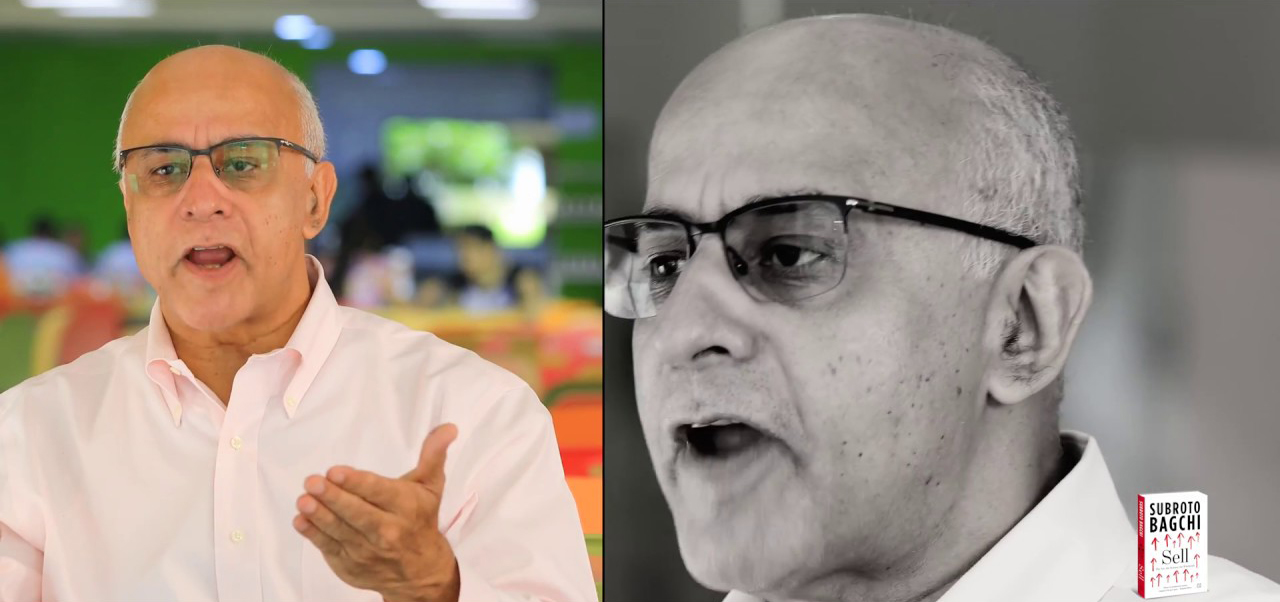
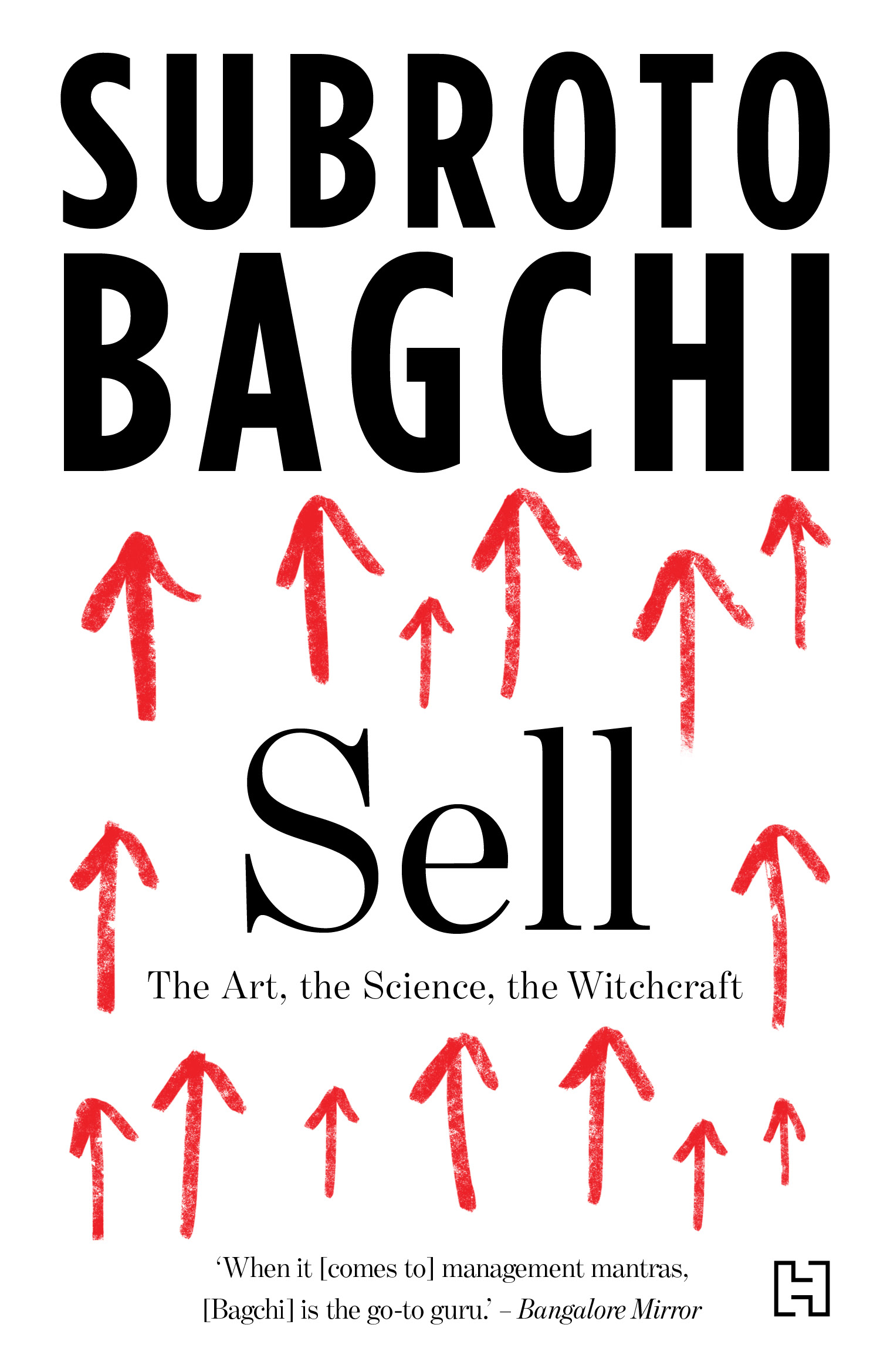
    ‘Sell: The Art, Science, the Witchcraft’ is the title of SubrotoDa’s book and it brings together the experience and advice of various sales leaders. Subroto has known these sales leaders and drawn on their unique sales philosophy and wisdom. There are nice anecdotes, unique insights and practical tips.

    SubrotoDa defines sales as part science, part art and part wizardry. It is not a profession in itself but a very critical skill in every field and an essential skill for people across all levels within the organization. Selling is not something to be apologetic about. It is not a pushy, winner-take-all masculine act. It is an empathy-led, process-driven and knowledge-intensive discipline.

    A lot of things in Sell impressed me – visual design of technological solution, collaboration between sales and marketing for larger deals, response to a major RFP loss, Google Quotient, The Naked Burger, Do It Like Swedes etc. I definitely intend to influence my sales practices with some of these thoughts.

    He uses the analogy of life-cycle of Coho salmon to drive home the importance of right prospecting by segmenting the customers and figuring out the right hook. Right qualification is importance to save the most precious resource of salesperson: time. And also ensure optimization of organizational energy, effort, intellect and other resources. I smiled at the different stereotypes presented: Great giver of homework, patron saint of thought leadership etc.

    He has some stellar lines for us:
    – Authenticity is in short; hence in demand
    – The prospecting process has changed. Your future customers are already doing prospecting about you and your company

    Honesty, transparency, customer relationship, negotiation, etc. are important traits for an effective seller and Subroto delves into each of these topics. Customer relationship is a competitive advantage and one has to developer chemistry with the customer. He emphasizes one thing that has not changed in sales – people buy from people. A best sales person is a consultant who advises client and brings teams together to create the right solution and sell in a consultative approach.

    Subroto also delves into areas of deal-making, legal support, paperwork etc. He ends the book with detailing of what a makes a true sales champion.

    Subroto delivers his rich intellect and wisdom in easy to understand nuggets. He has strong rationale for his views. I had whole-heartedly followed his advice of uprooting ourselves and exploring new geographies to break our comfort zone and rewire our thinking.

    Could this have been even a greater book? Would have I liked anything more in this book? Yes – Some more depth on some topics (I understand the overall writing style of Subroto). I would have liked to see the comparative analysis of selling practices of Indian IT and true blue Western IT companies. Maybe some detailed case studies of winning a large and complex enterprise deal – without divulging confidentiality of any entities. Maybe some biggest sales follies of the sales leaders. I would also have loved to see his views on how the new and mid-sized Indian companies can win deals in the new emerging global landscape. This would have been a great service to many emerging sales leaders.

    Sell is a great resource for technology sales professionals. It is a great addition to the dearth of Indian voice on this topic. It has nice insights for sales professional. Read it!

  • Avoiding Sep 11 Attacks, Happy Marriage Equation & Better Thinking Ideas

    Avoiding Sep 11 Attacks, Happy Marriage Equation & Better Thinking Ideas

    Thinking_Fast_Slow_Summary

    First Things First – Daniel Kahneman’s “Thinking, Fast And Slow” Is A Must Must Read Book ! Yes – READ IT. It Is One Of The Best Investments You Will Make.

    Daniel Kahneman is the first non-economist to profession to win the Nobel Prize in Economics. But do not worry – the book is easy read and very though-provoking. The book aims to help us understand our systematic errors (biases) so that we an anticipate, identify and avoid them. An accurate diagnosis of our errors of judgement and choice may prevent or limit the damages of our errors.

    The central theme is that our minds have two systems for making decisions – System 1 and System 2.

    System 1 operates automatically and quickly, with little or no effort and no sense of voluntary control.
    System 2 allocates attention to the effortful mental activities that demand it, including complex computations. The operations of System 2 are often associated with the subjective experience of agency, choice, and concentration.

    The books speaks of the role and importance of System 1 in our lives and decisions – intuitions, illusions. It controls us more than we think it does. We become strangers to ourselves. Eventually, System 2 should drive us. And if System 1 is driving us, we should slow down and change course.

    The book touches upon many topics and each one is worth diving further into. I am resisting my temptation to write about all of them – as I want you to read the book.

    Let me touch upon selective interesting points:

    1. One of the important point is about Focus. Multi-tasking is not a great thing as self-control and deliberate thought apparently draw on the same limited budget of effort. Self-control requires attention and effort. Focus and maintaining a consistent thought process requires discipline. Hence tired and hungry judges tend to fall back on the easier default position of denying requests for parole rather thank think more deeper on merits of the case.

    2. High correlation exists between thinking and self-control. People with high self-control have higher measures of executive control in cognitive tasks, and especially the ability to reallocate their attention effectively. The children who had shown more self-control as four-year-olds had substantially higher scores on tests of intelligence. There is a significant difference in intellectual aptitude between people with different self-control.

    3. Another interesting finding is the idea of money primes individualism: a reluctance to be involved with others, to depend on others, or to accept demands from others.

    4. Cognitive Ease allows System 1 to be in control while Cognitive Strain determines whether System 1 should involve System 2. Hence marketing works on creative cognitive ease and lead us to intended behaviours. Using bold colors, simpler language helps. If the message is to be printed, use high-quality paper to maximize the contrast between characters and their background. If you use color, you are more likely to be believed if your text is printed in bright blue or red than in middling shades of green, yellow, or pale blue. As we all know, repetition induces cognitive ease and a comforting feeling of familiarity. It is the exposure effect. A good mood weakens System 2 and hence one needs to be extra careful. Similarly, one should not dismiss an idea because it is badly packaged in a hard language or bad font.

    5. The Wisdom of Crowds indeed makes sense. A collective judgement is often superior to individual judgements.

    6. Whenever taking decisions, ensure that the different biases are checked:
    Halo Effect
    Substitute Effect
    Anchoring
    Availability
    Optimism Bias

    A checklist is a great tool for making decisions.

    Example of Availability Bias: People feel politicians and celebrities often resort to Adultery? Does the aphrodisiac of power cause such behaviour? Statistically, politicians and celebrities have same amount of affairs as other people – it is only that their cases get highlighted more in the media and we tend to feel that they are more morally challenged.

    7. Bad News: Some experimenters have reported that an angry face “pops out” of a crowd of happy faces, but a single happy face does not stand out in an angry crowd. The brains of humans and other animals contain a mechanism that is designed to give priority to bad news. By shaving a few hundredths of a second from the time needed to detect a predator, this circuit improves the animal’s odds of living long enough to reproduce. The automatic operations of System 1 reflect this evolutionary history. No comparably rapid mechanism for recognizing good news has been detected. Of course, we and our animal cousins are quickly alerted to signs of opportunities to mate or to feed, and advertisers design billboards accordingly. Still, threats are privileged above opportunities, as they should be.

    8. The sunk-cost fallacy keeps people for too long in poor jobs, unhappy marriages, and unpromising research projects.

    9. people expect to have stronger emotional reactions (including regret) to an outcome that is produced by action than to the same outcome when it is produced by inaction

    10. The greatest test for professionals including fund managers is persistent achievement.

    Most of the buyers and sellers know that they have the same information; they exchange the stocks primarily because they have different opinions. The buyers think the price is too low and likely to rise, while the sellers think the price is high and likely to drop. The puzzle is why buyers and sellers alike think that the current price is wrong. What makes them believe they know more about what the price should be than the market does? For most of them, that belief is an illusion.

    The book contains many memorable quotes. For example:
    – Pupil of the eye is the window to the soul.
    – Emotional tail wags the rational dog

    The book is replete with rich examples and interesting anecdotes. Some examples were really amazing and though-provoking.

    1. The Equation for Success

    According to Kaheman, his favourite equation is:

    Success = Talent + Luck
    Great Success = A Little More Talent + A Lot Of Luck

    We tend to undermine the role of luck. Whether analyzing stock markets or other events, we tend to ignore the role of luck.

    2. The Formula for Marital Stability

    Frequency of Lovemaking minus frequency of quarrels

    Sounds obvious? Now this is endorsement from the Nobel-prize winning Guru!

    3. The September 11 Attacks

    If an event had actually occurred, people exaggerated the probability that they had assigned to it earlier. If the possible event had not come to pass, the participants erroneously recalled that they had always considered it unlikely.

    The worse the consequence, the greater the hindsight bias. In the case of a catastrophe, such as 9/11, we are especially ready to believe that the officials who failed to anticipate it were negligent or blind. On July 10, 2001, the Central Intelligence Agency obtained information that al-Qaeda might be planning a major attack against the United States. George Tenet, director of the CIA, brought the information not to President George W. Bush but to National Security Adviser Condoleezza Rice. When the facts later emerged, Ben Bradlee, the legendary executive editor of The Washington Post, declared, “It seems to me elementary that if you’ve got the story that’s going to dominate history you might as well go right to the president.” But on July 10, no one knew—or could have known—that this tidbit of intelligence would turn out to dominate history.

    Could better thinking have changed the course of history?

    4. Michael Lewis’s bestselling Moneyball is a story about the inefficiency of the traditional mode of prediction. Professional baseball scouts traditionally forecast the success of possible players in part by their build and look. The hero of Lewis’s book is Billy Beane, the manager of the Oakland A’s, who made the unpopular decision to overrule his scouts and to select players by the statistics of past performance. The players the A’s picked were inexpensive, because other teams had rejected them for not looking the part. The team soon achieved excellent results at low cost.

    5. The basic message of Built to Last and other similar books is that good managerial practices can be identified and that good practices will be rewarded by good results. Both messages are overstated. Because luck plays a large role, the quality of leadership and management practices cannot be inferred reliably from observations of success. And even if you had perfect foreknowledge that a CEO has brilliant vision and extraordinary competence, you still would be unable to predict how the company will perform with much better accuracy than the flip of a coin. On average, the gap in corporate profitability and stock returns between the outstanding firms and the less successful firms studied in Built to Last shrank to almost nothing in the period following the study. The average profitability of the companies identified in the famous In Search of Excellence dropped sharply as well within a short time. A study of Fortune’s “Most Admired Companies” finds that over a twenty-year period, the firms with the worst ratings went on to earn much higher stock returns than the most admired firms.

    Photo Credit:

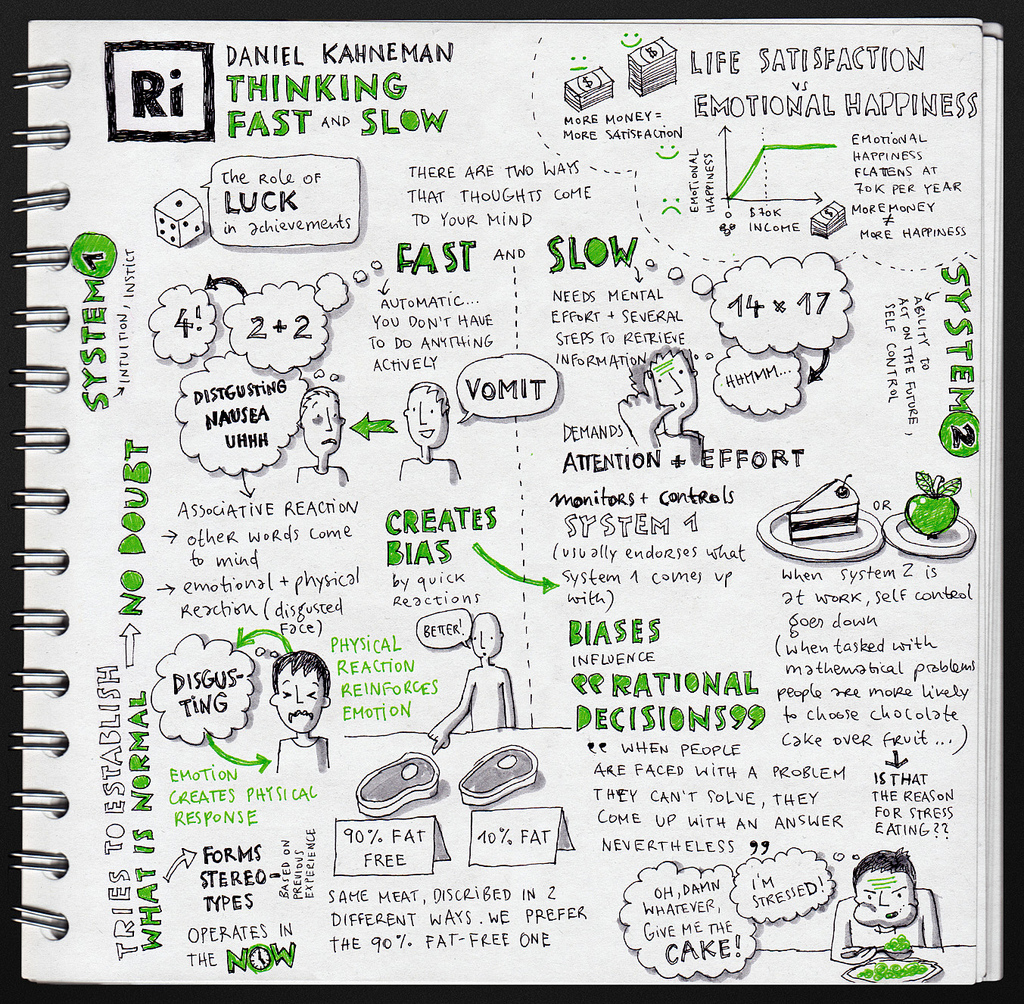
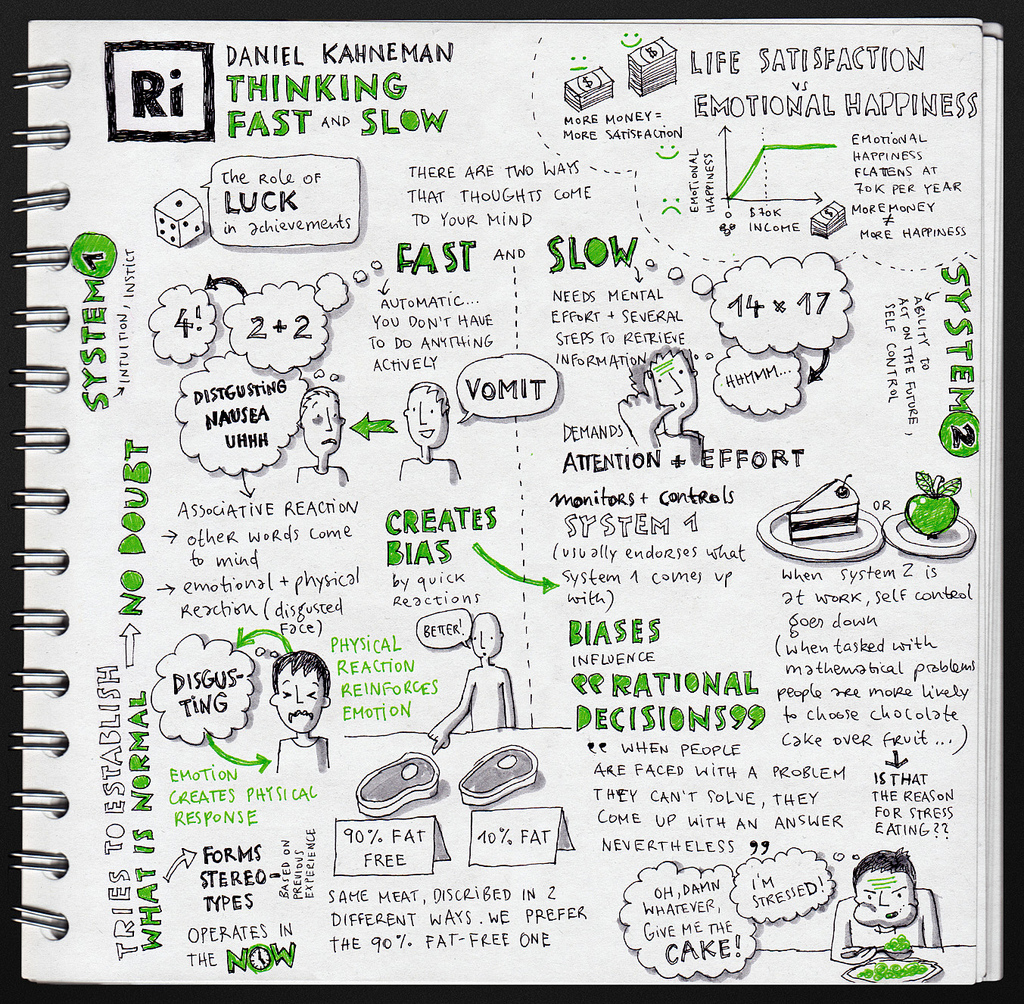
    Please Find A Very Interesting Snapshot Of The Book by: Eva-Lotta Lamm

    This sketchnote is featured in Eva-Lotta’s new book that gathers her sketchnotes from over 100 talks taken at design events and conferences in 2011.
     
    In addition, Eva-Lotta invited 10 of her favourite sketchnoters from all over the world to contribute to the book. They all sketched the same TED talk and created some stunning sketches that show off the wide variety of styles and different ways of summarising content.
     
    www.sketchnotesbook.com

  • Dream Like Ronnie !

    Dream Like Ronnie !

    The Trio of Ronnie Screwala, Zarine Mehta and Deven Khote got my attention early in life. I was in school and Doordarshan was a staple diet. United Television came across as a different company – production, content and overall packaging. The logo of UTV was stuck in mind.

    Since then UTV and Ronnie Screwvala and his team have continued to impress us. India’s first soap – Shanti was a big step at that time. It continued to grow in leaps and bound. In-flight entertainment business, post-production, IPO, broadcasting, VAS business etc. It ventured into the movie business via movie distribution and soon turned into production as well. I am sure each milestone had its share of challenges.

    Everyone sees the success and the limelight. Especially in the glamour business. Ronnie’s UTV was sold to Disney – a watershed moment for Indian entertainment industry. It was a great and a heartening story – a company that its Indian entertainment brethren and camps did not take seriously initially was bought by one of the biggest and iconic entertainment companies in the world.

    Ronnie has played an important role in India movie business. During the course of my doctoral thesis on the role of modern management in Indian Film Industry, I came across many exemplary practices of UTV. I have documented them and they are a part of my thesis.

    UTV gave special importance to movie marketing and production values and content.

    Ronnie has recently penned his journey in his book – Dream With Your Eyes Open. Trust him to do the same with his book. Indian non-fiction does not get great attention. But Ronnie is trying a lot of things here as well. Check his list to redefine this space:

    1. Great Marketing Campaign Around The Book – Unless You Are Lost In Hawaiian Vacation, Very People Will Miss The Book Launch
    2. Ranbir Kapoor Launches The Book – A Perfect Launch
    3. Testimonials From Captain Of Indian Industry & Disney
    4. Testimonial From Narendra Modi
    5. India’s First Television Ad For The Book
    6. An Active Social Media Campaign, Website

    The success of the book is important as it helps to promote the message of Entrepreneurship. He says the books is about “It can be done” and not “I did it” Great. The message of entrepreneurship need more ambassadors. Importance of failing. Importance of taking risks. Dreaming Big! May thousands of Ronnie bloom !

    Related Links:
    Book Website – Dreams With Your Eyes Open