Category: Food For Thought

  • Loving Vincent – When Paintings Come To Life!

    Loving Vincent – When Paintings Come To Life!

    We can only speak by our paintings
    Vincent Van Gogh

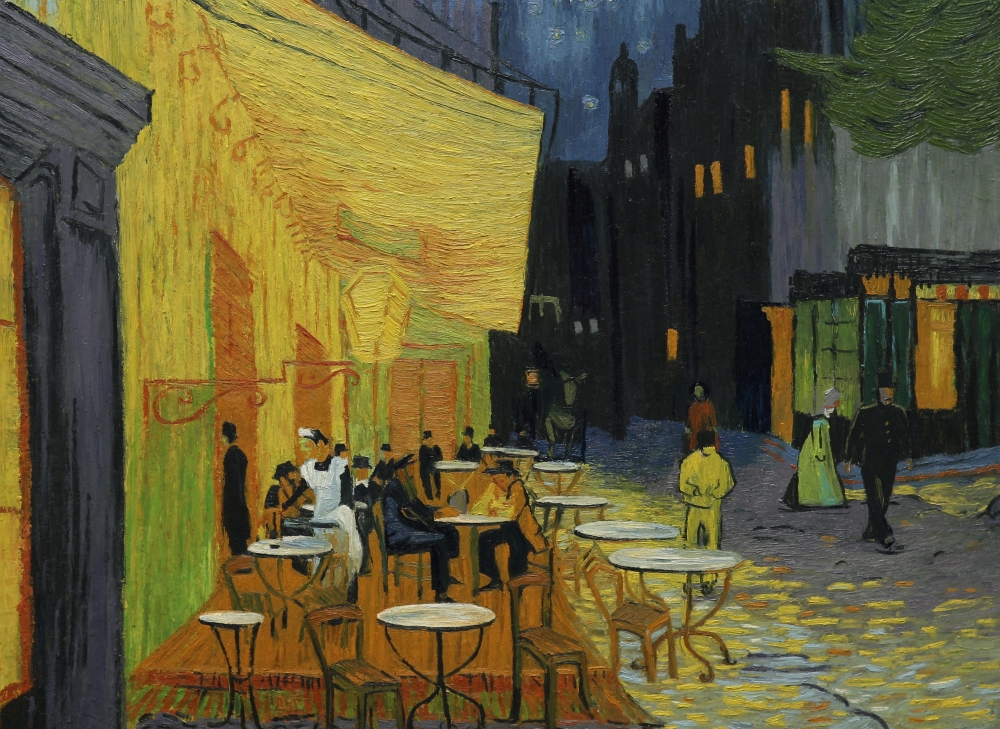
    Loving Vincent brings alive the magic of Vincent van Gogh. The movie, made of oil paintings, is a visual delight. The film’s 65,000 frames are actual oil paintings on canvas – painted in Van Gogh style by more than 125 painters. What a thought! What an execution! What a result!

    The movie is a cinematic experience not to be missed! It’s like Van Gogh’s paintings and characters coming to life as you experience the story. The efforts and detail-oriented execution of 6 years of creative work bring rich results on screen. The director Dorota Kobiela had planned this as a short movie with crowd-sourced funding but the project gathered momentum and it has become a mammoth masterpiece. The film was made at a cost of USD 5.5 million – a fraction of Marvel and DC budgets! Dorota Kobiela deserves a rich applause for this magnificent and innovative work!

    Loving Vincent is the first fully painted animated feature film which revolves around the mystery of Vincent van Gogh’s death. Postman Joseph Roulin asks his son Armand to deliver Van Gogh’s last letter to his brother Theo, but both the sender and the recipient are dead. It’s almost one year since Van Gogh’s death and Armand tries to find out the real cause. There is no conclusive evidence. During his pursuit, the audience discover Van Gogh’s genius, his approach to life, his loneliness, his troubled childhood, his professional challenges, his relationship issues and other facets of his life.

    What impressed me the most was that he created his masterpieces and genius body of work within a decade. He had more than 2000 works of art in a decade – we do not need a lifetime to create works that are timeless!

    Watch Loving Vincent Trailer

    Watch The Making Of Loving Vincent – Painting Techniques

  • Celebrating Learning & Innovation – The Museum Of Failure

    Celebrating Learning & Innovation – The Museum Of Failure

    The winner takes it all! Winning at any cost seems to be the modern mantra – whether in business, politics or any other aspect of life.

    But what about failures? Failure is a learning process. Failure is an important part in our journey of evolution. Unless we fail, we do not learn the important lessons that are necessary for our growth – personal as well as professional.

    Once a famous Indian King had to make a choice between two able generals for an important war. One was a general who had never lost an war. He was the lucky general. The other one had won more wars but lost a few as well. The upcoming war was an important one and king chose the one with a mixed record. The second general would not take success for granted. He would be less arrogant and take the right steps for winning the war. And who knows the first one could run out of his luck – law of averages would catch-up! Wise choice.

    Today, the excessive focus on success has made failure a completely negative concept. Failure is not welcome. But failure is nothing to be shameful about. Every race has always one winner – so we should not consider the rest as failures.

    Failure is an equally important factor in the innovation journey. Hundreds of innovations became successful, but thousands and thousands failed before the successful ones!

    I recently came across an interesting Museum – the Museum of Failure. Hidden in a small town of Helsingborg in Sweden, it is a collection of all interesting innovation failures. It has a collection of failed products and services from the world – to drive home a single point – that business of innovation is risky proposition, but it is a learning process.

    Some of the famous items on display include:

    – Apple Newton

    – Harley Davidson Perfume

    – Google Glass

    – Nokia N-Gage

    – Kodak Digital Camera

    – Sony Betamax

    – Lego Fiber Optics

    – Ford Edsel

    – Donald Trump Board Game

    – Colgate Beef Lasagna

    – Coke Coffee Cola


    The important thing is to not get disappointed after failure or lose enthusiasm. We should avoid self-doubts as well. Failure tells us to start once again but with more intelligence and information. Hence failure is never final. It is a stepping stone towards success!

    Official Site of Museum of Failure


    Check A Quick YouTube Video:


  • Depression – Rising India’s Big Challenge

    Depression – Rising India’s Big Challenge

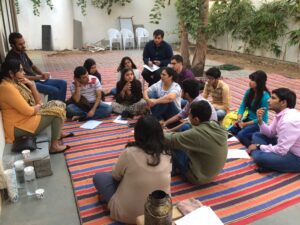
    Pre-Christmas Eve was a special evening!  A discussion on ‘Perspectives on Mental Health’ was organized at Project Otenga, Ahmedabad. This event was organized under the aegis of ‘Against Depression’, a clinical depression awareness project initiated by  Udit Thakre, a psychology student. Dr Nimrat Singh, a leading clinical psychologist, was our shepherd as she shared her rich experiences and knowledge of the subject. It was heartening to see a lot of young people – as they are the future shapers.

    As the conversation proceeded, the group increasingly veered towards talking about depression. India is the depression and suicide capital of the world. According to NIMHANS, one in twenty Indians suffers from depression.  Depression issue in India is aggravated by the social and cultural factors. Most Indian families are reluctant to acknowledge the occurrence of mental illness in and around them. They are embarrassed and dismissive of the issue. This causes avoidance in taking the right steps to address mental health issues. On an average, it takes 10 years to diagnose cases of depression in India – which is much higher than the global average.

    The session addressed many myths of about depression – such as:

    – Once you get depression, you are gone for life. You cannot ever live a normal life.

    – Women are more prone to depression than men.

    – Weak people develop depression

    – Introverts are more prone to depression than extrovert people.

    The fact is that depression can strike anyone – irrespective of age, health, life-stage. Depression can be caused by a lot of things. It can be even triggered by weather, food or erratic lifestyle. Anger, when not channelized correctly,  translates into depression. Often, we are dominated and driven by media designed view of life – creating lot of self-worth issues.

    Our eyes will see what our mind knows. Prevention and management of depression depends heavily of self-awareness, awareness about an individual’s rights and awareness about a person’s environment and how it is affecting him/her. The intensity of depression is directly related to dialogue. If you have dialogue with family and friends, maintain good relationships, exercise regularly and have a regulated lifestyle, you can avoid depressions. Maintaining a diary, regular family life and open dialogue help in channelizing feelings and emotions. In the words of Dr. Nimrat Singh “ It is better to be a pressure cooker which release steam regularly rather than being a volcano.”

    The good news is that mental health issues, especially depression, can be cured. And people can lead a completely normal lives after treatment. The key is to create awareness and being there for people suffering from mental health issues.
    Please find the links to the following documents – shared by ‘Against Depression’:

    1. A continuously updated list of mental health professionals (psychologists and psychiatrists) in Ahmedabad

    2. A manual on depression published by the World Health Organization. 

    If you are interested in helping or being a part of ‘Against Depression’, please contact Udit Thakre at udit.thakre@gmail.com.

    Let us work together on solving one of the biggest challenges of a rising India!


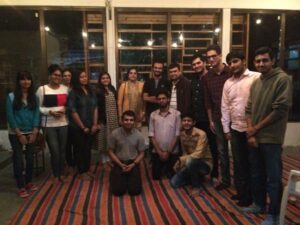
     Participants with Dr Nimrat Singh & Udit Thakre 


    Cover Photo Credit: Jad Limcaco on Unsplash

  • TEDx Talk: Soul Fuel – Why Solivagant Travel Matters!

    TEDx Talk: Soul Fuel – Why Solivagant Travel Matters!

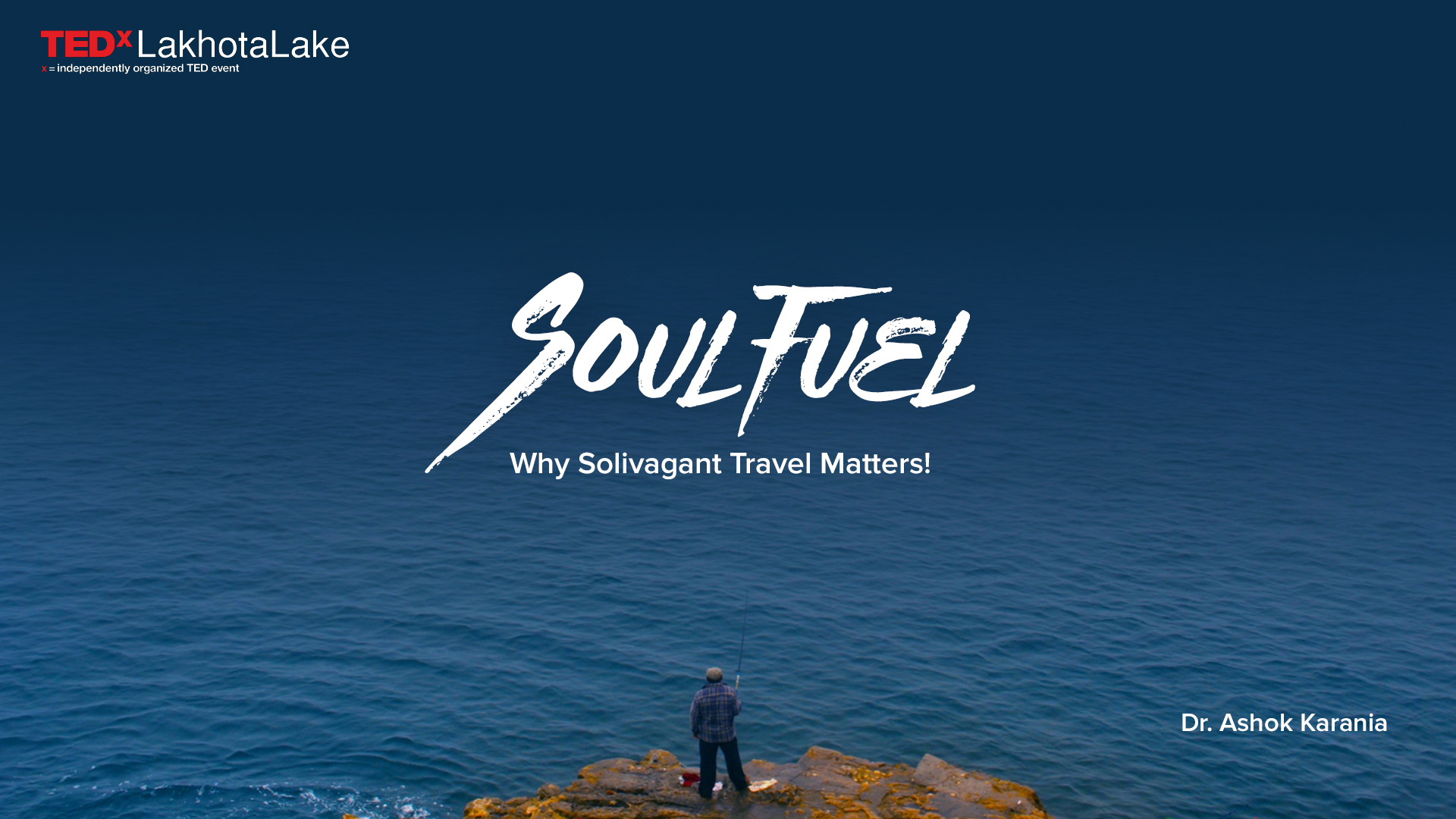
    My TEDx Talk on ‘Soul Fuel – Why Solivagant Travel Matters’ is live!

    Technology, travel and movies are my passions. I work around the confluence of these themes using my varied skills!

    I am an evangelist to influence and inspire people to travel. I believe that travel is the best way to widen our horizons, accept differences, remove intolerance and make the world a better place. It promotes cultural exchange, understanding and helps people to connect with people.

    In my TEDx talk, I spoke about the joys of traveling alone and how it is an enriching and life-changing learning experience. I strong believe: A new you is the best travel souvenir!

    I welcome your feedback and suggestions on this talk and what other topics you would like to me cover in future talks and travelogues! And yes, if you like it, spread the good word. Please “like” and share it.

    Keep traveling! Keep discovering!

  • If

    If

    English poets have produced some remarkable work and “If” is one of the great gems. British Nobel laureate Rudyar Kipling’s poem was written in 1895 and published in “Rewards & Fairies” in 1910.

    “If” remains one of the most beautiful advice and inspirational gem. One can find glimpses of Bhagwad Gita, Vedic & Natural wisdom in this poem.

    Though the whole work is awesome, some of my favorites lines are:

    1. If you can trust yourself when all men doubt you,
    But make allowance for their doubting too;

    2. If you can dream—and not make dreams your master;
    If you can think—and not make thoughts your aim;

    3. If you can meet with Triumph and Disaster
    And treat those two impostors just the same;
    (Like Sthitaprajna in Bhagwad Gita)

    4. If you can talk with crowds and keep your virtue,
    Or walk with Kings—nor lose the common touch,

    “If”

    If you can keep your head when all about you
    Are losing theirs and blaming it on you,
    If you can trust yourself when all men doubt you,
    But make allowance for their doubting too;
    If you can wait and not be tired by waiting,
    Or being lied about, don’t deal in lies,
    Or being hated, don’t give way to hating,
    And yet don’t look too good, nor talk too wise:

    If you can dream—and not make dreams your master;
    If you can think—and not make thoughts your aim;
    If you can meet with Triumph and Disaster
    And treat those two impostors just the same;
    If you can bear to hear the truth you’ve spoken
    Twisted by knaves to make a trap for fools,
    Or watch the things you gave your life to, broken,
    And stoop and build ’em up with worn-out tools:

    If you can make one heap of all your winnings
    And risk it on one turn of pitch-and-toss,
    And lose, and start again at your beginnings
    And never breathe a word about your loss;
    If you can force your heart and nerve and sinew
    To serve your turn long after they are gone,
    And so hold on when there is nothing in you
    Except the Will which says to them: ‘Hold on!’

    If you can talk with crowds and keep your virtue,
    Or walk with Kings—nor lose the common touch,
    If neither foes nor loving friends can hurt you,
    If all men count with you, but none too much;
    If you can fill the unforgiving minute
    With sixty seconds’ worth of distance run,
    Yours is the Earth and everything that’s in it,
    And—which is more—you’ll be a Man, my son!

  • Kshamapan – Michammi Dukkadam – The Festival Of Forgiveness

    Kshamapan – Michammi Dukkadam – The Festival Of Forgiveness

    Forgiveness is the supreme act of courage!

    It is an act of faith and humility. It releases both the parties to move on and build a new tomorrow.However, it is very difficult to execute. Equally difficult is forgiving oneself!

    However, we need to start somewhere!

    And nothing better than the holy day of Samvastari – the last day of Paryushan – the biggest Jain Festival. On this day, all Jains ask for forgiveness by saying – Michammi Dukkadam.

    Dear Friend

    I ask for forgiveness, if I may have hurt you, intentionally or unintentionally, by Thoughts, Words or Action.

    Micchami Dukkadam !

  • The Eklavya Experience

    The Eklavya Experience

    As you progress in life, one of the important anxieties of life is about your child’s education. Are you preparing them for the future? Will they be ready to be a global citizen? Will they learn how to learn? Will they know how to deal with the challenges? What is the right mix between academic rigour and extra-curricular activities? 

    So many questions…The funny thing is that none of these questions may have mattered when we had gone to school. Yet we have so many questions. Are we doing analysis paralysis? Are we overdoing this?

    School is one part of the equation but a very important part. Because school is the child’s first external environment after the home unit. School environment can determine and influence our children beyond our imagination. 

    As parents of two children, me and my wife were clear about a few things while we are selecting our school. Education is important but we did not want to rob the childhood of our kids. Academic rigour and discipline are pre-requisite for a good citizen and strong civic sense is the first religion. But we want our kids to also have time for life activities and no-activity times. We have seen many kids having a schedule that can put a leading consultant to shame – whole life is going to be driven by Outlook Calendars – so why create stress from early days? Knowing Mozart is fine but let our kids also enjoy the music of Mozart of Madras. Knowing Picasso is fine but let them also create doodles on home walls! The only important things are quality of education, discipline, extra-curricular and co-curricular balance, ethics and values driven learning. 

    Sometimes life rewards you more than you wish for. Our joy knew no bounds when we discovered Eklavya. It checked all our boxes and it went beyond. We got the admission after waiting for some time and we were very happy. You can read our Eklavya Experience at my earlier blog: The Eklavya Evangelist.

    Life was good and my child was enjoying the school life. But life surprises you. At a very short notice, we had to move to a European country and we had to uproot our lives here. It was one of the best education exercise of life. We were taken out of our comfort zones and our autopilot lives were re-programmed. This is the benefit of moving to new place as Subroto Bagchi explained to me during our EDI interactions.

    My child was admitted to one of the most wonderful schools – which had children from more than 50 countries and different backgrounds. His best friends were from different continents and it truly broadened his outlook. The teachers were very good and some of the pedagogic approaches were impressive indeed. But somehow all of us missed Eklavya. He would tell his teachers and principal stories of his school (Eklavya) – forgetting that Eklavya was his ex-school. 

    Time passed and I was at nearing the end of our stint and we had to decide on the next steps. My son was very clear about what was to be done. He wanted to go back to Eklavya. Not that we needed any strong convincing! My family decided to move earlier than me. This decision would have manifold implications and we would need to plan for it. We would need additional support from our families, employer organization and Eklavya as well. And all these people helped me immensely and I am grateful to them. 

    Eklavya Team was very supportive. Principal Madam gave us helpful inputs and Administrative Team was super-efficient. Even in our absence, they made sure that we got the personal touch and advice. Once we landed, teachers took personal interest to ensure my son could catch-up with his peers in certain subjects. It is so special to see class teacher taking more efforts than you to ensure that your child is getting ahead and giving his best – It speaks highly of the individual teacher and her values and greatness – but it is an example of the great organization and ethos created by the founder. Once our son was struggling to get certain act right and the pain of that was on class teacher’s face. That moment is strongly sketched in our minds as a rare example of care and genuine interest in the student’s progress. Right from Principal to support staff, everyone says – My children. Contrast this to a philosophy were students are customers and parents are financiers! During regular school interactions, every teacher has inputs which are specific to your child and they you the same with anecdotes and action steps – this is very high level of engagement and involvement. 

    We recently had an interaction with the founder Shri Sunil Handa. He explained that the philosophy was to prepare the children for the future – where they can excel and achieve their true potential. How they can confidently say – I do not know but I am willing to learn and succeed. How they can fail and learn to get up and give another shot till they succeed. The emphasis at Eklavya is to understand the basics and concepts and apply it in own way to real life. The emphasis is also on being an individual with strong civic sense. 

    He advised parents to give as much exposure as possible to the children. Watch movies, play sports, meet people from all backgrounds, do all crazy things – but spend time together. He warned parents from giving a sheltered and protected environment – it harms the child. The analogy was – Do not a Dettol mother – sanitizing everything around. Eklavya philosophy would say – Do not stay away from cow-dung. Smell it. Check dry cow-dung. See how it burns. Etc Etc. 

    The Eklavya School is following principles similar to the Growth Mindset. In her book ‘Mindset’ author Carol Dweck suggests that our mindset makes a great impact on how we live our life. It determines what kind of a person we become. Many people believe they are super talented and talent alone creates success. There is not much effort required and their intelligence and talent is fixed. This is fixed mindset and it is not a great model. In contrast, people with growth mindset believe that most of their abilities can be developed through hard work and dedication. Talent is a good addition but learning and resilience are key ingredients of success. A growth mindset person thrives on challenges and sees failure as an inspiration for growth and developing existing abilities. All great achievers have had growth mindset.

    The practices and principles followed at Eklavya are very similar to the leading Finnish schools and outstanding schools in Britain. However, I would say that Eklavya is in a class of its own. It has its unique values, character and academic approach. The most important part is that everyone at Eklavya lives and executes this uniqueness every day thereby creating a great model of excellence and culture. And the credit goes to the entire Eklavya team from founder Shri Sunil Handa, Principal, Teachers, Administrative Teams, Support Staff and everyone. And as a student of management, it is a very fascinating case study for me. Because Drucker had said – Culture eats strategy for breakfast everyday!

    Image Credit: Diana Robinson

    Related Reading: The Eklavya Evangelist
  • Making The World A Better Place!

    Making The World A Better Place!

    Nothing can be as contrasting as traveling to Auschwitz and Cannes between two weekends. Auschwitz and Cannes paint polar portraits: Introspection & Illuminati, Guilt and Glamour, Prayers and Party. One starts questioning a lot of things. One starts wondering a lot of actions.

    Amidst these different shades of thoughts, I was traveling in Nice and we were passing through the beautiful beachfront in the French Riviera. It was a sunny day and the beach was bubbling with life. Inevitably, we started talking about the elephant in the cab: A few months back, this was the place where the terrible terror had struck. The happening Promenade Des Anglais had turned into a cemetery within 4 minutes on Bastille day. The cab driver started describing the details of the terror attack and impact on the local people.

    I asked the cab driver about the upcoming elections, the rise of the right and if Marine Le Pen could indeed win the presidential election in France. We had already seen how the world has been changing and getting divided. Brexit results had sent the first shocks in June 2016 and US presidential election results in November 2016 had accentuated the rise of intolerance and rejection of globalization.

    The cabbie told me the what happened was unfortunate. It is leading to further intolerance and promotion of stereotypes. But he does not believe in politics.

    I asked him what is the way out. He has a simple philosophy and he promotes the same philosophy in his family and neighborhood. The society is a good place if you do the right thing. If you are a good citizen, work hard and care for your family and neighbors. You automatically take right decisions and help the poor and needy. The world becomes a better place with you. Simple, deep and wise words.

    I guess as we embark on 2017 and a difficult environment across the globe, let us make the world better place starting with us. Let us do the right thing. Doing the right thing may be difficult but it will save us from future Auschwitzs and create more Cannes.

    Happy New Year 2017

    Image Courtesy: visitnc.com

  • India’s Silent Revolution…

    India’s Silent Revolution…

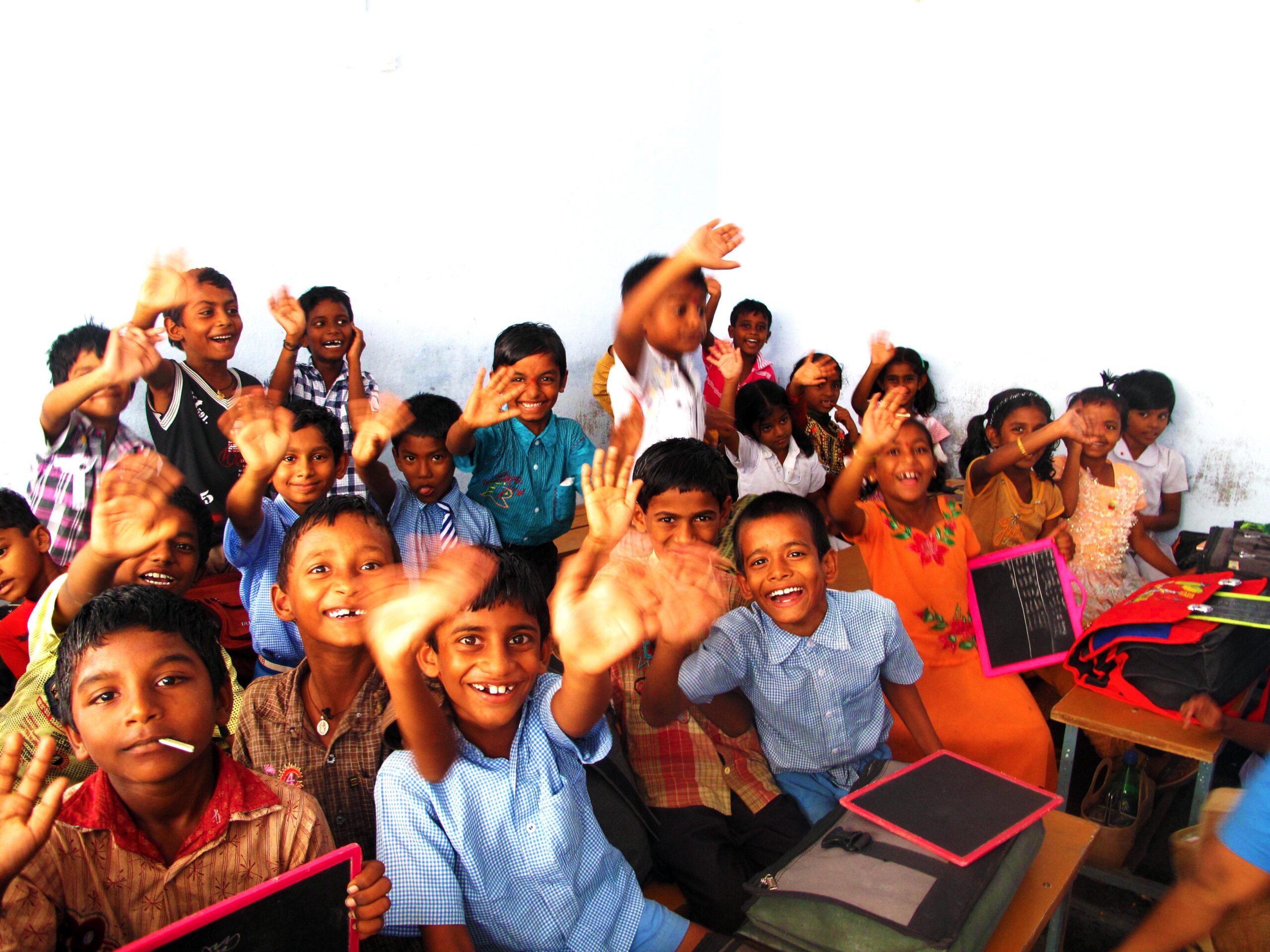
    A silent revolution is happening inside India. A revolution that is led by India’s leading minds. And they are putting their biggest investments behind the revolution – ideas, time and money. The revolution is working for providing world-class education to India’s children in rural areas. People across the board are working towards providing quality education for India’s poor and underprivileged children.

    Anupama Nayar and Vineet Nayar created Sampark Foundation to provide innovation led large-scale changes in primary school education. The ex-CEO of HCL Technologies and his wife have impacted the lives of 3 million children in 50,000 schools in Indian states of Uttarakhand, Jammu & Kashmir and Chattisgarh so far. They have committed to invest USD 100 million (INR 650 crores) and improve quality of education for 10 million children by 2020.

    After researching the key issues in primary education in India and studying Global Best Practices, they have initiated audio-visual driven learning methods. Sampark Didi helps to improve the English and Maths basic skills for students and teachers.

    Children love smartphones and tablets. Digital learning technologies can be an interesting catalyst for improving education. One such example is EkStep

    Nandan Nilekani – Time’s Global Influential Thinker, Architect of India’s National Identity Project Aadhar and ex-CEO of InfoSys has founded EkStep Foundation. It is a non-for-profit foundation that aims to extend learning opportunities to millions of Indian children through a collaborative, universal platform that facilitates creation and consumption of educational content. Nandan, Rohini Nilekani and Shankar Maruwada are co-founder and have the leadership team that was instrumental in developing the Aadhar Project.

    The Nilekanis have started with an initial commitment of USD 10 million and gamified Apps. EkStep Genie is a meta-app for creation and dissemination of gamified content.

    Azim Premji Foundation is working with 350,000 schools across 8 different states of India. Apart from research and development of content, it is working with Governments to improve the approach and outcomes of education. It is also establishing its own schools.

    The above initiatives are about the primary and basic education. India’s stock market expert Rakesh Jhunjhunwala and other foundations are working towards building curiosity and scientific appreciation amongst India’s generation next. Agastya Foundation runs one of the largest hands-on science education programs for children and teachers in the world. Agastya’s mission is “to spark curiosity, nurture creativity and instill confidence” in economically disadvantaged children and government schoolteachers by bringing innovative hands-on science education and peer-to-peer learning to government schools and villages across India.

    It has 175+ Mobile Science Vans which take science education to the village doorstep and 74+ Science Centers for disadvantaged children. It also has a 172-acre Creativity Lab campus in Andhra Pradesh and 313 Night Village Schools.

    Apart from these, there are several other initiatives – Mittals’ Bharti Foundation, Education Alliance, Central Square (founded by ex-ChrysCapital’s Ashish Dhawan), Pratham etc.

    Truly, the scale and execution of the above ideas is impressive. Even if a tiny percentage of the above efforts is successful, it will create a great impact.

    Fruits of education will take a few years to bear fruit, but they yield results at the right time when India’s economic leadership will be significant. And these children bring a new perspective to India’s future and transform India.

  • What Is Your Cathedral Project?

    What Is Your Cathedral Project?

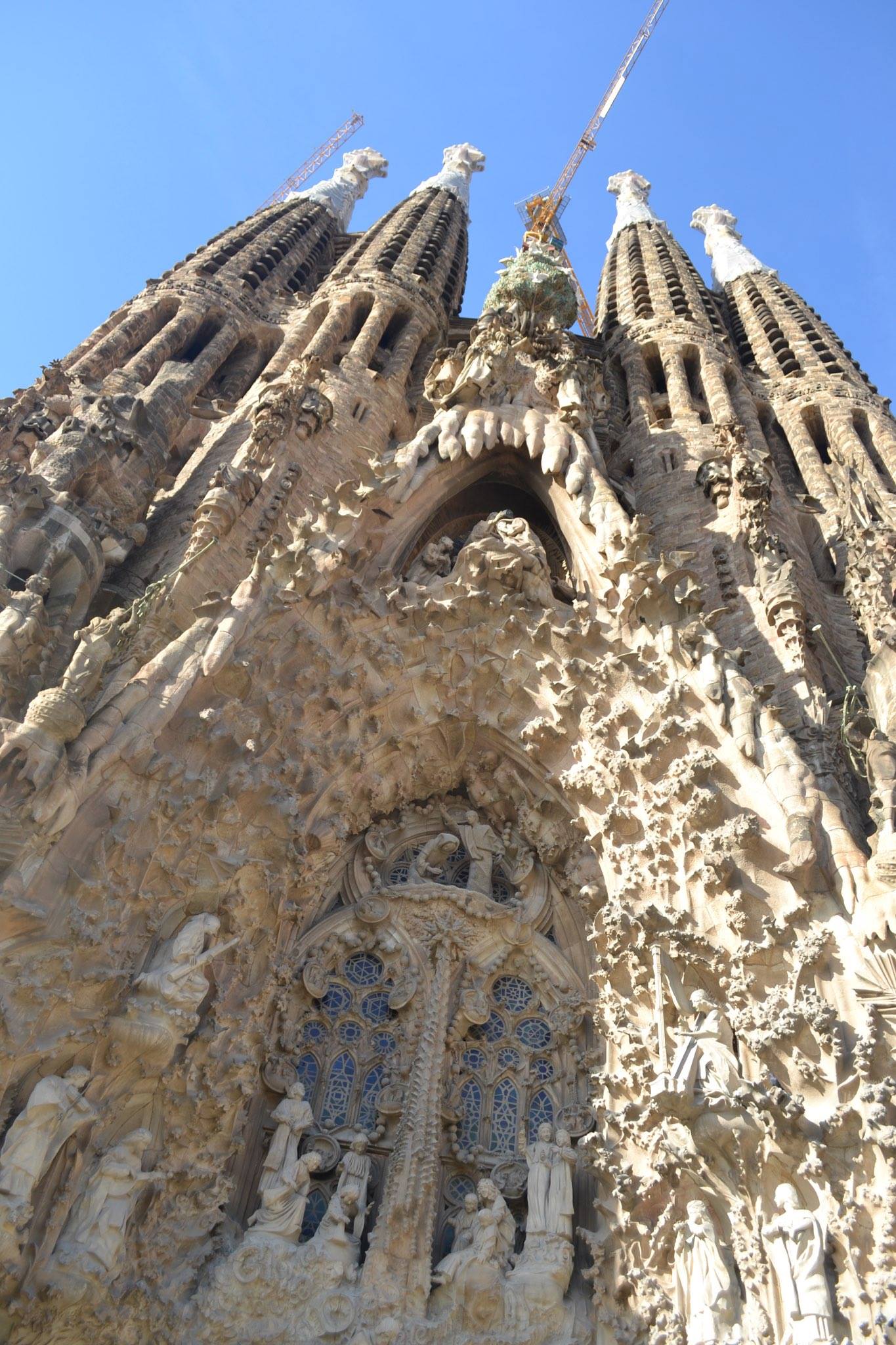
    Stephen Hawking recently said spoke about the importance of money and fallout of Brexit on important projects. He said important projects need to be protected as their value goes beyond one generation. He called those important projects as Cathedral Projects – working on food shortage, overpopulation effects, acidulation of oceans etc.

    I liked the term Cathedral Project – It signifies a project that is grand, audacious, visionary and noble. As Hawking himself said: “People are starting to question the value of pure wealth. Is knowledge or experience more important than money? Can possessions stand in the way of fulfilment? Can we truly own anything, or are we just transient custodians? These questions are leading to a shift in behaviour which, in turn, is inspiring some groundbreaking new enterprises and ideas. These are termed “cathedral projects”, the modern equivalent of the grand church buildings, constructed as part of humanity’s attempt to bridge heaven and Earth. These ideas are started by one generation with the hope a future generation will take up these challenges.” (Source: The Guardian)

    While Hawking was right that Cathedral Projects need big money, they equally need the best minds and smart talent. Like our money is spent on latest gadgets, is our talent also being spent on less important things?

    Are our best engineers optimising the social media feed or developing weather forecast to save fishermen? Are our best scientists helping search engine’s mobile reach or working on affordable drinking water solutions for millions. Are our best marketers selling Cola waters or finding creative ways to encourage education and gender sensitivity? Are our best directors churning million dollar box office blockbusters or spreading the message of tolerance and peace in wholesome entertainment?

    The usual quantity vs quality questions comes here. Earlier masters and experts would spend lifetimes on a few projects. They would dwell on it day-in and day-out. They would research and travel and read till they had their desired vision. Often, they would re-start the work. How many times does this happen? We always have deadlines. We always want to complete more project in short times. We have ghost-writers and ghost-architects behind big names. How many new Gaudi, Stephen Hawking, Newton and Picasso are being created?

    Are we content with the monthly salary and comfort of our material choices? Are we thinking of living upto to our potential? Are we all living the world better off? Are we all thinking beyond the obvious? What are our cathedral projects?

    Sagrada_Familia_Ash