Category: Technology

  • Social Media – Frankenstein Resurrected?

    Social Media – Frankenstein Resurrected?

    Is Social Media A Boon Or Bane? The Eternal Debate Continues In The New Netflix Documentary-

    Jeff Orlowski’s Docu-Drama ‘The Social Dilemma’ Does Not Tell Us Anything New….We Have Known Both Sides Of Story For Long….What It Does Is To Reinforce The Arguments – Primarily Against Social Media Giants. 

    The Documentary Has Two Distinct Tracks. The First Track Features Interviews With The Most Smartest And Conscientious Employees Of The Big Tech Giants. The Second Track Showcase A Fictional Story – How Social Media Manipulates & Ruins Kids Of A Perfectly Normal American Family.  

    The Great Minds Of Silicon Valley Include:

    1. Tristan Harris – Former Google Design Ethicist
    2. Justin Rosenstein – Co-Inventor of Facebook ‘Like’ Button
    3. Tim Kendall – Former Director of Monetization At Facebook, Former President Of Pinterest
    4. Renee DiResta
    5.  Jeff Seibert 

    These Interviews Highlight Risk Of Social Media Addiction. Social Media Giants Engineer Platforms To Create Addiction, Manipulate Behaviour & Reap Profits For Their Shareholders. The Dangerous Impact On Mental Health Of Children & Teenagers, Personal Privacy & Data Confidentiality Issues, The Rise Of Hate Crimes & Genocide, The Fuelling Of Fake News, Death Of Democracies Are Some Of The Negatives That Can No Longer Be Ignored. 

    The Documentary Considers Founders Of Social Media Giants To Be Trapped. Too Naive! Shareholders & Governments Are Human Beings – And Human Beings Have A Choice – But Are We Willing To Call Spade A Spade? 

    Social Media Is A Drug. Agree. It Is Challenging The Organised Religion – An Equally Dangerous Drug 🙂

    Why Our Best Brains Work For Biggest Social Media Companies? Agriculture Crisis Hits Headlines Every Year And We Have No Solution….Why We Applaud New Feature Upgrades Of Big Tech Giants While Many Genuine Research Organizations Die Every Year…

    Technology Is Neutral. A Gun In The Hands Of Police Protects, While In The Hands Of Terrorist Kills. 

    Social Media Has Reunited Families, Help Raise Awareness Of Evils, Found Blood Donors, Brought Joy To Our Life. But It Has Also  Led To Recruitment Of Extremists In Terrorist Organizations, Body-Shaming, Incited Crimes Etc. As Well. 

    Social Media Is Not 100% Evil Or The Only Evil. It Is Too Simplistic To Blame It For All Evils In The Society. Yes – It Is A Platform That Amplifies The Evil In The Society. Social Media Giants Are Taking Corrective Actions But We Need Neutral Champions To Review These Actions. 

    Practical Takeways:

    1. Regulate Screen Time For Self & Kids

    2. Do Not Take Devices To Bedroom

    3. No Devices For Kids Till High School

    4. Research & Question Sources Of Information

    5. Explore Alternatives To Big Social Media Products

    6. AI Is Already Running The World

    I Believe Our Ethics, Values & Choices Drive The Usage Of Any Technology. Social Media Can Be An Agent Of Good. Let’s Switch Off The Screens, Watch The Real World, Smell The Flowers & Drive A Positive Change. The Answers Lie With Us….

    Watch It – A Important Documentary To Watch. One’s Outlook Toward Mindless Scrolling & Notifications Will Change!

  • A Long Story Short: Short Films Are Trending Big Time!

    A Long Story Short: Short Films Are Trending Big Time!

    Short Films are trending big time in India and other regions of the world.

    The current rise of short films in India can be contributed to the following factors:

    1. Digital Technologies:
    The proliferation of affordable and reliable internet has created new opportunities for content consumption. The ‘mobile first’ generation is hungry for good content on their personal screens. The cheap internet has opened up the entire nation and regions for consuming short films – one does not need to visit a cinema. And short films are ideally suited for the personal screens and small time window.

    2. Demand for Diverse & Innovative Content:
    Young Generation is more eclectic in their choices. They are looking for new and diverse content. They are more experimental in nature and reward a good story regardless of the star cast. The young and impatient generation has a short attention span and they are look for instant gratification. Short films are “Any Time Movies”.

    3. New Distribution Platforms:
    Online Platforms like YouTube gave a big boost to short films. Today, there are numerous platforms including Netflix, Amazon Prime, Hotstar, Zee5, ErosNow etc. providing a great distribution reach to these movies. Humara Movies, Pocket Films, Terribly Tiny Tales, Alt-Balaji etc are dedicated to the short films.

    Tata Sky has a dedicated Shorts channel which has more than 2000+ movies. Shorts TV is the global leader for short movies and it produces and distributes short movies.

    In addition, there are large number of Film Festivals dedicated to the short movies.

    4. Creative Freedom:
    Film makers love the creative freedom provided by the medium of short movies. There is no big pressure of formula movies and and other commercial considerations to bow to.

    Film makers from across the nation and globe can bring their original stories. They do not need censor certificates for these movies – a big factor.

    Short movies can be a launching platform for new makers. Existing players can use the platform to diversify their portfolio. Lot of big names have taken a leap in the world of short movies – Anurag Kashyap, Sujoy Ghosh, Neeraj Ghaywn, Jackie Shroff, Irrfan, Tapsee Pannu, Manoj Bajpayee, Radhika Apte.

    5. Monetisation:
    Short movies also provide strong monetisation opportunities for unique content. The monetisation opportunities can be: direct brand associations, sale to platforms, film festival reward money and online ad revenue shares. The revenues can be global. The Royal Stag Large Short Films is truly a unique model – which can be exported to the world.

    Apart from the monetisation opportunities, film makers get a lot of Finanical support to get started. In US, film makers also get crowdfunding via Seed & Spark, Kickstarter, Indiegogo and other platforms.

    The rise of short movies is a great development. Does it send warning signals to full feature films? Not really. Both short movies and full feature movies can co-exist. T20 and Test Cricket both co-exist. The short movies are actually inspiring full feature movies. The rise of content-driven cinema is a positive influence of short movies.

    Short Film are the Haiku of the Cinema. Short Films are the Jamun Shots – small but they pack a strong punch. Short Films prove that when it comes to entertainment, size does not matter.

    Short movies are an art form in itself – the movies are completing the circle as the motion picture started in form of short movies only!

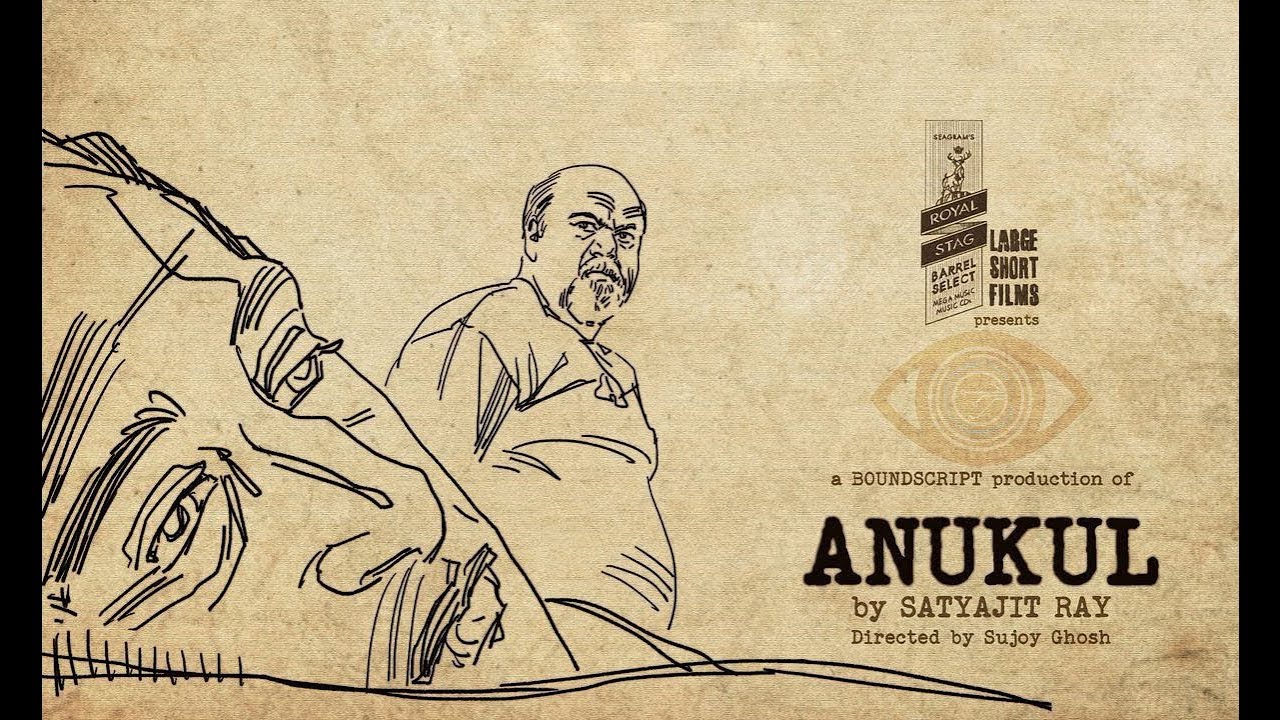
    Want a quick taste of short movies?
    Check Anukul…

  • The Future Of Fintech

    The Future Of Fintech

    Technological changes and overall trends are often difficult to predict. What seems as the obvious future often fails to deliver, and new innovations take over! Look around and many of the technological tools that we take for granted, were never predicted…The Fintech world continues to present new ideas, solutions and business models.

    The future of Fintech, money and payments is linked to the evolution of the society. In next 10-20 years, we may see the emergence of robots, machine to machine interaction, smart cities, universal basic economy, ageing population, climate change and prosperous mankind.

    In that age, payments between machines will be automatic and invisible. Cashless economy will be a reality with secure, invisible, hyper-connected, data-driven money and payment system becoming a backbone like internet and electricity.

    Payments will be integrated as a part of buying experience. Pricing and offers will be specific to you as per your financial score. Secure micro-payments will be order of the day. Micro-payments will also mean more access to everyone.

    Technological innovations in payment will allow the remaining less-privileged to get access to basic income and help from across the world. The credit scoring, mortgage options etc. all will be seamless and real-time.

    Property will be tokenized. Agricultural land will be tokenized. Equity tokenization will unlock liquidity. Blockchain will be leveraged for tokenization in the future and new business models will emerge. Privacy, legal and security frameworks will ensure the required safeguards.

    Quick and easy barter mechanisms will become an alternative to the money economy.

    The cumulative effect will be help unbanked and underbanked individuals and SMEs to get benefits of the financial system and accelerate job creation, equitable and balanced economic growth.

    Image Credit: Joshua Reddekopp on Unsplash

  • Celebrating Learning & Innovation – The Museum Of Failure

    Celebrating Learning & Innovation – The Museum Of Failure

    The winner takes it all! Winning at any cost seems to be the modern mantra – whether in business, politics or any other aspect of life.

    But what about failures? Failure is a learning process. Failure is an important part in our journey of evolution. Unless we fail, we do not learn the important lessons that are necessary for our growth – personal as well as professional.

    Once a famous Indian King had to make a choice between two able generals for an important war. One was a general who had never lost an war. He was the lucky general. The other one had won more wars but lost a few as well. The upcoming war was an important one and king chose the one with a mixed record. The second general would not take success for granted. He would be less arrogant and take the right steps for winning the war. And who knows the first one could run out of his luck – law of averages would catch-up! Wise choice.

    Today, the excessive focus on success has made failure a completely negative concept. Failure is not welcome. But failure is nothing to be shameful about. Every race has always one winner – so we should not consider the rest as failures.

    Failure is an equally important factor in the innovation journey. Hundreds of innovations became successful, but thousands and thousands failed before the successful ones!

    I recently came across an interesting Museum – the Museum of Failure. Hidden in a small town of Helsingborg in Sweden, it is a collection of all interesting innovation failures. It has a collection of failed products and services from the world – to drive home a single point – that business of innovation is risky proposition, but it is a learning process.

    Some of the famous items on display include:

    – Apple Newton

    – Harley Davidson Perfume

    – Google Glass

    – Nokia N-Gage

    – Kodak Digital Camera

    – Sony Betamax

    – Lego Fiber Optics

    – Ford Edsel

    – Donald Trump Board Game

    – Colgate Beef Lasagna

    – Coke Coffee Cola


    The important thing is to not get disappointed after failure or lose enthusiasm. We should avoid self-doubts as well. Failure tells us to start once again but with more intelligence and information. Hence failure is never final. It is a stepping stone towards success!

    Official Site of Museum of Failure


    Check A Quick YouTube Video:


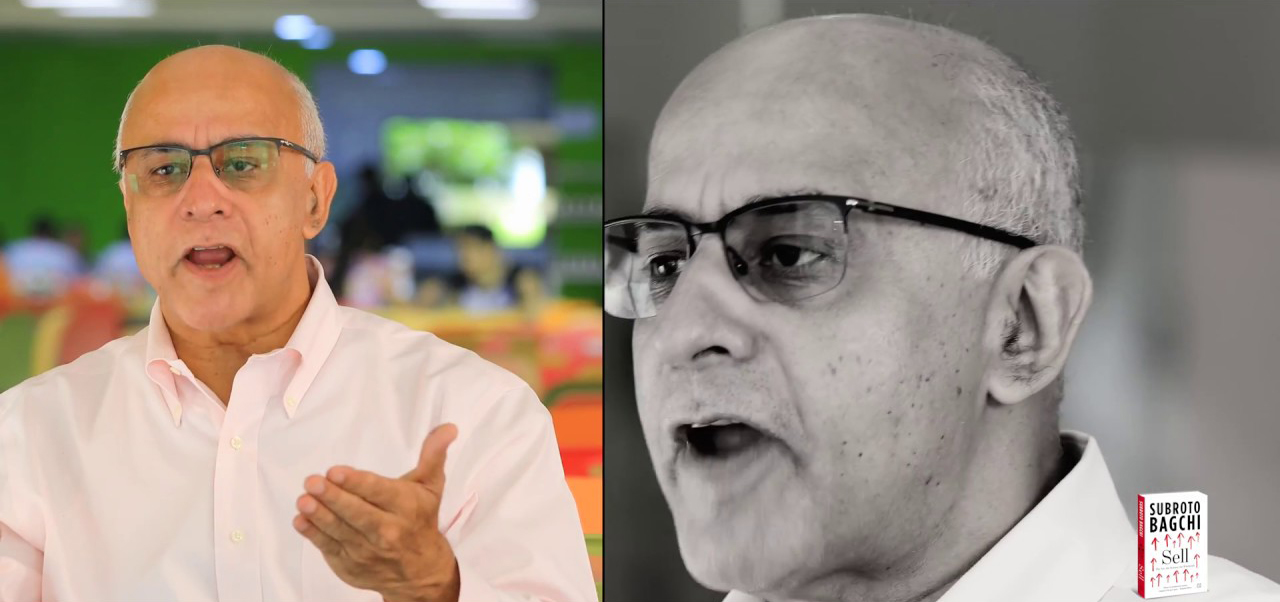
  • Subroto Bagchi’s Sell: Rich Insights For Technology Sales

    Subroto Bagchi’s Sell: Rich Insights For Technology Sales

    Selling is a challenging profession and a very demanding one as well! Selling today is a different ball game with the buyer being more knowledgeable and smart. A buyer would have done a thorough research on us before actually interacting with us. A lot of activities in the sales process are getting digital and a smart sales person needs to understand this shift. Even Artificial Intelligence will invade sales area. So how does one deal with these changes? What are the best practices in technology sales? Unfortunately, there are few sources and books on technology selling that can provide insights and shared experiences. Mindtree Co-founder Subroto Bagchi tries to address this gap and provide his rich insights on selling.

    Many of Subroto’s fans and friends like me were awaiting his new book – since a lot of water had flown in Ganges since the release of his previous book. And ever since he told me that his upcoming book was on sales, the salesman in me was eager to lay his hands on the book.

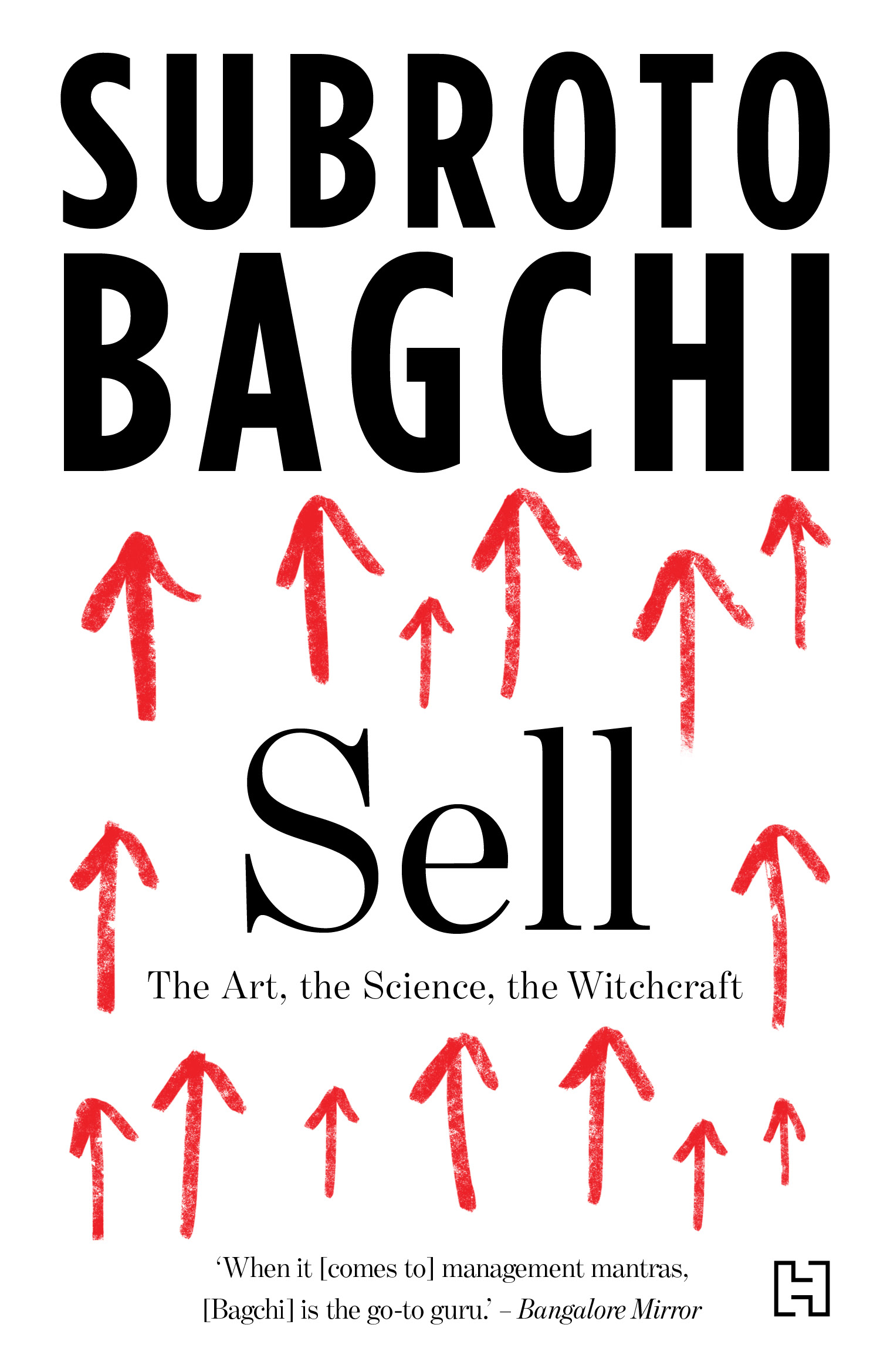
    ‘Sell: The Art, Science, the Witchcraft’ is the title of SubrotoDa’s book and it brings together the experience and advice of various sales leaders. Subroto has known these sales leaders and drawn on their unique sales philosophy and wisdom. There are nice anecdotes, unique insights and practical tips.

    SubrotoDa defines sales as part science, part art and part wizardry. It is not a profession in itself but a very critical skill in every field and an essential skill for people across all levels within the organization. Selling is not something to be apologetic about. It is not a pushy, winner-take-all masculine act. It is an empathy-led, process-driven and knowledge-intensive discipline.

    A lot of things in Sell impressed me – visual design of technological solution, collaboration between sales and marketing for larger deals, response to a major RFP loss, Google Quotient, The Naked Burger, Do It Like Swedes etc. I definitely intend to influence my sales practices with some of these thoughts.

    He uses the analogy of life-cycle of Coho salmon to drive home the importance of right prospecting by segmenting the customers and figuring out the right hook. Right qualification is importance to save the most precious resource of salesperson: time. And also ensure optimization of organizational energy, effort, intellect and other resources. I smiled at the different stereotypes presented: Great giver of homework, patron saint of thought leadership etc.

    He has some stellar lines for us:
    – Authenticity is in short; hence in demand
    – The prospecting process has changed. Your future customers are already doing prospecting about you and your company

    Honesty, transparency, customer relationship, negotiation, etc. are important traits for an effective seller and Subroto delves into each of these topics. Customer relationship is a competitive advantage and one has to developer chemistry with the customer. He emphasizes one thing that has not changed in sales – people buy from people. A best sales person is a consultant who advises client and brings teams together to create the right solution and sell in a consultative approach.

    Subroto also delves into areas of deal-making, legal support, paperwork etc. He ends the book with detailing of what a makes a true sales champion.

    Subroto delivers his rich intellect and wisdom in easy to understand nuggets. He has strong rationale for his views. I had whole-heartedly followed his advice of uprooting ourselves and exploring new geographies to break our comfort zone and rewire our thinking.

    Could this have been even a greater book? Would have I liked anything more in this book? Yes – Some more depth on some topics (I understand the overall writing style of Subroto). I would have liked to see the comparative analysis of selling practices of Indian IT and true blue Western IT companies. Maybe some detailed case studies of winning a large and complex enterprise deal – without divulging confidentiality of any entities. Maybe some biggest sales follies of the sales leaders. I would also have loved to see his views on how the new and mid-sized Indian companies can win deals in the new emerging global landscape. This would have been a great service to many emerging sales leaders.

    Sell is a great resource for technology sales professionals. It is a great addition to the dearth of Indian voice on this topic. It has nice insights for sales professional. Read it!

  • TEDx Talk: Soul Fuel – Why Solivagant Travel Matters!

    TEDx Talk: Soul Fuel – Why Solivagant Travel Matters!

    My TEDx Talk on ‘Soul Fuel – Why Solivagant Travel Matters’ is live!

    Technology, travel and movies are my passions. I work around the confluence of these themes using my varied skills!

    I am an evangelist to influence and inspire people to travel. I believe that travel is the best way to widen our horizons, accept differences, remove intolerance and make the world a better place. It promotes cultural exchange, understanding and helps people to connect with people.

    In my TEDx talk, I spoke about the joys of traveling alone and how it is an enriching and life-changing learning experience. I strong believe: A new you is the best travel souvenir!

    I welcome your feedback and suggestions on this talk and what other topics you would like to me cover in future talks and travelogues! And yes, if you like it, spread the good word. Please “like” and share it.

    Keep traveling! Keep discovering!

  • Oxford – Gujaratilexicon Collaborate For Digital Experience In Local Language

    Oxford – Gujaratilexicon Collaborate For Digital Experience In Local Language

    Gujaratilexicon is pleased to announce the launch of the Gujarati Living Dictionary as part of the Oxford Global Languages (OGL) initiative.

    The OGL programme is building dictionaries and lexical resources for around 100 of the world’s languages and making them available online. The Gujarati Living Dictionary is launched as a part of a special focus on Indian languages.

    Explore the Gujarati Living Dictionary at: https://gu.oxforddictionaries.com/

    Judy Pearsall, Director for Oxford Dictionaries put forward the motivating philosophy in her own words: “Digital communication across the globe is dominated by English and other major global languages. We are at a critical time in the nexus of the internet and its impact on language diversity and viability, and the time to act is now. OGL is a mission to help digital communication through building resources for the world’s languages. India has a remarkable linguistic landscape with a richness and history that is found in few other places on the planet. But only 35 percent of the Indian population use the internet. Hence we are putting a special focus on Indian languages and aim to work for more initiatives in this space.”

    Gujaratlexicon is the thought leader in Gujarati language space and aims to preserve, popularize and develop Gujarati language through the power of information technology.

    Dr. Ashok Karania, Mentor of Gujaratilexicon is enthused about the collaboration between Oxford and Gujaratilexicon. He says: “We are humbled to be a part of the global initiative of Oxford to transform digital experience for the non-English world by providing content and tools in local languages. Gujarati is the language of the enterprising people across the world and this initiative will inspire further technology, research and education programs for diasporic and local Indians. As digital era and AI transform the technology world, the personal human experience will be more important than ever and technologies in local language will ensure those expressions”

    About OGL:

    Oxford Global Languages (OGL) is a major initiative from Oxford Dictionaries, part of Oxford Univeristy Press, which launched in 2014. OGL aims to transform the experience of millions of people worldwide by making their language available in digital form – on websites, in apps, and via other tools.

    OGL records how living languages, including their variants and dialects, are used today. The result is a vast data store of language data that is accessible, linked, and reusable. https://www.oxforddictionaries.com/ogl/

    About GL:

    Gujaratilexicon is a landmark work in the history of Gujarati language containing resources of more than 45 lakh words. It aims to contemporize Gujarati language and develop rich and relevant Gujarati language resources.

    The mission is the result of undying passion and relentless vision of Amar Shri Ratilal P. Chandaria, who spent more than 25 years on this project. The leading Gujaratilexicon projects include Digital Bhagwadgomandal, Digital Sarth Kosh, LokKosh, Lets Learn

    Gujarati, Crossword, Gujaratilexicon Mobile Application, Global Gujaratilexicon, Gujarati Games, eBooks etc. It is supported by Chandaria Foundation & Arnion Technologies. https://www.gujaratilexicon.com

  • The Golden Age of Technology

    The Golden Age of Technology

    Elon Musk is a genius. Recently, he asked American Governors to regulate Artificial Intelligence (AI) before it’s too late. Musk’s position on AI is known but his recent comments again brought the debate of intrusion of technology in our lives? Is the golden age of technology over? No. Musk’s concerns withstanding, we are embarking on a golden age of technology globally.

    Technology excites us. Technology frightens us. Technology amazes us. Technology arouses us. Technology challenges us. Technology is all around us. Technology is a part of our daily lives. The continuous improvement and rise of technology has created new possibilities.

    We are embarking on a golden age of technology thanks to the combined forces of Smart Devices, Global Connectivity, Cloud Power, Machine Learning & Data Analytics. I called it the DNA of new age of technology – Devices & Data, Networks & Connectivity, Analytics. The DNA is connecting different technology dots and creating disruptive ideas. The disruptive ideas are scaling fast to change business models and influence our digital lives. The impact of technology is real when politicians smart promising faster internet, digital government and smart IOT cities to win votes!

    1. Devices & Data

    Devices are smarter, faster, cheaper and loaded with sensors. The devices include micro-buttons and chips. Human body and car can be a device itself. The skin stickers can capture vital body stats. Ingestible sensors can give the real view of what is happening inside your body. Beacons in airports, retails stores, hospitals, warehouses, museums are a reality now.

    Data is the new oil. Huge amount of data is being captured on an ongoing basis. Mobile phones, apps, browsers, sensors, fitness devices etc. are some of the avenues through which data is regularly captured. We have collected more data in last two years than in last 20 years.

    2. Networks & Connectivity

    The proliferation of connectivity across the world is a big booster to the technology aspirations of mankind. As countries get faster and reliable internet connectivity, it will open traditional vestiges to innovation. The connectivity will boost existing and new businesses and empower citizens. As countries realize that their GDP and connectivity are positively co-related, the investments in connectivity will continue. And it will boost new technologies like drones, robots and autonomous cars.

    The widespread availability of internet and internet access has opened the quick collection, transmission and analysis of data. We also have the capability to store huge amount of data in large data warehouses or leverage cloud options like AWS, Azure etc.

    3. Analytics & Predictive Intelligence

    The huge collection of data opens the possibility for rich analysis. The huge processing power is available at cheap rates and new software frameworks help to analyse the huge amount of data being collected. Not only are we now capable of analysing the past data, but we can predict the future. We can determine ongoing patterns to make important predictions relevant recommendations. We are all used to Amazon recommendations, but we also have recommendations for clothing, food to eat, restaurants to visit. As the data gets enlarged and enriched, we will get more intelligent recommendations.

    The machine learning and analytics are powering connected intelligence. The mundane and hazardous tasks can be taken over by technology leaving the humans to focus on more value-enriching tasks. The technology intelligence and algorithms can make better decisions than human beings. Finance, healthcare, governance, transport, educations are being disrupted.

    Is the golden age of technology real?

    The paradigm shifts are causing changes in business, economic models, governance and our daily lives. The combined forces of DNA are solving biggest problems of the world. The world is moving towards better health systems, predictive diagnostics, safe driving, removing language barriers, greener technologies, digital governance etc. The possibilities are immense.

    Technology giants, governments and innovators must address concerns of privacy, security and economic costs. The systems should be properly tested and compliances must be adhered to. Digital lives need digital assurance. But technology is an irreversible ride. A gun in the hand of a soldier protects the citizens and a gun in the hand of a terrorist harms the citizens. Technology is powered by human minds and it also powers the human mind. We must make the choices. No human being should work in dangerous mines or do scavenging jobs. At the same time, no machine can create magic of Picasso, J K Rowling or Roger Federer!

    Image: MIT Technology Review

  • Agile – Shift Left Is The Right Shift!

    Agile – Shift Left Is The Right Shift!

    AAEAAQAAAAAAAAsmAAAAJGU4MDI1MzU5LWIwNTQtNGViYS04YjE2LTk0Y2U4MmIyNjA0MQ

    Summary of Test Focus Roundtable Discussion on Agile Approaches @ London

    Digital is the new reality of life. Digital transformation has necessitated the rise of new methodologies and practices to deliver faster, better and scalable products. Agile Methodology is at the epicenter of the new technology philosophies and tactics.

    Recently, Qmetry Team with Test Magazine hosted a roundtable discussion on the Agile & Shift Left approaches at the Test Focus event. Agile is a very hot topic was evident from the sheer number of attendees and the vocal debates at the session. We had three power packed roundtable sessions with expert practitioners, scrum masters, new agile converts and fence sitters. They represented large enterprises, mid-size companies and startups. Experts from testing organizations also joined the deliberations. All of this contributed to very insightful and interesting interactions.

    Agile, like love, it is a used, over-used and abused term. To me, agile is essentially a mindset. A mindset of breaking up tasks into smaller pieces of work, quick and frequent feedback and adapting to changes. From this perspective, agile way of doing things is as old as the mountains. In fact, the agile principles have been seen in extreme programming and other practices.

    Agile is not just scrums and sprints. These represent only the tools and methods. Apart from the mindset, core agile practices include the adoption of following concepts from a testing perspective:

    1. Unit Testing
    2. Distributed Teams
    3. Refactoring
    4. Continuous Integration, Continuous Delivery & DevOps
    5. Automated Acceptance Testing
    6. Test Driven Development
    7. Behavior Driven Development
    8. Pair Programming

    Organizations should implement the agile methodologies that work of them rather than blindly following the manifesto. They can have Agile, Wagile etc.. At the end of the day, going agile is a decision linked to the organizational need and business case. It is not necessary to adopt all of the above ideas if it does not work for the team.

    One interesting point that emerged in the discussion was about automation. The importance of automation is increasing in the agile world. In-sprint automation is a key goal for most of the practitioners and scrum QA teams can work on the same. Some have a separate automation team if their project demands the same. It all boils down to the sprint planning. Many teams are already at Sprint minus 1 automation. Automation of acceptance test is a key success for many organizations.

    How to go agile? The fundamental point is to identify the reason to go agile. What is the business case? What is the technology case? Be clear about the expectations and goals. The next stage is to identify agile champions and enthusiastic team members and get a strong cross-functional team of product owners, business users, developers and QA team members. The team with the right attitude is going to make or break the agile projects. It is always important to identify failure or success as a common event rather than finger-pointing at others. The role of the product owner cannot be over-emphasized in setting the right environment and empowerment. The reporting structure of the team needs to be understood and appreciated.

    Agile means different things to different people. Hence the most important task is to get the team or organization’s definition of agile right. Let there be a common definition and it should be consistent across the organization. Definition of ‘done’ is so important in determining the success and failure. Developers want to ship products quickly and QA wants to ensure the right assurance – but both should agree on the definition of done.

    The final step is to have the selection of right tools. Agile has distributed teams and proper test management tool is required for creating a common view. Agile is about transparency, flexibility, collaboration and joint success. A good test management tool will provide the required transparency and provide a single honest view to all the stakeholders. Rich reports and metrics will help for continuous improvement. One of the important aspects is using the information from the past runs and improve – that is where analytics and actionable intelligence comes into the picture.

    So, what did I learn? What do we believe as the key success factors for agile implementation?

    1. Clarity of goals
    2. Transparency
    3. Collaboration
    4. Right Tools, Processes & Metrics
    5. Flexibility

    Image Credit: Lillehammer 2016 Youth Olympic Games

  • Blockchain – The Trusted Ledger Of Everything

    Blockchain – The Trusted Ledger Of Everything

    Digital is redefining everyday lives. Our life experiences are shaped by digital forces. The artificial intelligence and internet of everything are on the cusp of becoming a daily reality. However, the financial and economic transactions in our digital lives are still ruled by old paradigms. The need for a third-party intermediary to verify our identity and intent still exists. It creates a slow, old, vulnerable and expensive system which has been the basis of our financial world. Blockchain aims to redefine this antiquated system.

    Blockchain is the breakthrough technology that is revolutionizing the world economy. It is essentially an open-source distributed database. The digital database uses state-of-the-art cryptography and mass collaboration to authenticate and settle transactions. The ever-expanding chain of computers form the network and everyone on the networks approves an exchange before it is verified and recorded. It is truly open source, peer-to-peer and highly secure – thus becoming the platform of trust.

    Bitcoin was the first use case of Blockchain. The power and potential of Blockchain lies in its ability to represent anything digital – rights, goods and property. The emerging use cases of Blockchain include:

    1. Property Rights / Land Records – Governments can avoid fraudulent deeds, manipulation of records and conflict of ownership by leveraging Blockchain

    2. Electronic Medical Records – Healthcare industry has multiple stakeholders accessing patient information. Hospitals, doctors, insurance companies, governments etc. can be confident that they are working on secure, encrypted and genuine records using Blockchain

    3. Certificate of Authentication – Fraudulent transactions will be avoided as every transaction is recorded and distributed on public ledger.

    4. Certification of Compliances – Everledger has authenticated more than 1000,000 diamonds using Blockchain. It has developed a system of warranties that enable mining companies to verify that their rough-cut diamonds are not being used by militias to fund conflicts. Thus, it ensures compliance with Kimberley Process. Bye Bye Blood Diamonds.

    5. Share Ownership Registry – US Securities and Exchange Commission (SEC) has approved the use of the Blockchain as a share ownership register for online retailer Overstock.com.

    6. Micropayments: People wanting to read just one article or subscribe to 2 channels on Cable TV can use the Blockchain Infrastructure. ChangeCoin allows instant transfer of value irrespective of size. Similarly, Chain allows to give tip to a blogger or car share driver – very useful in a sharing economy.

    7. Data Privacy – Estonia, the leading European country in digital services uses a Blockchain implementation to manage and protect its citizens’ data across about 1,000 online services.

    8. Patents & Innovation – Authentication and verification

    9. ESOPs for Employees

    10. Wills

    11. Tax Collection

    12. Remittance of Funds to Unbanked

    It is not surprising that all the leading companies in the world are working on Blockchain in some form or the other. Microsoft has built multiple offerings on Blockchain by leveraging its Azure platform. IBM, PWC, UBS, Bank of Canada are other organizations working on Blockchain. Who’s Who have joined Hyperledger – including Amex, Wells Fargo, J P Morgan, Intel, IBM, BNP Paribas, Samsung, Intuit etc. R3 is leading a consortium of 75 world’s leading financial institutions including Wells Fargo, Barclays, UBS to design and deliver advanced distributed ledger technologies. Billions of dollars are being invested in Silicon Valley startups working on Blockchain.

    Several institutions including financial organizations will be severely impacted by Blockchain as it bypasses the traditional channels. Governments, legal agencies, enforcement organizations will need to understand and embrace this technology. Often the ignorance of the potential of Blockchain and understanding of its working causes skepticism about the technology. Blockchain enthusiasts need to educate, inform and demonstrate the benefits in action.

    The rise of Blockchain is imminent. The speed of the rise will be determined by social, legal, political and human acceptance.

    Image Credit: Blockchaintechnologies.com