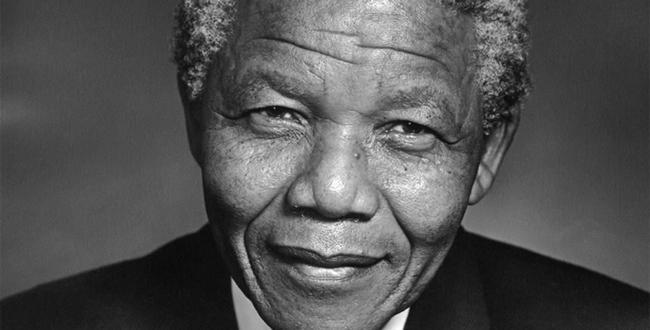
Recently, I got this wonderful note from Rati Kaka. As an observer of leadership, I was amazed to see the lasting impact Nelson Mandela’s transforming leadership skills. I decided to share this with one and all.
Mandela: His 8 Lessons of Leadership
By Richard Stengel
Nelson Mandela has always felt most at ease around children, and in some ways his greatest deprivation was that he spent 27 years without hearing a baby cry or holding a child’s hand. Last month, when I visited Mandela in Johannesburg — a frailer, foggier Mandela than the one I used to know — his first instinct was to spread his arms to my two boys. Within seconds they were hugging the friendly old man who asked them what sports they liked to play and what they’d had for breakfast. While we talked, he held my son Gabriel, whose complicated middle name is Rolihlahla, Nelson Mandela’s real first name. He told Gabriel the story of that name, how in Xhosa it translates as “pulling down the branch of a tree” but that its real meaning is “troublemaker.”
As he celebrates his 90th birthday next week, Nelson Mandela has made enough trouble for several lifetimes. He liberated a country from a system of violent prejudice and helped unite white and black, oppressor and oppressed, in a way that had never been done before. In the 1990s I worked with Mandela for almost two years on his autobiography, Long Walk to Freedom. After all that time spent in his company, I felt a terrible sense of withdrawal when the book was done; it was like the sun going out of one’s life. We have seen each other occasionally over the years, but I wanted to make what might be a final visit and have my sons meet him one more time.
I also wanted to talk to him about leadership. Mandela is the closest thing the world has to a secular saint, but he would be the first to admit that he is something far more pedestrian: a politician. He overthrew apartheid and created a nonracial democratic South Africa by knowing precisely when and how to transition between his roles as warrior, martyr, diplomat and statesman. Uncomfortable with abstract philosophical concepts, he would often say to me that an issue “was not a question of principle; it was a question of tactics.” He is a master tactician.
Mandela is no longer comfortable with inquiries or favors. He’s fearful that he may not be able to summon what people expect when they visit a living deity, and vain enough to care that they not think him diminished. But the world has never needed Mandela’s gifts — as a tactician, as an activist and, yes, as a politician — more, as he showed again in London on June 25, when he rose to condemn the savagery of Zimbabwe’s Robert Mugabe. As we enter the main stretch of a historic presidential campaign in America, there is much that he can teach the two candidates. I’ve always thought of what you are about to read as Madiba’s Rules (Madiba, his clan name, is what everyone close to him calls him), and they are cobbled together from our conversations old and new and from observing him up close and from afar. They are mostly practical. Many of them stem directly from his personal experience. All of them are calibrated to cause the best kind of trouble: the trouble that forces us to ask how we can make the world a better place.
No. 1 : Courage is not the absence of fear — it’s inspiring others to move beyond it
In 1994, during the presidential-election campaign, Mandela got on a tiny propeller plane to fly down to the killing fields of Natal and give a speech to his Zulu supporters. I agreed to meet him at the airport, where we would continue our work after his speech. When the plane was 20 minutes from landing, one of its engines failed. Some on the plane began to panic. The only thing that calmed them was looking at Mandela, who quietly read his newspaper as if he were a commuter on his morning train to the office. The airport prepared for an emergency landing, and the pilot managed to land the plane safely. When Mandela and I got in the backseat of his bulletproof BMW that would take us to the rally, he turned to me and said, “Man, I was terrified up there!”
Mandela was often afraid during his time underground, during the Rivonia trial that led to his imprisonment, during his time on Robben Island. “Of course I was afraid!” he would tell me later. It would have been irrational, he suggested, not to be. “I can’t pretend that I’m brave and that I can beat the whole world.” But as a leader, you cannot let people know. “You must put up a front.”
And that’s precisely what he learned to do: pretend and, through the act of appearing fearless, inspire others. It was a pantomime Mandela perfected on Robben Island, where there was much to fear. Prisoners who were with him said watching Mandela walk across the courtyard, upright and proud, was enough to keep them going for days. He knew that he was a model for others, and that gave him the strength to triumph over his own fear.
No. 2 : Lead from the front — but don’t leave your base behind
Mandela is cagey. in 1985 he was operated on for an enlarged prostate. When he was returned to prison, he was separated from his colleagues and friends for the first time in 21 years. They protested. But as his longtime friend Ahmed Kathrada recalls, he said to them, “Wait a minute, chaps. Some good may come of this.”
The good that came of it was that Mandela on his own launched negotiations with the apartheid government. This was anathema to the African National Congress (ANC). After decades of saying “prisoners cannot negotiate” and after advocating an armed struggle that would bring the government to its knees, he decided that the time was right to begin to talk to his oppressors.
When he initiated his negotiations with the government in 1985, there were many who thought he had lost it. “We thought he was selling out,” says Cyril Ramaphosa, then the powerful and fiery leader of the National Union of Mineworkers. “I went to see him to tell him, What are you doing? It was an unbelievable initiative. He took a massive risk.”
Mandela launched a campaign to persuade the ANC that his was the correct course. His reputation was on the line. He went to each of his comrades in prison, Kathrada remembers, and explained what he was doing. Slowly and deliberately, he brought them along. “You take your support base along with you,” says Ramaphosa, who was secretary-general of the ANC and is now a business mogul. “Once you arrive at the beachhead, then you allow the people to move on. He’s not a bubble-gum leader — chew it now and throw it away.”
For Mandela, refusing to negotiate was about tactics, not principles. Throughout his life, he has always made that distinction. His unwavering principle — the overthrow of apartheid and the achievement of one man, one vote — was immutable, but almost anything that helped him get to that goal he regarded as a tactic. He is the most pragmatic of idealists.
“He’s a historical man,” says Ramaphosa. “He was thinking way ahead of us. He has posterity in mind: How will they view what we’ve done?” Prison gave him the ability to take the long view. It had to; there was no other view possible. He was thinking in terms of not days and weeks but decades. He knew history was on his side, that the result was inevitable; it was just a question of how soon and how it would be achieved. “Things will be better in the long run,” he sometimes said. He always played for the long run.
No. 3 : Lead from the back — and let others believe they are in front
Mandela loved to reminisce about his boyhood and his lazy afternoons herding cattle. “You know,” he would say, “you can only lead them from behind.” He would then raise his eyebrows to make sure I got the analogy.
As a boy, Mandela was greatly influenced by Jongintaba, the tribal king who raised him. When Jongintaba had meetings of his court, the men gathered in a circle, and only after all had spoken did the king begin to speak. The chief’s job, Mandela said, was not to tell people what to do but to form a consensus. “Don’t enter the debate too early,” he used to say.
During the time I worked with Mandela, he often called meetings of his kitchen cabinet at his home in Houghton, a lovely old suburb of Johannesburg. He would gather half a dozen men, Ramaphosa, Thabo Mbeki (who is now the South African President) and others around the dining-room table or sometimes in a circle in his driveway. Some of his colleagues would shout at him — to move faster, to be more radical — and Mandela would simply listen. When he finally did speak at those meetings, he slowly and methodically summarized everyone’s points of view and then unfurled his own thoughts, subtly steering the decision in the direction he wanted without imposing it. The trick of leadership is allowing yourself to be led too. “It is wise,” he said, “to persuade people to do things and make them think it was their own idea.”
No. 4 : Know your enemy — and learn about his favorite sport
As far back as the 1960s, Mandela began studying Afrikaans, the language of the white South Africans who created apartheid. His comrades in the ANC teased him about it, but he wanted to understand the Afrikaner’s worldview; he knew that one day he would be fighting them or negotiating with them, and either way, his destiny was tied to theirs.
This was strategic in two senses: by speaking his opponents’ language, he might understand their strengths and weaknesses and formulate tactics accordingly. But he would also be ingratiating himself with his enemy. Everyone from ordinary jailers to P.W. Botha was impressed by Mandela’s willingness to speak Afrikaans and his knowledge of Afrikaner history. He even brushed up on his knowledge of rugby, the Afrikaners’ beloved sport, so he would be able to compare notes on teams and players.
Mandela understood that blacks and Afrikaners had something fundamental in common: Afrikaners believed themselves to be Africans as deeply as blacks did. He knew, too, that Afrikaners had been the victims of prejudice themselves: the British government and the white English settlers looked down on them. Afrikaners suffered from a cultural inferiority complex almost as much as blacks did.
Mandela was a lawyer, and in prison he helped the warders with their legal problems. They were far less educated and worldly than he, and it was extraordinary to them that a black man was willing and able to help them. These were “the most ruthless and brutal of the apartheid regime’s characters,” says Allister Sparks, the great South African historian, and he “realized that even the worst and crudest could be negotiated with.”
No. 5 : Keep your friends close — and your rivals even closer
Many of the guests Mandela invited to the house he built in Qunu were people whom, he intimated to me, he did not wholly trust. He had them to dinner; he called to consult with them; he flattered them and gave them gifts. Mandela is a man of invincible charm — and he has often used that charm to even greater effect on his rivals than on his allies.
On Robben Island, Mandela would always include in his brain trust men he neither liked nor relied on. One person he became close to was Chris Hani, the fiery chief of staff of the ANC’s military wing. There were some who thought Hani was conspiring against Mandela, but Mandela cozied up to him. “It wasn’t just Hani,” says Ramaphosa. “It was also the big industrialists, the mining families, the opposition. He would pick up the phone and call them on their birthdays. He would go to family funerals. He saw it as an opportunity.” When Mandela emerged from prison, he famously included his jailers among his friends and put leaders who had kept him in prison in his first Cabinet. Yet I well knew that he despised some of these men.
There were times he washed his hands of people — and times when, like so many people of great charm, he allowed himself to be charmed. Mandela initially developed a quick rapport with South African President F.W. de Klerk, which is why he later felt so betrayed when De Klerk attacked him in public.
Mandela believed that embracing his rivals was a way of controlling them: they were more dangerous on their own than within his circle of influence. He cherished loyalty, but he was never obsessed by it. After all, he used to say, “people act in their own interest.” It was simply a fact of human nature, not a flaw or a defect. The flip side of being an optimist — and he is one — is trusting people too much. But Mandela recognized that the way to deal with those he didn’t trust was to neutralize them with charm.
No. 6 : Appearances matter — and remember to smile
When Mandela was a poor law student in Johannesburg wearing his one threadbare suit, he was taken to see Walter Sisulu. Sisulu was a real estate agent and a young leader of the ANC. Mandela saw a sophisticated and successful black man whom he could emulate. Sisulu saw the future.
Sisulu once told me that his great quest in the 1950s was to turn the ANC into a mass movement; and then one day, he recalled with a smile, “a mass leader walked into my office.” Mandela was tall and handsome, an amateur boxer who carried himself with the regal air of a chief’s son. And he had a smile that was like the sun coming out on a cloudy day.
We sometimes forget the historical correlation between leadership and physicality. George Washington was the tallest and probably the strongest man in every room he entered. Size and strength have more to do with DNA than with leadership manuals, but Mandela understood how his appearance could advance his cause. As leader of the ANC’s underground military wing, he insisted that he be photographed in the proper fatigues and with a beard, and throughout his career he has been concerned about dressing appropriately for his position. George Bizos, his lawyer, remembers that he first met Mandela at an Indian tailor’s shop in the 1950s and that Mandela was the first black South African he had ever seen being fitted for a suit. Now Mandela’s uniform is a series of exuberant-print shirts that declare him the joyous grandfather of modern Africa.
When Mandela was running for the presidency in 1994, he knew that symbols mattered as much as substance. He was never a great public speaker, and people often tuned out what he was saying after the first few minutes. But it was the iconography that people understood. When he was on a platform, he would always do the toyi-toyi, the township dance that was an emblem of the struggle. But more important was that dazzling, beatific, all-inclusive smile. For white South Africans, the smile symbolized Mandela’s lack of bitterness and suggested that he was sympathetic to them. To black voters, it said, I am the happy warrior, and we will triumph. The ubiquitous ANC election poster was simply his smiling face. “The smile,” says Ramaphosa, “was the message.”
After he emerged from prison, people would say, over and over, It is amazing that he is not bitter. There are a thousand things Nelson Mandela was bitter about, but he knew that more than anything else, he had to project the exact opposite emotion. He always said, “Forget the past” — but I knew he never did.
No. 7 : Nothing is black or white
When we began our series of interviews, I would often ask Mandela questions like this one: When you decided to suspend the armed struggle, was it because you realized you did not have the strength to overthrow the government or because you knew you could win over international opinion by choosing nonviolence? He would then give me a curious glance and say, “Why not both?”
I did start asking smarter questions, but the message was clear: Life is never either/or. Decisions are complex, and there are always competing factors. To look for simple explanations is the bias of the human brain, but it doesn’t correspond to reality. Nothing is ever as straightforward as it appears.
Mandela is comfortable with contradiction. As a politician, he was a pragmatist who saw the world as infinitely nuanced. Much of this, I believe, came from living as a black man under an apartheid system that offered a daily regimen of excruciating and debilitating moral choices: Do I defer to the white boss to get the job I want and avoid a punishment? Do I carry my pass?
As a statesman, Mandela was uncommonly loyal to Muammar Gaddafi and Fidel Castro. They had helped the ANC when the U.S. still branded Mandela as a terrorist. When I asked him about Gaddafi and Castro, he suggested that Americans tend to see things in black and white, and he would upbraid me for my lack of nuance. Every problem has many causes. While he was indisputably and clearly against apartheid, the causes of apartheid were complex. They were historical, sociological and psychological. Mandela’s calculus was always, What is the end that I seek, and what is the most practical way to get there?
No. 8 : Quitting is leading too
In 1993, Mandela asked me if I knew of any countries where the minimum voting age was under 18. I did some research and presented him with a rather undistinguished list: Indonesia, Cuba, Nicaragua, North Korea and Iran. He nodded and uttered his highest praise: “Very good, very good.” Two weeks later, Mandela went on South African television and proposed that the voting age be lowered to 14. “He tried to sell us the idea,” recalls Ramaphosa, “but he was the only [supporter]. And he had to face the reality that it would not win the day. He accepted it with great humility. He doesn’t sulk. That was also a lesson in leadership.”
Knowing how to abandon a failed idea, task or relationship is often the most difficult kind of decision a leader has to make. In many ways, Mandela’s greatest legacy as President of South Africa is the way he chose to leave it. When he was elected in 1994, Mandela probably could have pressed to be President for life — and there were many who felt that in return for his years in prison, that was the least South Africa could do.
In the history of Africa, there have been only a handful of democratically elected leaders who willingly stood down from office. Mandela was determined to set a precedent for all who followed him — not only in South Africa but across the rest of the continent. He would be the anti-Mugabe, the man who gave birth to his country and refused to hold it hostage. “His job was to set the course,” says Ramaphosa, “not to steer the ship.” He knows that leaders lead as much by what they choose not to do as what they do.
Ultimately, the key to understanding Mandela is those 27 years in prison. The man who walked onto Robben Island in 1964 was emotional, headstrong, easily stung. The man who emerged was balanced and disciplined. He is not and never has been introspective. I often asked him how the man who emerged from prison differed from the willful young man who had entered it. He hated this question. Finally, in exasperation one day, he said, “I came out mature.” There is nothing so rare — or so valuable — as a mature man. Happy birthday, Madiba.
 Every parent wants to give nothing but the best to child.