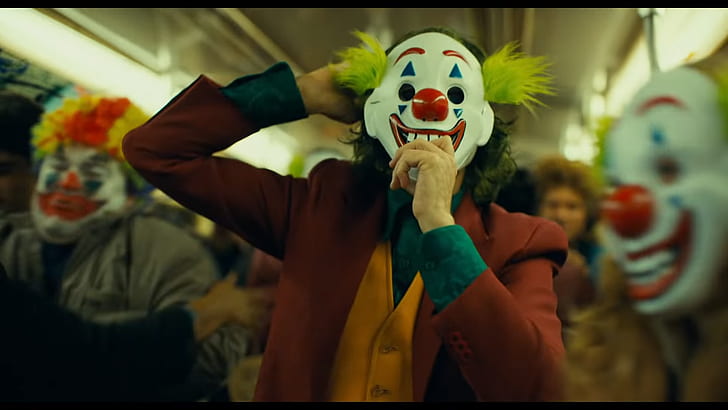
Joker movie is a cinematic experience par excellence.
Director Tod Phillips has reimagined the classic character and presented a
very gripping tale.
Joaquin Phoenix is Arthur Fleck – the clown on hire and a struggling
stand-up comedian. He lives with his mother in a rat-hole apartment in Gotham
city. He adores the celebrity TV comedian and talk show host Murray Franklin.
He wants to be famous like him. He has a silent crush on his neighbour. He has
mental health challenges and he finds an unlikely connection with one of the
most powerful man in the city. The story unfolds and slowly showcases his rise
as Joker.
The beauty of the movie is in details….Cinema at its best!
The moment of Arthur trying to be friendly with a boy in the bus. The scare
of the dwarf clown trying to open the door. The pain of unconquered love when
he visits his desired love. The sadness of funding cuts. The despair of being
fired. The anger and cries of unravelling a difficult past.
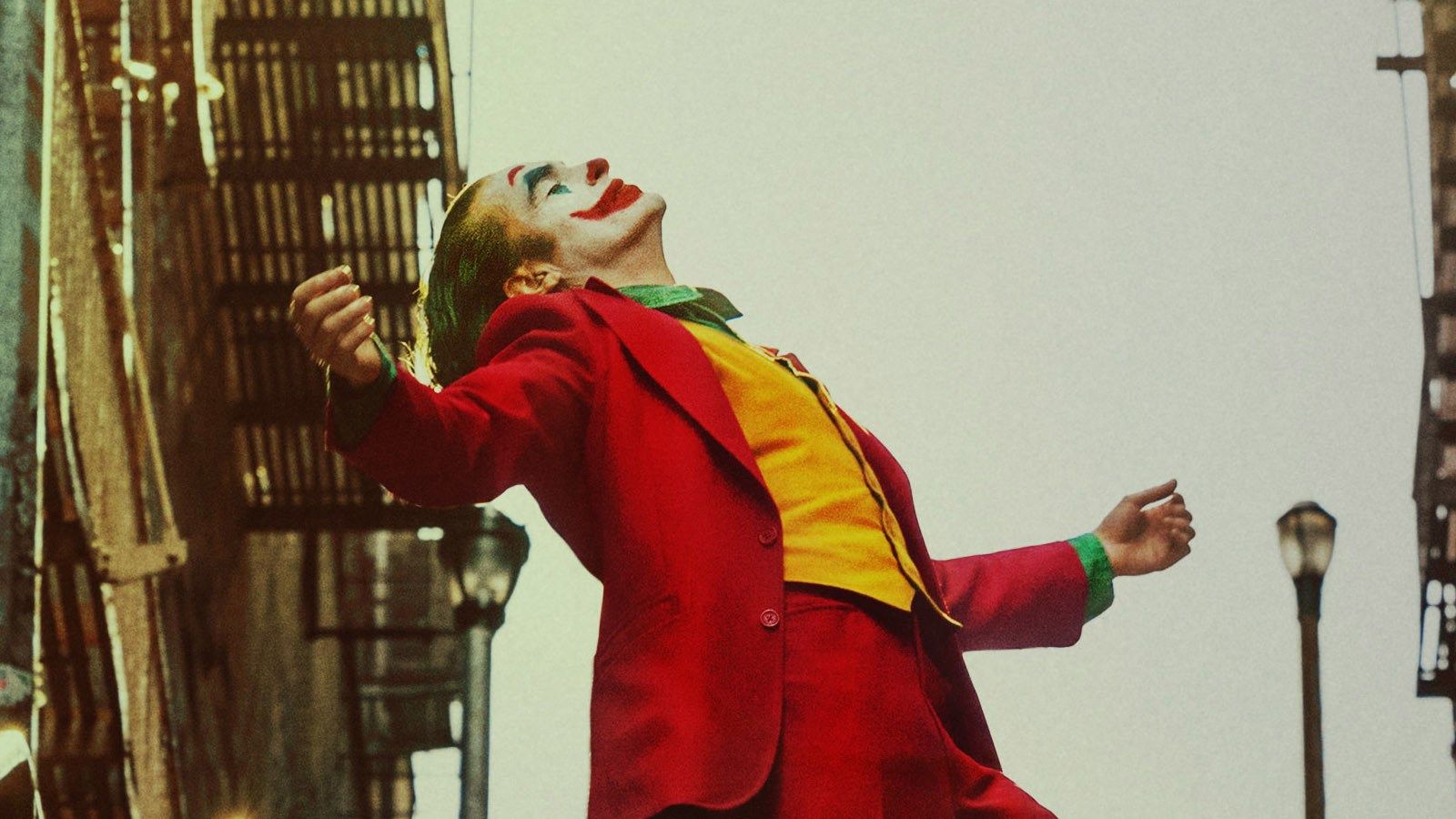
Joker’s dance on the steps – Oh my God! What a capture!
Director has captured the loneliness and despair in beautifully captured
shots. The lonely steps. The lonely train on a dark night. The flickering
lights. The dull apartments. The empty lives. The dark people. Everything he
shows has a meaning. Everything he has shown has a context. Even the ‘Charlie
Chaplin’ movie in the theatre.
The world is falling apart. The garbage collectors are on strike and
streets are stinking. The funding for social services is down because “they” do
not care about such things. The divide between rich and have-nots is widening. The powerful Thomas
refers to the have-nots as Clowns. Arthur beautifully asks: Is it me who is
crazy or the whole world is getting crazy?
Eventually the clown’s actions start resonating with many in the world!
Ambition. Love. Illusion of Love. Failure. Loneliness. Grief. Struggle.
Celebrity Cult. Power. Pain. Everything is captured and shown subtly.
Joaquin Phoenix gives a masterclass in acting! The way he has sunk into the
character and portrayed all the emotions – too good! He rules the screen. He
owns the movie.
Director Tod Phillips has challenged the citadel of great directors with
this movie. Oscars all the way!
Mahatma Gandhi is one of the most significant and enduring gifts of India to
the world. And so is Bollywood. How is the relationship between India’s biggest
exports?
Mahatma Gandhi saw only two movies in his
lifetime. The first was a Hollywood movie called ‘Mission To Moscow’. And the
second one was the 1944 Indian movie ‘Ram Rajya’, which was directed by Vijay
Bhatt. Thus, he saw only one Indian movie.
Let us look at representation of Mahatma Gandhi
in movies.
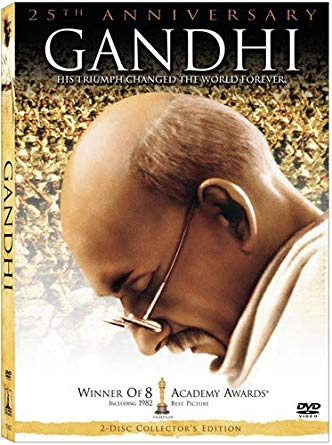
Sir Richard Attenborough’s Gandhi – The Gandhi Movie of All Time
Let me first take Richard Attenborough’s Gandhi out of the way. This is
‘The Gandhi Movie of All Time’ – the one movie that everyone should watch!
It is an amazing epic of all time, a movie par excellence and a life story
beyond imagination! Everyone was at their best in the movie –actors, director, producer,
cinematographer, music director, costume designer. Nobody could have done
anything less good for this project – It was a divine duty or a ‘Sistine
chapel’ of their lives!!
The Gandhi movie swept all the major awards including Oscars, Golden Globe
& BAFTA. It won the 8 Oscars including the Best Film and Best Actor. The
movie had a very successful box office run across the world. In India, it had
an ordinary response.
Richard Attenborough’s Gandhi is a moving experience. It transforms you. It keeps you engaged. It is one of the best tributes to Gandhi and his ideals. Ben Kingsley gave a performance of his lifetime. Ben Kingsley has Indian-Gujarati roots and his original name is Krishna Pandit Bhanji. Hence it was apt to see an Indian origin Ben play the legendary role. Rohini Hattangady, Amrish Puri, Om Puri and Saeed Jaffrey enact key roles in the movie.
The trivia of movie Gandhi are endless. One of the most interesting is that
three lakh extras participated in Gandhi’s funeral procession scene in the
movie. Only a few claimed the remuneration – everyone did it as their duty and
tribute to Gandhi.
Growing as a young kid in late 80s, Richard Attenborough’s Gandhi was a
constant fixture of your Doordarshan life. Every important day including October
2, 2019 would be the day to view Gandhi. And what gem we had been offered
regularly – Maybe like other Doordarshan offerings like Tamas, Buniyaad, Yeh Jo
Hai Zindagi, National Programme of Music, we ignored the priceless gift!
Gandhi & Bollywood
Richard Attenborough’s Gandhi remains one of most significant movies of our
times. But Richard’s Gandhi is not a Bollywood movie. It is a British movie.
Let us turn our eyes to Bollywood.
One of the first though indirect portrayal of Gandhi on screen was in the
Dwarkadas Sampat’s 1920 movie ‘Mahatma Vidur’. The character Vidur was dressed
and walked like Gandhiji.
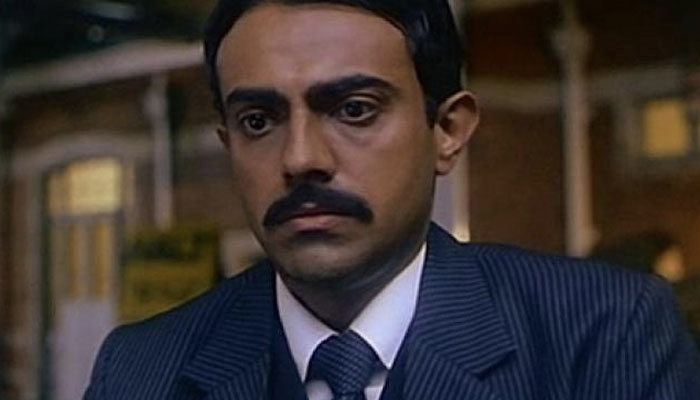
The first significant Indian attempt on Gandhiji was by Shyam Benegal. The 1996 movie ‘The Making Of The Mahatma’ focussed on the 21 years of Gandhi’s life in South Africa and his transformation. It is true that Gandhi discovered himself, his philosophy and political tools in South Africa. The movie is based on his South African experiences including the iconic incident of being thrown out of the train at Pietermaritzburg station. As Gopal Gandhi said later that the man who stood up from the fall was a revolutionary! Actor Rajit Kapoor did a splendid job and the movie is a great piece of work. The movie failed at the box-office though it won few awards.
Kamal Hasan made a movie named ‘Hey Ram’ in 2000 and depicted the struggle
of a man trying to kill Mahatma Gandhi. Shah Rukh Khan and Rani Mukherji joined
Kamal Hasan but they could not save the movie from tanking at the box office.
Anupam Kher and Urmila Matondkar had used Gandhi’s killing as a backdrop Jahnu
Barua directed 2005 movie ‘Maine Gandhi Ko Nahin Maara’. Anil Kapoor produced
‘Gandhi My Father’ in 2007. The movie was based on Feroz Khan’s play and was
adapted for the big screen. The movie focussed on the troubled relationship
between Gandhiji and his son Hiralal Gandhi. Many people amplified Harilal’s
negative views on Gandhi – How ‘Father Of The Nation’ could not be a great
father to his own son! But it backfired. The movie also bombed at the box
office.
Movies on Gandhi were not getting enough Gandhis! (currency notes)
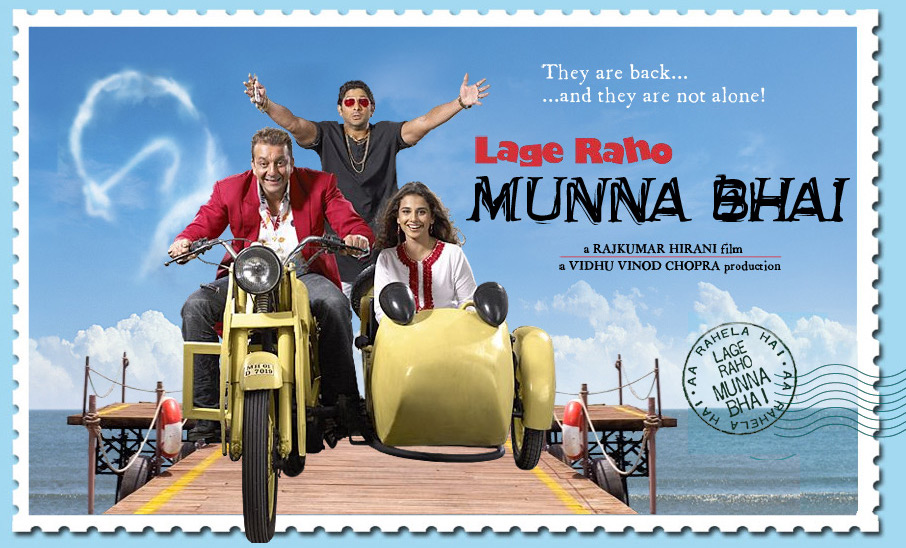
It had to take Rajkumar Hirani’s Midas touch to turn the tide. Leveraging
his unique story telling skills and humour, he offered a completely new
perspective on Gandhi. ‘Lage Raho Munnabhai’ did what thousands of historians,
hundreds of books and several organisations could not do – bring Gandhi back in
fashion. The simple story of a loveable Mumbai don using Gandhi’s principles to
solve challenges and win his lady love. Munnabhai’s Gandhigiri was observed
throughout the nation in ensuing months and years. It was Hiran’s excellent
vision, script and direction that delivered a genuine blockbuster at the movie.
‘Lage Raho Munnabhai’ was the biggest hits of 2006. Producer Vidhu Vinod Chopra
smiled all the way to the bank. More importantly, it made Gandhi cool and
offered a great new alternative narrative and a perspective on Gandhi to the
youth. He brought Gandhi out of the statues and photo frames and books into the
lives of youth. A great achievement! The power of good cinema!
Amit Rai made a movie ‘Road To Sangam’ in 2009 starring Paresh Rawal and Om
Puri. The movie focussed on immersion of the ashes of Gandhiji against a
communal backdrop. Gandhi’s great grand-son Tushar Gandhi played a Cameo in the
movie and it won several awards. But it was a box office disaster. Rakesh
Ranjan Kumar’s 2011 ’Gandhi To Hitler’
is based on Gandhi’s letters to Hitler.
Apart from the above, Gandhi has been represented in biopics of other
leaders like Shri Babasaheb Ambedkar, Iron Man Sardar Patel, Shaheed Bhagat
Singh etc. Hollywood had made another movie called ‘Nine Hours To Rama’ in 1962
where Gandhi’s assassination was re-imagined and Godse was presented as hero.
The Mark Robson directed film never released in India and tanked globally. It
had no Indian actors.
Gandhi’s Under-Representation In Indian Cinema
Mahatma is under-represented in Indian film industry. The best work on
Gandhi is by a non-Indian – Maybe an outsider had more courage and better
perspective to make a film on Gandhi. The greatest film makers of our time in
1940s to 1980s never thought of making a movie on Gandhi. They must have
thought – Gandhi is so much within us that we never need a movie for him.
Gandhi is a family member of every Indian. What is there to tell about Gandhi
that people do not know? The movie may not make money!
Dada Saheb Phalke, Bimal Roy, V Shantaram, Himanshu Rai, Chandulal Shah, Mehboob Khan, Raj Kapoor, Chetan Anand, Satyajit Ray, Hrishikesh Mukherjee – None of them made a movie on Gandhi. The movies till 1950s and 1960s had a lot of influence of Gandhian values but there was no Gandhi movie. The erosion of patriotic feeling, the rise of corruption, the arrival of angry young man, the liberalisation of economy, the excitement of millennium – different phases of a growing India. And all this while Gandhi remained in background in the cinematic world.
There were occasional trace of Gandhi. In Bimal Roy’s Nutan starrer Sujata,
the main protagonist avoids suicide after becoming aware of Gandhi’s views on
suicide and changes her life. Salim Khan Saheb had once commented that the
pivoted character of movie ‘Imaan Dharam’ was inspired by Gandhiji. The
protagonist of his movie ‘Kabza’ was also Gandhi. Ashutosh Gowariker’s movie
Swades was influenced by Gandhian principles – Shah Rukh Khan is called Mohan
in the movie. The interesting thing to note is that the movies on Gandhi and
his philosophy are limited and lacking depth.
Charlie Chaplin and Gandhi
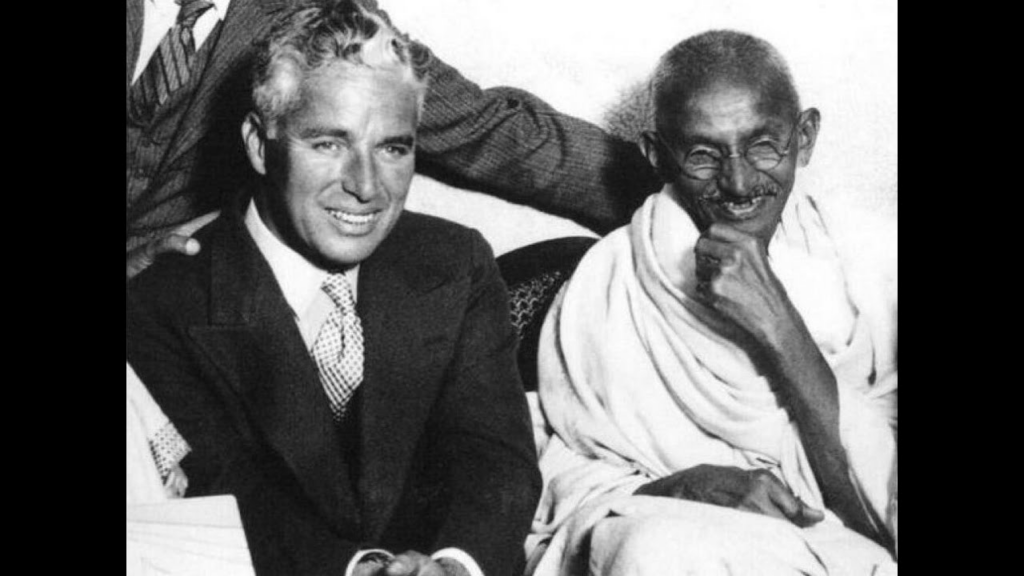
Interestingly, Charlie Chaplin was inspired by Gandhi and one can notice the influence in his film ‘Modern Times’. Charlie Chaplin had met Mahatma Gandhi in at a nondescript building at London’s East India Dock Road in 1931. The two had discussions on lot of topic including machinery, socio-economic conditions, philosophy of principles driving Indian Independence struggle etc. Charlie Chaplin’s memoir describe how he was transfixed to see Gandhi offer the evening prayers – a super intelligent being immersed in spiritual devotion! (An interesting point to note is the biopics of both Gandhi and Charlie Chaplin were made by one person – Sir Richard Attenborough.)
How would modern directors interpret Gandhi? We have had Love Stories and
Lust Stories. How about ‘Gandhi Stories’ by Zoya Akhtar, Anurag Kashyap,
Sanjay Leela Bhansali and Karan Johar? Or if Hollywood presented Gandhi through
the eyes of Steven Spielberg, Christopher Nolan or James Cameron? Just imagine!
Creating a life of purpose requires us to be in sync with our true self. And I believe knowing our core values is an important aspect of life design.
Core Values are usually associated with organisations. But all of us also
have our core values and principles. Our behaviour, decisions and actions are
driven by them.
Core values are our guiding lights! Core values are our true north! Core values define us! They help us to understand what is important to us and what we really cherish! Core Values enable decision-making. When we are confused, our values can direct us to the right road. It can help us make the choices that are consistent with our belief systems. And that creates happiness and bliss. If our actions are not aligned with our core values, we feel frustration and stress.
What are your core values? How do you define your core values? Core values are not created – they are discovered. Over a period of time, our values emerge and become our compass. So, reflect on yourself, the journey and list out all things that come to your mind – when you define yourself and what you stand for. Be honest with self and only list the real values – no need for cool or nice words.
My core values are:
Authenticity – Being honest, straight-forward and sincere
Simplicity – Less is more
Loyalty – Dependability, sticking to commitments
Creativity – Being different, versatile and trying new things
Generosity – Share the success. ‘Live2Give’ is the mantra!
My professional values are:
Purpose – Always be goal-driven
Passion – What is life without passion or enthusiasm?
Promise – Deliver the commitments, keep the faith
Performance – Results drive professional life
Play – Add life to work with fun and joy for self and everyone around!
Once the core values are determined, live the values! The details are in action! Let the behaviour be aligned with your values. It will help you take the right short term and long-term decisions. It will help you to live life to your own chosen standards. And that is a bliss!
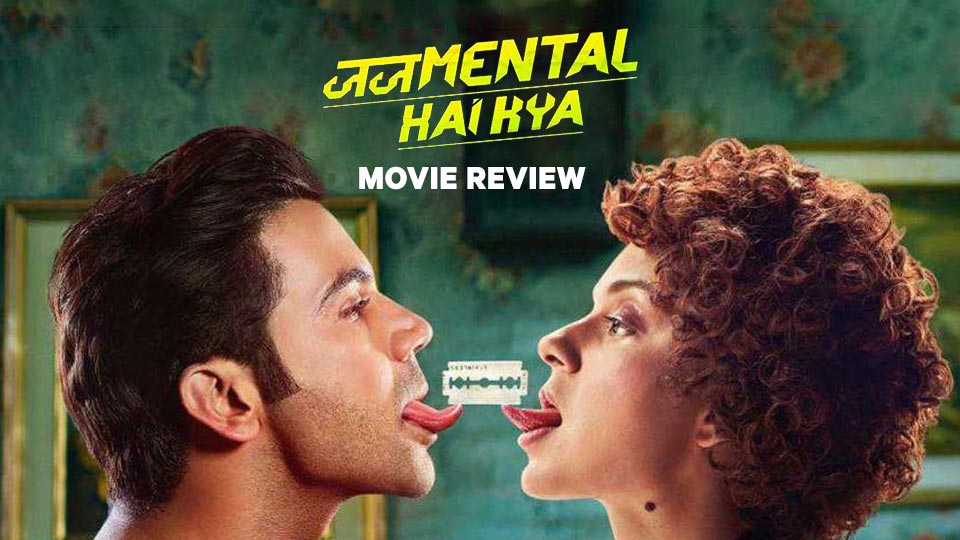
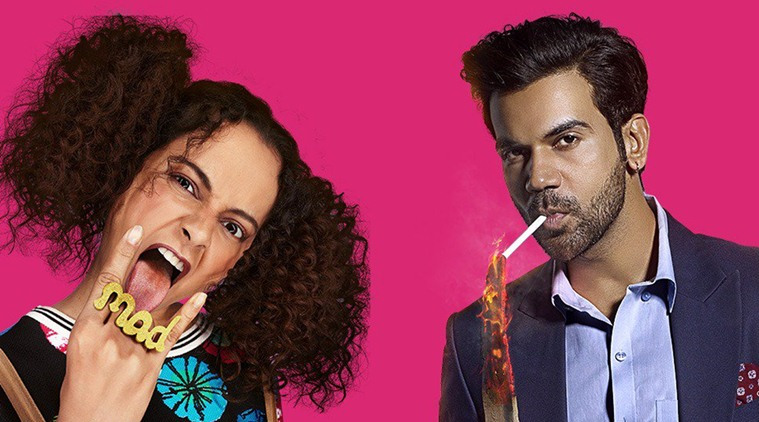
The new Bollywood is making brave choices and Judgementally Hai Kya is a shining example of the new experiments of Bollywood. It is a courageous movie – which will challenge you, divide you, confuse you! Better than ‘leave-your-brain-at-home’ cinema.
Kangana and Rajkumar Rao are at the top of their game. Both play the
characters with impeccable conviction and bring out the multiples shades of the
quirky characters remarkably. It is an ode to Kangana’s art that she looks so
natural in the role. Rajkumar is a perfect match to her.
Kangana is suffering from acute psychosis and identity disorder. The
troubled mind has a troubled past and a challenging present. Rajkumar Rao moves
in as a tenant in the house with his wife – who is murdered. The movie catches
edgy thriller style after the murder. The Ramayana theme is invoked in a modern
style and Sita is seen as the victim of male violence. The movie keeps you
guessing and your loyalties to the character are challenged again and again.
The director is the real hero. He paints the pain and anguish of the characters with rich colours and textures. The change in the backdrop and the mood of the film between Bombay and London is nice and consistent. The conflict and the struggles of a troubled mind are beautiful depicted in the title song – noteworthy are the street art that complement the mood of the mind. Spot on!
The director could not have asked for a better actor to demonstrate the anxieties and troubles of a psychotic mind. The scene where she explains that demons are following her – it affects you. She cannot trust anyone – the fall in the drama with Jimmy Shergill again explains the state of mentally unstable mind.
Kangana’s current off-screen controversies and perennial persona helping in adding richness to the character. Is she giving message from her real life – domestic violence, misunderstood, feminine voice? Who is the real mad?
The movie has its flaws. The second half is problematic. The Jimmy Shergill
track is not given the proper treatment. The finale could have been better.
The jury is out on the choice of using mental health patient as the protagonist. I know that it has not depicted all the challenges of mentally ill patients – but I guess it was never meant to be perfect on technicalities. More importantly, I think it helps in opening a dialogue on mental health. Bollywood has impact in India that is too big. The movie is creating awareness of the challenges of mental health patients. It stops us from dismissing their problems as madness. It stops from being insensitive to their challenges. It helps in telling us to educate ourselves and be more sensitive about understanding the troubled minds.
The movie has taken the important topic of Mental Health and given it the right and sensitive treatment. The movie has a significant message for the world – mentally ill patients are different and need their space. Understand them, support them, lighten their mental distress and accept them unconditionally. And yes, do not be judgemental!
A must watch – a difficult watch, a complex watch – but yet a must watch!
Shocked and saddened by the suicide of V G Siddhartha – cannot believe it!
Siddhartha founded the Cafe Coffee Day chain and changed the way India drank coffee. He created thousands of jobs, a great brand and shared wealth. He also backed Mindtree and underwrote Infosys shares. He made other IT investments and gave support to the founders.
Why did he do this? We will never know the reasons. He came from a strong family, had great political and business connections. He was a successful entrepreneur. There are talks about the pressure of PE investor, Income Tax harassment and Debt woes. But an entrepreneur knows all such challenges – at what point did it really get too much? Or was there something else?
It is impossible for us to judge what he must be going through. No one can imagine his situation.
My point is simple….Suicide is not the answer. Life is a gift. Setbacks give way to sunshine. Today’s problems will go away.
Suicide means end of a great talent and human potential. It means failure of the human spirit. It leaves behind emotional scars for family and friends for life – a guilt that they could not do enough.
And yes, no individual nor any organisation is worth giving up our live for.
When one feels low, please talk to friends. Listen to music – a cure for everything. Spend time with nature. Or help others – world is full of more unfortunate people and helpless situations than us – help others. Instead of giving up life, help others live a good life and one could find our own meaning of life.
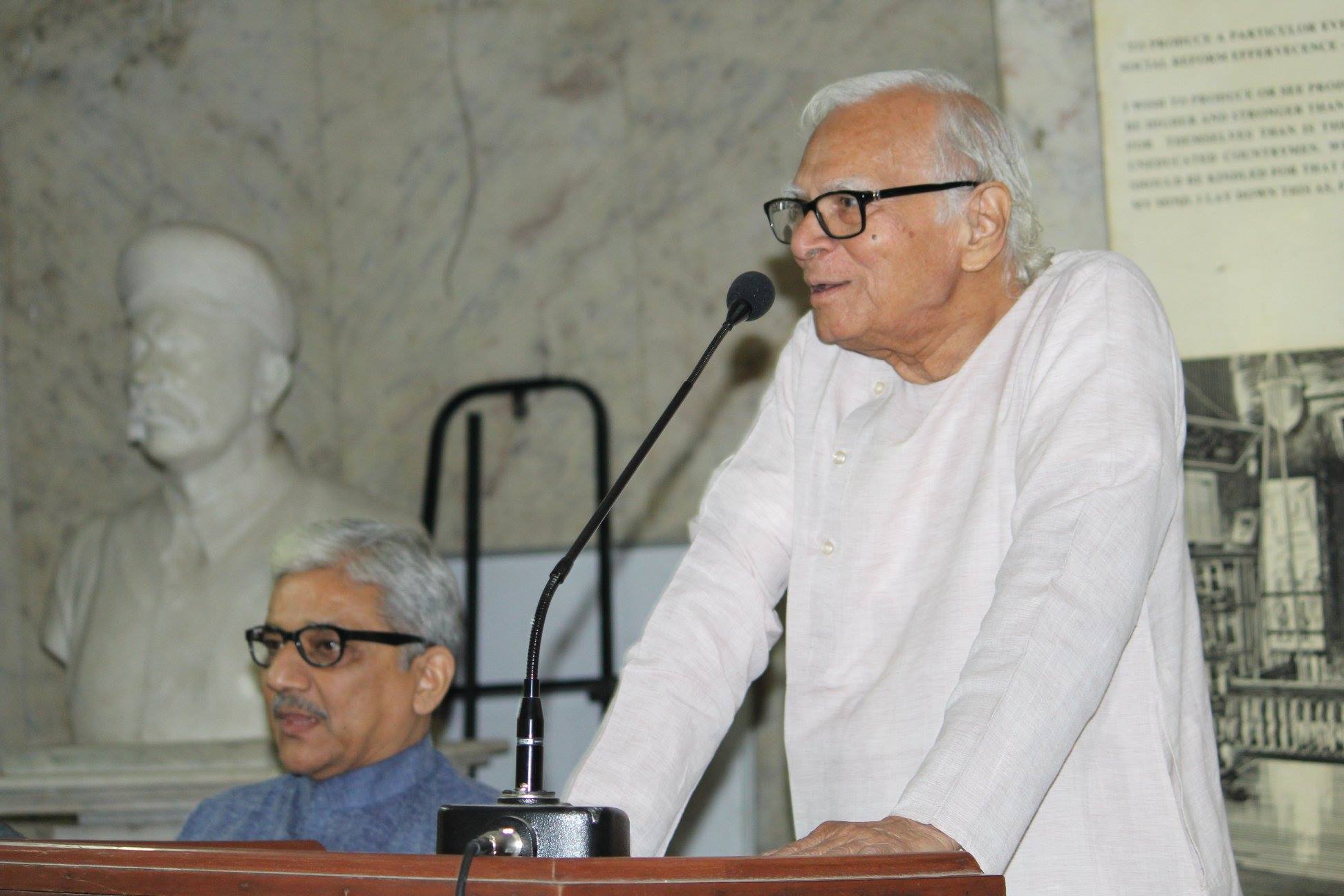
Intoxication found at Gujarat Vidyapith premises! Intoxication of love, respect and admiration for Prakash N Shah (પ્રકાશન. શાહ ka નશા)
The occasion was the public felicitation of Shri Prakash N Shah – the many with many roles! The auditorium was overflowing with double its capacity and people occupying the aisles, areas between dais-chair, service area – whatever space one could find. The Saturday evening distractions or the 40 degree heat did not stop the admirers to throng at Gujarat Vidyapith. The audience grabbed every word like a gem and the 2.5 hour event ended too soon – never mind the endless sweating!
Prakashotsav – The festival celebrating Prakash N Shah was organised by his friends, well-wishers and Sarthak Prakashan team.
The evening started with a mock court where the most loved culprit Prakash N Shah was produced in the court of judge Hashmukh Patel. The lawyers Ketan Rupera and Urvish Kothari conducted the proceedings with the help of Ashish Kakkad. The public prosecutor Urvish Kothari produced a stellar list of witnesses to prove the charges against Prakash N Shah. Ratilal Borisagar, Ashwin Chauhan, Ashish Mehta, Binit Modi, Biren Kothari, Nayanbahen Shah and other stellar figures accused Prakash Shah of several crimes – the burning ambition of being a prime minister, torturing the world with his cryptic and incomprehensible language, creating a cult of his own, communist leanings, hidden acting skills etc. The court proceedings were ably proved with strong logic, evidences and confessions of the witnesses.
The mock court was followed by the release of Urvish Kothari’s book on Conversations with Prakash Shah. Prakash N Shah was felicitated by a section of citizens of Ahmedabad.
The grand finale was the speech of Prakash N Shah. He expressed his gratitude for the great gesture.
He recounted his journey. His central thought was – Yukta and Mukta. He spoke about Gandhi. He spoke about the impact of three primary books on his life. The audience was listening as hypnotised by David Copperfield but time came calling….
Prakash N Shah’s intoxication and values will remain…An evening to remember for a human to never forget …..
Prakashbhai & Ash:
The white clothes, the simple spectacle and the straight from the heart laughter is how I visualise him whenever we say Prakashbhai. His simplicity, his vision, his clarity and his friendliness is his magic that drives us to him again and again.
Thanks to Vipool Kalyani and Gujaratilexicon, I have the greatest fortune of spending lot of time with him and knowing him. The Nireekshak Digitization and other initiatives got us working together. Gujaratilexicon briefly operated from his residence during a difficult time in our journey.
Prakash N Shah is a towering personality but he is our Prakashbhai. Our DadaGuru….Sri Sri Sri Dada Guru…Not many can see the Halo behind him…So you see he does have a cult! He is also the business partner of my spouse – they are still searching for their Eureka moment!
Death is a technical problem. Yuval Noah Harris says that death happens because our body parts fail. The next frontier in science is to conquer death. We are adding years to our life with each passing decade. Can we become immortal?
Death is the ultimate truth of life. People are either afraid of death or try to run away from it. Acknowledge it. Accept it. And live today’s life with full celebration!
Death is the reality of life. And when we die, the bank balance, designation, KRAs, Instagram supremacy and everything else will cease to matter. Within a few days, live will move on. Within a few years, the name will be gone. Within a few generations, our memory will be gone. So why stress so much? Let us live a life of principles. Let us live a life to be an example to our network. Let us live a life to help others.
After a good day of hard work and meaningful activities with family, one gets a great sleep. Similarly, a life of good deed and actions results in a peaceful long time sleep.
What would I wish when I die? One of my life’s biggest principle is ‘Live 2 Give’. I guess it should continue after the death. Hence it would be nice to be useful to others even when I am gone. Organ donation or donating the complete body for medical reasons is a great option. The soul has departed, so if the body organs can help someone else, it should be exercised. In India, there are emotional and spiritual reasons that are discussed, but I believe it is the lack of awareness on the benefits of organ donation that is the key issue. I would love to give possessions like books to the people who benefit from it.
Death should not be a serious event. There should be no or minimal formalities – let the world carry on without being affected. The loved ones and friends should celebrate the departure at a cinema call and watch a favourite movie – Anand, Guide, Kabhi Haa Kabhi Naa! If food questions comes in, the South Indian food is the way to go! And pan as well!
The World Cup 2019 Semi-final has silenced a nation of 1.35 billion
people.
The India – New Zealand clash has prompted strong emotions across the
globe. The fans’ reaction is a testimony to their love of the game and ‘Men in
Blue’. One can discard their involvement and ideas as arm-chair suggestions but
without fans, the game is incomplete. The game is a bigger game because of fan,
and it unites everyone – delivery boy, CEO, office staff, families!
What else did I see in the India – New Zealand clash? What can be learn
from it for our life?
1. Innovation
Indian team showed no innovation. India stuck to their old ways. Same
batting order except pushing Dhoni down. Dhoni should have risen up in the
order and he would have anchored the batting. He would have stopped Rishabh and
Hardik from rash shots.
Our Batsman played the same way as they did in earlier matches.
We all need to innovate in life. We cannot keep trying the same things
every time. Our career requires us to develop new skills and bring new ideas to
the table. Innovation is key to success in today’s world. We need to evolve!
2. No Plan B
Indian Team did not have a Plan B. What if our big guns did not deliver?
What if our middle order was exposed? India’s middle order was our biggest
problem and we never worked on it. The lack of Plan B costed us the match.
We had a great opportunity in India vs SL match to give practice to
others. But still Virat came at No.3 and so did others at their own positions.
In life our best planned ideas can go wrong. We need to have a Plan B.
If our dream promotion does not happen, what do we do? If we do not get
admission in IIM, what do we do?
3. Flexibility / Overconfidence
The team came across as stubborn as well. The rains would have made the
batting difficult was a given factor . But our earlier success blinded us to
the new situation. Maybe we got overconfident. What has worked well would
continue!
Respect the conditions. Respect the opponents. Every artist touches the
stage before it performs on the stage – we did not kiss and read the pitch
well.
It is not the strongest or the smartest that survives – it is the most
adaptable that survives. We need to learn flexibility in life. Change as per
the situation and circumstance. Do not be stubborn.
4. Discipline
New Zealand was a disciplined outfit. The batsmen, bowler and fielder
played to the strength. The bowlers stuck to the line and the length. The
batsmen may have been slow but scored a decent score in the circumstances. The
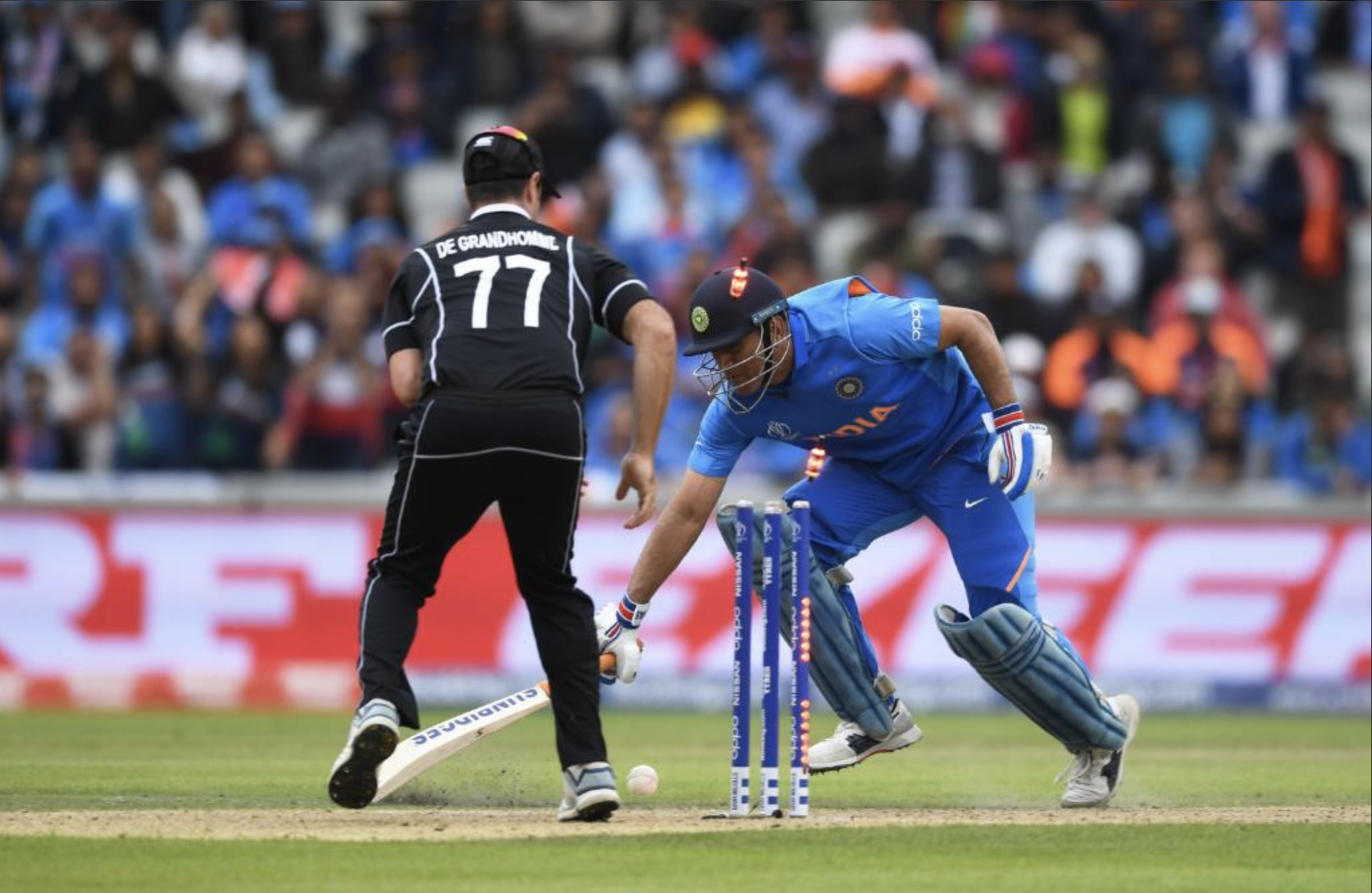
fielding was exceptional including the run-out that broke Dhoni’s stellar run
and Indian hearts.
Indian batsmen were still in their flashy IPL mode. Rishabh Pant and
Hardik Pandya could not control their natural instincts. Clearly Rahul was out
of the place. We had our share of woes in fielding as well. Virat said that 45
minutes of bad cricket cost us the tournaments. That is what happens in life as
well. One bad impulsive action or decision can cause greater regrets!
Whether is studies or financial planning, discipline goes a long way.
Avoid flamboyance. Just do the job silently and consistently. The devil is in
the details. Persistent efforts win!
5. Leadership
New Zealand skipper deserves equal credit for the leadership he
demonstrated. He was the captain cool. Not only did he read the pitch right, he
played to the strengths. Kane Williamson outsmarted India tactically
with the way he attacked upfront and the way he set the field. He was in action throughout out the match and
encouraging the team. He changed the bowlers, backed the colleagues and calmed
every one when Jadeja-Dhoni were on fire. His belief ensured that New Zealand
was through the match.
Many people talked about the luck and the rains. A champion team does
not need luck. And luck favors the brave and the prepared teams. Had India
showed more steel and flexibility, the outcome would have been different. Luck
helped Dhoni and Jadeja. But it also helped Guptill – whose run out was the
worst thing to happen to India. Or Virat’s dicey wicket. But there are no other
excuses – we lost on our own account. We were almost there…but New Zealand got
it better that day! We should have not lost to England – we could have got
another opponent!
But the most important thing is that India put a great emphatic show
during the entire World Cup. All of us loved it and our team was the table
toppers! We had a great semi-final as well where hopes were alive till the last
over. It was Dhoni that gave us the belief that we could still have win
probability of 70% at 5-3. And we got to see Jadeja’s striking response to
Sanjay bits and pieces comment!
Rohit Sharma’s magnificent batting and Bumrah’s magical bowling will
remain in our hearts and minds for long time to come!
Life is about wins and rising after each fall. Sports is the greatest teacher. This too shall pass!
Let us back the BlackCaps for a win! Cricket needs a new champion!
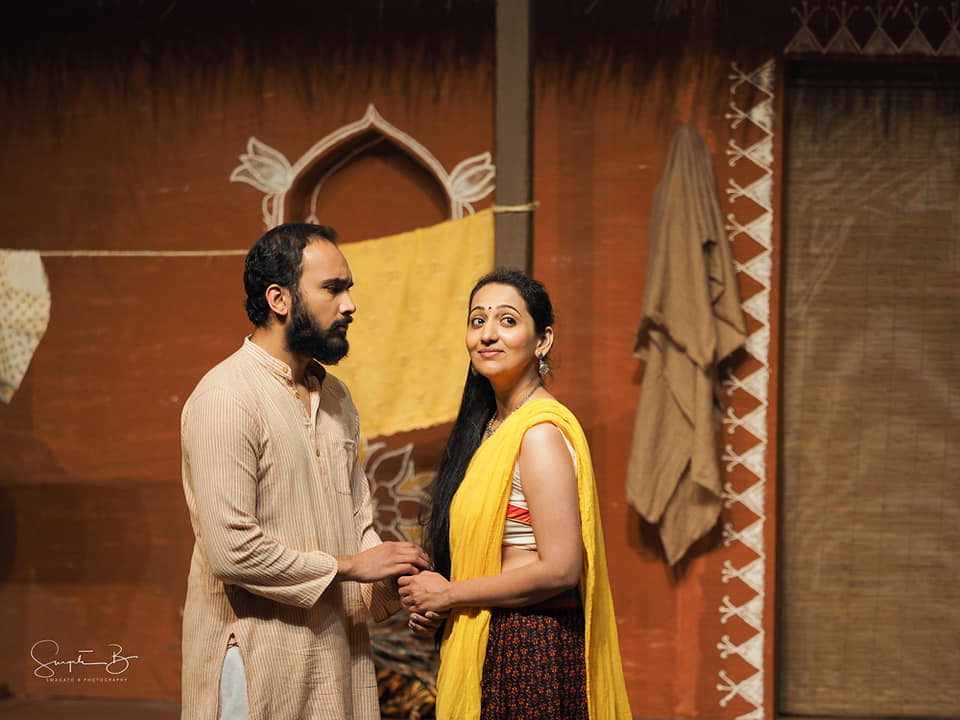
Aashadh Ka Ek Din: Mohan Rakesh’s Classic Three Act Play Was Presented Beautifully By Director Manish Sabu.
The Award Winning & Pioneering Modern Hindi Play Focuses On Poet Kalidasa’s Life & His Emotional Connect With Mallika. Mallika’s Influence & Inspiration Allows Him To Create Great Works But He Struggles As Politics & Power Rob His Creativity. He Returns To His Roots After Abandoning Politics But Surprise Is In Store For Him. Each Act Ends With Mallika Being Left Alone & Kalidasa Moving On.
The Pure Hindi Was A Great Delight In This World Of Hinglish. Preeti Bhat Shone As Mallika With Strong Support From Others. A Great Play To Watch – Showcases Strong Content, Amazing Acting, Nice Direction & High Production Values.
Chernobyl is back in news thanks to HBO series. Chernobyl is one of the most tragic events in our history. Chernobyl happened when I was in school. I was too young to understand it but we were all talking that something big and bad had happened.. I remember me and my friend Abhi reading the newspapers, watching TV and discussing this passionately. Since then a visit to Chernobyl was one of the things in my bucket list – yes I have an interesting bucket list.
I landed in Kiev for a trip to Chernobyl. Though Ukrainian authorities had started tourist activities in the Chernobyl since many years, it was recently only that Visa regime became friendly.
I reached the Kiev Central station after a quick ride in the Soviet style metro. The Chernobyl Tours are conducted by licensed agencies and instructors. I had chosen one of the local agencies and our guide for the day was Igor. The tour was only allowed to people above 18 years. Basic health criteria must be met. Currently, citizens of Russia and Belarus cannot visit the tour. There were 3-4 check-points to ensure that the compliance was met.
We got lot of instructions about the safety and do and don’ts for the trip. We were not supposed to put our clothing down on the floor or ground anywhere. We had to regularly measure radiation levels using Geiger counter. We could not touch the animals. We could go only in areas allowed for visits etc. We were not supposed to take anything from the nuclear site and town. No special souvenirs!
The big question was about the safety of the tour. The Chernobyl Zone and Prypiat town have high radiation but they are safe for human beings. One-day tour’s radiation is equal to the radiation experienced in one hour airplane flight. Or the exposure is 160 times less than X-Ray of chest. And we had Geiger meter to be sure. So the trip was safe. Or it means flights are not as safe as we think!
After the basic instructions and tips, Igor gave us the background about the Chernobyl accident including the technical details. The accident happened on 01:23 am on April 26, 1986. A power failure test was being conducted and an accident happened causing explosion during emergency shutdown. And one thing led to another causing uncontrolled reaction – water flashed into the site created a steam explosion. The fire produced plumes of fission products and the radioactive material moved towards USSR and Europe. The authorities either did not understand the gravity of the situation or they downplayed it. But they did not acknowledge the accident immediately – maybe a mistake in hindsight. In fact, the people in the nearby town carried on the life as normal. Nobody was told the truth. It was only after a week that people were evacuated from the nearby town of Pripyat which had a population of 49,000 people. The town was designed as a model town and was the town planned for the staff and families of people working at Chernobyl Nuclear Power Plant. It was Sweden which alerted the world about the presence of these plumes in the air. Then authorities had to acknowledge the accident. Belarus was the worst affected country as plumes moved towards that direction.
Back to the trip. The first stop was the checkpoint of Dytiaki. Our passports were checked. We moved to the abandoned villages. We could see the traditional houses, village shopping store, doctor’s house, kindergarden etc. The houses were in ruins. People were forced to leave quickly as a part of evacuation drive. The authorities had destroyed these houses to ensure that the villagers do not return. The area of villages was within the 30 km radius of the accident and it was a risk. Villagers were sent to cities but many villagers did not adjust to the city life and wanted to come back – but then government withdrew their pension and other benefits. So people were forced to go back to cities. Nobody liked it. The villagers did not like it. Nor did the hosts in cities. Apart from hotels and camps, authorities forced city dwellers to accommodate the refugees. After the destruction of the village by authorities, nomads, thieves and others came here to steal the remnants of the house. As people had left in a hurry, lot of goods were there in the house. TV, Fridge, expensive things etc. People stole the metals, wires etc. Whatever they could get. And whatever little was left, was destroyed by nature over the years. Wear and tear due to nature was the final act. I was pained to see images of kindergarden. The dolls, the story books, the cots for kids etc. Very Emotional. We visited more abandoned sites – all of which had similar and equally tragic stories.
The next stop was the Chernobyl Nuclear Power Plant. The Chernobyl Nuclear Power Plant was one of the most important power plants in USSR. The aim was to make it the largest nuclear power plant in the world.
The city of Chernobyl was chosen after proper research. The density of population was low. The land was not very fertile and hence could be used for industrial use. The nearest big city was Kiev – which was far away from the place. Hence USSR started to develop infrastructure – roads, schools etc. The construction of Chernobyl and Pripyat city began in 1970 and the power planned was opened on 1977. The second reactor was commissioned in 1978, third in 1981 and fourth in 1983. The Chernobyl accident happened on April 26, 1986. But still the power plant continued to work and reactors were active. The three reactors were decommissioned only in 1996, 1991 and 2000 respectively. The reactor two indeed had to be closed earlier due to faults. The reactor No.5 was scheduled for going live on Nov 1986 and No.6 in a short time after that – but the work was suspended and then cancelled due to the accident. The site is very high on radio activity. The isotopes have half-life of at-least 30 years. Hence Reactor No. 4 is enclosed in a concrete and lead sarcophagus. It is further covered by a large steel confinement shelter, to prevent further escape of radioactivity. The large arch-shaped steel case has costed almost 2 billion dollars.
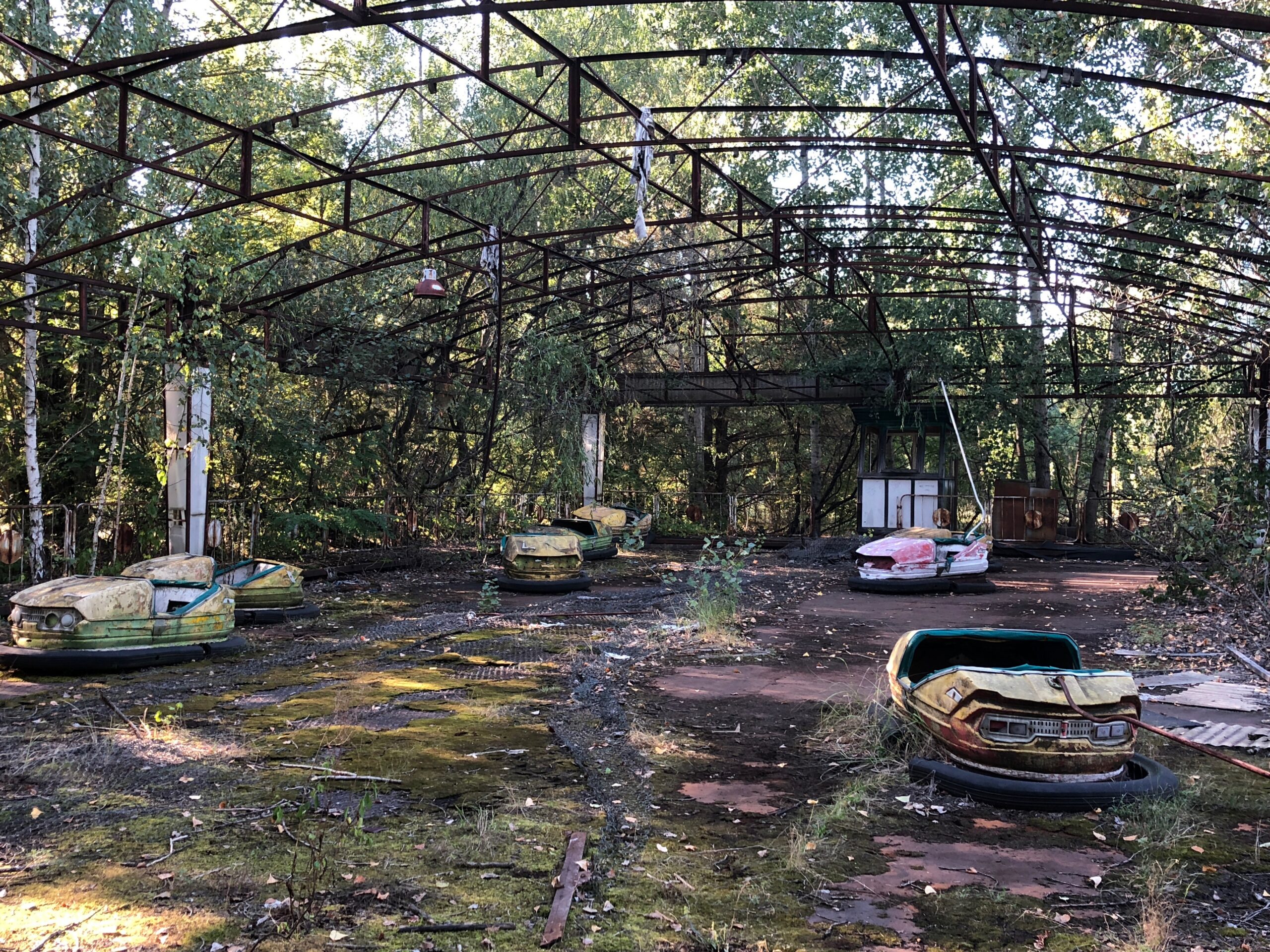
The next site was the city of Pripyat. The city of Pripyat was the planned city. It was the showcase to the world. It hosted scientists, delegates, diplomats, politicians and other important people from all over the world. It was designed as a showcase city for the world. The chosen ones came to Pripyat as it promised a better life. The salaries at both Pripyat and Duga was higher. The best food, best hotel, best schools, best healthcare was made available. People came here for a better life. The city of Pripyat had a cultural centre, theatre, football stadium, wonderful roads, shopping centre, amusement park etc. It was planned for walking and bicycles – no vehicles. There was a nice river port. Everything was planned for future growth of the city. But man proposes, God disposes…
The accident happened on April 26 but people were not given any information. The life continued and thus it exposed everyone to grave danger. The people injured in the plant were brought to the hospital here and they brought radio active elements. Some people heard of accident and visited near a bridge to see the view of the power plant. They got infected as well.
In fact, big celebration was planned for May 1 celebrations and it continued. People had hoarded their houses with food and wine and other things for the celebrations. On May 2, people were told to evacuate the city. They were given 3 hours to take two bags as it was a short-term evacuation. The information was given at 11 am and evacuation happened at 2 pm. They were told that this was temporary evacuation and everyone could be back in 3 days – so people did not take much stuff. They were allowed 2 bags only. Thus people left everything important to them here including electronic items, expensive items etc. A man tried to stuff his favourite cat in the bag but could not do so. But nobody returned. It was sad. The first match in the new stadium was scheduled on May 2, 1986. But it never happened. The new Amusement Park was to open on May 1, 1986 but it also never opened officially. 1300 buses came to evacuate the 49,000 people from town. The buses took lot of time on the road – they were on the roads next to power plant for hours and just inhaling more injurious plumes. People suffer from lot of health issues including cancer due to the exposure to these plumes. All dogs and cats and other animals in the zone were found and killed. 70 Belarusian villages were buried under the ground.
Today, the city of Pripyat is a ghost town. Everything is decaying and rusting. Large trees have grown. The residence building, theatre, hospitals etc. all are crumbling. The liquidators have destroyed everything. And rest by scavengers, thieves and nature. The rusting ferris wheel has been a sign of ghost town Pripyat.
The next stop was Red Forest. It was very near to the Chernobyl Power Plant and the most infected area. It was the most dangerous area and has the highest level of radioactive elements. At the time of evacuation, buses were standing next to it in queues as the town was cleared. Even we could see that readings on Geigmeter increased from 0.1 to 25-30 even when were in bus and moving at full speed. Dangerous indeed!
The last stop was the monument dedicated to liquidators, fire-fighters and other rescuers. It was next to Chernobyl Fire station in the Chernobyl town. It was designed by amateurs and it was never commissioned by anyone. It was an impromptu decision and nobody questioned it.
Even today few people live in Chernobyl town. The people who are managing facilities at power plant, overseeing liquidation process etc. Some people are allowed back as 30 years has passed and the 30km radius is considered safe. Even a hotel has opened and people can stay there. Everything requires permission. No schools still as people below 18 years are not allowed.
The most surprising thing is that even today Ukraine’s 40% of energy needs are met by nuclear energy. There is no opposition to nuclear power plants. Ukraine exports nuclear energy.
Chernobyl continues to be the reminder of what can happen when things go wrong with nuclear energy…..